Call it a real-life soap opera.
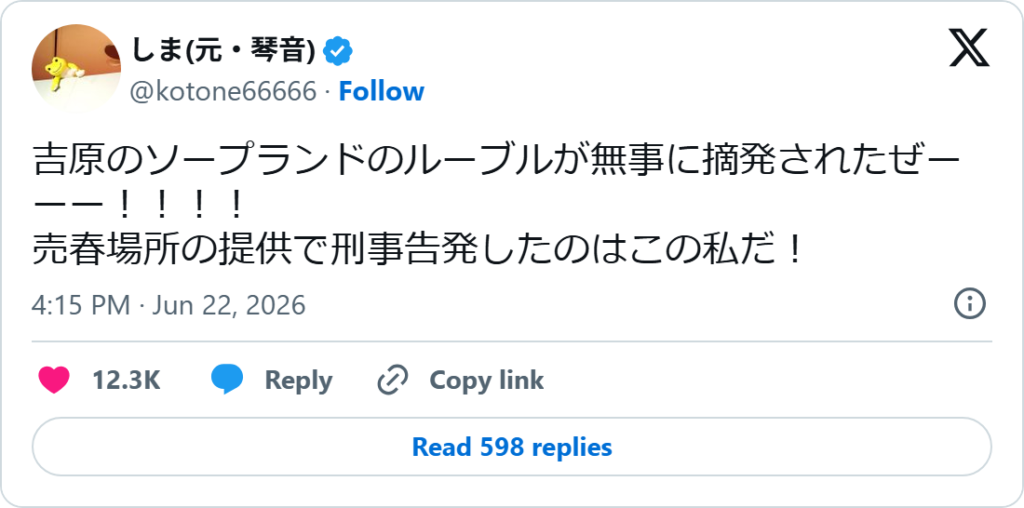
On June 22nd, X user @kotone66666, who posts as Shima, made a triumphant post: “The Yoshiwara soapland Louvre has finally been raided!!!! I’m the one who filed the criminal complaint, for provisioning a place for prostitution!”
Two days later, Tokyo’s Metropolitan Police Department confirmed what Shima and others had already learned through the industry rumor mill. Authorities announced they had arrested the operator, 55-year-old Miyashita Yoshihiro (宮下喜広), and four male staff for violating Japan’s Anti-Prostitution Act, specifically the provision of premises clause.
It was a rare bust. As I wrote in my article about soaplands, these businesses exist in a legal gray zone. True to the euphemism, soaplands are shops where female workers give male customers a “relaxing” cleaning in a private room. In reality, nearly all encounters end in sex. Soaplands get away with it via the legal fiction of “freedom of love” (自由恋愛, jiyū renai). In other words, workers shag their clients, not because they’re paid, but because they love them so much.
Despite the grayness, the country’s 1,200+ soaplands mostly operate without incident. Busts are few and far between; Miyagi Prefecture went 27 years between them. For the most part, Japanese authorities are more focused on busting the country’s illegal scout networks.
Police could raid any number of soaplands and probably find cause to round up the owners and staff. They simply choose not to.
Some on social media cast Shima as the villain in this tale, as Louvre’s closure put 36 other women out of work. Others targeted her Chinese heritage in a disgusting ethnonationalistic attack. But others noted that sex workers in Japan, like Shima, who suffer mistreatment or abuse, often have only two options.
The first is to ignore it and move on. The second is to burn the house down.
Shima chose violence. (Figuratively, people. Figuratively.) Here’s why what she did has soapland owners so spooked, and why many sex worker advocates say Japan’s worker protection laws have to change.
She only had one tool available
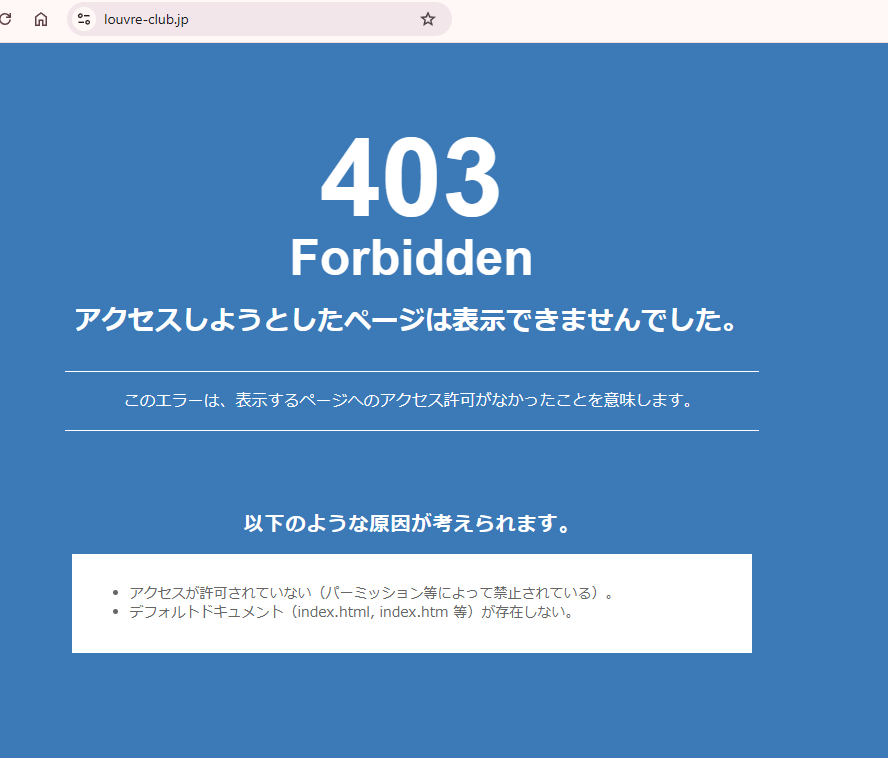
We only have Shima’s account of what went down at Louvre. But if her version is accurate, she had every reason to be pissed.
Shima says that she was attending a training session for shop workers. Despite having a 39°C (102.2°F) fever, she decided to push through. She was so sick, however, that an instructor took pity on her and sent her home.
Once home, though, the shop called her and reprimanded her. “Are you refusing to take this job seriously?” The person ended the call by firing her. “Don’t bother coming back,” they barked. (It isn’t clear who placed the call.)
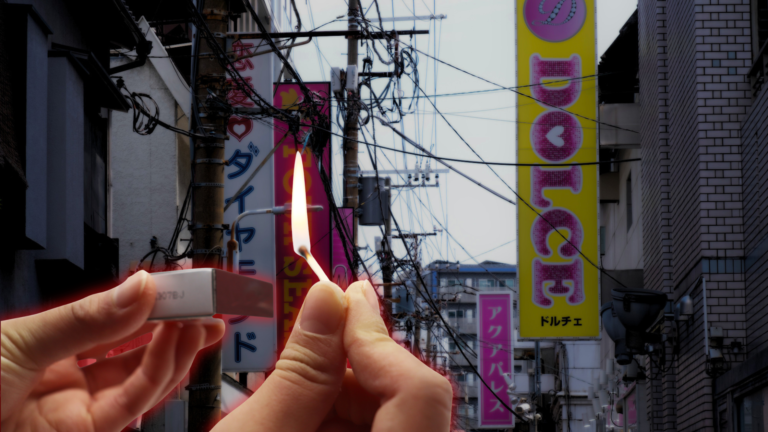
Shima didn’t stew in her resentment. Instead, she lit a match that has soapland owners quaking in their boots.