
Remember when rice disappeared from Japan’s store shelves in 2024? Did you switch to cheaper bags of the government’s emergency stockpiled rice, or splurge on the more expensive bags of that season’s harvest?
The Reiwa Rice Crisis (令和の米騒動, Reiwa no komesōdō) is now officially over, or at least the shortage is. Japan had a record 2.43 million tons of privately held rice inventory as of June 30, signaling that the supply crunch has given way to an abundance of rice.
So what does that mean for farmers and consumers?
Neither is getting their money back.
How the rice crisis went from bad to worse
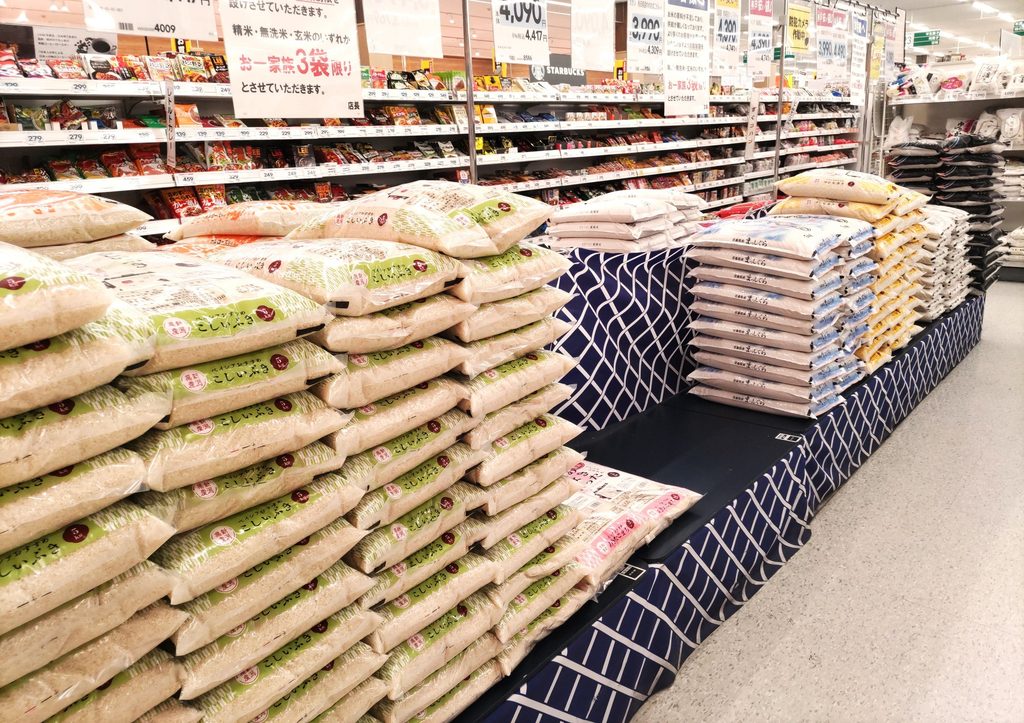
Japan’s rice shortage was real, but it was amplified by panic buying, delays in government policy, and the subsequent rush to restock.
In 2023, weather conditions hurt the quality of Japan’s rice harvest, reducing the amount of rice that could be sold as a top-grade product. According to the agriculture ministry, only 59.6% of rice inspected as of the end of September 2023 was classified as Grade 1, the highest quality grade – the lowest proportion since 2004.
Niigata Prefecture’s prized Koshihikari, Japan’s best-known rice variety, was hit particularly hard. Only 3.6% of the Koshihikari inspected there qualified as Grade 1 rice, after the previous summer’s extreme heat left grains chalky and more prone to breaking during milling.
At the time, however, news reports blamed the shortage on foreign tourists amid a surge in post-pandemic inbound tourism. But the government’s own data showed tourists ate well under 0.5% of Japan’s annual rice supply. The real cause was the decline in the quality of the harvest.
Then came the panic.
By the summer of 2024, private rice inventories had fallen to a record-low 1.56 million tons. Around the same time, consumers began stockpiling rice following Japan’s first-ever Nankai Trough advisory, issued after an earthquake struck off the Hyūga-nada coast. The advisory warned that the possibility of a major earthquake along the Nankai Trough had increased.
Rice shelves emptied within days.
The agriculture ministry initially resisted releasing the government’s emergency stockpiles, arguing that the new harvest was about to arrive. But the new crop did little to immediately calm the market. Prices continued climbing, eventually exceeding ¥4,000 (about US$25) for a 5-kilogram bag by March 2025.
Public criticism of the government’s handling of the rice crisis increased when then-agriculture minister Etō Taku bragged that his supporters gift him so much rice that he’s never had to buy it himself, adding that there’s enough in his pantry to sell. Etō resigned and was replaced by Koizumi Shinjirō, a Liberal Democratic Party lawmaker who is now the Defense Minister.
The agriculture ministry began auctioning off its emergency stockpile in March 2025, but only about 3% of the first tranche had reached collectors by the end of that month. In May, Koizumi switched from auctions to negotiated contracts, and cheap reserve rice finally reached shelves. Ultimately, 590,000 tons of stockpiled rice were released through March 2026.
Post-crisis, farmers are paid less
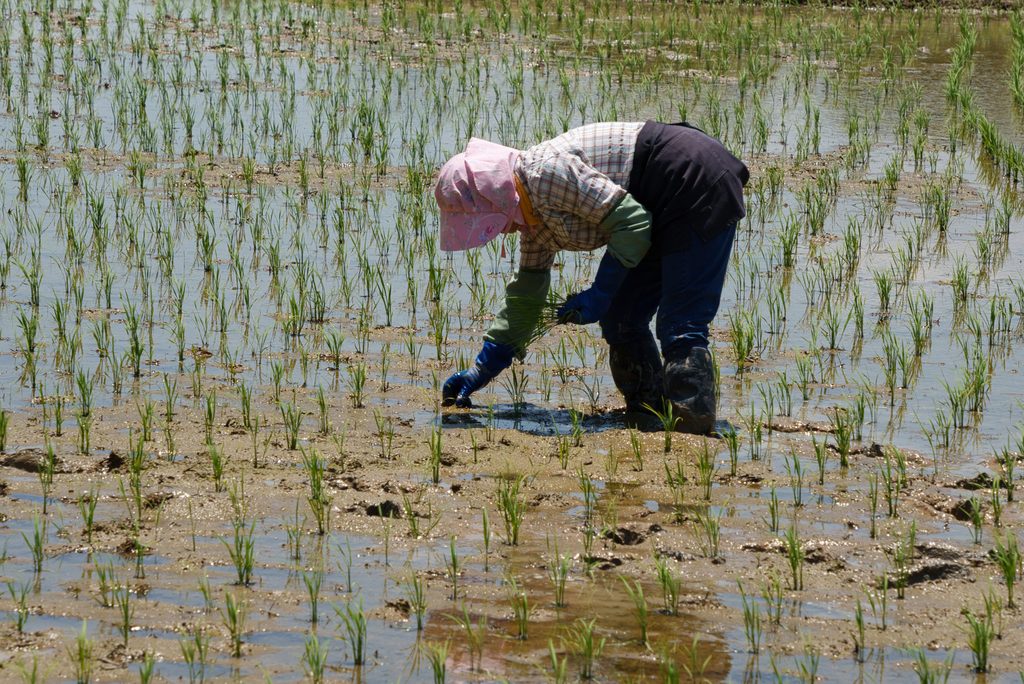
Now, however, the market has swung in the opposite direction.
On August 18, JA Zen-Noh Niigata set the 2026 advance payment for standard Koshihikari at ¥18,500 (about $116) per 60 kilograms of brown rice, nearly 40% below the price for the 2025 crop.
A JA Niigata official told Kyodo that the cooperative had “aimed for the cost benchmark as far as possible while setting a price consumers would also accept.”
For farmers, that compromise is painful.
“With fertilizer and materials going up year after year, this figure feels very low from a producer’s point of view,” said Tsurumaki Jun’ichi, 76, a rice farmer in Sanjō, Niigata.
The concern isn’t simply that rice prices have fallen. Production costs have continued to rise.
In April, the Rice Stable Supply Support Organization (米穀安定供給確保支援機構, Beikoku Antei Kyōkyū Kakuho Shien Kikō), an organization certified by the agriculture minister to produce cost indicators under the Food System Act, published a production-stage cost indicator of ¥20,535 (about $129) per 60 kilograms of brown rice, up 3.4% from the previous year.
The figure, however, isn’t a guaranteed price.
Under the system, the indicator creates only an expectation that the parties negotiate in good faith (努力義務, doryoku gimu). It doesn’t guarantee farmers a minimum price, nor does it impose penalties when the benchmark is not met.
For some farmers, the gap between what it costs to produce rice and what they can sell it for is becoming existential. At Nittano Farm in Isumi, Chiba, president Tōhei Shōichi says a private collector paid ¥35,000 (about $220) per 60 kilograms last year and has told him to expect around ¥15,000 (about $94) this year, less than half.
“If the costs come out negative, it’s better not to harvest,” Tōhei said.
He is harvesting anyway. He needs the income to make payroll.
The squeeze comes at a time when Japan’s rice farmers are already disappearing.
Farmers were leaving the industry long before this latest price cut. The agriculture ministry’s latest structural survey put the number of core agricultural workers at 986,600 in 2026, down about 4.8% in a year and roughly half the 2.05 million recorded in 2010.
Those who remain are also getting older. Their average age is 67.7, while 56.5% are 70 or older. Only 3.8% are in their 30s, and just 1.2% are 29 or younger.
The glut is the panic’s echo, not a bumper harvest
Japan’s record rice inventory isn’t simply the result of farmers suddenly producing too much rice. It is, in large part, the delayed echo of the panic.
MAFF reported private rice inventory at a record 2.43 million tons as of June 30, 2026, well above the industry’s “appropriate” range of 1.8 million to 2.0 million tons. The figure was also higher than the agriculture ministry’s own March forecast of between 2.21 million and 2.34 million tons.
The ministry now expects private inventory to reach as much as 2.81 million tons by June 2027.
One indication of how quickly the market has become saturated comes from JA Fukui, which says roughly a third of its 2025-crop inventory is still sitting in warehouses. Much of that rice has already been sold, but buyers have been unable to take delivery because the market is simply too full.
The problem, then, isn’t just supply. It’s demand.
Question: do you like UJ's independent coverage of Japan? Our writers are supported by our members. Join Unseen Japan Insider to get bonus content every week, an ad-free website, and access to our large and growing Insider archive.If you love what we do, help us pay our writers to do more of it by joining Insider. You'll get bonus content every week, an ad-free website, and access to our large and growing Insider archive.
So who actually made money?
The obvious question is: if consumers paid so much more for rice, and farmers are now being offered so much less, where did the money go?
The answer is more complicated than simply blaming the middlemen.
In a normal year, almost nobody in the rice supply chain makes much money. Then came 2025.
Kitoku Shinryō, one of Japan’s largest listed rice wholesalers, closed 2025 with revenue of ¥176.12 billion (about $1.1 billion), up 48% from the previous year. Operating profit jumped to ¥8.03 billion (about $50 million), while ordinary profit reached ¥8.17 billion (about $51 million). Net profit hit a record ¥5.52 billion (about $35 million), more than three times the previous year.
The company expects that windfall to fade. Its 2026 guidance calls for profits to roughly halve.
In other words, the wholesale sector did capture an extraordinary gain during the crisis. But that doesn’t necessarily mean it’s found a permanently profitable business model.
The same is true of the government’s stockpiled rice data.
As of March 30, 2025, the agriculture ministry found that collectors were buying stockpiled rice for ¥21,352 (about $134) per 60 kilograms and selling it for ¥22,402 (about $141), a ¥1,050 (about $6.60) markup. Wholesalers were selling to retailers for ¥34,114 (about $214) and to restaurants for ¥32,920 (about $207), implying markups of ¥11,712 (about $73) and ¥10,518 (about $66), respectively.
The wholesale tier had an extraordinary year by buying rice at one price and selling it into a suddenly expensive market, and is now facing the other side of that trade. It is also the tier sitting on a substantial amount of rice purchased when prices were much higher than the market is willing to pay today.
Consumers are getting relief, but not a refund
For consumers, the good news is that rice prices are finally falling.
MAFF’s weekly survey of roughly 1,000 supermarkets put the average price of a 5-kilogram bag at ¥3,198 (about $20) for the week of July 27 to August 2, down ¥113 (about 70 cents) from the previous week and falling for the sixth consecutive week.
Branded rice averaged ¥3,230 (about $20), accounting for about 81% of sales volume, while blended rice averaged ¥3,068 (about $19).
The trajectory tells the story.
Rice that cost roughly ¥2,000 (about $12.50) per 5 kilograms in 2022 climbed to ¥4,285 (about $27) in May 2025 and peaked at around ¥4,416 (about $28) around the turn of 2026. At ¥3,198 today, it is down roughly 28% from the peak.
But it is still about 60% more expensive than before the crisis.
Analysts expect prices to fall further with the new crop. Komaeda Daisuke of the NLI Research Institute forecasts a price of around ¥3,000 (about $19) per 5 kilograms, roughly 30% to 40% below the 2025 level. Origasa Shunsuke of the Distribution Economics Institute puts the likely range at ¥3,000 to ¥3,200 (about $19 to $20).
That is genuine relief for households. But it is hardly a return to the rice prices consumers remember.
And despite rice’s dramatic movement, the effect on overall inflation is surprisingly small. In the national consumer price index for June 2026, the rice category fell 8.7% from a year earlier but shaved just 0.10 points off the headline figure. Over the same month, food excluding fresh items rose 3.1% and added 0.78 points. Rice is getting cheaper, but the rest of the grocery bill isn’t.
The government now has a new rice problem
This leaves Tokyo with an awkward question: what should it do with all that rice?
Japan released a total of 590,000 tons of reserve rice during 2025 and budgeted to buy back 150,000 tons in fiscal 2026.
The proposed buyback is controversial.
Nihon Nōgyō Shimbun reported that agriculture minister Suzuki Norikazu personally asked Prime Minister Takaichi Sanae to authorize the purchase in mid-June, but was refused. One government source said Takaichi had formed a strong impression that the measure was simply an attempt to hold rice prices up, an uncomfortable proposition for a government whose signature cost-of-living policies are designed to reduce the burden on consumers.
Consumers aren’t necessarily rooting for the farmers
Perhaps the most surprising part of the story is the public reaction. Across hundreds of Yahoo! News Japan comments on articles about the falling rice market, the dominant sentiment isn’t sympathy for farmers.
Many commenters instead argue that wholesalers and JA cooperatives hoarded rice during the shortage and are now being forced to absorb losses. Straightforward expressions of sympathy for farmers make up only a small fraction of the engagement in the highest-ranked comments. Even comments supporting government intervention tend to attract substantial negative reactions.
That response reflects how quickly the public’s perspective has changed. During the shortage, consumers were angry about paying ¥4,000 or more for a bag of rice.
Now that prices are falling, many don’t see the farmers’ problem as their problem.
Keep reading



Sources
新潟のJA新米概算金、4割安 前年比、在庫増背景に. 共同通信
記録的コメ余りで新米4割安 新潟のコスト割れ、離農進む可能性. 日本経済新聞
コメ民間在庫最大の243万トン 適正量大幅超過、価格下落加速も. 共同通信
農家「早くやめた方が勝ち」新米の”買い取り価格”が急落 JA福井県コシヒカリ内金は60キロ1万7000円 「令和の米騒動」が生んだ「コメ余り」. FNNプライムオンライン
コメ価格下落 農家からは「収穫しない方がいい」の声も 専門家は今年の新米価格「5kg3000円前後」と予想. FNNプライムオンライン (archived 2026-07-24)
コメ5キロ3198円 6週連続下落―農水省. 時事通信
米のコスト指標(令和8年4月). 公益社団法人 米穀安定供給確保支援機構
米のコスト指標. 農林水産省
米の生産費高止まり 60kg1万5814円 24年産米. JAcom 農業協同組合新聞
2020年基準 消費者物価指数 全国 2026年(令和8年)6月分. 総務省統計局
[ニュース三面鏡]備蓄米買い戻しに道筋 需給緩和の“後始末”重く. 日本農業新聞
2026年の農業従事者100万人割れ:平均年齢は67.7歳―農水省調査. nippon.com
当たらぬ農水省コメ需要予測、25年産は28万トン下振れ. 日本経済新聞
「5キロ2600円台」の衝撃…“令和の米騒動”から一転、コメ暴落で農家が悲鳴「従業員の給料は僕の貯金から」. 集英社オンライン
「コメ価格が暴落する」は本当か? 米価下落シナリオを検証. NOMURA ウェルスタイル
2026年産新米の価格、3,000円割れの見通しも。いつ頃から安くなる?. MONEYIZM
23年産の1等米比率、20年間で最低 猛暑で白濁増える. 日本経済新聞
米の民間在庫156万t 過去最小 6月末 需要実績増 農水省. JAcom 農業協同組合新聞
「令和のコメ騒動」原因はどこに? 需給見通しに誤算、尾を引く. 日本経済新聞
江藤拓農相が辞表提出、コメ発言で事実上の更迭 後任に小泉進次郎氏. 日本経済新聞
米の消費拡大について(令和8年5月). 農林水産省
コスト調査の結果(米)(別冊). 農林水産省
[ニッポンの米]備蓄米販売でJA利益なし 必要経費だけ上乗せ 農水省調査で裏付け. 日本農業新聞 (archived 2026-01-04)Original (now unavailable): https://www.agrinews.co.jp/news/index/301472
米価高騰を背景に純利益55億円で過去最高益 木徳神糧25年12月期決算. 事業構想オンライン
備蓄米買い戻し来週表明へ 作柄踏まえ、量や時期示す. 日本農業新聞
鈴木農相 8月25日記者会見「26年産米の作柄で31日に公表、備蓄米買い戻しの是非を適切に判断したい」. AGRI JOURNAL