
Japan is experiencing a booming business. But not the good kind.
As we’ve reported elsewhere, the country’s population is rapidly aging. This has contributed to a series of problems, such as a rapid decrease in population and an increase in adults who are forced to become virtual “shut-ins” to care for their parents.
Looming in Japan’s near future is what one might call “the 2030 problem.” By the year 2030, one-third of Japan’s population will be senior citizens. The implications of this are stark and have prompted the government to tackle the issue on multiple fronts.
But the aging population has also resulted in a new problem: kodokushi (孤独死), or dying alone.
No official definition

People who either never had kids, or who have lost contact with them, or whose family have simply moved to other areas of Japan, increasingly find themselves isolated in their old age. Sometimes, they pass away silently in their own homes. They usually aren’t found for days or even weeks afterwards, when a telltale sign – the piling up of mail, communication from concerned relatives, or the telltale smell of rot in an apartment building – prompts neighbors to call the authorities.
According to Asahi Shimbun, as of 2018, kodokushi had no official definition. When I wrote this piece originally in 2018, the number of people who have died by themselves wasn’t officially tracked by the government. A study done around that time by the Nissei Fundamentals Research Foundation put the number at 30,000 a year.
Since then, Japan’s National Police Agency has started tracking deaths – and the numbers have gotten worse. The NPA put the number of deaths in 2024 at 76,020. 58,000 of those were over age 65.
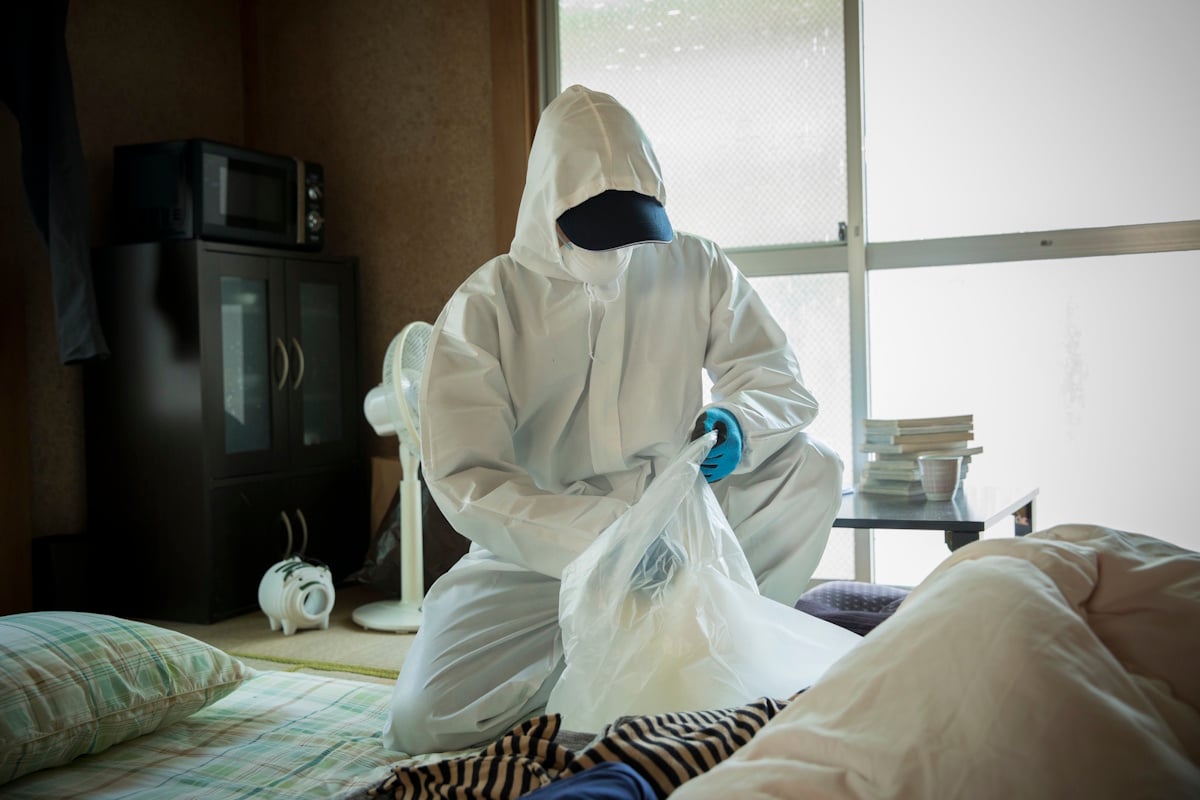
The growth can be seen in the growth in the estate liquidation (遺品整理; ihin seiri) industry. Asahi followed one such company, Yūshin, in the city of Chikushino in Fukuoka Prefecture, as it entered one such residence:
ドアを開けると血のにおいが鼻をついた。合掌し、清めの塩をまいて入室すると、遺体があった浴槽に固まった黒い血だまりが広がっていた。台所には飲みかけの缶コーヒーと割れた湯飲み。においが近隣に広がらないよう窓とドアを閉め切った部屋での作業に、3人のスタッフはたちまち汗まみれになった。
福岡県内の2階建てアパート。1階の1Kの部屋で7月末、一人暮らしの60代男性が亡くなった。管理会社が遺体を見つけたのは1カ月後。警察による遺体の搬出後、遺品整理業者が部屋の片付けにあたった。
「だいぶきちょうめんな方みたいですね。それにおしゃれ」
When we opened the door, the smell of blood struck our noses. We clasped hands in prayer, sprinkled purifying salts and entered the room; a congealed, black pool of blood spread out from the body in the bathtub. In the kitchen, a can coffee ready to be drunk and a broken teacup. The three staff members doing cleanup were sweating in the room, as they’d shut the windows and doors to prevent the smell from spreading into the neighborhood.
It’s a second floor apartment building in the middle of Fukuoka Prefecture. A 60-year-old man passed away in a room in a 1K apartment** at the end of July. It was a month until the property management company found him. A cleaning company was hired after the police took out the body.
“He seemed like a methodical man. And stylish”[, said Honda Hidekazu, a Yūshin staff member].
(**NOTE: Apartments in Japan are noted by the number of bedrooms, followed by the extra rooms available. E.g., a “1LDK” is a one-room apartment with a living room, dining room, and kitchen. In this case, “1K” is an apartment with just a kitchen, a bathroom, and a single large room that usually doubles as a bedroom and a living room. See this diagram for an example room layout.)
Companies like Yūshin charge apartment owners and municipalities a fee for their services. Fees are offset by the recycling of the deceased’s furniture.
Yūshin had started as a car reclamation company, but demand for estate liquidation services began to increase in 2012, so the company shifted gears. The company increased its staff from three to 10.
Now, Yūshin handles around 20 cases a month. It gets requests, not just from Fukuoka, but from Tokyo and Osaka to boot. Yūshin says that its busiest time of year is the end of the year, when families who can’t contact relatives realize that something has happened.
"Noah [at Unseen Japan] put together an itinerary that didn’t lock us in and we could travel at our own pace. In Tokyo, he guided us personally on a walking tour. Overall, he made our Japan trip an experience not to forget." - Kate and Simon S., Australia

From career woman to living in filth: The role of neglect in dying alone
A few months ago, the magazine Shūkan Josei PRIME published its own take on the kodokushi phenomenon – one that shows that the issue cuts across social and class boundaries.
The editorial staff of Shūkan Josei points to an apartment building in Tokyo’s Shinjuku district called “The Building of Lonely Deaths” (孤独死のアパート). Residents live in squalor, paying around USD $300 to $500 for rent, depending on how long they’ve lived there. Almost everyone in the building receives some sort of public assistance.
And, at least once a year, someone in the building dies. The manager keeps tabs on the water meter in apartments; if they’ve stopped, he knows he likely has a case of kodokushi on his hands.
Such lonely deaths aren’t reserved for the down-and-out, however. Satō-san, a woman in her 70s who lived in a 3LDK “mansion” (condo) in Saitama Prefecture, collapsed on the street one day and was carted to the hospital for treatment.
A former legislative secretary with a college education who had done well for herself, Satō-san, suffering from diabetes, hadn’t been taking care of either herself or her surroundings. Shūkan Josei describes her apartment as “piled so high with garbage there was no place to walk”.
Satō-san was an impulse shopper who would order goods from TV infomercials and simply toss them aside when they arrived. Health-wise, she ate whatever she wanted; with the loan on her apartment paid off and a healthy pension payout, she was able to enjoy junk food at a local restaurant every day, neglectful of the impact it was having on her health.
Buried in garbage
Yamashita Miyuki, a home health nurse who runs the organization Saezuri no Kai, reports that this level of self-neglect is common in cases of kodokushi:
「いつか、佐藤さんが家の中で倒れて、孤独死しているんじゃないかと気になって仕方ないんです。私たち医療者が訪問できるのは、数日おきなので、毎日様子を見に行けるわけじゃない。一番の心配は、偏った食生活による急死ですね。そのマンションのすぐ近くにファミレスがあるんですが、佐藤さんは、毎朝、ファミレスでとんかつ、ハンバーグを食べているみたいなんです。そんな不摂生な生活をやめようとしない。それで血糖値が一気に跳ね上がるんです。いつ高血糖の発作が起こって、意識障害で倒れていてもおかしくないというくらい、危険な状態になっているんです」
I’ve worried fruitlessly that Satō-san [the 70-year-old woman] would collapse and die alone in her apartment. Since we health care workers can only visit once every few days, there’s no way for us to see these conditions every day. What I worry about most is a quick death brought on by unhealthy eating habits. There’s a family restaurant near Satō-san’s apartment, and every morning, she’d eat tonkatsu [fried pork] and hamburger there. She never tried to stop eating in this un-nutritional way, so her blood sugar shot up. This led to a dangerous situation where it wouldn’t be at all unlikely if she lost consciousness and fell as a result of a diabetic seizure.
Satō-san’s case isn’t even the most extreme. Another woman in Chiba Prefecture was rescued from near death after being pulled from a garbage heap in her own home. Her legs had become necrotic and had left her unable to walk.
In cases such as Satō-san’s, these conditions of squalor have some sort of mental health condition as their root cause. Other cases can be more complex. As Asahi Shimbun reported recently, some elderly patients with Alzheimer’s end up alone when they’re unable to separate from their pets, who generally aren’t accepted at adult care facilities. This leaves such people stranded and struggling in filth as they become less able to tend to the animals under their care.
It’s not just the elderly dying alone, either. A 2024 report shows that, of the 20,000 people who died alone in the first three months of the year, over 2% ranged in age from their teens to their 30s.
Solutions are few and far between
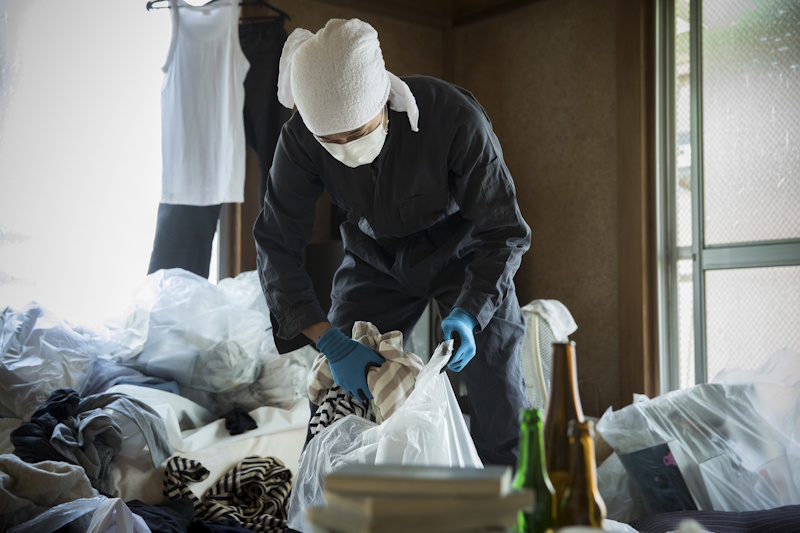
Satō-san narrowly avoided death on at least two separate occasions. While there may be hope for her, Yamashita Miyuki says the problem is tough to crack. People living in conditions like Satō-san do so because they’ve “given up” and are “waiting for death.” In these cases, it’s up to the person themselves to decide they want to make a change.
But people dying in their own homes is not just a societal inconvenience. Apartments like Satō-san’s, with garbage piled high, are susceptible to catching fire, which can take down an entire apartment building.

Want more news and views from Japan? Donate $5/month ($60 one-time donation) to the Unseen Japan Journalism Fund to join Unseen Japan Insider. You'll get our Insider newsletter with more news and deep dives, a chance to get your burning Japan questions answered, and a voice in our future editorial direction.
The site e-hinseiri.com puts forward a few suggestions of its own. People die alone, say the site’s author, because no one is paying attention to them, and no one is involved in their lives. The site urges neighbors to check in on elderly people living alone, and for family members to check in on their loved ones daily.
The site also encourages neighbors to pay attention to the conditions of elderly residents they see in the street or in the hallways. Is their clothing clean? Do they look like they’ve bathed and are caring for themselves?
Between 2018 and 2026, Japan’s government has done its part to improve awareness. and address the kodokushi problem. They include creating a Minister of Loneliness and investing $30 billion in incentives to improve community support in preventing loneliness. Local governments also run awareness campaigns in May, which is now officially Loneliness Prevention Month.
Private groups are also addressing the loneliness problem head-on. I wrote in 2025 about Ending Center, a nonprofit that handles cremation arrangements and also hosts book clubs and other social events for seniors ages 60 to 80.
It’s an uphill battle, however. In 2020, the number of single-person households hit an all-time high of 38%. It’s estimated that it could rise to 44% by 2050. With so many people in Japan choosing to remain single forever, forging community bonds to prevent social isolation will be more important than ever.
Japan says it’s dedicated to decontaminating the land spoiled by the Fukushima nuclear accident. But most residents still haven’t returned.
The new levy is intended to secure the country’s future – but some are calling for the agency that instituted it to be dissolved.
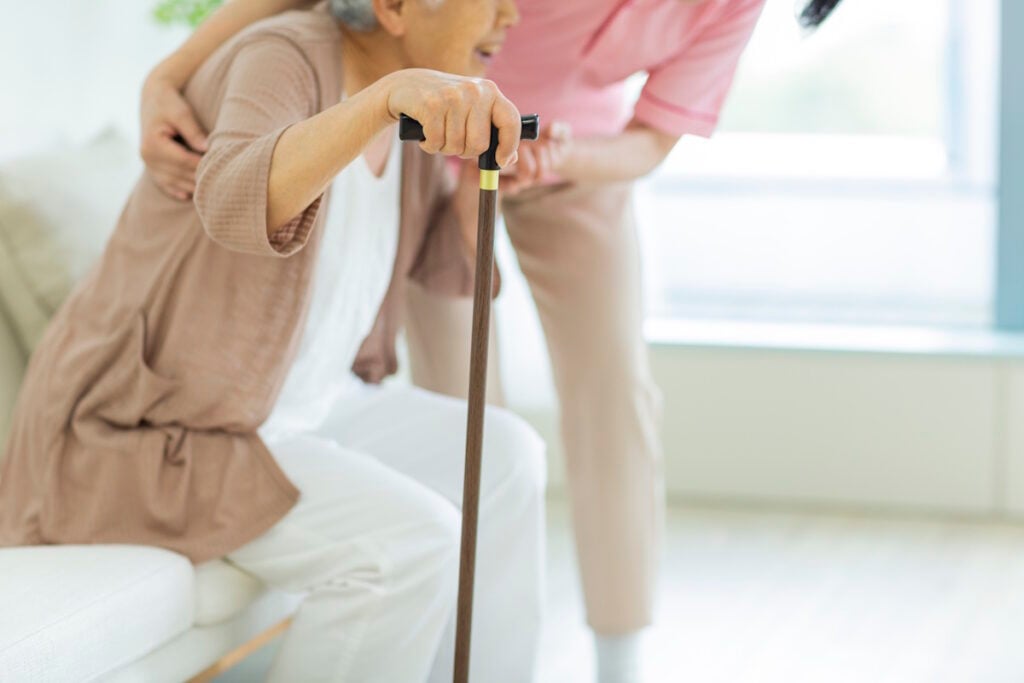
With a dwindling workforce, Japan is increasingly dependent on foreign workers to care for its rapidly aging population.
Sources
血だまりと飲みかけのコーヒー 遺品整理、日常の孤独死. Asahi Shimbun (archive link)
ゴミの中で孤独死寸前、元会社員が陥る危機. Toyo Keizai
介護保険、ペットに悩む 認知症で世話できず/入院を拒否 対象外、対策手探り. Asahi Shimbun
孤独死を防ぐにはどうしたら?遺品整理 (archive link)
Over 76,000 people die alone in Japan in 2024. Xinhua News Agency
65歳以上の「孤独死」は5.8万人、24年で警察庁が初集計. Nikkei
孤独・孤立対策推進法 (2024年4月施行). Japan Cabinet Office

