
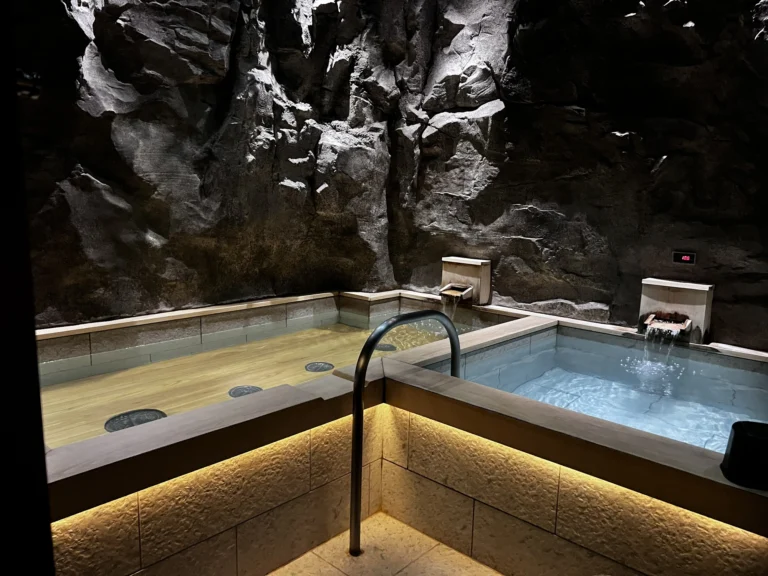
For many travelers, Japan’s hot springs are one of the country’s biggest draws. But there are two common frustrations: many public baths ban people with tattoos, and mixed-gender bathing is almost impossible to find in cities.
However, a new spot in Tokyo is addressing both problems at once by offering something new: a completely private hot spring experience where couples, families, and groups of friends can enjoy a real onsen together.
KUDOCHI Onsen is creating a new style of hot spring
KUDOCHI Onsen Roppongi opened on November 1, 2024. It’s the hot-spring-focused sister facility to the original KUDOCHI sauna Roppongi, which opened in a separate building in May 2023.
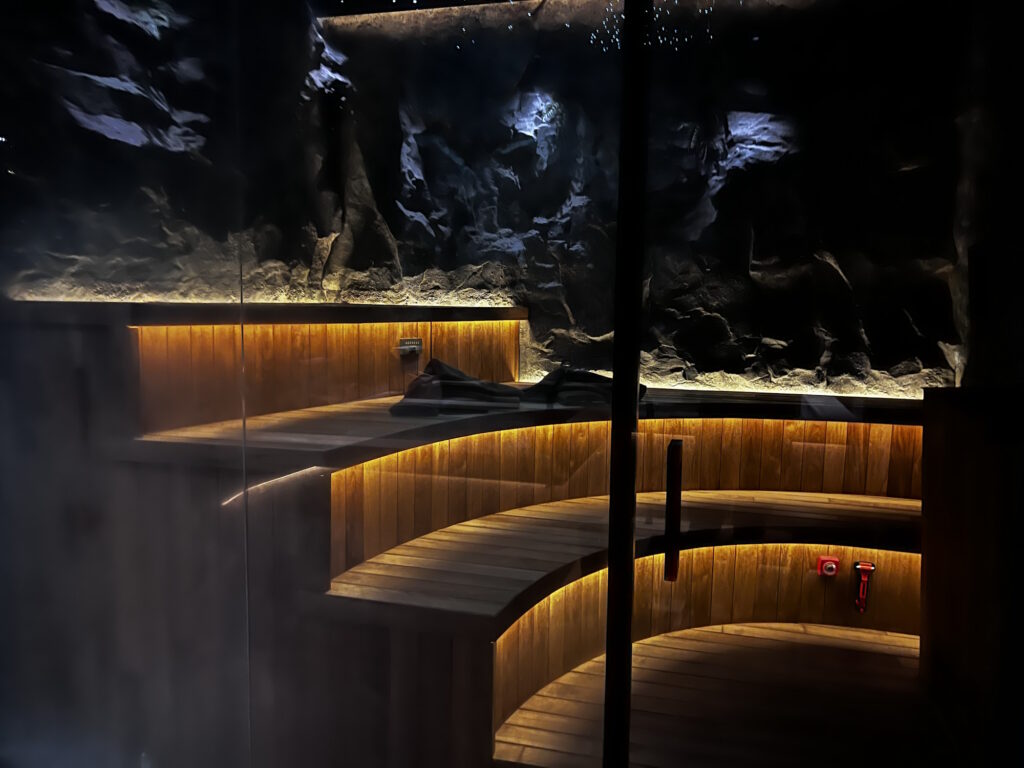
Unlike a traditional bathhouse, KUDOCHI operates daily, 24 hours a day. Everything revolves around three fully private, cave-themed rooms: SonDoong, Cenote, and Altamira. The entire process takes place without human contact: the main desk is unstaffed, and you enter the room using the QR code on the store’s app.
Privacy and round-the-clock opening times aren’t the only selling points, either. This onsen is tattoo-friendly, so no worries about being turned away just because you like ink. Plus, despite being smack in the middle of the city, it uses genuine hot spring water in its baths.
Normally, if you want to soak in a hot spring, you have to drive out to a mountainous area. So, what to do when you’re in the city looking for hot spring comfort? Maybe you’re a traveler on a tight schedule and don’t have time to take such a long detour. Or maybe you live in the city and are too exhausted from the work week to plan a mountain visit just for a bath.
That’s where KUDOCHI offers a solution.
Carried water: if you can’t go to the mountains, bring the mountains to you
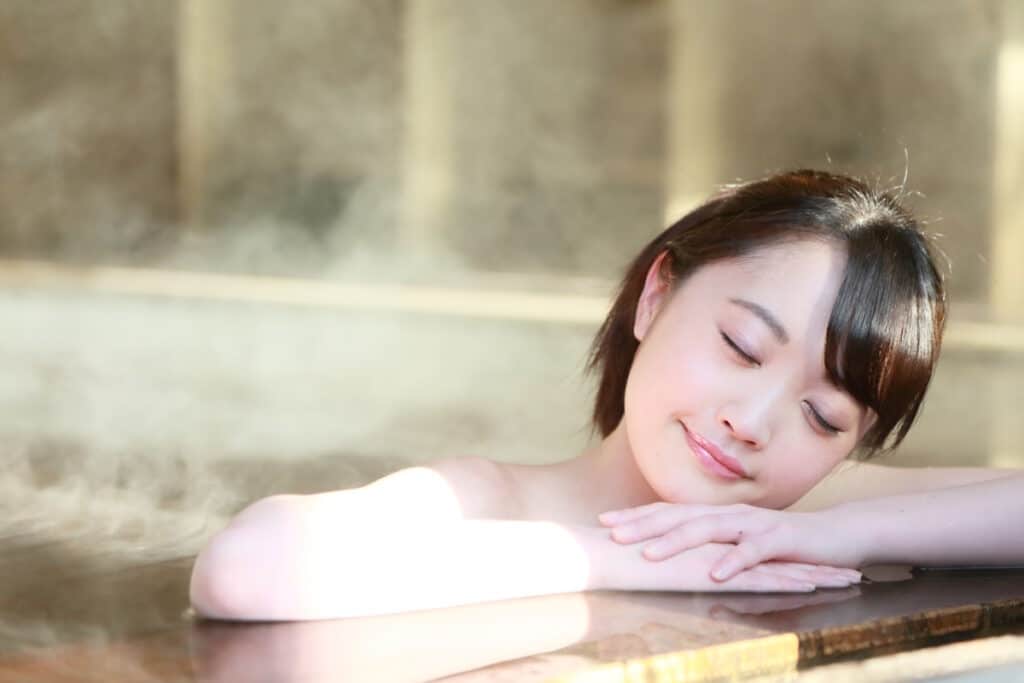
KUDOCHI uses a system known as hakobi-yu (運び湯), or “carried water.” Sealed tanker trucks transport certified natural hot spring water from famous hot spring areas across Japan straight to a more conveniently located bath house. As a bonus, KUDOCHI Onsen changes its featured hot spring source seasonally. Some previous carried water locations have included Nasu-Shiobara and Bato.
This is not a new concept. Hakobi-yu has been common for years at care homes, ryokan, and other places that want to offer the experience of soaking in a famous spring without shuttling all the way to the source.
It’s very different from jinko onsen (人工温泉), or “artificial hot springs.” Artificial hot springs simply add mineral compounds to heated tap water to imitate natural spring water.
This is an important distinction for two reasons. For one, Japanese people care about where the water actually comes from. For another, Japan’s Hot Spring Law (温泉法, Onsen-hō) legally reserves the term “onsen” for water that either emerges at 25 degrees Celsius or warmer or contains specific naturally occurring minerals above regulated thresholds.
Properly transported hakobi-yu allows KUDOCHI to call itself an onsen because the water itself remains unchanged during transport. Artificial mineral baths, by contrast, wouldn’t qualify.
How is it KUDOCHI can be co-ed? The perks of privacy
KUDOCHI’s biggest appeal is its privacy. That gives it a lot of leeway. Whereas most public baths in Tokyo are almost always separated into men’s and women’s areas and local regulations restrict mixed bathing, private baths fall under different legal rules. To be exact, they’re operated under Japan’s Hotel Business Law rather than the Public Bath Law.
That legal distinction allows places like KUDOCHI to let couples, families, or other groups share the same bath in complete privacy.
This privacy comes with a lot of other perks. Guests can adjust sound, lighting, and temperature to their preferences. Each bath also comes with a chilled bath (in case you get overheated) and a self-löyly (セルフロウリュ) sauna room, where guests can pour water on heated stones to create steam. That’s not something you get often in public saunas.
And, as mentioned before, it’s an ideal option for people with tattoos. Many traditional onsen and sento still prohibit visible tattoos because of their historical association with organized crime. While attitudes have gradually become more relaxed (especially toward foreign tourists), finding a tattoo-friendly bath can still be difficult.
Private sauna room boom
KUDOCHI is riding a much larger trend, with privacy in general and particularly with its self-service saunas. Private “koshitsu sauna” facilities exploded in popularity ever since the COVID-19 pandemic. For obvious reasons, many bathers sought quieter, cleaner, and less crowded alternatives to traditional public facilities.
Generally speaking, prices for koshitsu sauna start around ¥5,000 per hour (USD $30) on the lower end. But when you look at invitation-only memberships, those prices can shoot up to as much as ¥2,000,000 (USD $12,000). For a quick comparison: neighborhood sento are often less than ¥1,000 (USD $6).
Around a quarter of Japanese sauna users have now tried private saunas, although enthusiasts often debate whether the higher prices are actually worth it.
Other onsen in the big city
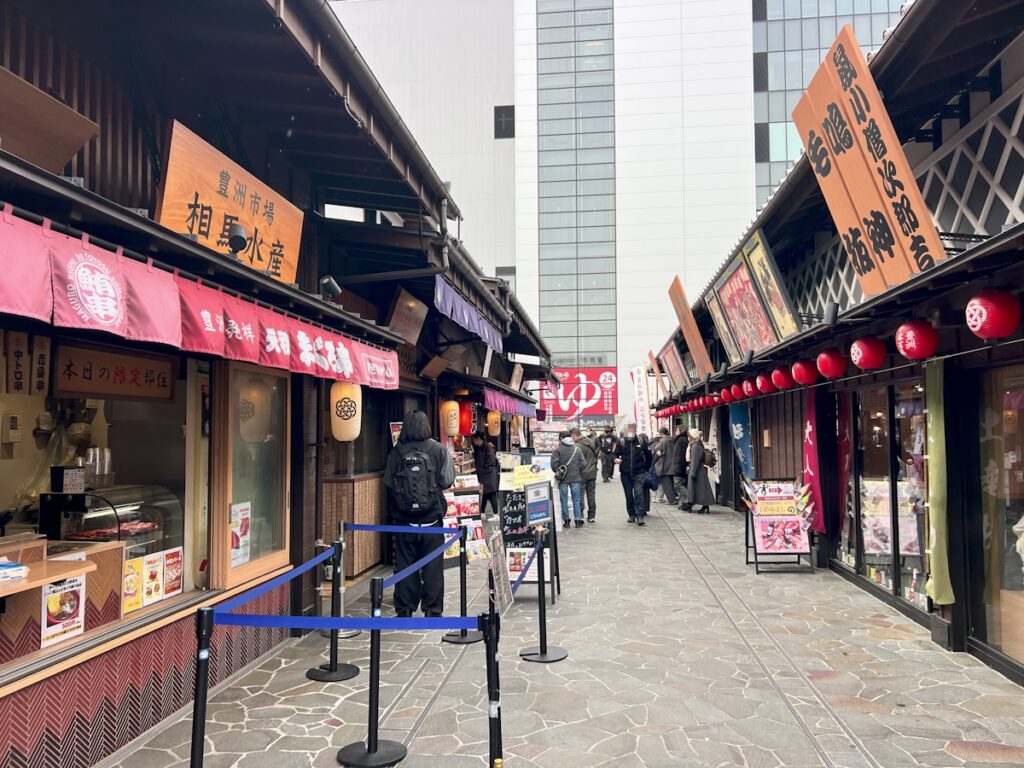
KUDOCHI’s use of transported hot spring water also isn’t entirely unique. Tokyo Toyosu Manyō Club (東京豊洲 万葉倶楽部) has been trucking in real hot spring water from Hakone and Yugawara since opening beside Toyosu Market in Senkyaku Banrai in February 2024. It’s also open 24/7, and it was the Manyō Club group’s first location inside Tokyo’s 23 wards.
Manyō no Yu Machida (万葉の湯 町田) has a similar model, also shipping water from Yugawara. But while those spots offer hakobi-yu, they’re on the opposite side of the spectrum in terms of the experience. They’re large, gender-separated public baths at day-spa prices. KUDOCHI, meanwhile, offers a boutique, reservation-only experience built around privacy, mixed-gender bathing, and personal space.
The brand has also expanded beyond Tokyo with KUDOCHI sauna Osaka Shinsaibashi, a seven-room private sauna facility. While that location emphasizes private sauna experiences rather than hakobi-yu, it shows just how quickly Japan’s private wellness market continues to grow.
How to visit KUDOCHI
For travelers, couples, friend groups, and especially anyone with tattoos, KUDOCHI offers something that is surprisingly hard to find in Japan: the chance to enjoy a genuine onsen in the city, without worrying about tattoo restrictions or being separated by gender. It comes at a premium price, but for many visitors, the privacy and flexibility may be worth paying for.
KUDOCHI Onsen Roppongi Address: Kobayashi Building B1F, 7-10-3 Roppongi, Minato City, Tokyo 106-0032
Pricing: Altamira (up to 6 people) – ¥35,000 for 120 minutes, ¥49,000 for five hours; SonDoong and Cenote (up to 8 people) – ¥39,000 for 120 minutes, ¥55,000 for five hours.
KUDOCHI Onsen website (English). Reservations are required online. The app is required for entrance.
Keep reading

Sources
KUDOCHI onsen 六本木温泉店(全室温泉付き完全個室サウナ・公式) KUDOCHI sauna
六本木で温泉×サウナ!「KUDOCHI onsen 六本木温泉店」が11月1日オープン ご当地サウナ委員会
全室温泉付き! KUDOCHI onsen 六本木温泉店が誕生 SAUNA BROS.WEB
急増する「個室サウナ」 高い料金設定と施設の当たり外れにサウナーたちの本音 マネーポストWEB
温泉宅配|「運び湯」とは ヒューマンウェア(温泉宅配)
天然温泉とは?人工温泉との違い 基礎知識や見分け方を解説 いきいき夢ロマン
サウナの男女混浴は法律でどうなってる?公衆浴場法・条例を調べてみた 株式会社秀建
東京・湯河原温泉 万葉の湯 町田(湯処・公式。「毎日、タンクローリーで運ぶ源泉」で湯河原の源泉を提供) 万葉倶楽部
東京豊洲 万葉倶楽部(2024年2月開業・24時間、箱根/湯河原の名湯を運び湯で提供、入館¥3,850) 東京近郊日帰り温泉サーチ