
Japan gets a lot of attention for its annual fertility festivals, such as the Kanamara Matsuri (Festival of the Steel Phallus – ouch). A lesser-known phenomenon, though, is the 秘宝館 (hihōkan), or roadside sex museums.
Unfortunately, there’s a reason you don’t hear much about them. Outside of two remaining installations, most have died off. Fortunately, there’s still a spot in Tokyo that’s dedicated to keeping this collision between sex and kitsch alive in the 21st century.
What is a roadside sex museum?
Literally, hihōkan means “hidden treasure hall.” It’s a euphemism, like how “delivery health” refers to hotel sex. In reality, hihōkan are museums filled with erotica and other offbeat art. Once upon a time, these buildings clustered in onsen towns around the country and were pitched as adults-only sightseeing spots on group tours.
How did these unique attractions come into existence? The first, 男女神社秘宝館 (Danjo Jinja Hihōkan, The Male/Female Shrine of Hidden Treasures), was born in Tokushima Prefecture in April 1969. But it was the 元祖国際秘宝館 (Ganso Kokusai Hihōkan, “Original International Hihōkan”) near Ise, Mie Prefecture that was the first to use life-size figures and dioramas. Reportedly, the museum was the pet project of a local pearl-industry businessman inspired by 1950s American roadside attractions.
At its peak, there were 20 hihōkan operating nationwide. The facilities spread from Sapporo down to Kyushu’s Beppu, with clusters in Atami, Ureshino, and other onsen-rich areas.
The boom was driven largely by corporate travel. During Japan’s postwar boom between the 1950s and 1970s, firms would routinely send busloads of employees on morale-boosting trips to onsen towns. The largely male and besotted employees needed something to do between dipping in water and eating their banquet dinners. An adults-only “secret treasure hall” was the perfect diversion.
How they were built (and what was inside)
The hihōkan stood out for two reasons. One was the sexual, erotic nature of the exhibits. The other was the nature of the exhibits themselves. They made heavy use of wax figures, animatronics, and interactive exhibits, such as push-button mechanical sex scenes, mirror mazes, trick-mirror rooms, and peep boxes.
The dioramas looked like something out of a B-movie seen while on a drug trip. Mannequin scenes of sexual scenarios and sexualized folklore imagery (e.g., mermaids) dominated exhibit floors.
Some ran “health and hygiene” corners warning visitors of the dangers of sexually transmitted diseases. Most eventually dropped these in favor of pure entertainment. Other entertainment options included erotic film screenings as well as traditional shunga (春画) erotic art and the so-called “48 techniques” (四十八手; shijūhachi-te), a sexualized version of a term borrowed from sumo dating back to the Edo era that depicts different sexual positions. (“48” isn’t an exact number here; it just means “a lot.”)
You might be wondering: who would (or could) make interesting, sexualized life-like mannequin figures? The answer: film experts! Most of the figures in these exhibits were engineered by Tōkyō Sōken, founded by ex-Tōhō film-studio staff. The studio blended wax and fiberglass mannequins, built using techniques they learned making movies.
What happened to the hihōkan?
The hihōkan’s fate was tied to the Japanese economy. After Japan’s bubble burst in the 1990s, companies cut the corporate trip to save money. Domestic travel shifted to focusing on individuals and families. Large onsen fell out of favor, with hidden hot springs (秘湯, hitō) now booming in popularity.
Faced with the bust, many ryokan went out of business. They took the hihōkan with them. The museums’ exhibits and animatronics displays cost ¥3–5 million ($19K-30K) per figure to maintain. Without a steady supply of tourists, most roadside sex museums couldn’t keep these displays in working order.
Then there were the obscenity crackdowns. In February 2006, a visitor to the Tōhoku Safari Park (東北サファリパーク) in Nihonmatsu, Fukushima Prefecture complained to authorities that “there are some truly awful photos” in the museum. Prefectural police raided and deemed some of the exhibits in violation of Penal Code Article 175, the obscenity statute.
The cops arrested the park’s president, Kumakubo Norio (熊久保勅夫), plus two employees, and seized 70 photographs. They were later released, and the park carried on, but only after shuttering its roadside sex museum for good.
Where you can experience a hihōkan today
The last authentic hihōkan standing in its original form is in the onsen town of Atami. The Atami Hihōkan in Shizuoka Prefecture is run by the Atami Ropeway Company. Run under the tagline “エロっていちばん、クリエイティブだ” (“Eroticism is the ultimate creativity”), the museum features exhibits such as the Fortune-Telling Hall and the “Beautiful Women of Atami.”
Fortunately, the exhibits at the other museums didn’t entirely disappear. The Maboroshi Hakurankai, or “Phantom Expo” in Itō, Shizuoka, absorbed collections from roughly eight defunct hihōkan and ten other shuttered museums and amusement parks.
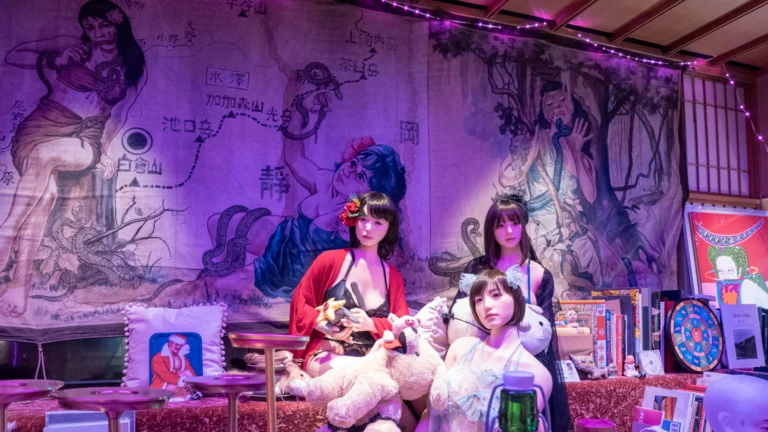
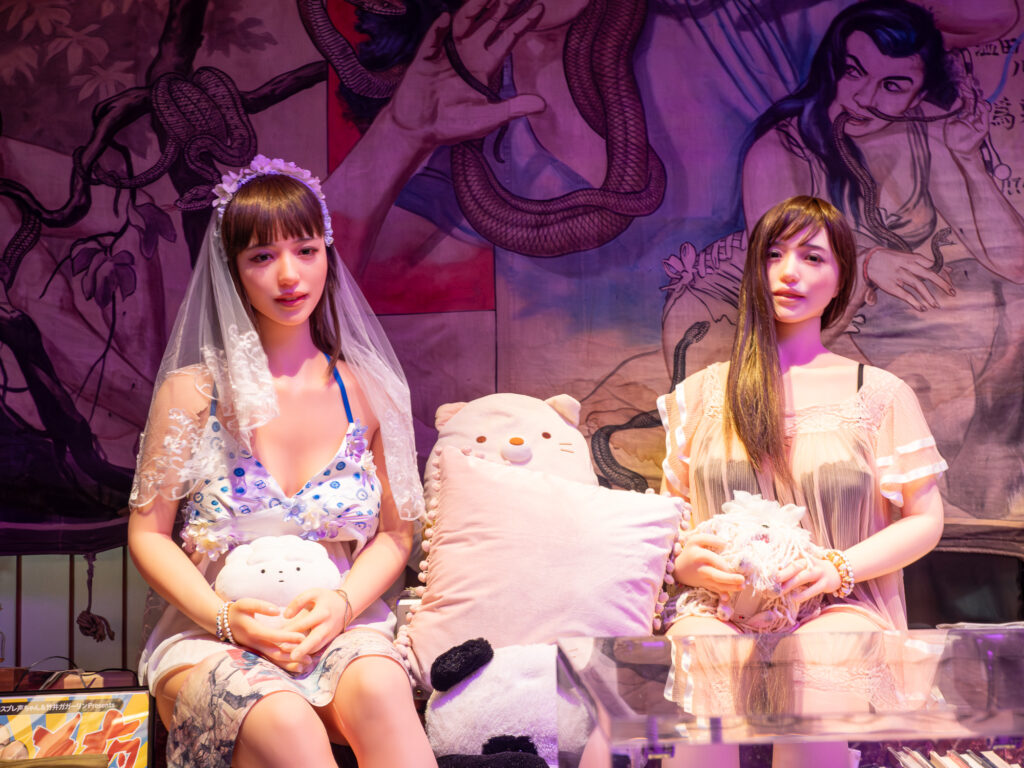
The other surviving home of the hihōkan is The Museum of Roadside Art (大道芸術館; daidōgeijutsukan), located in the historic geisha district at Mukōjima, Sumida Ward, in Tokyo. Its curator, editor-photographer Tsuzuki Kyōichi (都築響一), salvaged the mannequins and sets from the Toba SF Miraikan hihōkan in Mie, particularly those focused on its “Erotic Space Future Journey” theme.
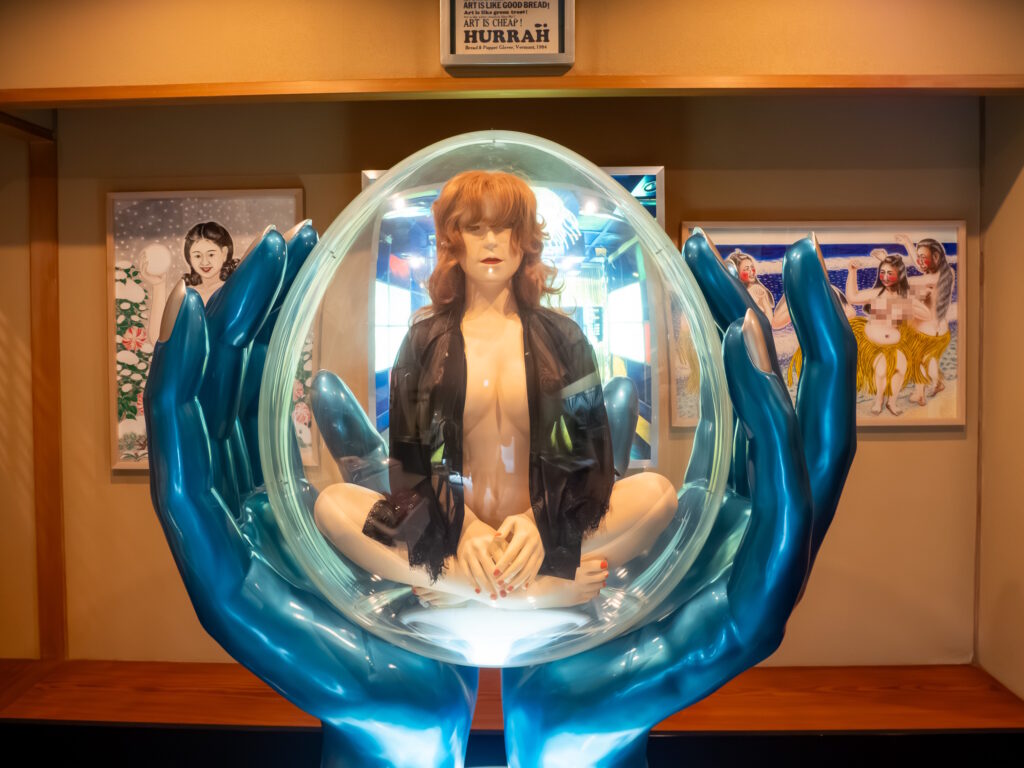
The Museum operates as an adult nightlife venue of the kind I document in my Tokyo nightlife guide. Tsuzuki’s goal is to treat erotica as a form of culture rather than a sense of shame. Indeed, above the door as you walk in, Tsuzuki has hung a copy of the Why Cheap Art? Manifesto from the Bread and Puppet Theater, which proclaims that “art is not business!” and “art is cheap!”
Tsuzuki occasionally sponsors events to promote the Museum’s cause; his 2015 event “神は性器に宿る” (“God Dwells in Genitals”) drew about 15,000 visitors, between 70-80% of them women. Pop star Dua Lipa even paid a visit once.
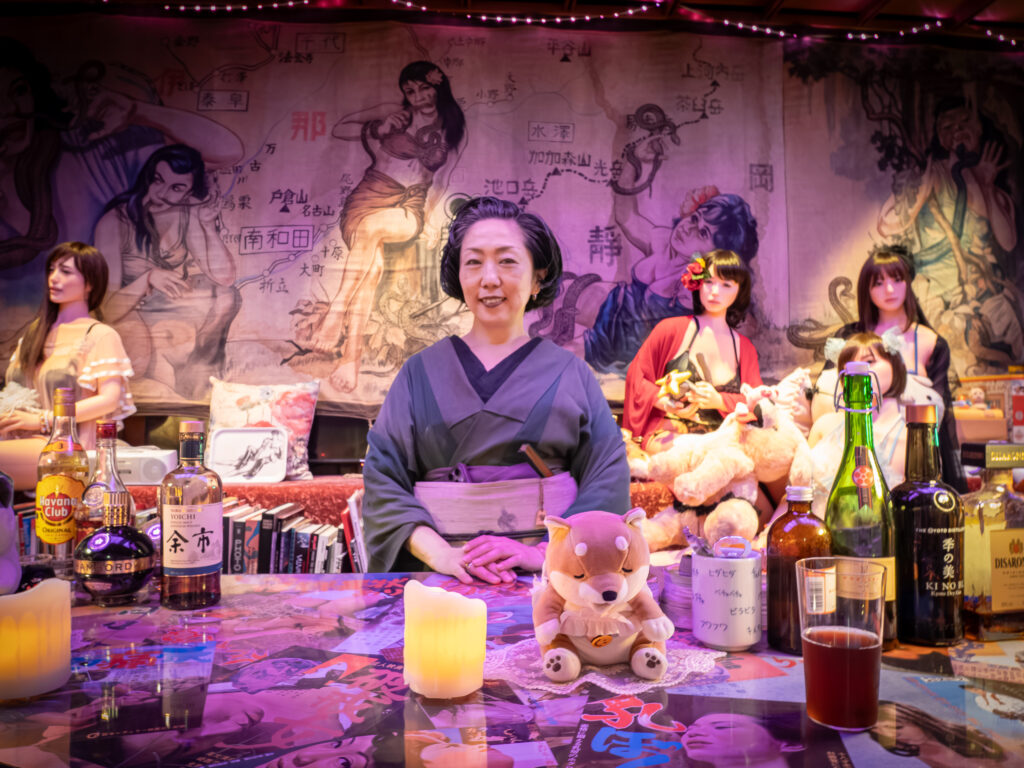
The Museum of Roadside Art is very foreigner-friendly. In fact, proprietress Konta Atsuko told me that their main clientele is foreign visitors.
For Japanese people, she says, “a hihōkan comes with a filter: ‘Oh, that stuff, yeah, yeah, I get it, the silly ridiculous thing.’ But people from abroad don’t have that hihōkan filter. So when they see it, they go, ‘Wait, what?!'”
Konta also thinks foreign visitors appreciate the Museum’s mission more than her fellow Japanese. “Japan, probably far more than abroad, very often refuses to recognize the artistic element in things like mass culture,” she said. “But art is supposed to be completely free.”
The hihōkan started as a sexual oddity for drunken salarymen in an age where “corporate entertainment” meant “male entertainment.” It survives today in a different context: as a statement that art can be wild, sensual, sexual, and even downright explicit.
More importantly, it stands as a statement that art isn’t defined by societal norms or its monetary value. Art can just be itself.
How to visit
- Location: Mukōjima, Sumida Ward, Tokyo (向島 5-28-4). A former ryōtei in the old Mukōjima geisha quarter, with Tokyo Skytree in view from the rooftop.
- Access: A short walk from Hikifune Station (曳舟駅) on the Tōbu Skytree Line / Keisei Oshiage Line (Higashi-Mukōjima, 東向島, is also close).
- Hours: Mon–Thu 5:00–11:00 pm · Fri–Sat 3:00–11:00 pm · Closed Sun & holidays. Last entry 30 min before close.
- Admission: ¥3,000 (about $18.50), including a ¥1,000 (~$6.20) voucher for the 2nd-floor bar. Weekday view-only option ¥2,000 (~$12.35).
- Ages: 18 and over only.
- On-site: Second-floor bar (茶と酒 わかめ) among the love dolls; occasional rakugo nights.
- Curator: Tsuzuki Kyōichi (都築響一).
- Website: Museum of Roadside Art
Keep reading
Sources
秘宝館 Wikipedia (日本語)
日本最後の秘宝館 文春オンライン(妙木忍)
日本最後の秘宝館「熱海秘宝館」がリニューアル インターネットミュージアム
昭和の文化遺産、閉館した「秘宝館」展示物たちのその後 おたくま経済新聞
ROADSIDER’S=路傍の編集人、都築響一が手掛けるリアルアートの巣窟「大道芸術館」 TOKION
大道芸術館 museum of roadside art(都築響一コレクション) 大道芸術館 公式サイト
The Museum of Roadside Art in Tokyo has a bizarre collection of kitschy art and love dolls Time Out Tokyo