Japan is over 80% mountainous. That’s a heck of a lot of mountains, from soaring, snowcapped Mt. Fuji, to quaintly rolling green hills, to active volcanoes burbling and sizzling with deadly gases.
These mountains hold crucial ecological and economic roles, supplying Japanese civilization with fresh water, lumber, stone, ore, game, and other crucial resources. They’re also cultural foundations, at the heart of Japanese spirituality and identity. Shinto gods have long been thought to reside in mountains, inspiring traditions of faith climbing, mountain worship, and daring Buddhist pilgrimages to temper souls and seek enlightenment.
To modern Japanese, the mountains are also sources of endless, four-season leisure. Autumn treks to view colorful leaves. Spring pilgrimages to view fresh green leaves that spread from the mountain base to the crown in dozens of subtly stunning green palettes.
Hiking, climbing, hunting, fishing, skiing, rafting, gliding, snowshoeing, and more. With hills accessible from the doorstep of many homes across the archipelago, many people here have an intimate relationship with mountains.
For those reasons and countless more, a trip to Japan isn’t complete without a trip to the mountains. (How could you possibly miss 80% of the country?) Here, we present a ranking of the ten best mountain towns in Japan.
Explaining the ranking
We began with an initial list of 41 mountain town candidates from 27 of Japan’s prefectures. Many of these options are concentrated in Japan’s high-altitude center, the Japanese Alps, but we made sure to include sites in northern Japan, western Japan, Kyushu, and Shikoku.
Sorry, Okinawa. You’ll fit better into a forthcoming seaside ranking.
To create a balanced ranking, we scored these towns on thirteen factors, including access to and quality of activities like hiking and skiing, natural beauty, traditional culture, access, climate, and solitude. (You can refer to the bottom of the article for explanations of all thirteen categories.)
The ideal mountain town, per this ranking, is one that:
- Is accessible but not overcrowded with throngs of tourists;
- Contains outstanding scenic beauty;
- Has a good balance of outdoor activities like skiing in the winter, hiking, rafting, and fishing in the summer; and
- Emphasizes traditional Japanese culture, spirituality, and cuisine.
If that sounds like a great mountain town to you, you’ll love this list. Without further ado: Japan’s top ten mountain towns!
The ranking: Top 10
1. Takayama (Gifu Prefecture)
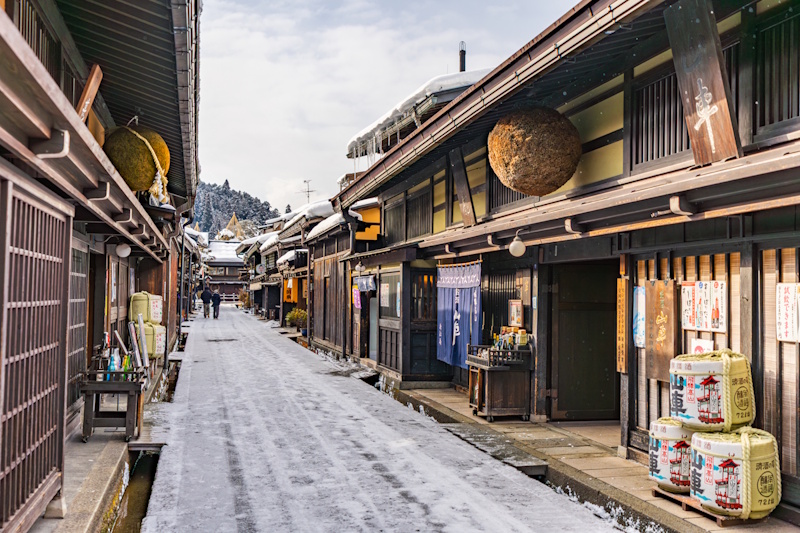
Takayama (高山市) just might be the best mountain town in Japan. A historic merchant town nestled directly next to Chubu Sangaku National Park, home to Japan’s towering alpine center, this little city has long punched above its weight in both nature and culture.
Home to ancient craft traditions of lacquerware, yew wood carving, pottery, furniture, and preserved foods, Takayama charms with its attractive merchant town of darkly atmospheric Edo Period buildings. Meanwhile, natural attractions range from the stony slopes and drama of Mt. Norikura (3,026m) to the hidden cloud forest of Goshikigahara, only accessible via a licensed guide.
Takayama earned the number one spot in this ranking through its strong balance. You can go skiing in the winter within an hour of downtown, hike wooded trails and towering peaks, experience ancient cultural traditions, and feast on delectable unagi and Hidagyu beef. Takayama is the ultimate versatile mountain town.
2. Nikko (Tochigi Prefecture)
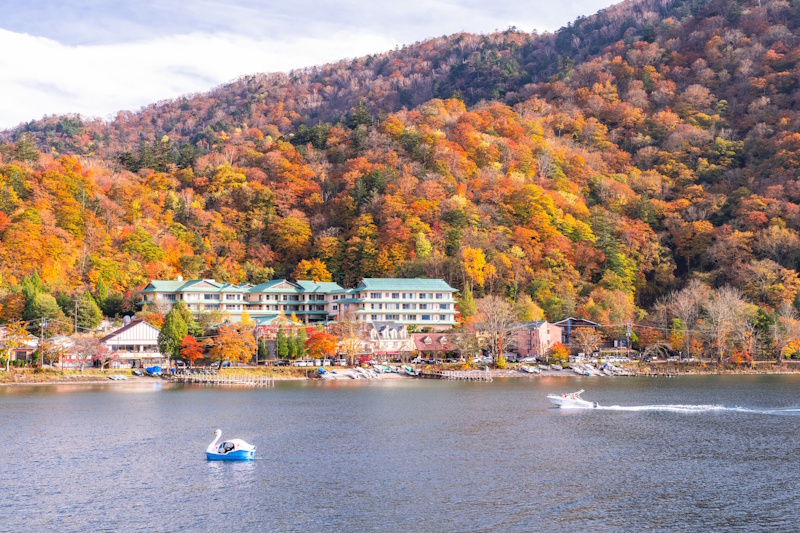
This list rewards towns that balance nature and culture hand in hand, and Tochigi Prefecture’s gem, accessible just two hours by train from downtown Tokyo, is without question the second best at this after Takayama.
Like Takayama, Nikko (日光) scored in the top five in both “Activities” and “Convenience”. The city is host to one of Japan’s most important shrines, a national park featuring rare highlands and soaring waterfalls, and refreshing hot springs villages.
The sheer number and diversity of activities available in Nikko are its strong points. Take a winter visit: you could spend one day skiing at a nearby resort, and the next day gallery-hopping and visiting imperial villas. Or a summer visit might consist of backcountry hikes and waterfall sightseeing. The real downsides to both Takayama and Nikko are their less-than-stellar climates: they’re both humid places offering only the slightest degree of relief during Japan’s scorching summers.
3. Fuji Five Lakes (Yamanashi Prefecture)
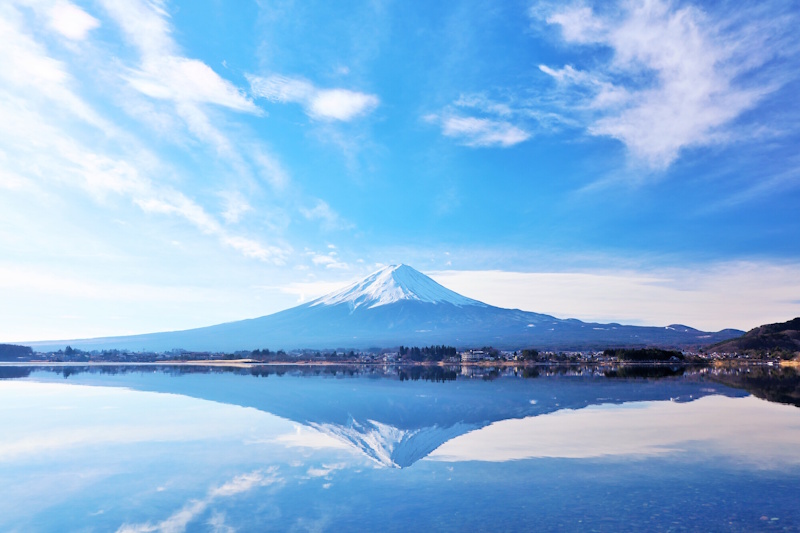
Fujiyoshida may lack exceptional winter powder for shredding sessions. But it makes up for that with practically everything else: mountain climbing, boating, canoeing, wakeboarding, camping, cycling, and fishing.
Mind-blowing scenery, with Mt. Fuji looming magnificently over the hills, lakes, and woods. A fairly pleasant climate, shaving four-plus degrees Celsius off of Tokyo’s summer highs, and lots of winter sunshine.
Takayama and Nikko lean toward more traditional culture, with ancient temples, authentic architecture, and Japanese cuisine. Fuji Five Lakes sways toward modern comfort. You can find fusion restaurants, attractive boutiques and galleries, museums, and more. These lakes have been developed for tourism, which means less romantic mountain isolation, but more to do.
4. Kiso (Nagano Prefecture)
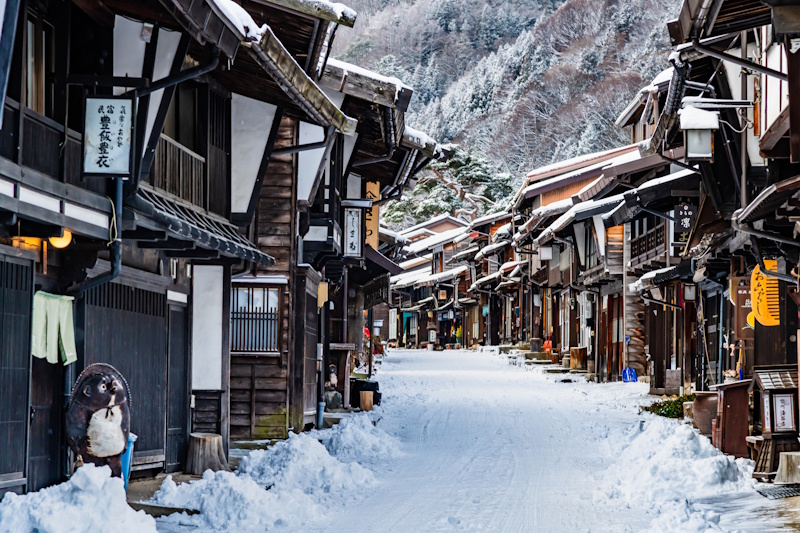
Kiso (木曽町) is rather less well-known than the top three entries on this list. But it earns its ranking. It nets top ten scores in terms of both “Attractions” (trekking across isolated, stark mountain landscapes and historic post villages with perfectly preserved architecture and traditions) and “Convenience.” It also sports a surprising number of authentic dining options and easy train accessibility from Nagoya.
The stars of Kiso are the nearby “juku”: Fukushima-juku and Narai-juku. These old towns were part of Edo Period trails connecting Kyoto to the capital of Edo, and can still be experienced today. Hiking from post town to post town is a unique cultural experience, and it will surround trekkers with lush green mountains that rise to triumphant heights, such as the 3,067-meter Mt. Ontake.
5. Kamikochi (Nagano Prefecture)
Stunning nature at its absolute finest. Kamikochi (上高地) is deep in the Japanese Alps. It takes about five hours by transit just to get to the lowland base. But the high-altitude ponds and woods contain a rare and mystical quality in this wilderness long-protected by the Japanese government. And most importantly, Kamikochi is a base for access to dozens of peaks over 3,000 meters. It’s a mountain-climber’s dream.
Kamikochi loses some points because it’s deliberately underdeveloped. A limited number of campsites, lodges, and mountain huts mean that prices are inflated and you need to book well in advance to stay among these majestic peaks. Still, on the Gifu Prefecture side of Kamikochi, just outside of the national park boundaries, Hirayu Onsen permits winter skiing and relaxing plunges in natural hot springs.
Navigating to hard-to-get places like Kamikochi can be confusing for first-time (or even repeat) Japan travelers. You can use our free, five-day Japan trip planning guide to help you prepare for your trip. It includes advice on how to get around the country on transit, plus other gotchas you might not be expecting.
6. Tateyama (Toyama Prefecture)
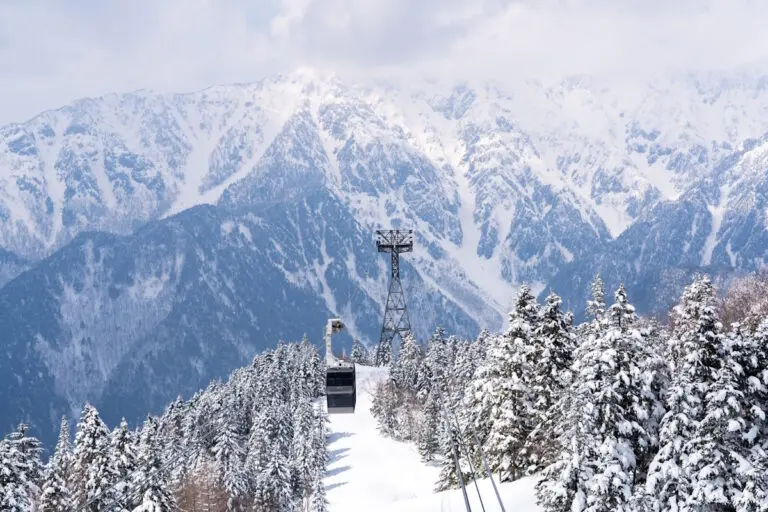
Mt. Tate (3,015m) is without question one of Japan’s finest peaks, and is also without question one of its snowiest. Tateyama (立山) receives over 90 meters of snow on an annual basis. Outside of Hokkaido, it is the prime destination for snow experience in Japan, with its glorious walls of snow on the Kurobe Alpine Route, relaxed skiing, and a plethora of snow-based winter activities.
The area also offers an access point to climbing the Japanese Alps from the northwest side (by comparison, Kamikochi enters the Japanese Alps from the south-center). Vast lakes, hidden waterfalls, and natural beauty by the bucket await in Tateyama. The area mostly loses points for lacking a strong town base or cultural center. But if you catch the urge to chow down on sushi, the prefectural capital of Toyama is only an hour away.
Toyama Prefecture in general is becoming a hot new travel destination. Other attractions include the Suganuma Gassho-zukuri village, the Takaoka Daibutsu, and the Toyama Glass Art Museum, among many others.
7. Tsuruoka (Yamagata Prefecture)
Like Tateyama and Kamikochi, Tsuruoka is a base, an entry point, a gateway into something greater. But rather than that something being tremendous mountains, that something is the Dewa Sanzan.
These three sacred mountains have served as a spiritual and sacred route for hundreds of years. Priests and ascetics traverse Mt. Haguro, Mt. Gassan, and Mt. Yudono in search of enlightenment and rebirth. A journey through this trail combines nature, culture, and authentic spirituality across diverse landscapes of forests, moors, grasslands, and rugged peaks.
Tsuruoka itself is a quaint city of rice fields and culinary cultivation. In recent years, a flourishing gastronomic scene has made the most of Yamagata Prefecture’s high-quality rice and sake. Additionally, Tsuruoka and Dewa Sanzan earn some bonus points for being off the radar, as they’re far less touristy than places like Takayama and Nikko.
8. Hakuba (Nagano Prefecture)
Were you expecting this one higher up?
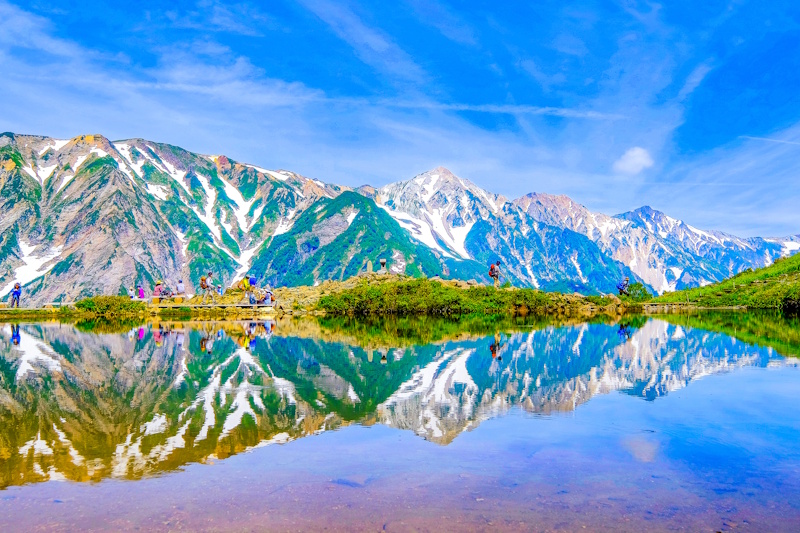
Hakuba, one of Japan’s top two most famous ski resorts, does solidly make the top ten, earning the number two “Activity” score on this list after Nikko. The town, marvelously scenic under the dominion of towering white mountains, offers more than an abundance of fun.
There’s skiing and snowboarding of every sort, hiking and trekking, mountain biking, snowshoeing, hot air balloons, play parks for kids, and much more. The village has also developed in a charming way, presenting a stunning variety of restaurants catering to tourists while nonetheless retaining a relaxed, rural feel.
What holds Hakuba back on this list is, of course, the hordes of tourists that threaten to overrun its ski lifts, bringing with them inflated prices. Hakuba also receives less snow than most of the best skiing areas in Japan, so conditions have become a bit more unstable due to the climate crisis.
9. Dake Onsen (Fukushima Prefecture)
Some of the most extreme and exciting nature in all of Japan can be experienced just west of Fukushima City in the Mt. Adatara and Mt. Azuma areas of Bandai-Asahi National Park.
This remarkable region contains three active volcanoes, hundreds of miles of hiking trails both in low-lying forests and on 1,500-meter-high ridges, and a number of charming, storied hot springs villages. The natural launch point for all of this mountain fun is Dake Onsen, easily accessible from Koriyama on the Shinkansen.
Dake Onsen was an all-around high scorer, scoring in the top 1/3 of all three categories. While it doesn’t have the high peaks of Kamikochi or the history of Nikko, it lets its visitors directly encounter thrilling mountain landscapes.
10. Furano (Hokkaido)
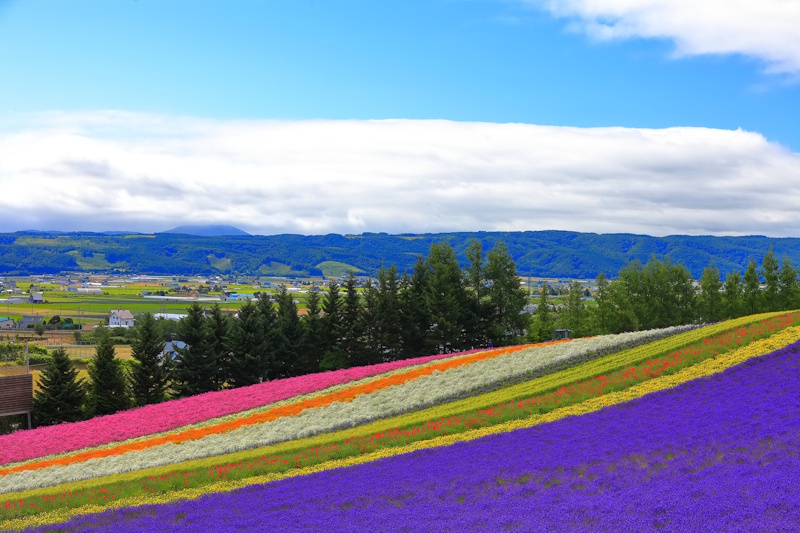
Surprisingly, the lone entry from Hokkaido in the top 10 of this list is delightful Furano, near the center of the prefecture. Hokkaido’s other candidates were either too specialized, like Niseko in skiing, or too remote, like Kamikawa on the opposite side of Daisetsuzan National Park.
Furano is another all-arounder. It permits outstanding skiing in the lowland hills and provides access to the epic wilderness of Daisetsuzan. It also has a rich food culture of melons and milk that come to delectable fruition in the peak of summer.
Furano also lavishes its visitors with all four seasons: cool and comfortable summers (though less so in recent years), early but beautiful autumns, and long, snowy winters. It’s also home to the iconic Farm Tomita, known for its lush lavender fields.
Going to Hokkaido is always a great choice on a Japan trip. The challenge is the extra travel required. There are a lot of gotchas, many of which we call out in our free trip planner, that can catch you off-guard if you’re not prepared.
Honorable Mentions
Four top scorers from around Japan that deserve honorable mentions are Karuizawa (Nagano Prefecture), Aso (Kumamoto Prefecture), Myoko (Niigata Prefecture), and Okutama (Tokyo).
Karuizawa delivers up nature activities in droves while being a stone’s throw from Tokyo. Aso features the mind-blowing natural volcanic scenery and historic culture of a place like Dake Onsen, but lacks the winter snowfall to give it enough points to make the top 10. Myoko accumulated points as a great winter skiing destination with epic summer peaks to climb. And Okutama is Tokyo’s great green backyard, offering endless day-trip fun for Tokyo residents and visitors.
Need help planning your mountain getaway? Unseen Japan Tours can design a custom itinerary around your interests and help you navigate smaller places where English is rarely spoken. Chat with us today→