
Whenever English language media picks up a social issue in Japan, I get both excited and nervous. Excited, because I wish some of the issues we discuss on UJ received wider attention abroad. Nervous, because I wonder what’s gonna get lost in translation.
Such is the case with the “leg-hair harassment” (スネハラ; sunehara) story now making the rounds in various publications. Some of the coverage is great. But the follow-on reporting, built off of veteran reporter Mori Kurumi’s original BBC piece, drops a lot of critical context. This issue is hardly new, and the “weird Japan” English coverage around it obscures the deeper, systemic issues plaguing the Japanese workplace.
This isn’t a new issue

The issue of “leg-hair harassment” isn’t new. It’s been around for a couple of years but only took off in a big way a few months ago.
In March, 2024, Shikigaku surveyed 300 people asking if it was ever okay to wear shorts to the office. The answer was a resounding no: at the time, only 7% of those polled said they’d feel comfortable doing so.
Shortly after, in summer of that year, the word sunehara (from すね毛ハラスメント, sune-ge harasumento) entered popular vernacular. It was pushed, not by Japanese women, but by a men’s waxing salon promoting its hair removal (脱毛; datsumō) service.
Around the same time, legal site Bengo4.com took up the issue, looking at it from two angles:
- Is a man showing his hairy legs in the office a form of sexual or power harassment? (Verdict: Nope.)
- Is asking a man to shave his unseemly hairy legs a form of harassment? (Verdict: asking nicely probably isn’t, but demanding he do so would be.)
Of course, summer 2024 was a little cooler than summers 2025 and 2026 (I write as we enter our third straight day of 35C heat in Tokyo.) Rising temps have forced this issue back into the news every year since then.
So why is it popping off in English now?
The main impetus was an announcement by Tokyo Governor Koike Yuriko in April that she was expanding her long-running “Tokyo Cool Biz” summer-dress campaign to encourage half-pants (ハーフパンツ) and T-shirts for Tokyo Metropolitan Government staff. The policy is a response to record-setting heat and a need to conserve energy as utility prices rise.
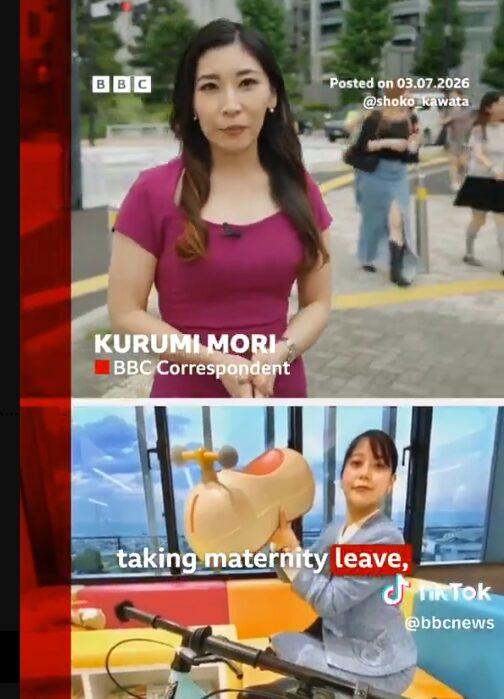
That news, combined with a survey on sunehara, led Mori Kurumi, a Japanese reporter and Columbia Journalism School graduate, to write her piece for the BBC. Mori’s piece is a carefully worded, nuanced report. It doesn’t claim that Japanese women find sunehara a pressing issue; it merely notes some women are noting their distaste for seeing men’s hairy legs in an office setting.
The BBC ran Mori’s piece in both English and Japanese. On X, Japanese users who didn’t bother to take the time to read Mori’s piece lit into her, accusing the BBC of “manufacturing” a non-issue. Some of them feel like they were still nursing grievances from Mori’s last big story, which focused on the first Japanese mayor to announce she was taking maternity leave. (Some men hate the idea that a woman would take time off work to have a child because, well, patriarchy.)
It’s part of Japan’s larger “harassment inflation” trend
Sunehara wasn’t born in a vacuum, though. It’s part of a larger “___ harassment” trend that’s dominated Japanese news for years.
Some of these harassments identify legitimate issues in Japanese society. The biggest: “customer harassment,” or abuse of store employees by irate customers. This is such a problem that workplaces like JR East Railways have instituted policies to crack down on verbal and physical abuse of their employees. Some stores and government offices now permit employees to omit their real names from their name tags to prevent customers from threatening them outside of work.
Other forms of harassment sound trivial or even made up. “Smell harassment” is when your stank drives your co-workers crazy. “Logical harassment” is when you try to cow your foes (in this case, your families and co-workers) with the power of reasoning. There’s even “Jirō harassment,” which is when you make a new employee finish their bowl of Japan’s infamous gut-busting ramen.
The abundance of harassments has grown so silly that it’s creating a backlash. Indeed, a 2025 Diamond Online essay by writer Mutō Hiroki entitled “Leg hair is harassment? Come on…” pushes back specifically against the notion that “sunehara” should be taken seriously.
Question: do you like UJ's independent coverage of Japan? Our writers are supported by our members. Join Unseen Japan Insider to get bonus content every week, an ad-free website, and access to our large and growing Insider archive.If you love UJ's independent coverage of Japan, join Unseen Japan Insider to get content every week, an ad-free website, and access to our large and growing Insider archive.
Blame “Big Datsumō” for “leg hair harassment”
The key question is: Is “leg-hair harassment” something that Japanese women are actually complaining about?
The answer: No, not really.
The current discussion in Japanese media was driven partly by a recent survey from Gorilla Clinic. Yes, it’s another hair-removal clinic. You’ll notice the trend here: just as, previously, a nasty new term for women had been pushed by a TV station promoting its reality dating program, now a hair removal clinic is trying to convince men that their body hair is unsightly and they should pay to have it removed.
The survey of 800 working people aged 20-59 found that 53.5% opposed men wearing shorts to work. 45.5% said the key issue was body shape or body hair. Of those people, 30% of women said they found the sight of men’s leg hair off-putting.
That’s…not a lot. And it doesn’t establish that women consider showing leg hair a form of “harassment.”
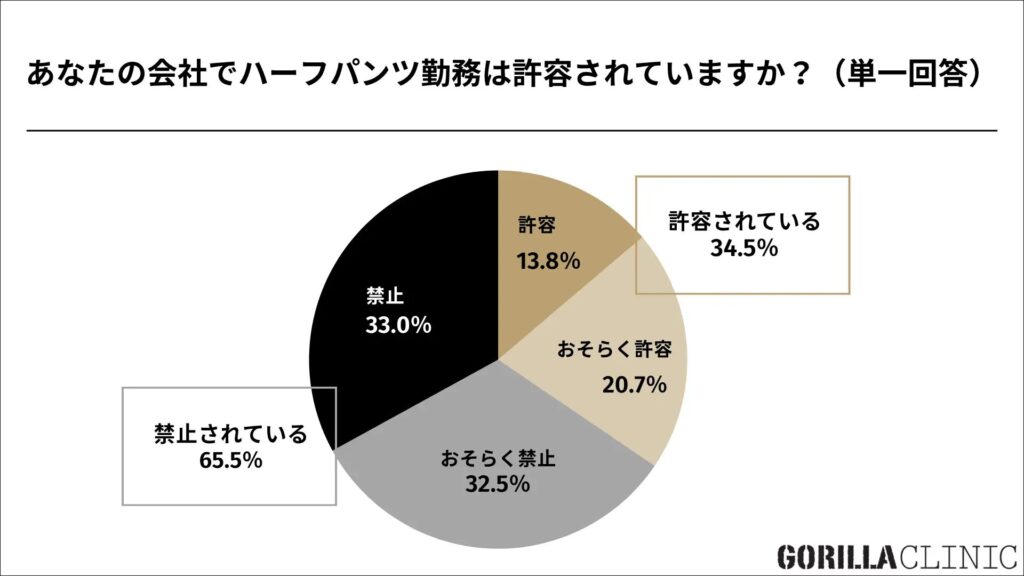
The Gorilla survey contained another interesting tidbit, though. It found that, while most workplaces still banned wearing short pants, 34.5% allowed it to some degree. Japan’s worsening heat is apparently forcing people to rethink their stringent opposition to The Right to Bear Legs.
In other words, concerns around “sunehara” are marketing hype. All that women are saying in these surveys is that they’d rather not see hairy legs. Big Body Hair Removal in Japan is using that as a springboard to sell its services to men anxious about offending their female colleagues.
“Leg-hair harassment” is silly. Workplace harassment is very real

Why did “hara-hara” become a thing? Why has Japan invented this plethora of harassments that pit neighbor against neighbor? Does the Japanese press like creating more anxiety in the workplace?
Sadly, hyper-awareness around workplace harassment exists for a reason: because workplace harassment, particularly against women, exists in spades.
Power harassment has been a longstanding problem across genders in Japanese workplaces. Even renowned companies such as Toei Animation have faced accusations of harassment within their ranks, while lesser-known companies have been judged to have literally harassed some of their employees to death. Part-time employees are particularly susceptible to abuse: one survey found 68.9% said they’ve been the victim of some form of harassment.
Women, as usual, get the short end of the stick here. Sexual harassment is rampant, with women saying they face a second wave of harassment if they dare to speak out. Just last year, a wave of Japanese women took to social media service X to share their most harrowing harassment stories.
Harassment, in other words, is real and alive in the Japanese workplace. “Leg-hair harassment,” however, is not. At best, it reflects a general anxiety around being forced to adjust to change (in this case, climate change).
Blaring headlines about how Japanese women are disgusted by men’s furry tree trunks in the office are guaranteed traffic drivers. Behind the clickbait, though, is a deeper story worth telling. It’d be nice if more English-language publications about Japan focused on telling it.
Keep reading


Sources
ハーフパンツでの勤務を解禁…東京都庁で「新クールビズ」 夏への準備進む TOKYO MX
「おじさんのスネは不快?」都庁“ハーフパンツ勤務”に賛否噴出…「スネハラ」論争の行方 集英社オンライン (Shūeisha Online)
【夏の“男性ビジカジ”新常識】賛否両論の「ハーフパンツ勤務」許容ラインが判明!(ゴリラクリニック調査 n=800) PR TIMES
夏の職場、男性の「ハーフパンツ勤務」は賛否が拮抗 オフィスハーフパンツの容認条件は「すね毛なし」 AMP[アンプ] (ampmedia.jp, Japanese business media)
クールビズで過熱、“スネハラ”なる造語も爆誕…「ハーパンvsミニスカ」の不毛な論争 日刊ゲンダイDIGITAL (Nikkan Gendai)
《東京クールビズ》ハーフパンツ解禁で「女性の生足も認めるべき」すね毛論争で浮き彫りになった“男女格差” 週刊女性PRIME (Shūkan Josei PRIME)
‘Leg hair harassment’: Tokyo’s ‘Cool Biz’ campaign runs into hairy problem The Star (ANN)
真夏の職場「ハーフパンツ論争」勃発! 黒々としたすね毛に困惑…「剃って」はハラスメントになる? 弁護士ドットコム (Bengo4.com)
男性の“ハーフパンツ出社”どう思う? アリ派「省エネで地球に優しい」ナシ派「すね毛が気持ち悪い」…法的な見解は 弁護士ドットコム (Bengo4.com)
すね毛がハラスメントってウソだろ…中年男性ライターが「すね毛狩り」におびえるワケ ダイヤモンド・オンライン (Diamond Online)
ハラハラ(ハラスメントハラスメント)とは?具体例や対策を弁護士が解説 弁護士法人グレイス (Grace Law)
ハラスメントの種類一覧表【2026最新】企業の防止策を解説(50種類超) デイライト法律事務所 (Daylight Law Office)
2025年4月施行!東京都カスハラ防止条例・指針のポイント BUSINESS LAWYERS
東京都が「週休3日制」2025年度導入へ 小池百合子知事「育児と仕事の両立を徹底支援、都庁から」 東京新聞デジタル (Tokyo Shimbun)