Japanese popular music, better known as J-Pop, is a mix of Japanese musical tradition and Western influence. The largest Western influences of J-Pop is 60s pop and rock music, similar to that of the Beach Boys and The Beatles. When combined with the 12-tone Japanese musical scales, this makes for a distinctive take on popular music, often locked within a very specific time and locale.
Notable offshoots of Japanese popular music include visual kei, enka and idol music, which often serve as gateways to Japanese culture in and of itself. Today we’ll look at three lesser-known subgenres: the optimistic and mature City Pop, the chic and indie Shibuya-kei, and the high-pitched, surrealist Denpa Song.
City Pop
A fusion of easy-listening , disco and jazz, city pop is a hallmark of 1970s and 1980s Japan. Thanks to the economy at the time, Japan experienced an unprecedented amount of wealth and electronics. It was in the 1980s that Sony’s revolutionary Walkman made its worldwide debut, along with the car stereo, were the perfect instruments for night time cruising. It was a time for innovation, and it showed in the music of city pop.
Ito Ginji’s “Konukaame” (1977). Easy listening perfect for a night drive.
Contrary to the political messages of enka and folk music that dominated the 1970s, city pop was much more mellow, cosmopolitan and passive. In addition, there are American, Polynesian, and Caribbean musical influences, evoking a sense of escapism to faraway destinations. Because of its international aesthetic, city pop gives the listener a sense of “uncanny valley”, but in the most cohesive way:
I think you can hear the respect they have for American music. They can extract what’s important from American music and use that as a jumping-off point.
– Kitazawa Yosuke, producer of Light in the Attic’s Japan’s Archival Series
Though it went out of style after Japan’s economic bubble burst in the 1990s, city pop experienced a resurgence of popularity in the late 2010s through the rise of vaporwave. Takeuchi Mariya’s “Plastic Love” in particular, has gained worldwide popularity with over 30 million plays on YouTube, despite it being originally released in 1984 to moderate success. In a recent NHK interview about this sleeper hit, Takeuchi said:
私の36年前の作品である「プラスティック・ラヴ」が、なぜか、一昨年あたりからでしょうか、海外の若者の間で人気を得るという不思議な現象が起こっておりまして、その再生回数の多さに、正直私自身が一番驚いているわけなんですけれども。20代だった私が洋楽テイストを目指して作った、この楽曲をまさに洋楽の本場にいる若者たちが今、好んで聞いてくれているというこの事実を、とても素直にうれしいと思っておりますし、個人的には自分のアルバムの中でも、アレンジも演奏も最も好きなトラックの一つだったので、今更ながら本当に作った甲斐があったなと思っております。
-Takeuchi Mariya, singer-songwriter
To be honest, I was surprised to hear about how [Plastic Love] became so popular with overseas youth, seeing as how it was a song I wrote 36 years ago. [However], when I originally wrote it in my twenties, I intended for it to have a Western flavor, and now young people–who are at the heart of Western music–are listening to this song. Personally, it was one of my favorite songs to arrange and play, which makes it all worthwhile.
Shibuya-kei
With the 1990s came Shibuya-kei, a form of indie pop music. Similar to city pop, it borrowed from international genres such as 60s pop, electronic music, and chanson, but it had more of an arthouse vibe than a cosmopolitan one. The etymology of “Shibuya-kei” comes from Tokyo’s Shibuya neighborhood, where youth culture made its mark. Shibuya’s amalgamation of fashion boutiques, record stores and nightclubs in particular contributed to the development of the genre.
Shibuya-kei, at its core, was experimental, with hipsters as its core demographic. This fact is more circumstantial than pejorative. The kitsch aesthetic in particular was the name of the game, allowing artists and listeners alike to copy-and-paste what they found appealing rather than what was deemed “good”. Konishi Yasuharu, founding member of the seminal Shibuya-kei group Pizzicato Five, sums it up as follows:
Shibuya in the ’90s is just like Haight-Ashbury [hipster neighborhood in San Francisco] in the ’60s. The young people there are always thinking about how to be cool.
-Konishi Yasuharu, Shibuya-kei musician and member of Pizzicato Five
Because Shibuya-kei was more of a loose cultural movement than a strictly defined genre, it was only as strong as its musical collective. Thus, when the musicians moved on to other genres and/or ventures near the end of the decade, the movement ceased to exist. Later iterations of Shibuya-kei would use electronic music as a framing device, feeding more into avant-garde futurism. Nevertheless, the songs were still radio-friendly, even with their indie sentiments.
Question: do you like UJ's independent coverage of Japan? Our writers are supported by our members. Join Unseen Japan Insider to get bonus content every week, an ad-free website, and access to our large and growing Insider archive.If you love what we do, help us pay our writers to do more of it by joining Insider. You'll get bonus content every week, an ad-free website, and access to our large and growing Insider archive.
Denpa Song
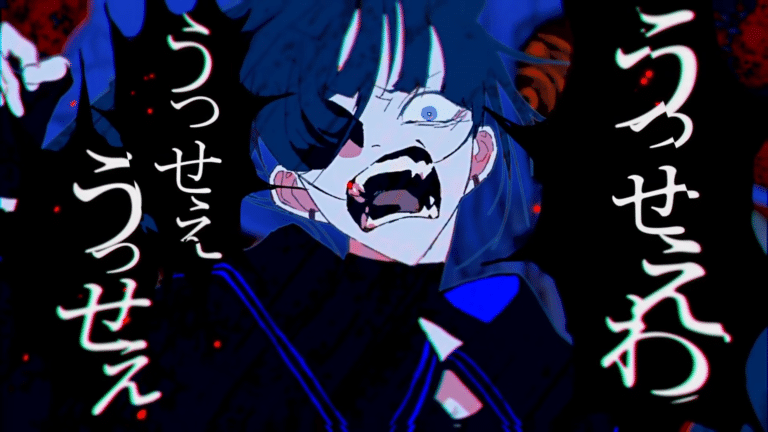
Denpa song is a form of Japanese pop music that features fast-paced electronic music and high-pitched vocals. It’s mostly popular with members of the otaku (Japanese word for “geek” or “nerd”) community, particularly those who are fans of anime. Because of this association, it is also known as Akiba-pop, as Tokyo’s Akihabara neighborhood is a notable mecca of otaku culture. However, despite its adorable vocals and hyperactive sounds, Denpa has a complex history.
The word “denpa” means “electromagnetic waves”, and originally became a hot topic after the Fukugawa Street Stabbings in 1981. The perpetrator had killed two housewives and two toddlers during his rampage. In court, he pleaded insanity and claimed that electromagnetic waves told him to stab people. While the insanity plea didn’t hold up (he received a life sentence), a few other people shared his sentiments about electromagnetic waves. This gave rise to the term “denpa-kei”, which meant people who were crazed, creepy, or otherwise delusional.
In spite of its pejorative origins, denpa-kei became less about delusion and more about nonsensical, hyperactive surrealism. Similar to Shibuya-kei, Denpa song is a subculture in and of itself, and focuses on transporting the listener to a quirky and off-beat world.
Not all denpa songs have cute or banal undertones. The repetitive lyrics and melodies have an addictive quality, specifically known as doku-denpa, or “electromagnetic poisoning”. Therefore, due to its niche demographic, it has managed to persist as a subculture over the past 20 years, with various interpretations. Even though public opinion of denpa song is still polarizing within Japanese society, denpa song is still ripe with potential for experimentation, and an enduring fandom.
Further Reading
- O, Safiyah. “JAPANESE ‘CITY POP [シティポップ]’: A DREAMY TRIP BACK TO JAPANS CAPITALIST FANTASY OF THE 1980S.” Beardedgentlemenmusic.com, Bearded Gentlemen Music, 23 Aug. 2017, beardedgentlemenmusic.com/2017/08/23/japanese-city-pop-1980s/.
- Blistein, Jon. “City Pop: Why Does the Soundtrack to Tokyo’s Tech Boom Still Resonate?” Rolling Stone, Rolling Stone, 3 May 2019, www.rollingstone.com/music/music-features/japanese-city-pop-returns-light-in-the-attic-compilation-pacific-breeze-822663/.
- Jarvis, Stephan Jan, et al. “A Complete Guide to Shibuya-Kei: Tokyo’s ’90s Music Revival.” Tokyo Weekender, 1 Apr. 2020, www.tokyoweekender.com/2020/03/complete-guide-shibuya-kei/.
- Ohanesian, Liz. “Japanese Indie Pop: The Beginner’s Guide to Shibuya-Kei.” LA Weekly, 23 May 2019, www.laweekly.com/japanese-indie-pop-the-beginners-guide-to-shibuya-kei/.
- Tornow, Samuel. “The Uncomfortable, Mysterious Beauty of Emamouse’s Denpa Song.” Bandcamp Daily, Bandcamp, 22 Jan. 2020, daily.bandcamp.com/features/emamouse-feature.
- “Denpa-Kei Subculture.” Denpa-Kei Subculture, 19 Dec. 2012, web.archive.org/web/20131015154152/denpa.omaera.org/culture.html.