
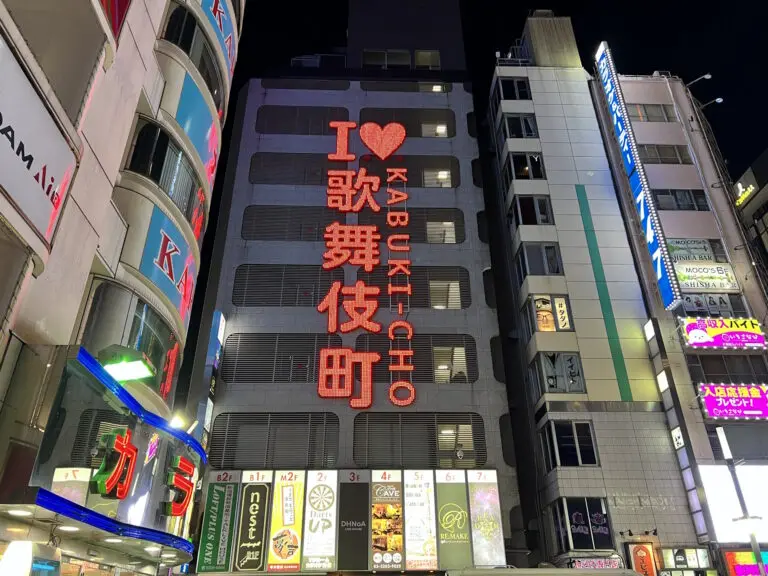
Even for those who usually aren’t into nightlife, Tokyo’s Kabukicho is a sight to behold. One of the world’s most active nightlife and adult entertainment hubs, the compact area within Shinjuku City boasts thousands of bars, cafes, and restaurants, as well as a variety of “only in Japan” adult entertainment options.
It’s no wonder tons of tourists want to go. Many wonder, however, whether it’s safe to visit. The bottom line: Yes, but it requires a little insight into where to go, and what (and who) to avoid.
What to do in Kabukicho
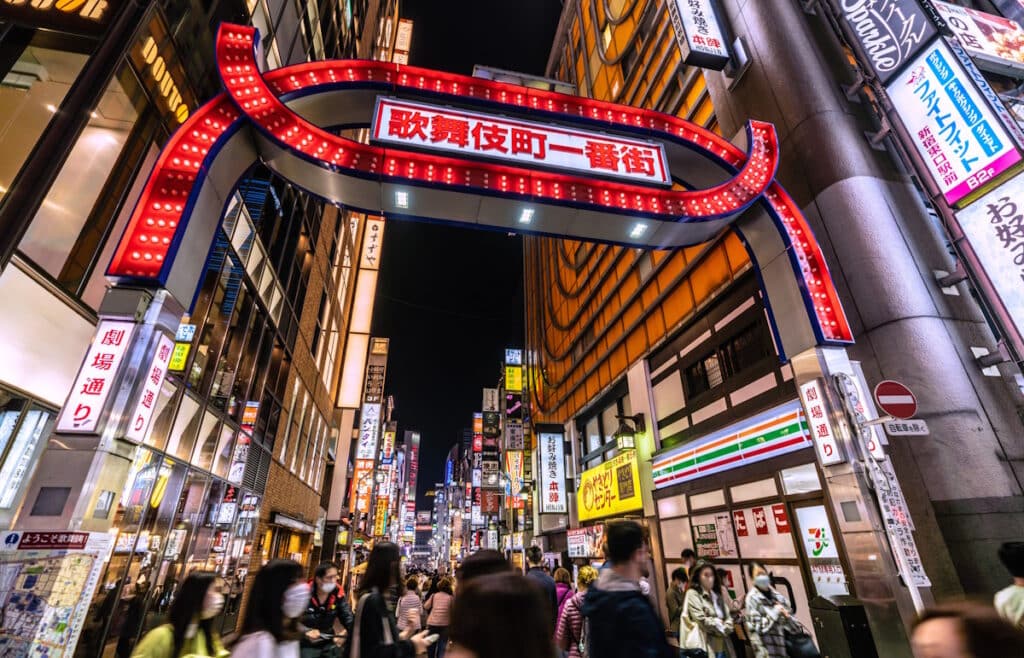
Kabukicho is Tokyo’s densest concentration of nightlife. Originally intended as a new home for Kabuki theater in Tokyo, it evolved into its current form after World War II. Besides serving as the city’s entertainment hotspot, it’s also become the home for those without a home, people who, for whatever reason, don’t fit into the traditional molds cast by Japanese society.
Two areas in Kabukicho drive this home. Ni-chōme is the heart of Tokyo’s LGBTQ+ scene, a collection of up to 400 bars, including King and Queen (a gay/lesbian bar pair) and the drag venue Campy! Close by, the famous Golden Gai yokochō boasts 240+ single-room bars, many of which hold only a few customers at a time.
Kabukichō also sports:
- Great cocktail bars, like the foreigner-friendly Bar Anniversary and the surprisingly good Sake Museum in the Subnade underground mall. The nearby Omoide Yokochō is another hotspot for finding great bars and restaurants.
- Old-time neighborhood attractions like Hanazono Shrine and the Shinjuku Batting Center.
- New attractions like the overly glitzy Tokyo Kabukicho Tower. Not a favorite destination of mine, but it sports some high-end hotels, Evangelion Kabukicho Impact, the Zepp Shinjuku music hall, and the snazzy 109 Cinemas Premium Shinjuku.
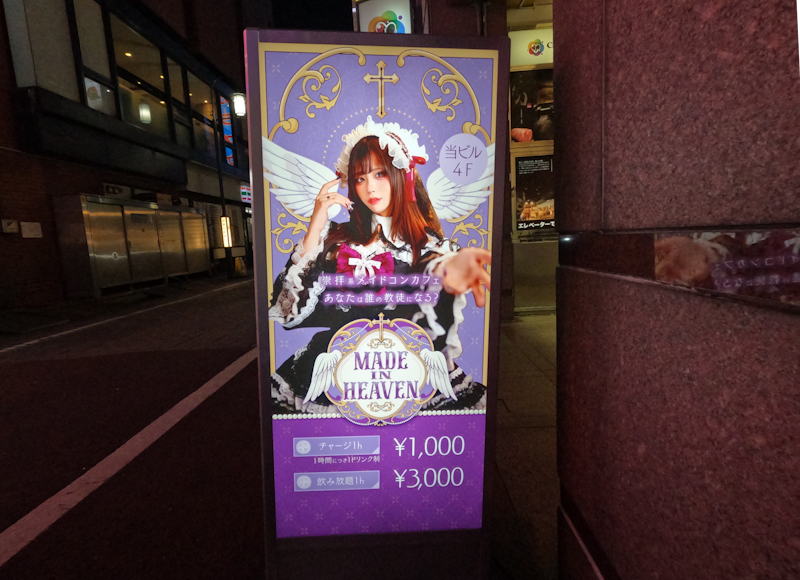
On the risque side, there are the more adult-coded entertainment venues. These include concept cafes and girls bars, muscle bars, hostess and host clubs, and even explicitly sexual businesses such as “oppai pubs,” soaplands, and happening bars. (Note that I cover the full gamut of these options, along with over two dozen vetted places to visit, in my Tokyo Nightlife Guide.)
Kabukicho is a hotspot for crime (but not violence)
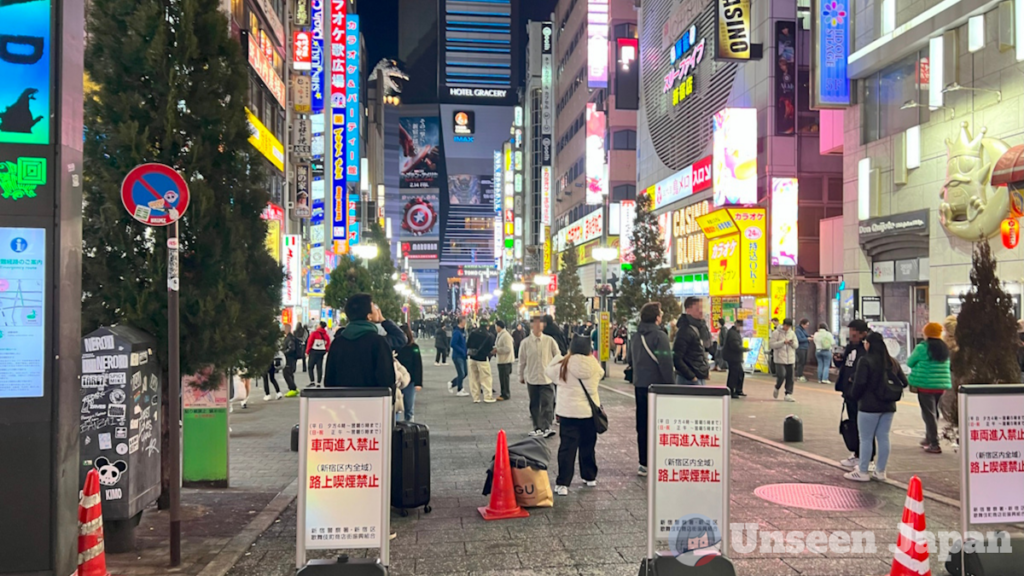
Now let’s get to the $64K question: Is Kabukicho safe?
The answer: On a pure numbers basis, yes. You’re very unlikely to be in any physical danger in Kabukicho.
There is a lot of crime in Kabukicho relative to the rest of Tokyo. Shinjuku is the highest crime ward in the city, and Kabukicho is why. In 2023, Shinjuku logged 5,537 recognized crimes. Kabukicho 1-chōme and 2-chōme are the second and third highest crime chōmes in the 23 wards.
Most of these crimes, however, aren’t violent. In 2024, only 145 (17.3%) of reported crimes in Kabukicho 1-chōme were violent. Most of these were drunken altercations (and, well, the occasional duel). 694, or 82.7%, were crimes like theft, fraud, and miscellaneous property offenses. 2-chōme is a little rougher but tops out at 27.3% violent crimes. Combined, 4 out of 5 crimes in Kabukicho are non-violent.
(By the way, if you’re curious…the highest-crime chōme? Shinjuku 3-chōme. The biggest crime there: shoplifting from the area’s fancy department stores.)
The most common danger: overcharging
The bigger danger to both locals and tourists in Kabukicho, aside from crime, is stores padding the bill.
Bottakuri (ぼったくり) crimes usually don’t feel like crimes at all. They involve promising one set of charges up front – e.g., an all-you-can-drink (飲み放題; nomihōdai) deal – and then tacking on extra charges for drinking games, drinks for staff (“cast drinks”), and additional add-ons. You can go in thinking you’ll only spend $30 and end up owing hundreds or even over a thousand.
Overcharging is treated as an ordinance violation, not a penal-code offense. It only rises to the level of a criminal offense if coercion is involved. (There were only four such cases in 1-chōme in 2024.)
On top of that, it’s suspected that many people never report overcharging. Some are embarrassed; many were drunk at the time of the incident. Others are non-Japanese-speaking tourists who either didn’t know how to file a report or left the country before they had a chance.
Because of all this, it’s hard to gauge the extent of overcharging in Kabukicho. Official figures put losses between January and October 2024 at around ¥140M ($867K). One lawyer who works in the area, however, says he fields three to four calls a week. The real scope of overcharging is likely far larger than the official estimates indicate.
Beware the barkers
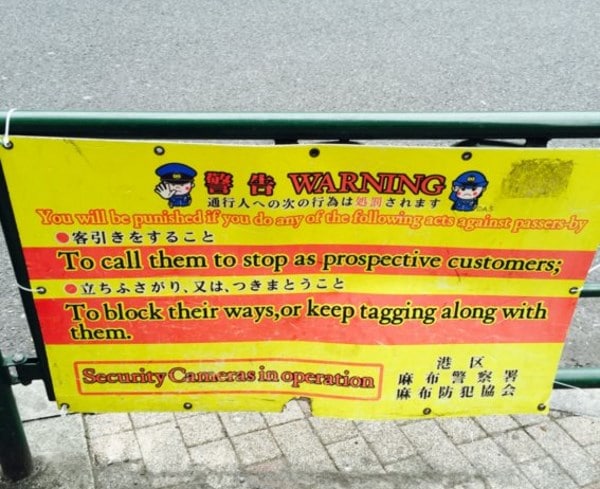
There are two ways people get pulled into scam stores. The most common for locals is online dating apps (マッチングアプリ; macchingu apuri). A woman sets up a “date” with a man in a bar that’s a front for scammers. Victims get overcharged and, in some cases, even drugged. If the victim runs out of cash to pay, the scammers will walk him to an ATM and force him to withdraw more.
For tourists, the biggest danger is the barkers or touts. These people, a mix of Japanese and English-speaking foreign touts, patrol the streets of Kabukicho, calling out to passersby (often tourists) to bring them to a specific shop. Aggressive touts may even stand in front of people or physically lead them into a store.
This behavior, called kyaku-hiki (客引き), is expressly illegal. The only legal form of street advertising is standing outside with a placard and calling out to people in general. Targeting specific people to come into a store is a crime that can result in a fine of up to ¥500,000 (~$3,070 USD) for individuals and up to ¥1,000,000 (~$6,140 USD) for business owners, or up to 6 months in jail.
So if it’s illegal, why do people do it? Because the money’s too good. Barkers can earn a 10-20% commission on whatever their victims are charged. Stores employ them as “freelancers” to insulate themselves from potential charges.
Kabukicho police are doing what they can to crack down on the barkers. They’ve chased them off the main drag of 1-chōme, though they still lurk around Golden Gai and the area’s side streets. Authorities are going after the stores that employ them by using an anti-bottakuri ordinance that allows fines on stores that accept customers brought in by barkers.
About those so-called “free information centers”
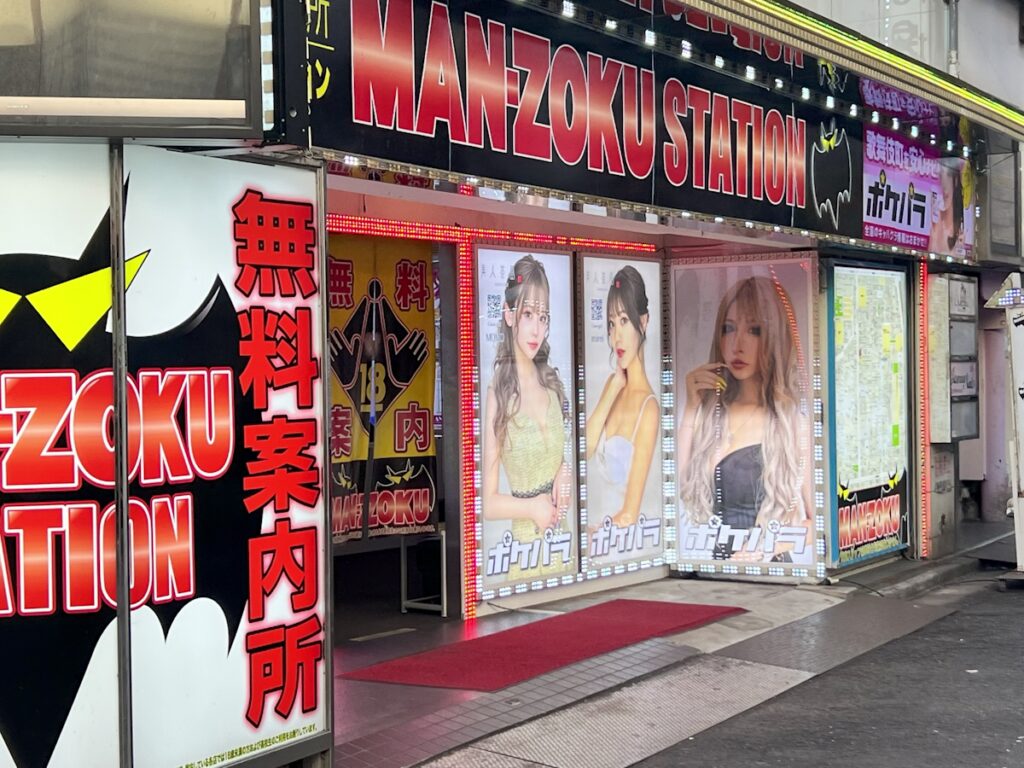
Kabukicho and other Tokyo nightlife districts abound with so-called “free information centers” (無料案内所; muryō annaijo). These centers promise to introduce you to various types of sexual and non-sexual businesses in Kabukicho. While historically aimed at Japanese domestic tourists, more are targeting overseas visitors.
Most of these stores aren’t scam shops. All of them, however, take kickbacks from referral stores. In other words, these aren’t reliable, third-party sources of information!
Staying safe and reporting a scam
None of this is intended to make Kabukicho sound scary. It really isn’t. You’re safer in Japan than you would be most anywhere else in the world. Kabukicho is no exception.
It’s possible to have a safe and fun night in Kabukicho. Just follow a few rules:
Only go into trusted stores. Walk past the free information centers. My Tokyo nightlife guide covers every type of Japanese nightlife business and lists over 30 locations that I’ve personally vetted. I update the guide monthly, so it’s always fresh and current (buyers get all updates, free of charge, for life).
Never listen to or follow a barker into a store. If one approaches you, ignore them and walk away. If they’re persistent, find a police officer or head straight for a police box (交番; kōban). The main one, near Kabukicho Tower, is at 2-44-2 Kabukicho. Heading here also gets you in view of patrolling officers and public safety guides who can help. (Most barkers will peel off by the time you get here.)
If you see barkers, act like you know where you’re going. The more lost and curious you look, the more likely they are to approach. If you’re by yourself, putting on headphones also helps.
Don’t engage in street prostitution. Prostitution (vaginal intercourse in exchange for money) is illegal in Japan. That hasn’t stopped foreigners from attempting it. Tokyo Shimbun reports that roughly 70% of the customers to Shinjuku’s Okubo Park, the city’s hotbed of street prostitution, are from overseas.
I support sex workers wholeheartedly. But on top of being illegal, engaging in street prostitution here is ethically suspect at best and morally repugnant at worst. Up to 40% of the people working here are doing so because of crushing debt at host clubs and concept cafes. Some are minors: Tokyo Shimbun found 16-year-old girls working the street.
While Japan doesn’t currently arrest customers, it will probably start doing so very soon. Street prostitution also opens you up to scams and even physical assault. If you want to enjoy the steamier side of Tokyo nightlife, my guide discusses in-depth how to do that legally.
If you’re scammed, contact the authorities. 110 is the emergency hotline, and support in English, Chinese, and Korean is available on request. Non-Japanese speakers can also call the Japan National Tourism Organization (JNTO) Travel Hotline at 050-3816-2787 for assistance.
Next to Amsterdam, Japan has one of the most distinctive nightlife scenes anywhere in the world. Follow the guidelines above, and you’re guaranteed to have a good time.
Keep reading

Sources
歌舞伎町の新たなぼったくりは「丁寧な接客と料金説明」 被害1億4000万円、都条例をすり抜ける巧妙な手口とは 東京新聞
「大久保公園」が海外のSNSで話題に…買春旅行の外国人が来るようになり「客待ち」摘発は前年から倍増した 東京新聞
東京23区「治安が悪い街」最新調査…「歌舞伎町1丁目」はワースト2位。1位は犯罪認知件数〈年800件〉超え THE GOLD ONLINE
客引き・スカウトの検挙状況と検挙事例 警視庁
盛り場トピックス(最近の盛り場の被害事例) 警視庁
客引き行為等の防止に関する条例の施行・改正、禁止となる行為 新宿区
新宿警察署 過去5年間の刑法犯の推移 警視庁
区市町村の町丁別、罪種別及び手口別認知件数(令和6年) 警視庁
歌舞伎町「立ちんぼ」摘発が問いかける売春防止法の限界 選挙ドットコム(坂本雅彦)