
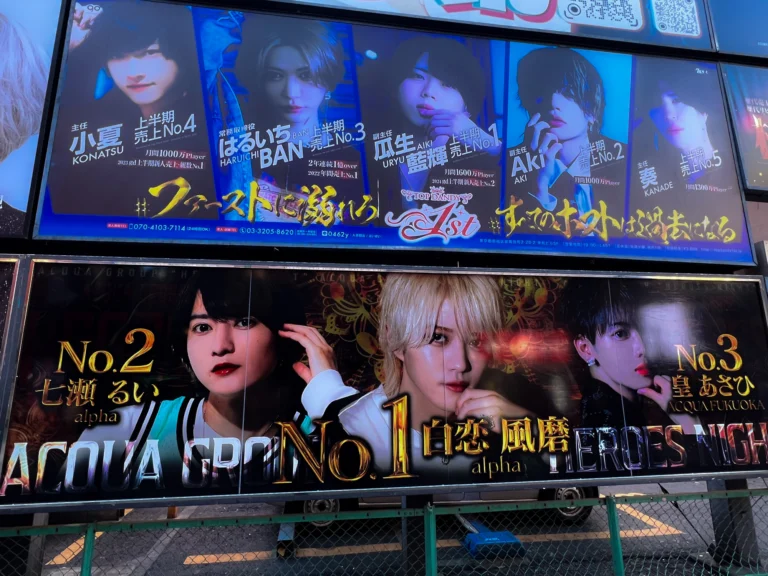
It’s been one year since Japan’s government revised the country’s Entertainment Law (known in brief as the 風営法; fūeihō) to crack down on host clubs. The move was ostensibly made to protect women who were resorting to prostitution and working in adult video to pay off massive club debts.
One year on, however, critics say nothing’s changed. As many predicted, the clubs have simply found new ways to avoid the law. The development shows why efforts to regulate Japan’s nightlife districts usually end in failure.
Bans on romance, coercion, billboard bragging

Host clubs are venues where male entertainers drink and converse with female customers. They’re one of many such nightlife businesses where young, attractive workers entertain members of the opposite (or same) sex.
Host clubs, however, have made headlines for their aggressive tactics, which include using fake romances to convince female customers to rack up bills they can’t immediately pay off. Some women trapped in the urikakekin (売掛金) debt system have taken to working at soaplands or engaging in street prostitution to finance their habit.
After several years of headlines warning about the danger to Japanese women this system imposed, Prime Minister Ishiba Shigeru’s cabinet proposed a revision to the Entertainment Law that passed both chambers of Japan’s Diet with unanimous support.
The new law prevents hosts from engaging in fake romantic relationships for business purposes. It also bans the kickbacks paid to scouts for routing women into Japan’s nightlife and sex industries. The bill further outlaws the unique custom of host clubs advertising on billboards how much money their top hosts pulled in.
Some violations result in administrative penalties, such as loss of license. Others, such as coercion and unlicensed operation, can result in fines or jail time.
There are several things the bill does not do. First, it doesn’t outlaw the controversial urikakekin debt system, in which a customer runs a large tab she has to pay off the next month. Kabukicho’s largest host club association said its members would voluntarily stop using the system.
Second, the advertising ban is only for physical billboards. The law doesn’t restrict host clubs from bragging about earnings in social media and online advertising.
No change on the streets – or in the clubs
How effective has the law been? According to a recent analysis by Mainichi Shimbun, it hasn’t moved the needle one iota.
Tokyo Metropolitan Police, who oversee the nightlife mecca of Kabukicho, say they’ve only made one arrest under the new provisions of the law. In fact, arrests at host clubs are down from 13 in 2024 to a mere 5 in the past year.
Meanwhile, since January 2026, police have arrested over 30 women for street prostitution. Of those, nearly 40% say they’re working to pay off host club debts.
How are women still getting into debt? Simple: clubs have found new ways to encourage overspending.
At some clubs, a host personally takes on a customer’s tab as personal debt. That makes the transaction a “private” matter between the customer and the host, not the store. In others, hosts and scouts encourage customers to take out shady consumer loans before entering the club. (Technically, that’s illegal. But so is touting, and that still happens routinely.)
“More malicious than ever”
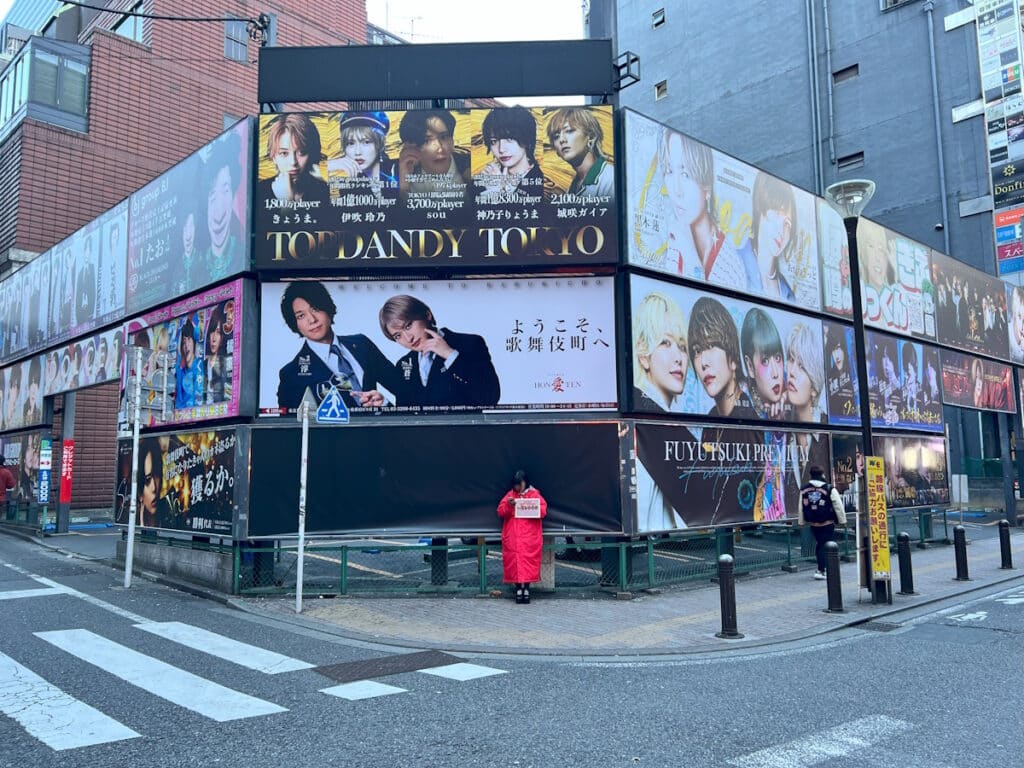
Japan’s National Police Agency points to the drop in arrests at host clubs as a sign the law is working. Customers, however, say that hosts have just gotten craftier.
For example, hosts have switched up their romance tactics to dodge the law. They’re still telling customers they love them. They’re just doing it surreptitiously, using sales-coded phrasing such as 好き (“I like you”) or 会いたい (“I want to see you”). They’re also communicating more via voice and video chat so that there’s no digital trail to use as evidence later.
More host clubs now ask to see a patron’s health insurance card before they enter. This enables them to sniff out plain-clothes police officers who may be attempting to check on the store’s operations.
To underscore the point, Mainichi separately profiled a woman who ran up a ¥7 million (~$43,000) tab in one night. She resorted to committing crimes to pay it off. Her host is still working at the same club.
“The stores have taken up tactics to avoid being caught,” one woman told the paper. “If anything, they’re more malicious than ever.”
But this has always been the way things run in Kabukicho. The Japanese government has cracked down on its nightlife districts before. Each time, businesses have simply changed tactics and kept on churning. In the end, there’s only so much any government can do to regulate human needs and desires.
Keep reading

Sources
真相・ニュースの現場から:「悪質ホストより巧妙に」風営法改正1年 売春導く構図変わらず 毎日新聞
歌舞伎町ホストクラブ「売掛金」規制の大誤算…”立ちんぼ女性”減少せず「立て替え」「闇金への仲介」まん延の”カオス”な実態とは? 弁護士JPニュース
悪質ホスト問題、売掛廃止も「新手口」で被害減らず…スカウト暗躍「入店前に闇金で借りさせる」 弁護士ドットコムニュース (archived)
悪質ホストクラブ対策について 警察庁
悪質ホスト、恋愛感情つけ込む営業規制 改正風営法が成立 日本経済新聞
歌舞伎町ホストクラブ「売掛金」全廃へ 業界団体設立、ルール検討というけど…実効性に疑問の声も 東京新聞デジタル
ホストの広告規制、影響は? 「1億円プレイヤー」から「凄い人」に―ネット広告対象外も変化・改正風営法 時事ドットコム
歌舞伎町から「No.1ホスト」の看板が消えた日 “神様”と呼ばれたカリスマホストが風営法改正に心境告白 ねとらぼ
風俗営業等の規制及び業務の適正化等に関する法律の一部を改正する法律案(第217回国会・内閣提出)議案情報 参議院