
Source: @YahooNewsTopics on X (2026-04-17)
Overall verdictNot “no plans” — no room. The replies refuse to stay inside the headline’s inflation frame. The most-liked reply, at 157 likes, sidesteps the whole question: “my schedule just doesn’t have a Golden Week on it” — a reminder that the survey treats GW as universal when most of Japan’s service and retail sector works straight through it. The second-most-liked (148 likes) demands a correction: this isn’t inflation, it’s policy failure that never made it into wages. A third cluster quietly reframes “no plans” into a small victory: with every destination now choked by inbound tourism and hotel rates several times pre-inflation levels, staying home is the rational choice, not the sad one. The 40% figure isn’t a tragedy in this thread so much as a Rorschach test for how each commenter feels about the Takaichi cabinet.
Note: Comments on X (formerly Twitter) in Japan tend to skew toward the political right, though individual threads may lean left depending on the original poster and topic. These comments are not necessarily representative of the Japanese population as a whole.
What the tweet was about
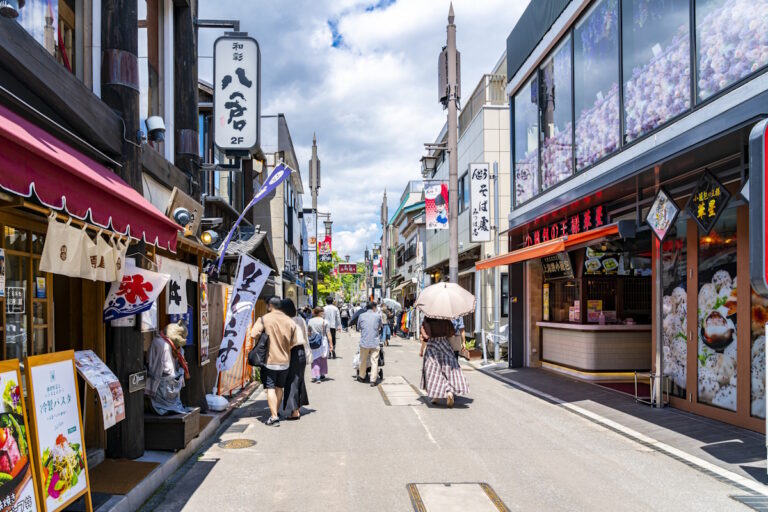
The tweet links to a Yahoo News Japan summary of an annual survey finding that roughly 41% of respondents have no plans for Golden Week 2026, framed as a four-year high driven by inflation. Golden Week is the late-April to early-May cluster of national holidays that typically produces Japan’s biggest domestic travel peak, so polling showing people opting out tends to become a political story quickly.
The poll landed at a politically sensitive moment. Prime Minister Takaichi’s cabinet is still holding a 59.1% approval rating, but under pressure over persistent inflation, 30 years of stagnant real wages, and the hotel-price surge driven by Japan’s record inbound tourism boom. The replies fold all three grievances into the GW question even when it wasn’t exactly what was being asked.
Unseen Japan has covered Japan’s cost-of-living dynamics in this guide to what it actually costs to live in Japan and the overtourism dimension in pieces such as Kyoto’s vacation-rental crackdown.
Sentiment distribution (engagement-weighted)
have no plans
for Golden
Week 2026
wages last
meaningfully
rose
Highest-engagement comments
Activity timeline (JST, 2026-04-16)
Key themes in detail
🏛️ Not Inflation, Policy Failure · 43.5% of engagement
The single strongest current in the thread is a correction to the headline itself. Commenters reject “inflation” as the right word, arguing the real story is policy: 30-plus years of stagnant real wages, a yen the Bank of Japan let slide, consumption-tax revenue that 61% went to corporate breaks (a figure repeated several times in the thread), and a Takaichi government that has not delivered on price-relief promises. The second-most-liked reply (148 likes) captures the mood in one line: “stop pawning it off on inflation or the Middle East — this is policy failure.”
💰 Can’t Afford It · 7.9% of engagement
The most literal reading of the survey. Commenters list Shinkansen tickets (20,000 yen Nagoya-to-Tokyo round trip, “three days’ take-home pay”), hotel rates at multiples of pre-inflation levels, and gasoline costs that wipe out car travel. A recurring correction from this theme: it isn’t really “no plans,” it’s “no margin to plan,” a phrasing that appears almost verbatim in several comments.
🗾 Crowds and Inbound · 17.4% of engagement
A distinct complaint from pure affordability: even if you could afford it, every destination is now unusable. Overtourism, 50-kilometer expressway jams, Shinkansen at 250% occupancy, and foreign-tourist behavior that commenters find disruptive to the relaxation GW is meant to provide. Several replies explicitly cite inbound demand as the reason hotel prices broke free of domestic ability to pay.
🏠 Home Is Best · 8.1% of engagement
The largest theme by raw comment count, and the most surprising. A sizable minority reframes the “no plans” finding into positive territory: walking the neighborhood, reading, the kind of quiet domestic time you can’t get when you force yourself into the crowd. One commenter invokes the Italian dolce far niente; others flip the survey into a challenge to the assumption that GW must be spent doing something expensive. This is the quietest political statement in the thread, but in a culture that historically treats holidays as obligatory outings, it reads as a real shift.
🛠️ Service Workers Never Had a GW · 17.3% of engagement
The top-liked reply of the whole thread (157 likes) belongs to this theme: “my schedule just doesn’t have a Golden Week on it.” Retail, logistics, nursing, food service, and construction workers repeatedly point out that over 70% of Japanese jobs are in service sectors that run through the holiday. The implicit critique: a survey that treats “no plans” as primarily an economic signal ignores the large share of the workforce for whom GW was never a free week to begin with.
⚖️ Rich vs. Poor · 5.6% of engagement
A smaller but sharp theme: the class read. Commenters pair the 41%-no-plans number with record outbound-travel figures (570,000 going abroad this GW) to argue that the Japanese public isn’t opting out of GW — only the working half is. “Regular folks can’t afford leisure. Meanwhile the wealthy flood the airports for overseas GW trips, and every network covers them.” A related line: the Nikkei hits record highs while 40% of the country can’t plan a weekend away.