
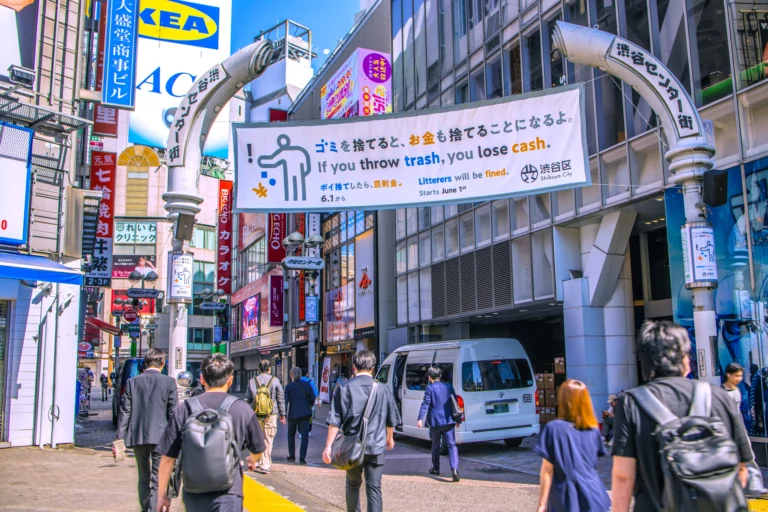
Shibuya has been having problems with littering and has finally decided to put a price on it. Which is to say, as of June 1, 2026, anyone caught tossing trash on the ward’s streets can be hit with a ¥2,000 (USD $13) on-the-spot fine.
The story is being used as an example of how tourism is making Japan worse. However, the statistics show that locals are just as much to blame for Shibuya’s slovenly condition as inbound visitors.
A quick rundown of the Clean Shibuya Ordinance
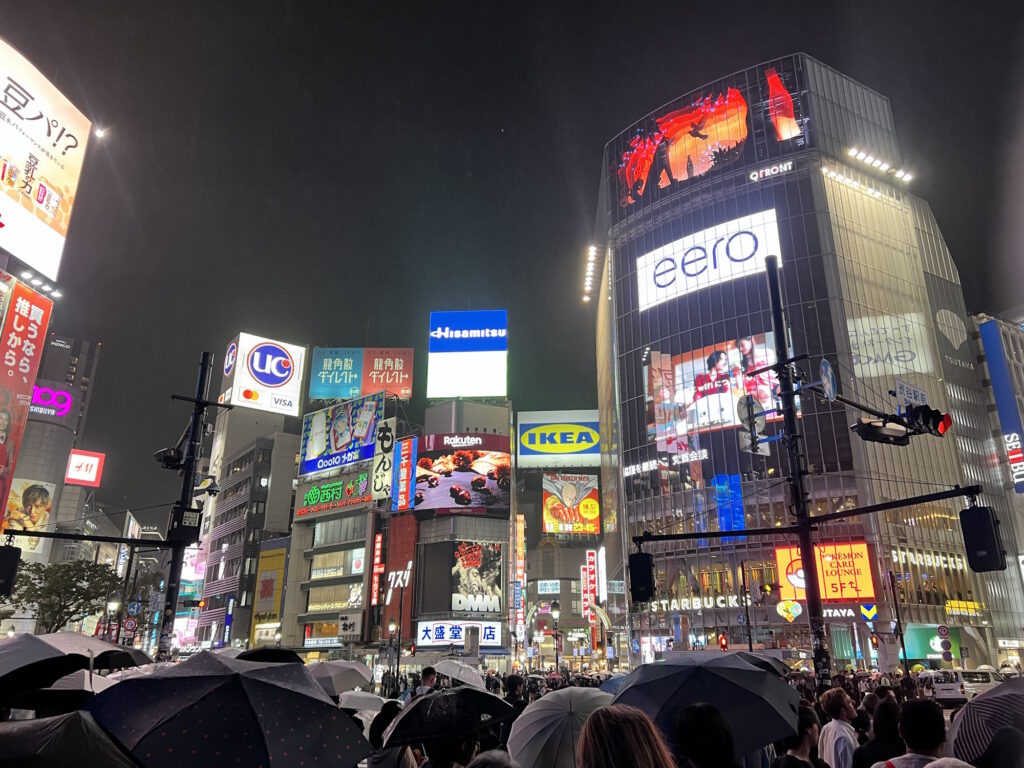
The “Clean Shibuya Ordinance” (きれいなまち渋谷をみんなでつくる条例, kirei na machi Shibuya o minna de tsukuru jōrei) is a local government measure first enacted in 1997. The ordinance was focused on education about beautifying the ward (i.e., not to litter or paint graffiti, smoke only in designated smoking areas, etc.). It also organized volunteer events to clean up trash, pull weeds, and so on.
However, on December 10, 2025, Shibuya revised the ordinance. The mayor, Hasebe Ken (長谷部健), said that education and voluntary beautification efforts weren’t cutting it. The littering problem was out of control.
So, the ward said that local businesses like convenience stores, cafés, and fast-food chains should install trash bins. This went into effect on April 1, 2026, but wouldn’t actually penalize businesses that didn’t follow it right away. Instead, they allowed a sort of grace period of two months so that news could spread around.
Now that it’s past June 1, though, any businesses without trash cans will be subject to penalties of up to ¥50,000 (USD $312). And as mentioned earlier, the ¥2,000 fine targeting litterbugs went into effect at the same time.
As for how the ward will enforce this, it’s deploying roughly 50 patrol officers to keep an eye out for litterers. The officers will be trained in multiple languages, including English, Chinese, and Korean. The setup even has a catchy slogan in English: “If you throw trash, you lose cash.”
Who, exactly, is littering? Some surprising statistics
On paper, it seems straightforward enough. If you make trash bins more available, people don’t have excuses for littering. If they still litter, they get a small but immediate financial sting for bad behavior.
But Shibuya isn’t just any neighborhood; it’s one of Tokyo’s busiest tourist hubs. The fact that the city created an English-language slogan with multilingual patrol officers suggests that this ordinance is directed mainly toward foreign tourists.
However, the actual statistics point to this not being a foreigner problem, with only 52% of litterers being foreigners. The other 48% are Japanese. You wouldn’t know that based on the headlines.
That being said, 92% of those littering were non-residents of Shibuya Ward. Meaning, it is mostly people who don’t live there who are tossing garbage wherever. Kind of like how it’s mostly people who don’t live there who cause a ruckus on Halloween.
The volume of litter is also startling. From 2020 to 2023, the ward had an average of eight to 25 items of trash on public streets per 100 meters (328 feet). This peaked at 70 items in August 2024. More recently, the average has been 37 to 56 items per 100 meters. In other words, the amount of litter has more than doubled in just a few short years.
A domestic terrorist attack that resulted in a public trash bin ban
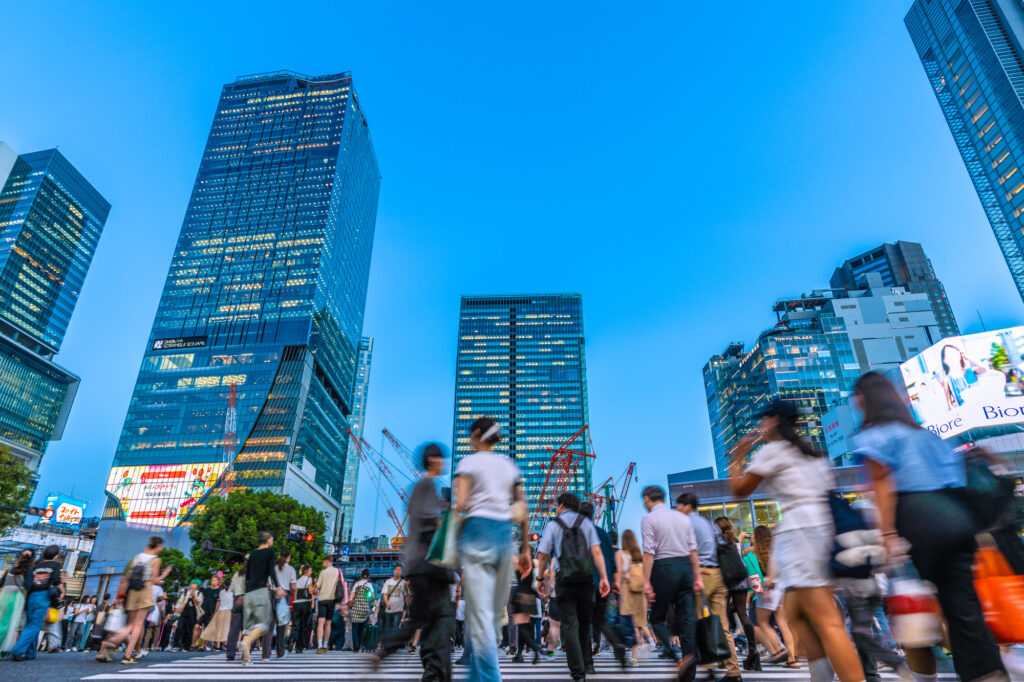
The thing is, Shibuya and Tokyo as a whole have almost no public trash bins. In 1995, the Aum Shinrikyo cult used trash cans as part of a sarin gas attack on the subway system, killing 13 people and injuring thousands. The government then removed public trash bins for security reasons. In 2023, the government doubled down on its no-trash-can policy for the G7 Summit in Hiroshima.
The result is a country where people are expected to carry their garbage home. But in a district like Shibuya, packed with tourists and takeaway food, that norm breaks down fast.
Foreign travelers also cite this lack of public trash cans as one of the biggest inconveniences of going to Japan. Studies from other cities that have dealt with littering issues have found that setting out more trash cans could significantly reduce litter.
With the trash issue in Shibuya getting so bad, those in charge have to do something. But instead of reinstalling public bins, they’re choosing to push the problem onto local businesses.
Pushback from business and political fronts
While forcing businesses to add a few trash bins may not sound like a big deal, they need a lot more maintenance than you’d expect. Early reports say that some businesses are already spending ¥80,000 to ¥100,000 (USD $500 to $625) per month managing trash.
A lot of that trash isn’t even coming from their own customers, but people dipping through their doors off the street. Meaning, it’s a total net loss. And if they don’t like it, they can get slapped with a ¥50,000 fine.
The vast majority of convenience stores and fast food joints had trash bins even before the revised Clean Shibuya Ordinance. It’s just that now, the government is pressuring businesses to open their private trash bins to public use.
Unsurprisingly, not everyone is happy about this. Chains like FamilyMart have framed compliance as a store-by-store decision rather than a blanket rollout.
It also seems generally unfair that the government is trying to enforce beautification but won’t do the basic work of waste management that would help it along. Of course, bureaucracy is infamous for its incompetence, so one might argue that having private businesses fill in a public infrastructure gap might be more efficient.
Or, combined with the enforcement that seems to target foreigners, it might make Shibuya an unappealing place in the long term, for both businesses and travelers. Shibuya has already lost its charm among Japan’s youth, with many fleeing the former iconic fashion and shopping district as businesses replace unique local stores with skyscrapers.
Hopefully, it won’t get that bad, but it’s still too soon to say.
Keep reading



Sources
渋谷区ポイ捨て禁止ルール(ポイ捨て者への罰則について) 渋谷区ポータル (Shibuya Ward official)
「ポイ捨て」に罰則金 渋谷区が改正条例施行へ、長谷部健区長が会見 シブヤ経済新聞
ごみ「ポイ捨て」したらその場で過料2000円…渋谷区で6月から 早朝のセンター街に転がる「現実」 東京新聞デジタル
渋谷区、飲食店「ゴミ箱」設置義務に賛否。ファミマは「店舗と協議」…来年6月から違反金5万円徴収の背景 Business Insider Japan
渋谷のポイ捨て、実は半数以上が外国人 「過料2000円」の新条例、実効性に疑問の声も ENCOUNT
渋谷区”ポイ捨て”新条例 施行1ヶ月で見えた課題 TOKYO MX+
Japan’s Shibuya to fine litterbugs on the spot from June as visitor numbers surge South China Morning Post