
Kyoto City May Partially Ban Vacation Rentals to Give Residents Tourist Relief

Japan already has strict regulations in place for AirBnB-style vacation rentals by owner (VRBO). None more so than Kyoto City. Now comes word that the city may crank that up to 11 as tourists continue to piss off residents who say they’re tired of loud parties. One of the policy changes on the table includes banning vacation rentals from certain residential areas entirely.

264 complaints across 1,088 properties
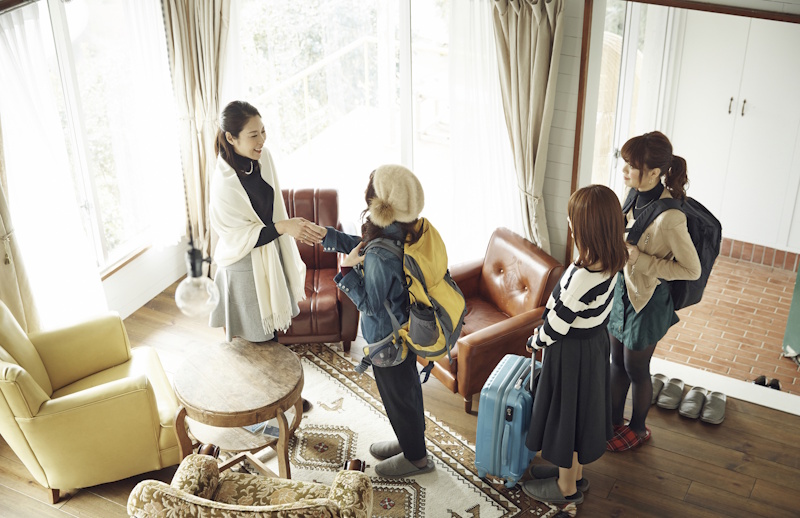
Picture: Fast&Slow / PIXTA(ピクスタ)

Vacation rentals have been strictly regulated since 2018, when Japan revised the lodging law to give cities more power to regulate VRBO. Cities can zone vacation rentals to specific areas and also determine their days of operation.

Kyoto City already has some of the strictest regulations. In general, a VRBO in Japan can’t operate more than 180 days out of the year. (The exception is the seven special “designated rental” areas, such as Tokyo’s Ōta City, where rentals are permitted year-round.)

In dedicated residential neighborhoods of Kyoto City, however, they’re restricted to operating only during a two-month period between January 15th and March 15th. In addition, owners must live at the property or within a 10-minute walk so they can respond to issues quickly.

The strict regulations mean that Kyoto City is home to only around 1,088 of the country’s 25K+ VRBO properties. However, in 2025, the city received 264 complaints from residents about vacation rentals. Most centered around noise and improper disposal of garbage.

That’s led Kyoto City to consider tightening regulations even further. Mayor Matsui Kōji won’t rule out designating certain areas as “zero-day rental” areas, meaning property owners wouldn’t be able to rent out homes or apartments in those zones at all.

Matsui stressed that the city recognizes banning vacation rentals outright would just mean that traffic ends up at other properties, such as bed and breakfasts. In response, Matsui says the city will consider regulating all such businesses uniformly, which might require changes to the city’s zoning laws.

Matsui emphasized he’s not seeking to regulate rentals out of business. He would prefer to see “rental businesses that are accepted by the community.” In other words, he wants to see vacation rental owners keep their deranged guests under control.

Foreigners travel, Japanese stay home
Cost/performance ratio of traveling to Japan

The growth of vacation rentals reflects the changing face of travel within Japan.

The Japan Tourism Agency reported last month that, while inbound traveler stays at lodging facilities were up 8.2%, the number of Japanese staying overnight in hotels shrank by 3.8%. As hotel prices keep rising, Japanese domestic travelers – who are struggling with stagnant wages and a weak yen – are opting to stay home.

The increasing demand makes vacation rentals a lucrative business. Many foreign travelers would rather stay in a residential neighborhood so they can get a taste of daily life in Japan.

However, that’s leading to increasing conflicts between people in Japan who are here to have fun on vacation and residents who have to get up and go to work in the morning. Noise complaints are the number one source of trouble, with some tourists partying well past 10 pm and keeping others from getting a good night’s sleep.

It’s unclear what steps Kyoto will take next. The city, which is already struggling on multiple fronts with overtourism, can ill afford to create fewer spaces for people to stay. Any regulation will have to balance accommodating a growing number of inbound tourists with residents’ needs.

Sources

京都市、民泊の営業「0日規制」案も 観光公害で「地域が崩壊する」. Asahi Shimbun

特区民泊とは?どんな民泊オーナーが向いているか解説. AirHost

京都市内において、いわゆる「民泊」の実施を検討されている方へ. Kyoto City Official Website

京都市が民泊の規制強化へ、市長「観光と市民生活を両立させる」…立地や営業日数を厳格化. Yomiuri Shimbun

25年宿泊、30都府県で減少 宿泊費高騰、旅行控え響く. Kyodo News
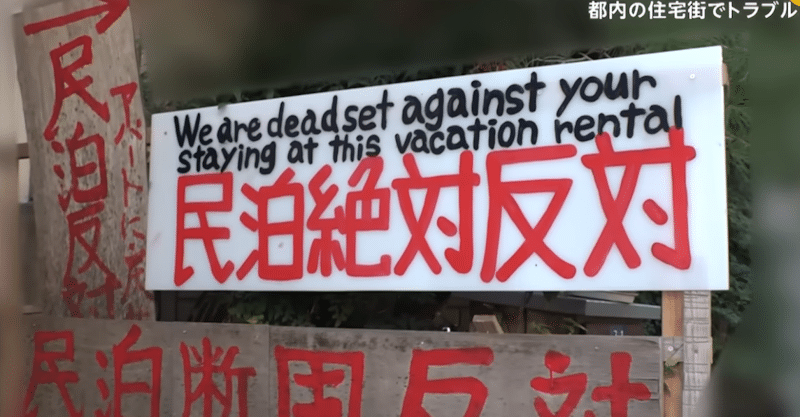
Angry Signs Opposing AirBnB-Style Rentals in Tokyo Raise Questions for Tourists

As tourism to Japan continues its upward trajectory, more people are staying at private vacation rentals brokered by sites like AirBnB. That’s causing tension with residents, at least one of whom decided to take matters into their own hands in Tokyo recently.

As reported by Asahi Shimbun and FNN, someone has been putting up a slew of signs in the neighborhood – written in Japanese, English, and Chinese – opposing foreigners renting apartments in one building as short-term vacation rentals. One English sign reads, “We are deadset against your staying at this vacation rental.”

No Title

No Description

Video of the sign in question. (Source: FNN)

Local residents interviewed by reporters say they regularly deal with loud noises coming from the apartments of the three-story building late at night. Security cameras have also caught travelers smoking outside and throwing their butts on the ground. (Smoking in public outside of designated areas is against the law in Tokyo.)

No one told us this would be a rental!

Screen capture of anti-vacation rental sign

Why all the anger? It turns out the situation is complicated. Besides the noise and garbage complaints, residents say they feel like they were conned.

The practice of home vacation rentals, or 民泊 (minpaku) in Japanese, has long been controversial. In response to complaints from citizens years back, Japan passed new regulations on minpaku in June 2018. Under the new law, an owner who wants to rent a house or apartment has to submit a notice first to their local city hall. Authorities will then dole out a registration number, which has to be displayed prominently somewhere on the building. This number must also be included in all online rental listings.

With Japan projected to receive over 40 million visitors in 2025, vacation rental stays are more popular than ever. There are currently 25,000 registered minpaku properties in Japan – an all-time record.

The law gives municipalities a lot of leeway in regulating short-term private rentals. In Tokyo, for example, Chuo, Koto, and Meguro City, among many others, only allow them to operate on weekends. Others, like Chiyoda, allow them to operate from private residents without restriction but restrict their operation in other areas.

The building in question is properly registered for short-term stays. However, it was built on the understanding of residents that it would be a regular apartment building.

New owners bought the building and registered it as a vacation rental last year. However, they never communicated with residents or sought acknowledgment for turning it into a minpaku facility. That’s left many in the neighborhood with a bad taste in their mouths.

Should you consider an AirBnB rental in Japan?

The apartment building owner refused to talk to reporters about the complaints. FNN interviewed foreign lodgers, one of whom brushed off the complaints.

“So long as it doesn’t impact me, I don’t care,” they said before walking away.

That raises the question: Should you consider a private residence stay on your trip to Japan?

On the one hand, many travelers think it feels more “real” to stay in a regular Japanese neighborhood among people going about their daily lives. It also exposes you to an area outside the usual tourist traps you might not have ventured into otherwise.

On the other hand, you may get your fair share of dirty looks – or, in this case, outright opposition. Incidents of tourists behaving badly make the news here on a weekly basis, which is causing increasing tensions between tourists and locals. As this story shows, you may unintentionally find yourself as a bit character in a local drama.

I’ve done AirBnB stays before I moved here and enjoyed them. However, if I had to do it again, I’d probably stick to a hotel, traditional ryokan, or extended-stay residence. The novelty isn’t worth the tension it might cause.

If you do stay in a short-term rental, do your best not to make your fellow vacationers look bad. Obey all local laws and keep the noise down, particularly at night. Remember that it may be your vacation – but it’s everyone else’s workday.