Study: Hokkaido Residents Would Make Millions If Paid to Shovel Snow
Confession: I have yet to visit Hokkaido. But as a former Upstate New York boy (Rochester, precisely), I know what it means to live in a winter wonderland. So I’m not surprised by this new thought experiment from a Hokkaido research institute that calculated how much effort Hokkaido residents spend shoveling the white stuff during the winter. Their conclusion: A hell of a lot.
With events like the Sapporo Snow Festival and beautiful scenes in towns like Biei, Hokkaido winters draws in travelers worldwide. However, the volume of snow – while pretty – makes life hard for people who actually live and work there.
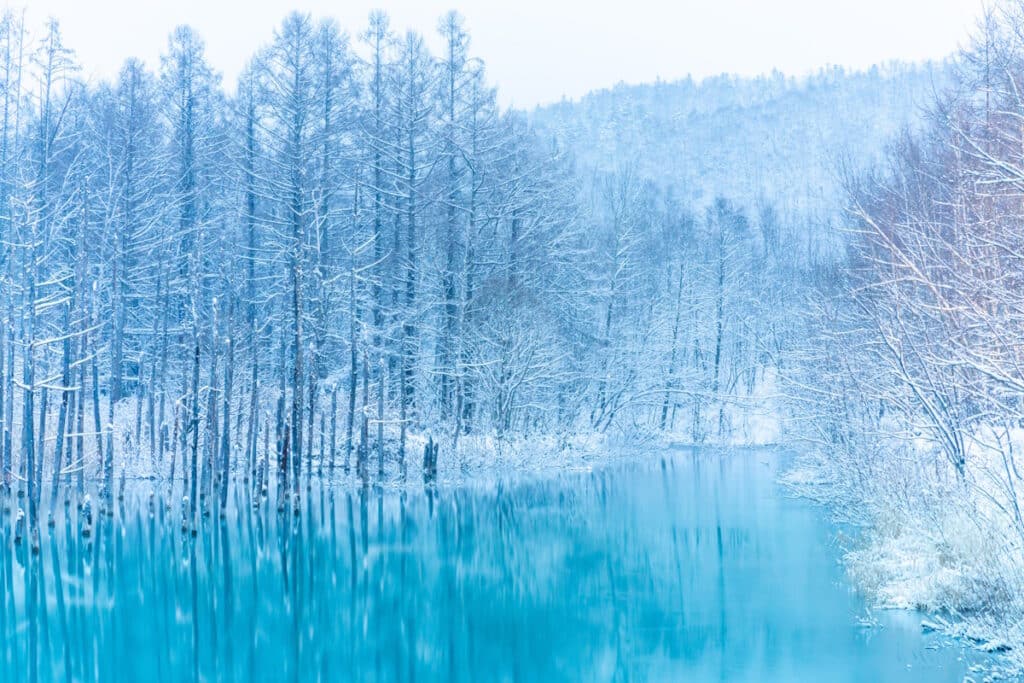
Blue Pond, Shirokane, Biei, Hokkaido. (Picture: Jake Images / PIXTA(ピクスタ))
How hard? According to Yomiuri Shimbun, a new study from the Dogin Regional Research Institute sought to calculate how much snow residents shovel by calculating how much they’d make if clearing powder were a paying gig.
The Institute estimated that some 2,125,000 residences have to clear snow during the winter, and each residence spends an average of 15 hours a year on snow removal. Estimating an hourly wage of 1,675.1 yen ($11.18, a pretty damn good hourly wage for Japan), they calculated that residents would earn a total of 53.4 billion yen, or USD $356M.
Mind you, at 15 hours per household, that’s only 24,000 yen ($160) a pop. Still, in the aggregate, it represents a stunning amount of effort that cuts into everyone’s productivity and leisure time.
The good (?) news is that climate may be reducing that burden a little. According to weather data, snowfalls have dropped gradually over the past 30 years and continue to decline.
That’s bad news for tourists, obviously. But perhaps a blessing for residents who are fed up with all the unpaid labor.
Sapporo Snow Festival: What to See, How to Enjoy
In Japan’s northernmost prefecture, Hokkaido, the first snowfall of the year can hit any time between late September and early November. From there, the ground can stay covered until as late as April or May of the following year.
True, the snow can be frustrating to deal with. Shoveling becomes a daily or even twice-daily chore. It’s best to keep some salt or sand in the back of your car in case of icy roads.
But the people of Hokkaido know how best to handle all this snow: by celebrating it. The prefecture’s largest event, the annual Sapporo Snow Festival, takes these mountains of snow and turns them into stunning works of art.
In recent years, the Snow Festival added two more sites: Susukino and Tsudome. These feature ice sculptures and rides and activities for children, respectively. Snow sculptors both amateur and professional from all over the world can reserve plots in Odori Park and use Hokkaido’s most abundant resource to design and craft a sculpture.
The History of the Sapporo Snow Festival
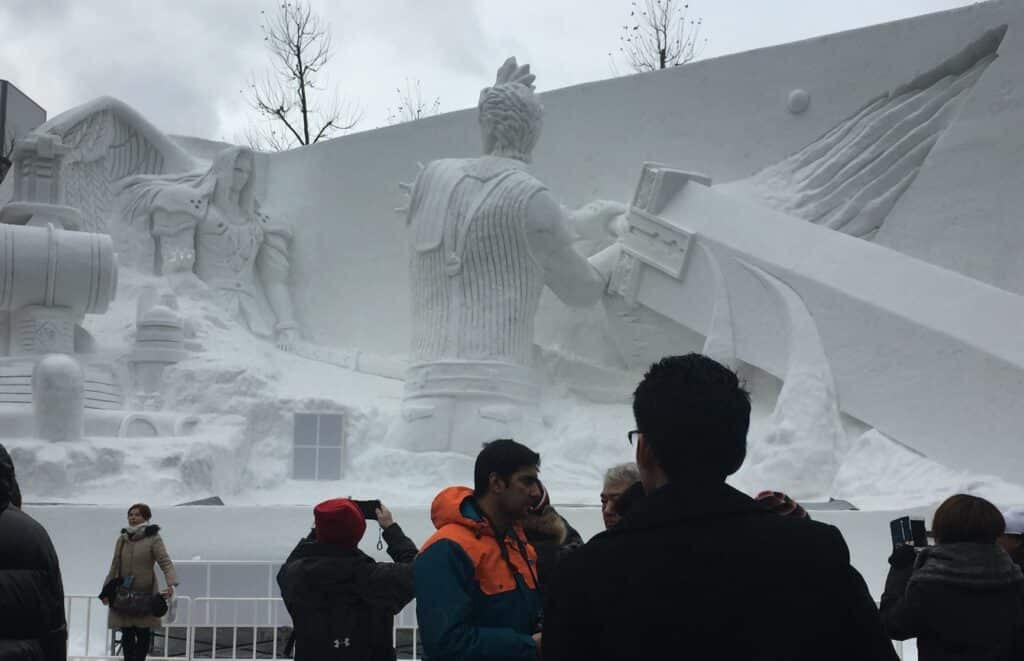
Cloud and Sephiroth from the video game Final Fantasy 7 at the 2017 Snow Festival
Sapporo held its first Snow Festival in 1950. The people of Sapporo were using Odori’s 7-Chome block as a snow dumping ground during the winter. The government of Sapporo wanted to do something with all the excess snow.
The first show featured only six sculptures, including a snow replica of the Venus de Milo. All sculptures were made by local high school and junior high students. The event also featured snowball fights, dancing, and dog races. Although held for only a single day, the festival was an unexpected success, with an estimated 50,000 people intending.
Following its immediate success, the Sapporo Snow Festival grew rapidly in duration and scale. In 1954, members of the Japan Self-Defense Force began taking part. This added labor allowed for the creation of the Festival’s now-signature giant snow sculptures. The largest sculptures typically stand 10 to 15 meters high.
Visitors From Around the World
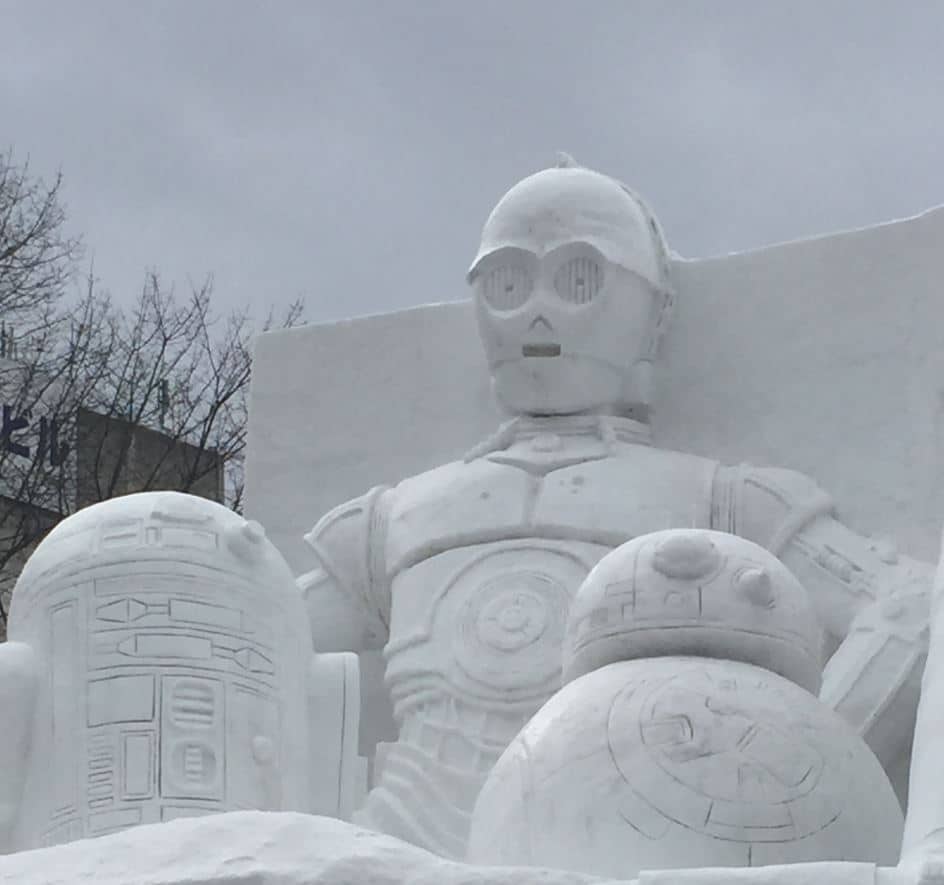
C-3PO, R2-D2, and BB-8 from Star Wars at the 2017 Snow Festival
International tourists began attending the Festival in the 1960s and 1970s. The international popularity of the event skyrocketed in 1976 when the annual theme was the United States Bicentennial. In 1987, the government extended the Snow Festival’s duration to its current seven days due to the increased number of visitors.
During the 1990s and 2000s, the Festival expanded from just Odori to its current three sites. The advent of projection mapping technology allowed for the creation of beautiful nighttime light shows projected against the large sculptures.
These days, the Sapporo Snow Festival runs for seven days across three venues every year. Large snow sculptures have celebrated everything from the Winter Olympics Games to the introduction of the Shinkansen in Hokkaido to the anniversary of the video game series Final Fantasy. The Festival displays 60 and 100 snow sculptures every year, with over half created by Sapporo’s citizens. In some years, the Snow Festival has also featured tube rides, curling rinks, a mock ski slope with demonstrations, and musical performances from both Japanese and foreign artists.
An estimated two to three million visitors attend every year. [1]
Tips for Visiting the Snow Festival
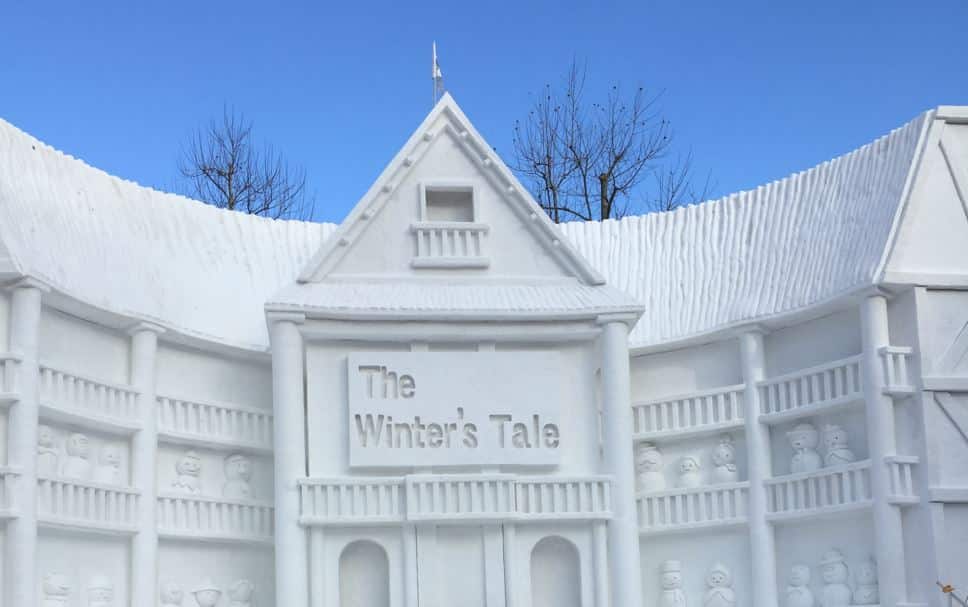
London’s Globe Theater at the 2016 Snow Festival
If you make your way to Sapporo to see the Snow Festival, you will find yourself with lots to do. There are sculptures to view, attractions to experience, food to taste, and so much more. Here are a few tips – from one of our UJ staff who visited the Snow Festival themselves! – to make the most of your time in Hokkaido’s wintery capital.
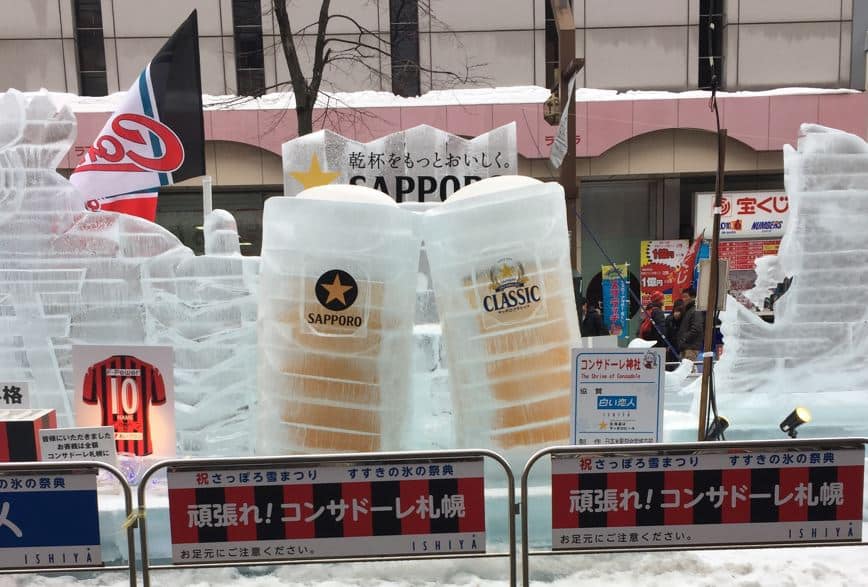
Ice sculpture of Sapporo Beer at the 2017 Snow Festival
Stay Warm
Bring plenty of warm clothing, and wear layers. Regardless of the weather, all that snow and ice in one place means that it gets pretty cold, especially at night. Make sure to bring plenty of warm clothing to wear so that you can enjoy the Snow Festival comfortably.
Don’t forget proper footwear. With so many people visiting the Snow Festival, the paths between the sculptures can quickly get slushy and icy. Always wear sturdy shoes with solid soles, such as winter boots, when visiting any Snow Festival sites. [2]
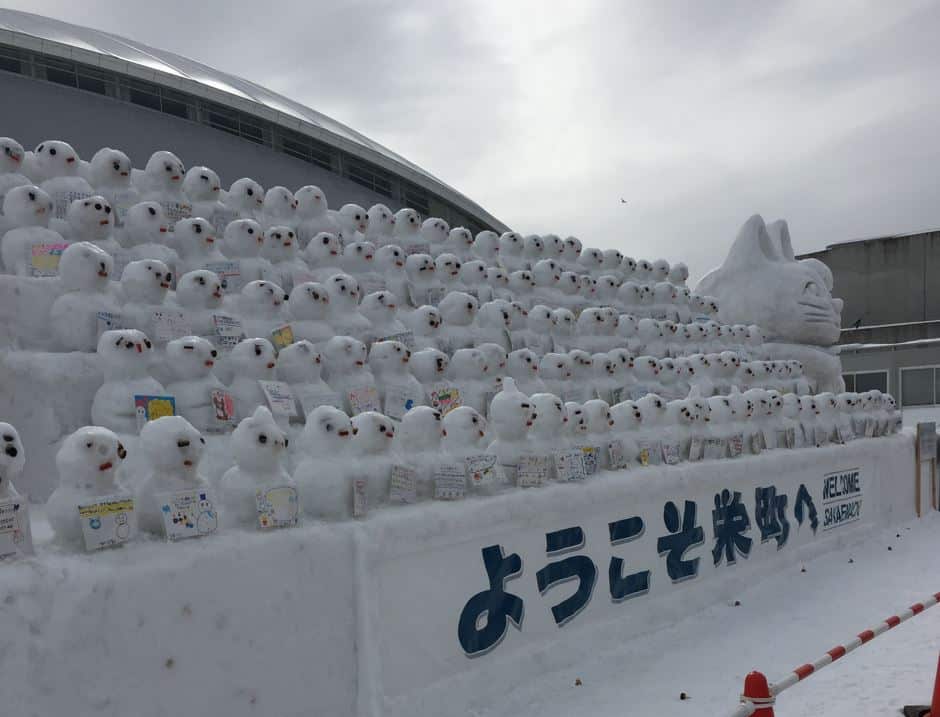
Snowmen made by Sapporo elementary school students at the 2017 Snow Festival
Experience Sapporo Culture
Come back once the sun goes down. Many of the larger snow sculptures featured in the event will have projection mapping light shows held regularly throughout the night, generally every 15-20 minutes. These are stunning technical-musical extravaganzas that you definitely don’t want to miss!
Taste the local delicacies. The Snow Festival’s Susukino Site is right near Sapporo’s famous Ramen Alley, a street filled with dozens of delicious ramen shops. It’s the perfect place to grab a nice hot meal while enjoying the Snow Festival. Plus, if you’re a drinker, you’ll definitely want to try the signature Sapporo beer – in particular, Sapporo Classic, which is sold exclusively in Hokkaido.
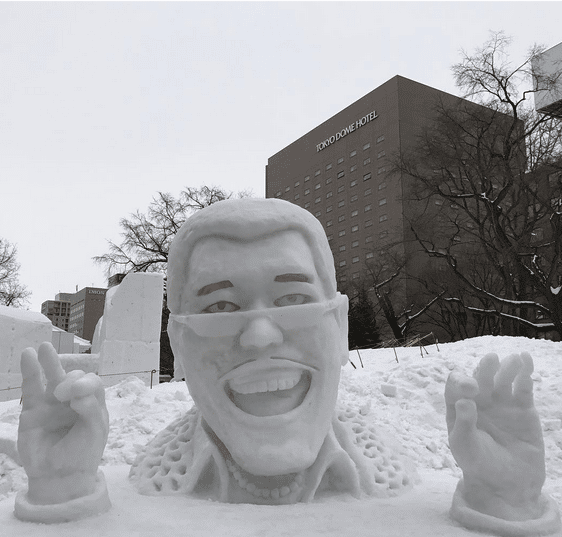
Comedian Pikotaro performing “Pen-Pineapple-Apple-Pen” at the 2017 Snow Festival
Travel and Transit
Tsudome is worth the trip. While the Odori and Susukino Sites are within walking distance of each other, the Tsudome Site is located at the Sapporo Community Dome outside the city center. During the festival, shuttle buses run from the Odori Site and JR Sapporo Station every 15 minutes. It’s definitely worth the trip, especially if you’ve got kids with you – Tsudome is the most interactive part of the Festival, featuring snowmobile rides, sliding slopes, a snowman making station, and more!
Try an underground stroll. While there are some subway stations closer to the Odori and Susukino sites, you can also walk directly to the Festival from JR Sapporo Station. One way to get there is via the underground shopping malls, Apia and Aurora Town, which keeps you warm as well as provides a perfect opportunity for purchasing some local delicacies or souvenirs!
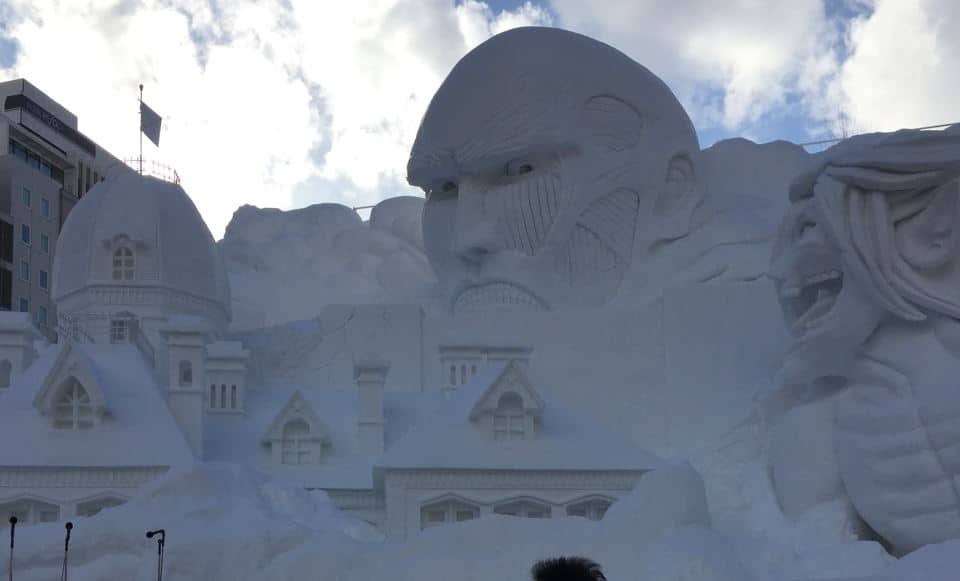
The Colossal Titan from the manga/anime Attack on Titan at the 2016 Snow Festival
The Snow Festival Returns in 2023
2023 will see the return of a fully in-person Snow Festival following several years of cancelled or virtually held Snow Festivals due to the COVID-19 pandemic. It will run from February 4 to February 11.
The Odori and Susukino Sites will be active, but the Tsudome Site will not be open in 2023 due to the difficulty in maintaining social distancing. The Odori Site will also not sell food or drink, although it will sell commemorative merchandise such as chopsticks, towels, and clothing.
In past years, Sapporo held a competition specifically for international snow sculptures. Due to travel restrictions, this competition will not be held in 2023.
The 2023 Snow Festival – the 73rd – will celebrate the 100th anniversary of Sapporo’s incorporation as a city. Large sculptures will include a Hokkaido Thoroughbred racehorse and a snow version of the new stadium currently being built for the Nippon Ham Fighters, Sapporo’s baseball team. Other planned sculptures include a Tyrannosaurus rex, Snow Hatsune Miku, the adorable Vocaloid from Hokkaido, and a Florence Nightingale-themed sculpture honoring medical workers during the COVID-19 pandemic. [3]
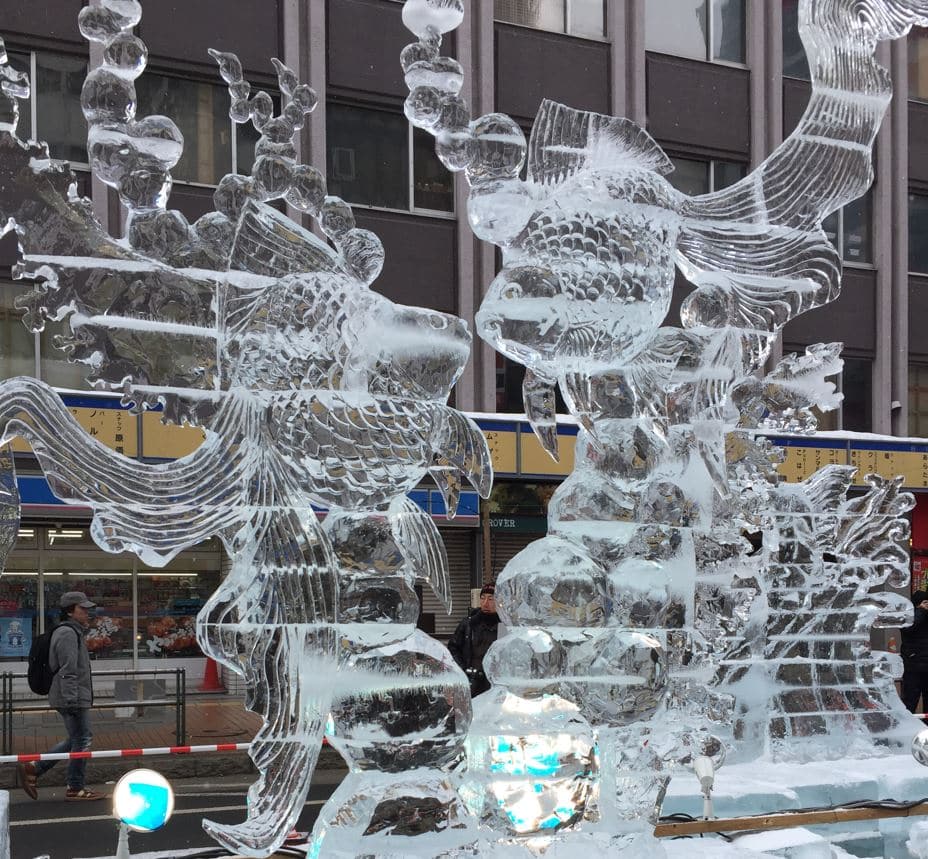
Ice sculpture of koi fish at the 2016 Snow Festival
If you find yourself in Japan during February, you should definitely make the Sapporo Snow Festival part of your itinerary. This celebration of all things winter is the perfect reminder that winter isn’t just frozen pipes, high heating bills and the constant need to shovel your driveway. Every year, this festival truly helps visitors from all over the world remember just how beautiful – and fun – winter can be!
Get our free weekly newsletter to kick off every week. No BS stories on Japanese culture and travel. Sourced from Japanese media, written by Japan experts.