
When most people think of the architecture of a Shinto shrine, they picture a vermilion torii gate marking the entrance to a sacred space, where a wooden sanctuary sits among towering cedar trees. Within that sanctuary, a kami is traditionally enshrined. Even outside shrine grounds, the same idea appears in household kamidana altars, businesses, and martial arts dōjō, where worshippers invite the presence of a kami into their daily lives.
But what if the kami isn’t in a building at all?
Long before torii gates and shrine buildings became a defining feature of Shinto, the religion was deeply rooted in the natural world. Rather than requiring a constructed sanctuary, a kami could reveal itself through extraordinary features of the landscape. Not because it represented a deity in the literal sense, but because it was believed to be a place where a kami was present.
When nature is the shrine
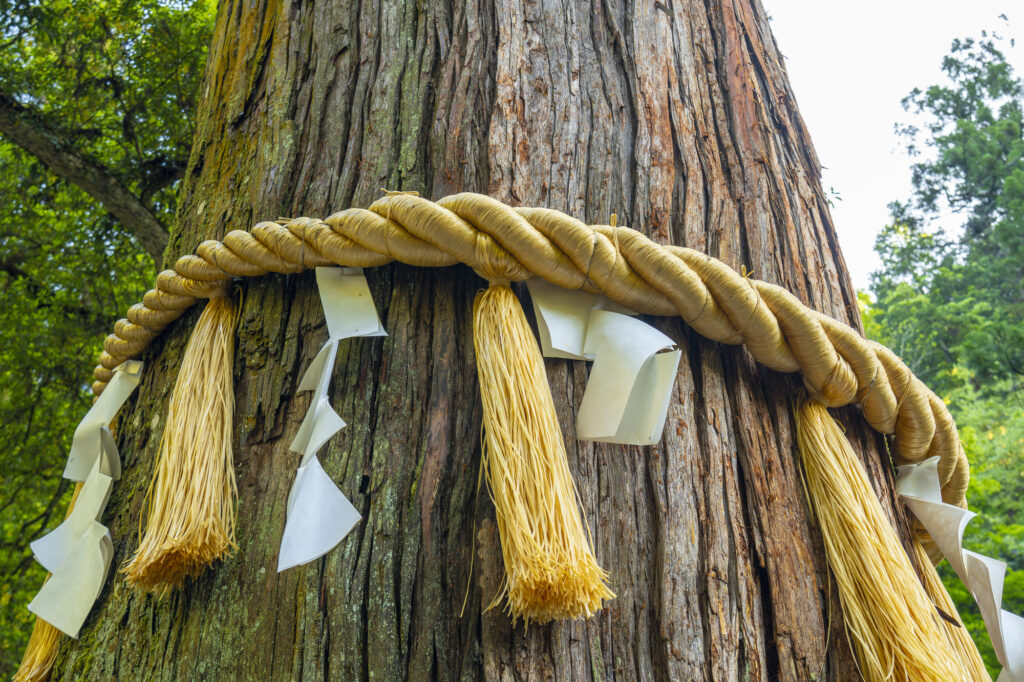
One of the most recognizable examples of this tradition is the shinboku (神木), or sacred tree. Across Japan, people come across ancient trees wrapped in shimenawa, the braided rope marking a sacred space. They can be found standing within shrine grounds, in parks, or even along quiet roadsides.
At first, it may seem odd for foreign visitors to Japan. But these trees reflect one of Shinto’s oldest ideas: that nature itself can become a place where the divine is present.
In some cases, a shrine was later built to honor the tree. In others, the tree has outlived generations, quietly bearing witness as the surrounding structures were rebuilt over centuries.
The same belief extends beyond trees. Iwakura (磐座) are natural boulders revered as places where kami descend or dwell, while some mountains are worshipped as go-shintai (御神体), the sacred object through which a kami manifests temporarily. Rather than constructing a home for the deity, these sites recognize the landscape itself as sacred.
Some shrines preserve this ancient understanding so completely that they dispense with one feature many visitors assume is indispensable: the honden, or main sanctuary. At these shrines, there is no building housing the kami because the mountain, tree, or rock is itself the focus of worship.
A shrine without a sanctuary
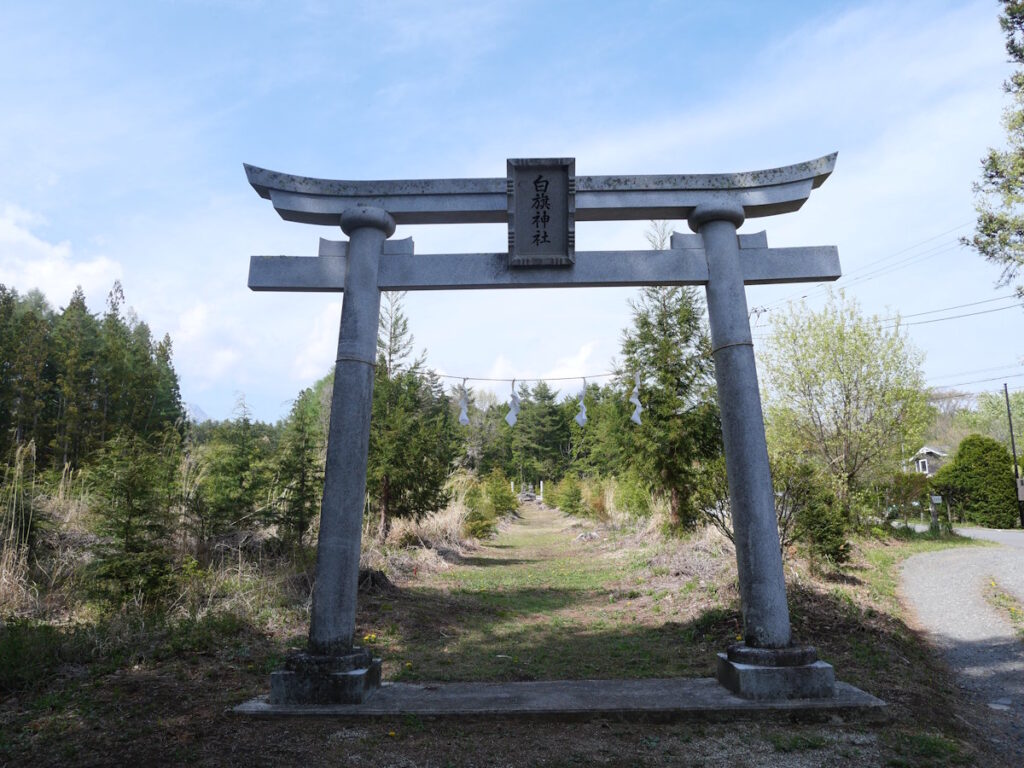
One of the most remarkable examples of this ancient tradition can be found at Shirahata Shrine (白旗神社) in Hokuto, Yamanashi Prefecture. Tucked away in the forests at the foot of Mount Yatsugatake, the shrine does away with what many visitors would consider its defining feature: a shrine building.
Instead, the heart of the shrine is a massive boulder approximately 2.4 meters (8 feet) tall, 2.7 meters (9 feet) long, and 1.5 meters (5 feet) wide. Resting atop the stone are two five-tiered gorintō (stone pagodas), while a small stone shrine stands nearby.
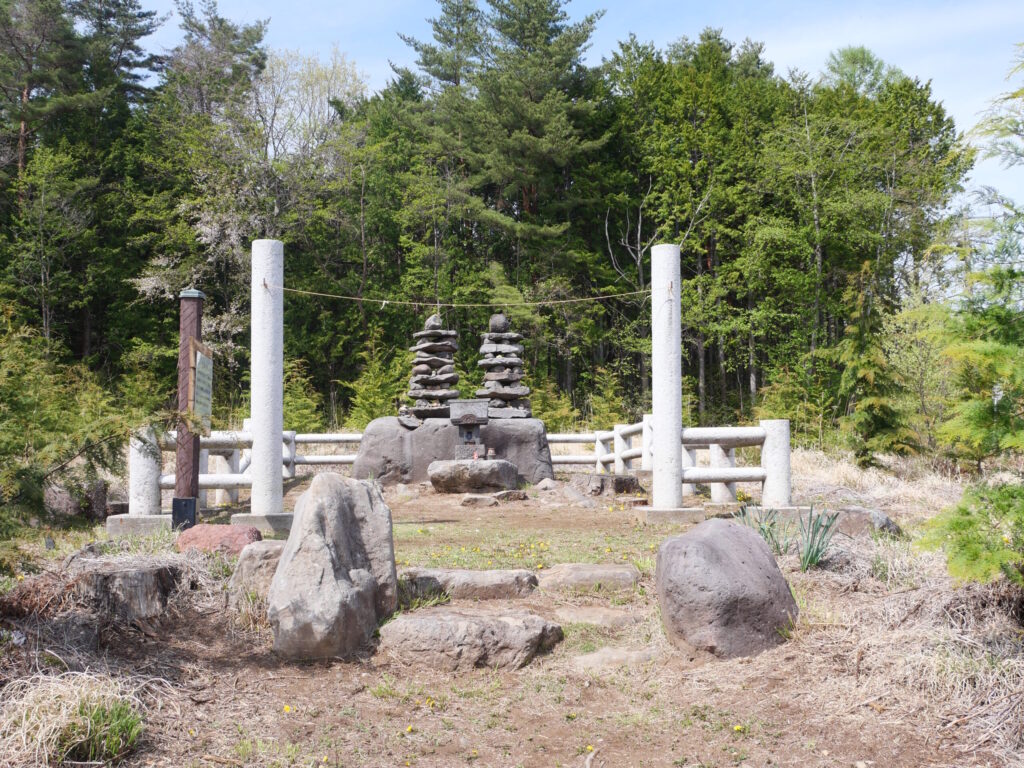
Yet neither of these structures is the true focus of worship. The boulder itself serves as the shrine’s sacred center, embodying a tradition in which the natural landscape is where the divine is encountered.
According to local tradition, the site is connected to Henmi Shirō Ariyoshi, grandson of Kai Genji leader Takeda Tarō Nobuyoshi. Ariyoshi is said to have buried the Genji clan’s white battle banner (shirahata) beneath the boulder, giving the shrine its name. Later generations came to revere the site itself, erecting a small stone shrine beside the rock while leaving the sacred boulder as the center of worship.
Centuries later, its unusual form has certainly drawn attention. According to the Yamanashi Prefectural Association of Shinto Shrines, this shrine centered on a sacred boulder crowned with two stone pagodas has no known parallel elsewhere in Japan.
Mountains that became the sanctuary
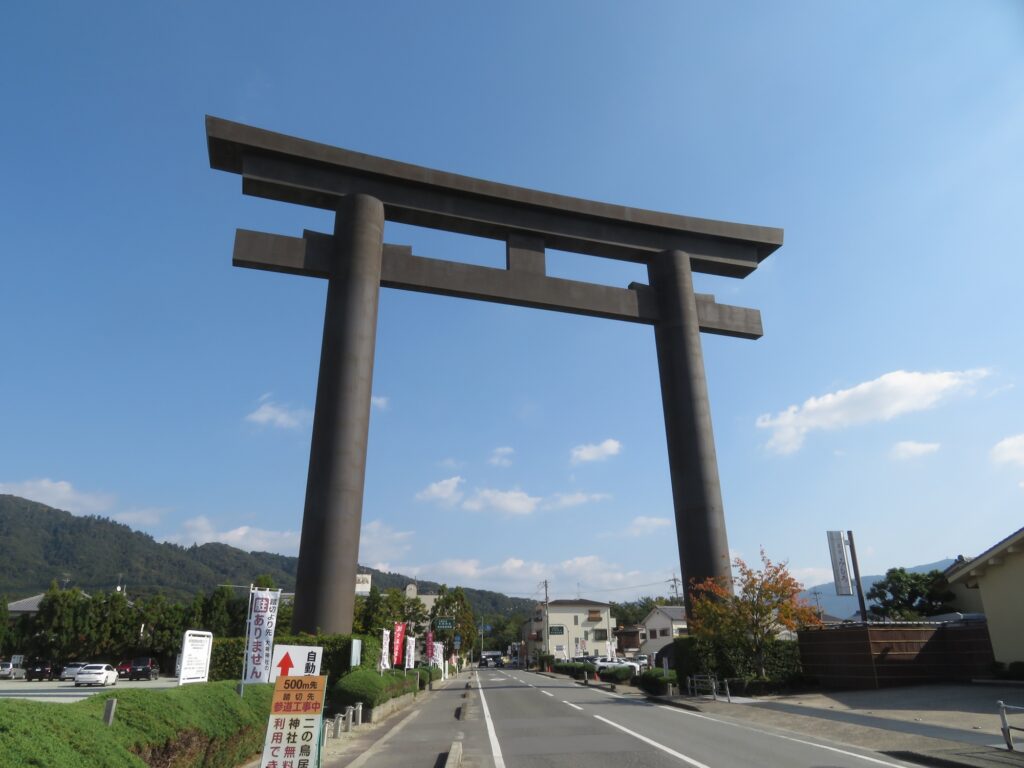
While Shirahata Shrine may be unique in its exact form, it’s far from the only shrine where nature itself serves as the sacred center. Across Japan, several of the country’s oldest and most important shrines continue traditions in which the kami is worshipped through a mountain rather than a building.
Perhaps the best-known example is Ōmiwa Shrine (大神神社) in Nara Prefecture, widely regarded as one of Japan’s oldest Shinto shrines. Unlike most shrines, it has no honden. Instead, worshippers face Mount Miwa, which is itself revered as the shrine’s go-shintai. Rather than housing the kami within a constructed sanctuary, the mountain is understood to embody the sacred presence itself.
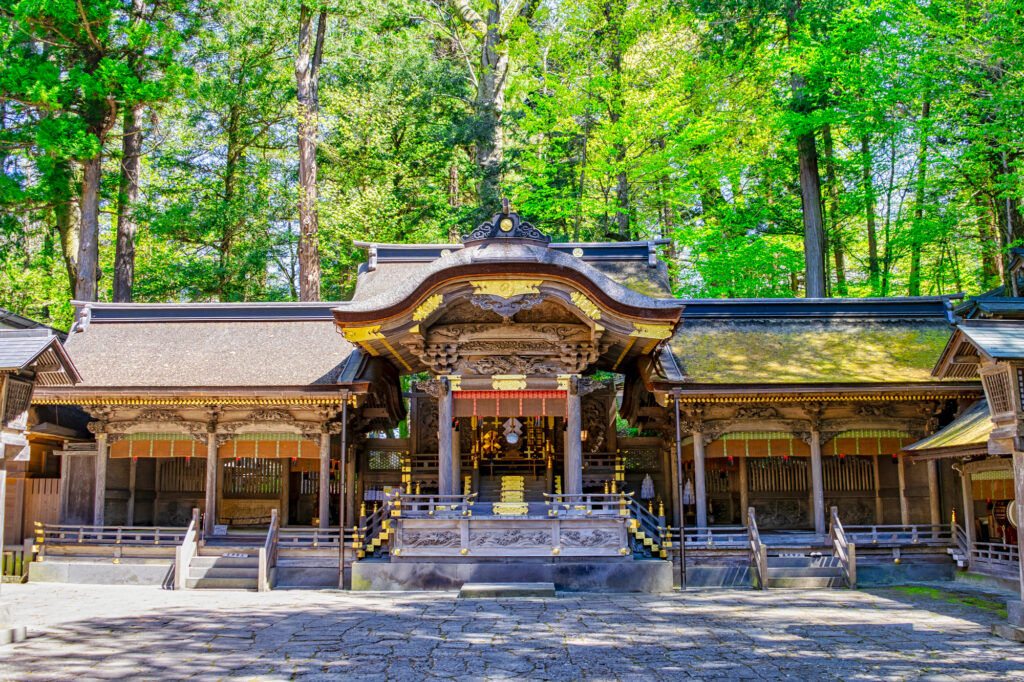
A similar tradition survives at Suwa Taisha (諏訪大社) in Nagano Prefecture. The shrine likewise lacks a honden, directing worship toward the sacred landscape instead. Every six years, its famous Onbashira Festival sees enormous fir trees hauled down the mountainsides. The trees are then erected at the shrine’s four corners in a centuries-old ritual, reinforcing the intimate relationship between the shrine and the surrounding mountains.
In eastern Japan, Kanasana Shrine (金鑽神社) in Saitama Prefecture follows the same pattern. There, the sacred peak of Mimuro-ga-take serves as the object of worship, continuing a tradition in which the natural world, not architecture, forms the heart of the shrine.
Taken together, these shrines remind us that while elaborate shrine buildings have become one of Shinto’s defining images, they aren’t what makes a place sacred.
For some of Japan’s oldest places of worship, the mountain itself has always been the sanctuary.
Question: do you like UJ's independent coverage of Japan? Our writers are supported by our members. Join Unseen Japan Insider to get bonus content every week, an ad-free website, and access to our large and growing Insider archive.If you love UJ's independent coverage of Japan, join Unseen Japan Insider to get content every week, an ad-free website, and access to our large and growing Insider archive.
The shrine of Japan’s legendary Onmyōji
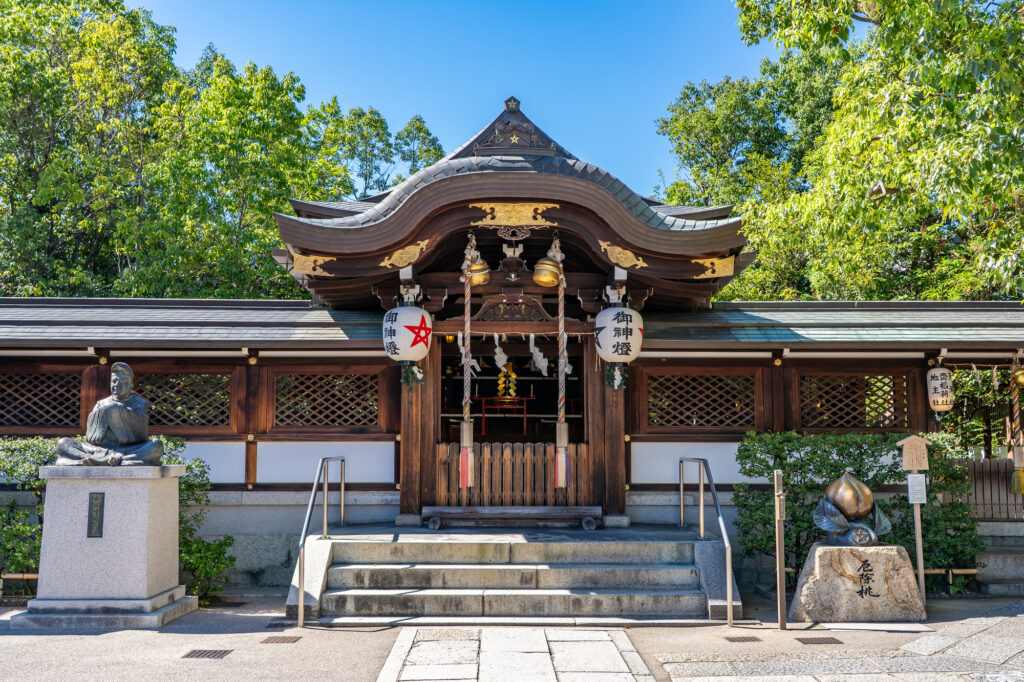
Nature was not the only way Shinto shrines evolved beyond the familiar wooden sanctuary. Some shrines preserve another uniquely Japanese tradition, rooted not in mountains or forests, but in the cosmology of the imperial court.
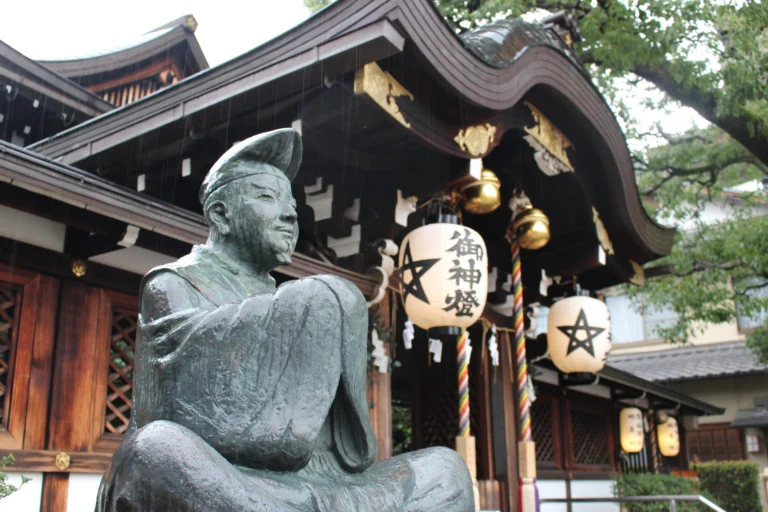
One of Japan’s most famous is Seimei Shrine (晴明神社) in Kyoto. With a reputation far larger than its grounds, it is dedicated to the legendary Abe no Seimei (921–1005), whose name has become synonymous with Japanese mysticism.
Seimei practiced onmyōdō (陰陽道), a discipline that combined astronomy, calendrical science, divination, and the philosophy of yin and yang. Administered through the imperial government’s Onmyōryō (Bureau of Yin and Yang), it helped determine everything from auspicious dates for ceremonies to the interpretation of celestial events. Later supernatural stories transformed Abe no Seimei into one of Japan’s most enduring folk heroes. Still, his work was rooted in what was considered an essential branch of state knowledge for the Heian court.
Why does a Shinto Shrine have a pentagram?
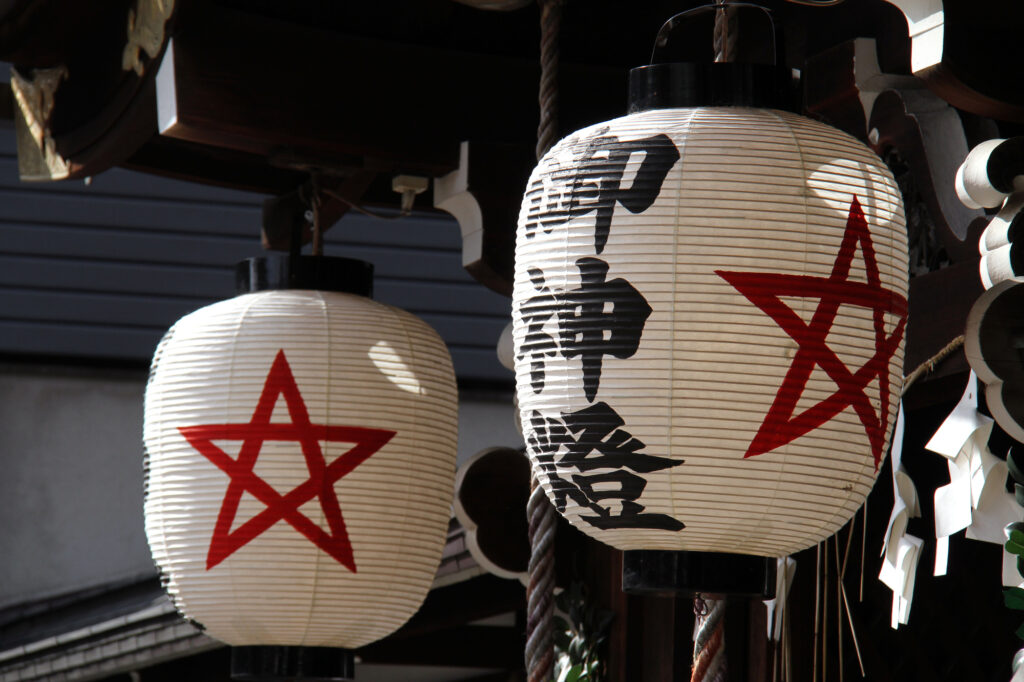
The five-pointed star that appears throughout Seimei Shrine, including ones outside of Kyoto, is known as the Seimei Kikyō (晴明桔梗), or Seimei Star. To many foreign visitors, it may remind them of the pentagram, a symbol commonly associated with Western occult traditions. While the two symbols share the same shape, their origins are entirely unrelated.
In Japan, the Seimei Star represents the Five Elements (gogyō, 五行) from Chinese cosmology: wood, fire, earth, metal, and water. These elements formed the foundation of onmyōdō, influencing everything from calendars and medicine to architecture and divination. The star came to symbolize the balance and interaction of these forces, while also serving as a mayoke (魔除け), a talisman believed to ward off misfortune and evil.
Today, the Seimei Star has become inseparable from Abe no Seimei’s legacy. It adorns the shrine’s torii gates, lanterns, and protective amulets, making Seimei Shrine one of the few places in Japan where a symbol so familiar to Western eyes carries an entirely different history and meaning.
Still, Seimei Shrine is not the only place where folklore has shaped a shrine’s identity.
Cutting ties to move forward
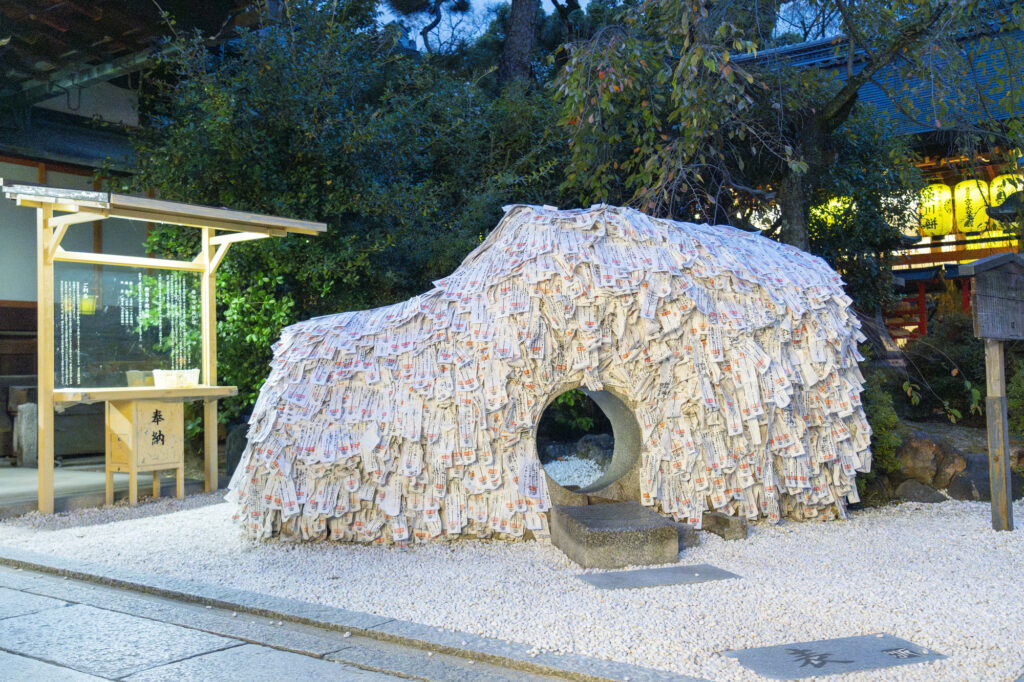
While Kyoto’s famous pentagram reflects centuries of court cosmology, other shrines have become known for something far more personal.
Nearby the larger Yasaka Shrine in Kyoto is Yasui Konpiragū, often called Japan’s “breakup shrine.” Every year, thousands of people visit seeking en-kiri (縁切り), the severing of harmful relationships or negative influences, and en-musubi (縁結び), the forging of healthier connections.
At the center of the shrine stands the Enkiri-Enmusubi Ishi, a large sacred stone covered almost entirely with paper prayer slips. After writing their wish on one of these slips, visitors crawl through a narrow opening in the stone, slip in hand, and back again before attaching the paper to the rock. Passing through the stone symbolizes leaving behind harmful ties and making room for new beginnings.
While many visitors pray to end unhealthy romantic relationships, the shrine’s focus extends far beyond love. People also seek to break free from illness, addiction, debt, abusive workplaces, or other circumstances holding them back. Likewise, prayers for new connections may involve friendships, careers, business opportunities, or improved health rather than love or marriage alone.
The popularity of Yasui Konpiragū reflects a broader understanding of en (縁), a Japanese concept often translated as “connection,” “relationship,” or “fate.” Rather than viewing all relationships as inherently good, the shrine recognizes that some bonds nourish our lives while others can become burdens. Its rituals are therefore less about ending relationships for their own sake than about creating space for healthier ones to take their place.
Blurring the line between history and horror
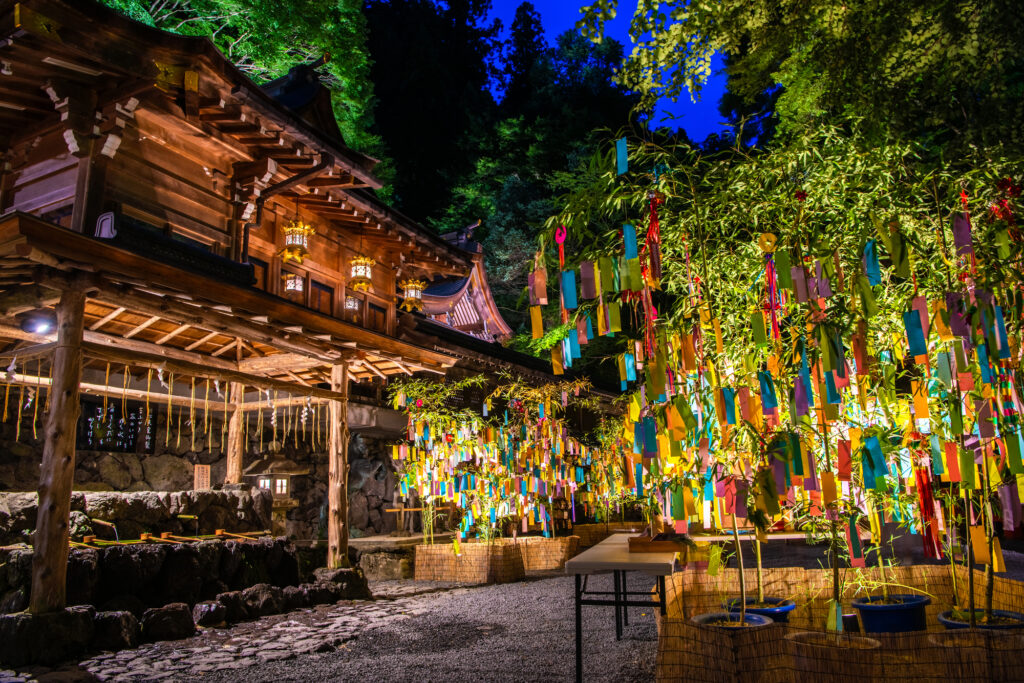
Few shrines in Japan have inspired as many ghost stories as Kifune Shrine (貴船神社), nestled deep in the mountains north of Kyoto. Dedicated to the deity of water and rain, the shrine has been a place of worship for more than a thousand years, with visitors praying for everything from safe travels to prosperous businesses and harmonious relationships.
Yet, Kifune is also associated with something far darker: the legend of ushi no toki mairi (丑の刻参り), or “the shrine visit at the Hour of the Ox.”
According to Japanese folklore, a person seeking revenge would dress in white, wear an iron tripod fitted with burning candles upon their head, and carry a hammer and long nails into the shrine grounds between one and three o’clock in the morning. There, they would nail a straw doll representing their intended victim to a sacred tree while reciting a curse. The ritual was believed to be especially powerful if repeated over seven consecutive nights without being seen.
The legend is often traced to the Hashihime of Uji, a woman said to have prayed at Kifune Shrine for twenty-one days after being consumed by jealousy over her husband’s infidelity. Later versions of the story tied specifically to Kifune Shrine say the shrine’s deity instructed her to transform herself into a demon by staining her body red, dressing in crimson, and submerging herself in the Uji River.
Today, there is no connection between Kifune Shrine’s actual religious practice and these legendary curse rituals. The shrine forbids nighttime trespassing, and remains an active place of worship dedicated to blessings associated with water, safe journeys, and relationships.
More than torii gates and wooden halls
Throughout Japanese history, there has never been a single model for what a shrine should be. Some preserve the memory of a time when mountains, trees, and boulders were revered. Others reflect traditions that once guided the imperial court, while others have become entwined with folklore. Regardless, these shrines reveal the remarkable diversity of Shinto itself.
So, the next time you pass beneath a torii gate, it may be worth looking a little closer. The shrine in front of you might not simply house a kami. It might preserve one of Japan’s oldest ways of understanding the world.
Keep reading


Sources
白旗神社(北杜市大泉町) 山梨県神社庁
白旗神社 ウィキペディア(日本語版)
石神・磐座・磐境・奇岩・巨石と呼ばれるものの研究(磐座・巨石データベース) Megalith Mury
甲斐 駒ヶ岳神社 神社について 竹宇駒ヶ岳神社(公式)
磐座神社(いわくらじんじゃ) 大神神社(公式)
諏訪大社とは 信濃國一之宮 諏訪大社(公式)
埼玉「金鑚神社」:素朴な山岳信仰の面影を今に残す nippon.com
神倉山のゴトビキ岩 南紀熊野ジオパーク
神倉神社 ウィキペディア(日本語版)
花窟神社 ウィキペディア(日本語版)
境内案内(安倍晴明公・五芒星〈晴明桔梗〉) 晴明神社(公式)
安倍晴明 ウィキペディア(日本語版)
晴明神社(名古屋市千種区) 名古屋コンシェルジュ(名古屋市観光公式)
縁切り縁結び碑について 安井金比羅宮(公式)
丑の刻参り ウィキペディア(日本語版)