

Japanese cuisine looks like it should be a vegetarian’s dream. There’s tofu, vegetable tempura, pickles, simmered vegetables, and miso soup.
But there’s a catch: many Japanese dishes rely on dashi (出汁), a stock commonly made from katsuobushi (鰹節), or dried bonito flakes. That means a seemingly harmless vegetable dish can contain fish without any obvious sign.
Even Japanese hosts can find this tricky to navigate. On October 18, the X account of a live-music bar asked followers what to serve a vegetarian who wanted to eat Japanese food. Nearly 900 replies followed, offering menu suggestions and debating which ingredients were acceptable. Some concluded that the only surefire way to please is to ask the guest directly.
Dashi: fish stock hiding in plain sight
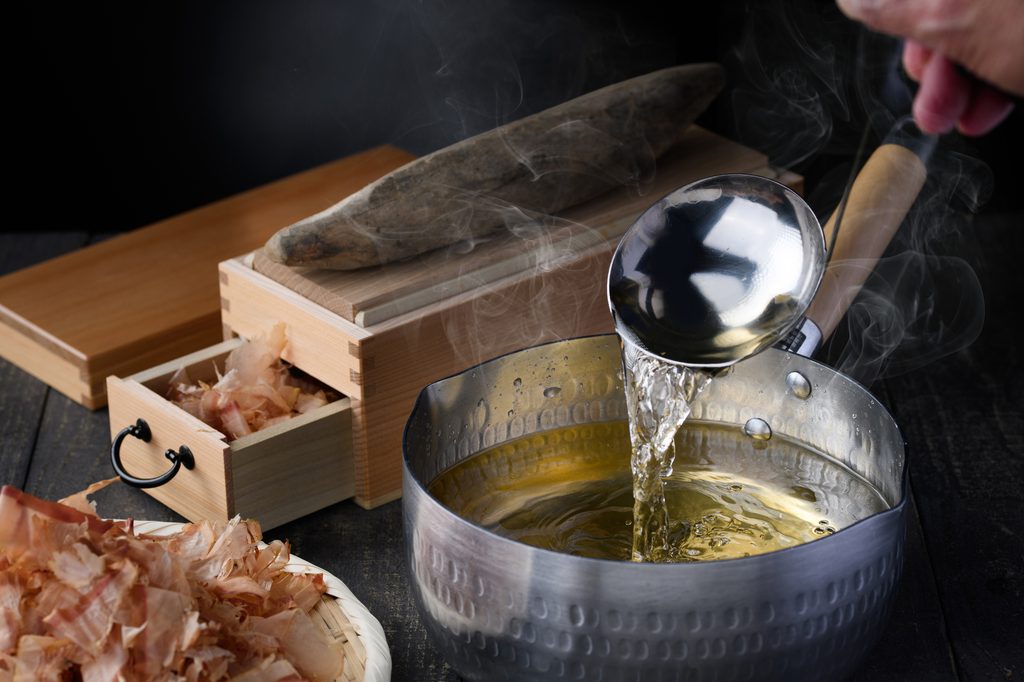
Dashi is a foundation of Japanese cooking. It provides the savory flavor behind dishes ranging from miso soup and noodle broths to simmered vegetables and dipping sauces. While you can make it with plant-based ingredients, traditional versions often use bonito, a type of fish in the tuna family, so they aren’t vegetarian- or vegan-friendly.
Japan’s tourism agency also recognizes the problem. Its April 2024 guide for restaurants and hotels welcoming vegetarian, vegan, and Muslim travelers explicitly tells cooks not to use bonito stock, even when fish isn’t served directly as an ingredient. The guidance emphasizes avoiding animal-derived ingredients regardless of how the dish is prepared.
For example, tempura served over rice or tendon (天丼, “TEN-dohn”) is a popular dish. While the vegetables, rice, and cooking oil might all be vegetarian, the accompanying sauce may contain seafood-based stock. The tourism agency’s example recommends replacing that stock with a broth made from mushrooms and konbu (昆布), or kelp.
The same issue can crop up in packaged foods. The Japan National Tourism Organization, which oversees the country’s official overseas tourism promotion, warns that convenience-store natto (納豆), or fermented soybeans, often comes with a sauce containing fish stock. The soybeans themselves may be vegan, but the little packet of sauce can change that.
This is also why simply asking for vegetarian food may not be enough. To many Japanese people, “vegetarian” doesn’t necessarily mean “free of meat- or fish-based products.” So, just like for those who are gluten-free, you have to be very specific about restrictions.
This is one of the things that makes dining in Japan harder when you have specific dietary restrictions. This is where booking a tour with a company like Unseen Japan Tours comes in handy. We can plan out a full itinerary and book meals at locations that meet your unique culinary needs.
Japanese X users debate how to make a menu vegetarian
The viral question originally came from Bar Rocinante (ロシナンテ), a live-music bar that hosts daily jam sessions. It asked what Japanese dishes might suit a vegetarian who wanted to try the country’s cuisine.
The answers were encouraging. Suggestions included simmered tofu and shōjin-age (精進揚げ), vegetable tempura that can be ordered without animal-derived ingredients. (Remember the shōjin part for later.) Others recommended familiar home-cooked dishes such as kinpira gobō (きんぴらごぼう), braised burdock root.
But the debate grew more complicated when people brought up dashi. Some users wondered whether kelp stock was acceptable, while others pointed out how difficult it could be to prepare conventional Japanese dishes without bonito broth. One cook suggested replacing it with the liquid left over from soaking dried shiitake mushrooms.
Many replies also pointed out that vegetarianism means different things to different people. Some diners avoid meat but eat fish, while others exclude all animal products. Asking about those distinctions before choosing a menu can save everyone a ton of confusion.
Shōjin ryōri: a Buddhist alternative
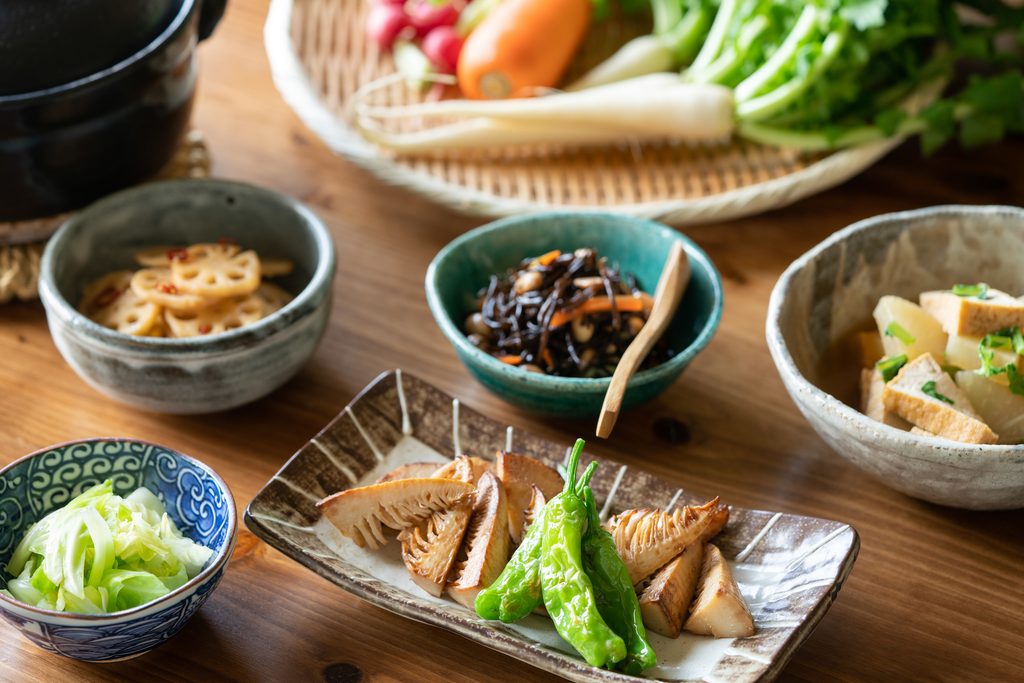
One user in that reply thread pointed out that if dashi was off-limits, shōjin ryōri (精進料理), or Buddhist temple cuisine, may be the safest bet for truly vegan and vegetarian traditional food. This cuisine arrived in Japan with Buddhism in the sixth century and further developed through Zen Buddhism in the 13th century.
Shōjin ryōri is traditionally plant-based, often featuring tofu, seasonal vegetables, mushrooms, and carefully prepared dishes that emphasize simplicity. Garlic, onions, and certain other pungent vegetables have traditionally been avoided.
However, diners shouldn’t assume every modern interpretation is automatically vegan. The Japan National Tourism Organization notes that some monks occasionally use dairy products, so it’s still worth checking ahead.
Near Tokyo, Takaosan Yakuō-in, a temple on Mount Takao west of the city, serves shōjin ryōri lunches by reservation. Bookings must generally be made at least two days in advance for parties of two or more. Meals start at ¥3,300 (~$21) and offer a chance to experience temple cuisine without venturing far from the capital.
Restaurants are starting to adapt
Businesses have an incentive to make vegetarian dining easier. Japan’s tourism agency estimates that approximately 2.21 million vegetarian visitors came to the country in 2025, representing around 5.2% of arrivals. These estimates are based on international visitor figures and vegetarian population data, not a direct count.
You can see the changes pop up here and there. In December 2025, Izumisano, Osaka Prefecture, partnered with food manufacturer Fuji Oil to get local restaurants and hotels to serve dishes made with its plant-based MIRA-Dashi products. Some ramen spots even specifically offer halal ramen.
Tokyo’s official vegetarian and vegan restaurant guide for 2026–2027 also makes an important distinction, highlighting ingredients used in broths and seasonings and not just what’s visible on the plate.
How to order vegetarian food in Japan
When you’re on the ground, seating yourself at an unfamiliar restaurant, the simplest approach is to explain your restrictions clearly rather than relying on the word “vegetarian” alone. Tell staff whether you avoid fish, seafood, eggs, dairy, or all animal products, and specifically ask about dashi. (Take note of our guide to useful phrases for just such an occasion.)
Another thing you can do is carry a Japanese dietary-restriction card to show to staff. Also, when booking, inform restaurants about your requirements, particularly if you’re reserving a set menu.
Need other advice on planning your trip? Sign up for our free five-day Japan trip planning email for information on everything from what to pack to how to get out of the airport without paying an arm and a leg.
With a little preparation, Japan offers plenty of opportunities to enjoy vegetable tempura, tofu dishes, traditional side dishes, and temple cuisine. You just need to understand a bit about the behind-the-scenes food prep.
Keep reading



Sources
ベジタリアンの人から日本料理を食べたいって言われてるんだけど、何がいい?→野菜の天ぷら、湯豆腐、精進料理などいろいろあるが、人によって許容範囲が違うので確認が必要 Togetter
ベジタリアン・ヴィーガン/ムスリム旅行者おもてなしガイド 観光庁
多様な食習慣を持つ訪日外国人旅行者の実情 観光庁
精進料理:精進料理の概要 観光庁 多言語解説文データベース
A Vegetarian and Vegan Guide to Japan Japan National Tourism Organization
Supervised Tokyo Gov’s Vegetarian & Vegan Restaurant Guide Japan Vege Project
精進料理のご案内 高尾山薬王院
大阪府泉佐野市において、多様な食習慣や文化的慣習を持つ訪日外国人観光客の受入環境整備に向けた取組みを開始します 泉佐野市