

A ramen shop in Mito, Ibaraki Prefecture, is drawing crowds with bowls priced at a third to a quarter of what you’d pay at a typical ramen joint. The secret? Noodle offcuts from the owner’s family-run noodle factory that would otherwise end up in the trash. The cheap bowls are drawing mixed reactions in a company racked by inflation and stagnant wages.
Mito ramen shop sells 250 yen bowls using free noodle offcuts
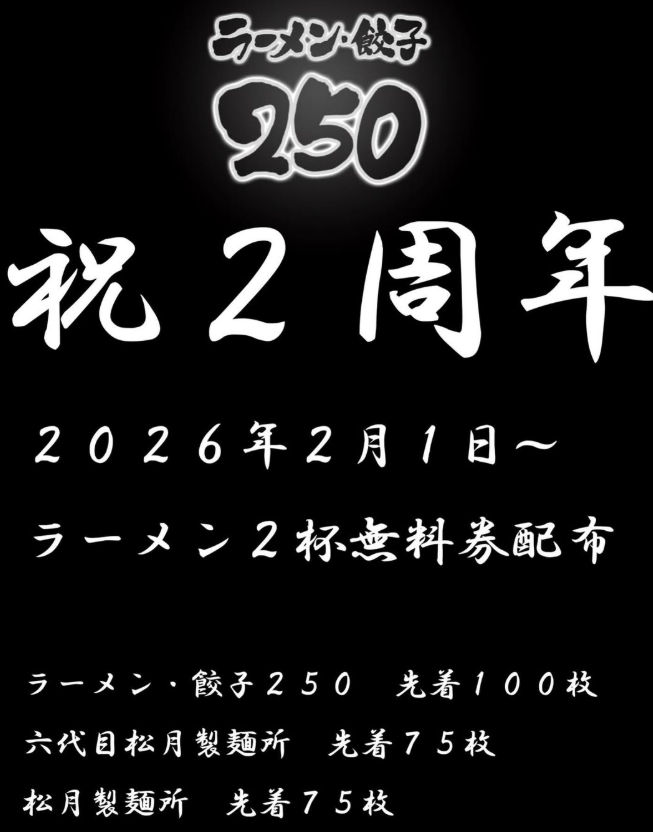
Ramen Gyoza 250, which opened in 2024 in Mito, Ibaraki Prefecture, has become a local sensation with its signature “makanai ramen,” priced at an almost unbelievable 250 yen ($1.60 at today’s exchange rate).
Makanai, 賄い, in Japanese typically refers to meals cooked for restaurant staff. The average bowl of ramen in Japan is priced under 700 yen, or around $4.40.
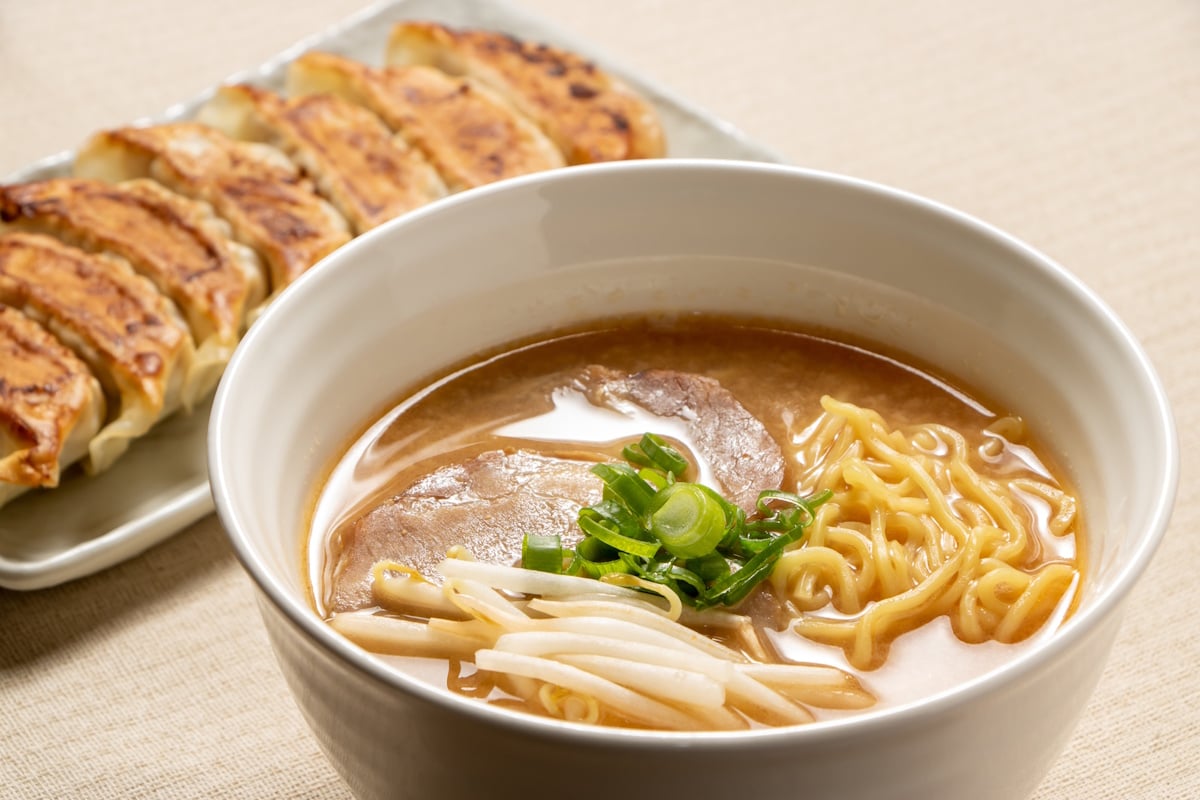
The bowl comes loaded with chicken bone broth, aromatic vegetables, Hokkaido onions, and pork belly chashu. And the noodle portion clocks in at 1.8 times the size of a standard serving. For context, the average bowl of ramen in Japan now hovers around the 1,000 yen mark.
The shop, run by Murakami Hideo, fills up the moment it opens at 11 a.m., rain or shine. Regulars drop by once or twice a week, and some order two bowls in a single sitting.
The gyoza, five crispy dumplings for 250 yen, means you can get a full ramen-and-gyoza lunch for a single 500 yen coin. Multiple customers told FNN News they couldn’t believe the volume and quality at such a low price, with one declaring it “number one in Kanto.”
The makanai ramen is so popular that it sells out during the lunch rush, with only around 15 servings available on a given day. But even the regular ramen on the menu costs just 350 yen ($2,24), making the entire operation feel like a throwback to an era before cost-of-living increases made eating out a luxury for many Japanese families.
Family noodle factory’s scraps keep prices at a quarter of the average
The key to the shop’s jaw-dropping prices lies in Murakami’s family background. His family has been running a noodle factory since the Meiji era, producing thin, thick, and curly noodles, and everything in between.
The manufacturing process inevitably generates offcuts, short, uneven, or broken strands that don’t meet the standards for commercial sale. These scraps, which would normally be thrown away, are instead diverted to Murakami’s shop, bringing his noodle cost down to zero. On the day FNN visited, five different types of noodle offcuts had been mixed into a single bowl, giving the dish a texture you genuinely can’t replicate anywhere else.
Planning a trip to Japan? Get an authentic, interpreted experience from Unseen Japan Tours and see a side of the country others miss!

Even with free noodles, running the business at 250 yen per bowl requires relentless cost management. Murakami personally visits wholesale markets to source the cheapest ingredients, and the shop cuts electricity costs by turning off the air conditioning.
Murakami employs two or three staff members and around ten part-timers, reportedly at some of the highest hourly wages in Ibaraki Prefecture. Despite all the belt-tightening, the shop is currently operating in the black.
The story has resonated widely online, though not without some mixed feelings. Several commenters praised the food waste reduction angle, noting that repurposing factory scraps into a viable product is exactly the kind of initiative Japan needs more of.
Others, however, pointed out the uncomfortable flip side: Japan’s decades-long obsession with keeping prices low, however admirable on an individual level, has arguably contributed to the deflationary spiral that continues to suppress wages and economic growth.
One commenter urged Murakami not to overwork himself, writing that “250 yen is too kind” and that 300 yen would still be a bargain. This tension sits at the heart of Japan’s cost-of-living crisis. Consumers desperately need affordable meals, but an economy built on razor-thin margins isn’t exactly a recipe for prosperity either.
These fears aren’t unfounded. The ramen industry has seen an increasing number of bankruptcies. Many shops say they feel hesitant to raise the price of a bowl above 1,000 yen ($6.40) – the so-called “1,000 yen wall” – for fear of losing customers.
Looking at it positively, though, Ramen Gyoza 250 is a story of ingenuity, family heritage, and a refusal to let good food go to waste. If you’re in Mito around lunchtime, check it out. After all, it’s hard to argue with a 250 yen bowl of ramen.

Want more news and views from Japan? Donate $5/month ($60 one-time donation) to the Unseen Japan Journalism Fund to join Unseen Japan Insider. You'll get our Insider newsletter with more news and deep dives, a chance to get your burning Japan questions answered, and a voice in our future editorial direction.
Yep or NOPE? Suntory’s New Dr Pepper-Like Soda Confuses Japanese Consumers
Suntory’s new drink NOPE promises lots of flavor. Just WHAT that flavor is, however, has sparked a raging debate in Japan.
This Ramen Shop in Japan Demands You Stay Off Your Damn Phone
The shop in Saitama Prefecture said it instituted the policy after a customer watched an “inappropriate” video.

As Nut Allergies Soar in Japan, Airlines Grapple with a Response
Nut allergies are overtaking both wheat and milk in Japan. Here’s how airlines are responding and how to stay safe on your trip.
Sources
「ボリュームある」1杯250円の激安ラーメン 通常捨てている麺の“端材”活用で麺の原価0円に…餃子も250円. FNN Prime Online
