

JR East opened voting Tuesday to choose a successor to the beloved Suica Penguin, setting off a social-media frenzy that has quickly become about more than which of three characters should replace the iconic mascot.
Within 48 hours, the post on X announcing the election had drawn more than 134 million views, 104,000 likes, 48,000 quote posts, and 36,000 reposts. That’s more than 4,000 times the number of followers on the JR East account, which has about 33,000.
But the reaction isn’t simply a backlash against the candidates. On X, users have turned the strangest-looking of the three into a running joke, producing fan art and rallying behind their preferred characters. Elsewhere, particularly in Yahoo! News comment sections, the mood is markedly more suspicious, with readers questioning whether the public vote will actually determine the winner.
That skepticism has a history.
JR East’s decision to let the public choose the next Suica mascot recalls its 2019 public call for suggestions for a new Yamanote Line station name. The station eventually opened as Takanawa Gateway, despite that name ranking just 130th among the submissions, with 36 votes.
This time, however, JR East has made a much clearer promise: the candidate receiving the most votes will become Suica’s new image character.
The election timeline
Voting opened September 8 at 3 p.m. Japan time and closes September 23 at 11:59 p.m. Each person may vote once through a dedicated JR East website.
The result will be announced on Nov. 18, Suica’s 25th anniversary. JR East will then hold a separate public call to determine the winning character’s nickname.
The new mascot is scheduled to debut on April 1, 2027, one day after the Suica Penguin’s graduation ceremony. Anyone can vote. The election terms state that people in Japan or overseas can participate regardless of age, gender, occupation, or nationality, provided they agree to the terms.
Meet the three candidates
Candidate A is an orange squirrel whose markings form one continuous line from its head to its tail, a design described as being modeled on a railway track.
Candidate B is a purple rabbit. JR East says the character “listens to the voices around it and leaps forward into the future.” Its purple coloring combines blue, representing reassurance, with red, representing emotion.
Candidate C is an orange creature of unspecified species carrying a mole in a shoulder bag. The concept is that the creature shows a mole that has only ever seen the underground what the wider world looks like.
JR East has not said what species Candidate C belongs to, and that omission has become one of the most discussed details of the election.
JR East changed its language on whether the public vote is binding
One reason the Takanawa Gateway comparison has gained traction is that JR East’s description of the mascot selection process changed between February and September.
In a February 19 press release announcing the process, JR East said only that it would “finally … hold a customer vote and decide the new character.” It did not explicitly say that the candidate receiving the most votes would win.
ITmedia flagged that omission at the time, noting that the release didn’t say that the design or name that “gathered the most votes” would be selected.
The September 8 announcement is considerably more explicit. JR East says it “will decide the character with the most votes as Suica’s new image character.”
JR East hasn’t explained why the wording changed, and there’s no evidence that public criticism caused the change.
But the practical difference is significant. The February wording left JR East with an obvious degree of discretion. The September wording gives voters a much more concrete expectation that their votes will determine the result.
That’s made the possibility of organized voting part of the online conversation.
Question: do you like UJ's independent coverage of Japan? Our writers are supported by our members. Join Unseen Japan Insider to get bonus content every week, an ad-free website, and access to our large and growing Insider archive.If you love what we do, help us pay our writers to do more of it by joining Insider. You'll get bonus content every week, an ad-free website, and access to our large and growing Insider archive.
The Takanawa Gateway precedent
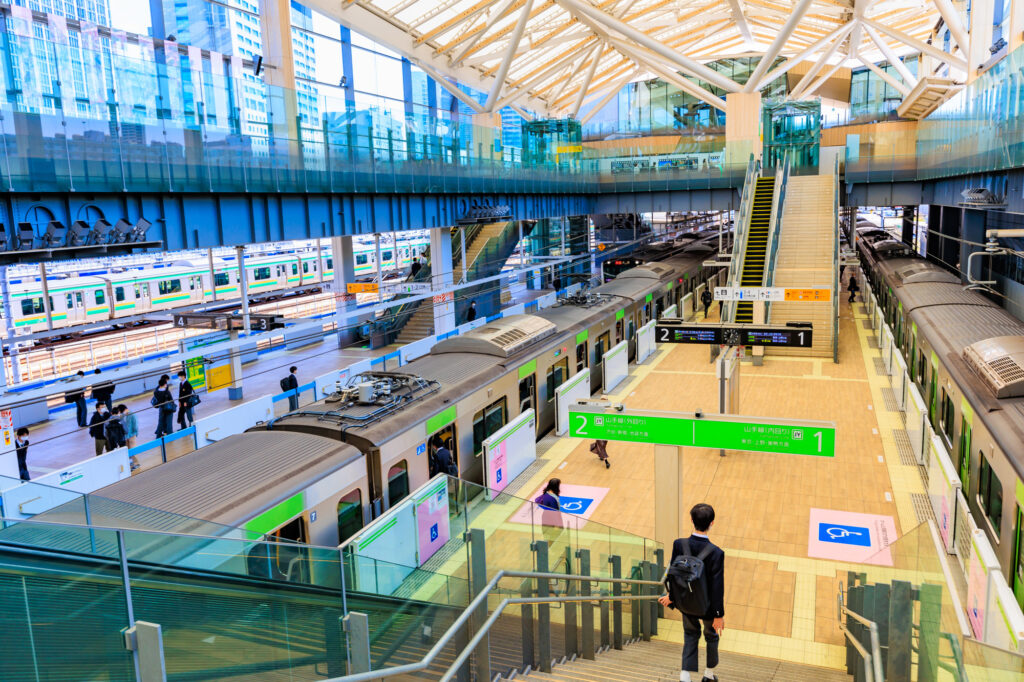
In 2019, JR East solicited suggestions for the name of what would become the first new Yamanote Line station in 20 years. The company received about 64,000 submissions.
“Takanawa” finished first with 8,398 submissions, followed by “Shibaura” with 4,265. “Takanawa Gateway” ranked 130th, with just 36.
JR East nevertheless selected Takanawa Gateway, explaining that the name reflected the area’s historical role as an entrance to Edo-era Tokyo and as a hub for railways during the Meiji era. The company had made it clear that it wanted to hear public opinion but was not bound by the results.
The station opened in 2020. Local residents eventually settled on “Takage” (タカゲ) as an abbreviation.
The precedent has followed JR East into the Suica mascot debate. In February, ITmedia described the Takanawa Gateway episode as a “curse” hanging over the successor vote. It cited Yahoo! Real-Time Search data showing that 42% of X posts about the Suica Penguin on Feb. 19 were classified as negative, and identified two broad camps: people loyal to the penguin and people distrustful of the voting process itself.
The distinction between the two processes matters, however.
The Takanawa Gateway exercise was a public solicitation for suggestions, or kōbo (公募). JR East never promised to adopt the most popular suggestion.
The current mascot process is explicitly a vote, and the September announcement says the candidate receiving the most votes will be chosen.
The mechanisms are therefore not the same.
JR East isn’t currently breaking the same promise it made in 2019. But the Takanawa Gateway decision damaged the credibility needed for people to take the company’s new promise at face value.
The reaction depends on where you look
Claims that “Japan hates the new Suica mascots” would miss a significant part of the reaction.
Across the 100 highest-engagement quote posts responding to JR East’s announcement, which as of September 9 had collectively received 1.14 million likes, 66.7% of engagement was affectionate: fan art, jokes, and people rallying around the candidates. Just 9.7% focused on criticism of the designs or the voting process.
The most-liked quote post, with 120,855 likes, said: “When this happens, you pick the creepiest one. We learned that at the Expo.”
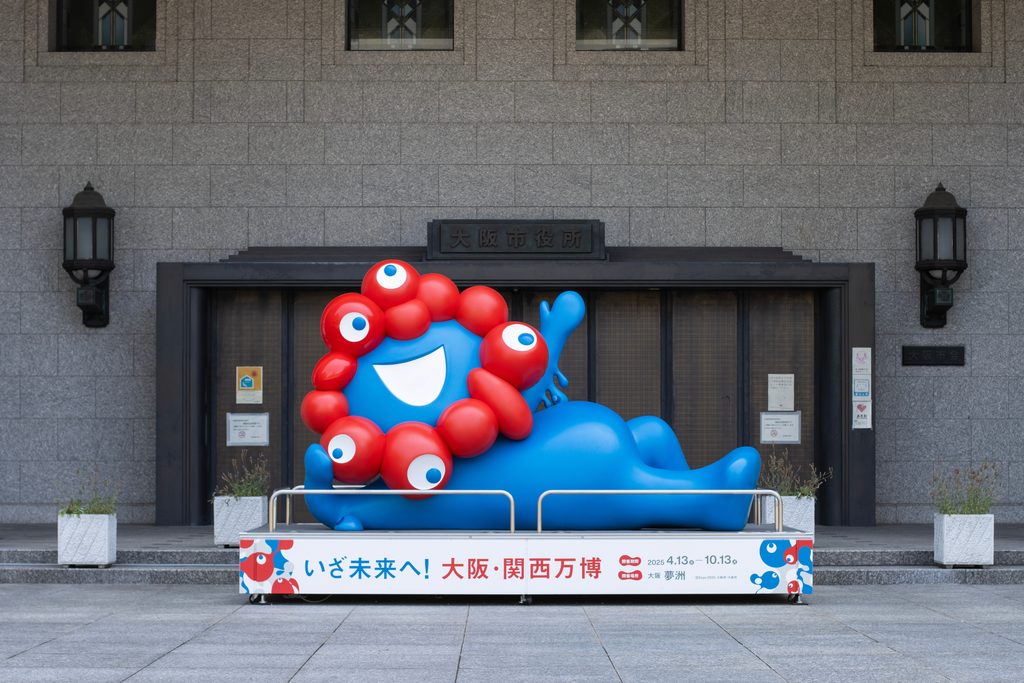
The reference is to Myaku-Myaku, the mascot of the Osaka-Kansai Expo 2025. The character was widely mocked when it was unveiled, but ultimately became a genuinely popular mascot.
Japanese social-media users are consciously invoking that trajectory. One post cited by Sumaho!! described seeing fan art of Candidate B and suddenly becoming fond of it, calling the phenomenon “the Inochi no Kagayaki phenomenon” after Myaku-Myaku’s official design name, Inochi no Kagayaki-kun.
In other words, some of the mockery is deliberately participatory. Users know that an unusual mascot can go from being ridiculed to being loved, and they’re playing with that process in real time.
The second-most-liked quote post, however, shows how the Takanawa Gateway episode is shaping the vote.
It received 94,467 likes and said: “Let’s all vote for this one and give JR a headache lol.”
That joke only works because JR East has promised to accept the candidate with the most votes. The stronger commitment in September has effectively given voters a lever, and some immediately noticed that they could use it.
Meanwhile, Yahoo! News comments on coverage of the election have tended in the opposite direction, with readers expressing disappointment and suspicion.
Both reactions are real. The difference is the venue.
Why is the Suica Penguin being retired?

Another part of the debate that’s gotten muddled is: the Suica Penguin was never originally created for Suica.
The character comes from illustrator and picture-book author Sakazaki Chiharu’s work, beginning with her debut book Pengin Gokoro (ペンギンゴコロ). JR East adopted the character in 2001 because it fit the concept behind Suica’s name: suisui, suggesting something that moves smoothly and without friction. JR East later confirmed to ITmedia that this was the thinking behind the choice.
The Penguin was initially intended to be a character for the launch campaign. It became a permanent part of the Suica brand after a 2003 View Suica Card promotion by Dentsu.
The copyright on Suica Penguin merchandise is credited to three parties: Sakazaki, JR East, and Dentsu. Asked whether the three parties jointly own the character and whether all three must approve merchandise, JR East declined to discuss the specifics, saying it would “refrain from answering specifics on contractual matters.”
That means JR East doesn’t simply have sole control over the character that has become synonymous with Suica.
Some users have independently connected that to the new designs. One post reasoned that JR East is effectively returning a character it borrowed, meaning that a successor can’t simply resemble the Penguin without raising questions about the existing character’s rights.
Another popular post asked why JR East does not simply commission Sakazaki, who also designed Chiba Prefecture’s Chiba-kun, to create a new original character that JR East could own outright under a new contract.
JR East says the change is about Suica’s future
JR East’s stated reason for changing the mascot isn’t the Penguin’s rights. It’s the company’s effort to reposition Suica.
The mascot refresh is part of “Suica Renaissance,” JR East’s plan to transform Suica from “a device for travel and small payments” into “a device for daily life.” One of the first major changes under that strategy is a new code-payment function for Mobile Suica, scheduled to launch in autumn 2026.
Unlike Suica’s existing tap-to-pay function, which stores its balance on the card’s chip and retains its ¥20,000 (~$130) ceiling, the new function will manage the balance on a server and allow payments of up to ¥300,000 (~$1,950).
The ¥300,000 limit isn’t an increase to Suica’s existing ¥20,000 e-money limit. It’s a new payment capability alongside the existing system.
The timing of the mascot change reflects that broader repositioning. JR East is trying to make Suica relevant beyond transportation, and the new character is intended to represent that next stage.
The strongest criticism isn’t nostalgia
Some of the most substantive criticism of the shortlist has little to do with people’s attachment to the Penguin. The most-liked purely critical post, with 8,691 likes, argued that none of the three candidates adequately considers contrast when reproduced in monochrome and therefore fails a basic requirement for a character that will appear in front of tens of millions of people.
Another post, which received 6,573 likes, argued that orange pigment fades more quickly in sunlight, potentially leaving Candidates A and C looking black on outdoor signage, while the Penguin’s black-and-white design is more resistant to that problem.
Yahoo! News commenters have also turned JR East’s own descriptions against it.
Candidate B is officially described as a character that listens to the voices around it. One commenter responded that by the time the three designs reached the final stage, “whichever one wins isn’t listening to customers,” calling the description self-parody.
Another invoked Takanawa Gateway directly, arguing that JR East would hold a public vote even though it had already made the decision internally. JR East, however, has released no interim vote totals.
Enthusiasm on X shouldn’t be mistaken for evidence that any candidate is actually leading. As Sumaho!! noted, visible support on social media and actual vote totals are two different things.
The loudest campaign on X isn’t necessarily the winning campaign.
The penguin’s final lap
The retirement announcement in November initially triggered an outcry, including a petition calling for the decision to be reversed and offers from rival railway mascots to take the Penguin’s place, such as Kotoden’s dolphin Koto-chan.
Now that voters have actual successors to choose from, that reaction has returned on a much larger scale.
But the story is no longer simply about whether people want to say goodbye to the Suica Penguin. It’s also about whether JR East can persuade the public that this time, a public vote really is a public vote.
The company has given voters until Sept. 23 to decide. And, unlike with Takanawa Gateway, JR East has now put in writing what happens if the public chooses something the company didn’t expect.
Keep reading

Sources
Suica新キャラクター候補3案を公開。特設サイトで一般投票スタート トラベル Watch
「ペンギンを返して」 Suica新キャラ候補3案公開でSNSに戸惑いの声 一般投票は8日から ITmedia NEWS
「Suicaのペンギン」後継キャラ投票が賛否両論の理由 「高輪ゲートウェイ」という“呪い” ITmedia NEWS
「Suicaのペンギン」卒業騒動にまつわる背景と誤解 JR東日本に聞いた ITmedia Mobile
Suicaの新たなイメージキャラクターの誕生 ~お客さまによる選考投票をスタートします~ 東日本旅客鉄道株式会社(PR TIMES)
Suicaの新たなイメージキャラクターの誕生プロセス 東日本旅客鉄道株式会社
Suica新キャラ投票、B案に愛着湧くネット民。高輪ゲートウェイへの不信も すまほん!!
Suicaの新たなイメージキャラクターの候補がどれもペンギンと比較してしまうと魅力に乏しい!?色合いについての指摘も Togetter
JR東日本、Suicaの新キャラクター候補を発表 ネット投票で決定へ 日本経済新聞
JR東、「Suica」の新たなキャラクター案「リス」「うさぎ」「オレンジの子」を発表 一般投票で決定 鉄道コム
Suica新イメージキャラクター誕生プロセスと「Penguin Years」キャンペーン発表 JREメディア
JR東日本、モバイルSuicaに「コード決済」実装 上限2万円→30万円に引き上げ 2026年秋に ITmedia Mobile
なぜ、Suicaは「チャージ上限2万円」なのか? コード決済導入でどう変わる? JR東日本に聞いた ITmedia Mobile
Suicaのペンギン ウィキペディア