
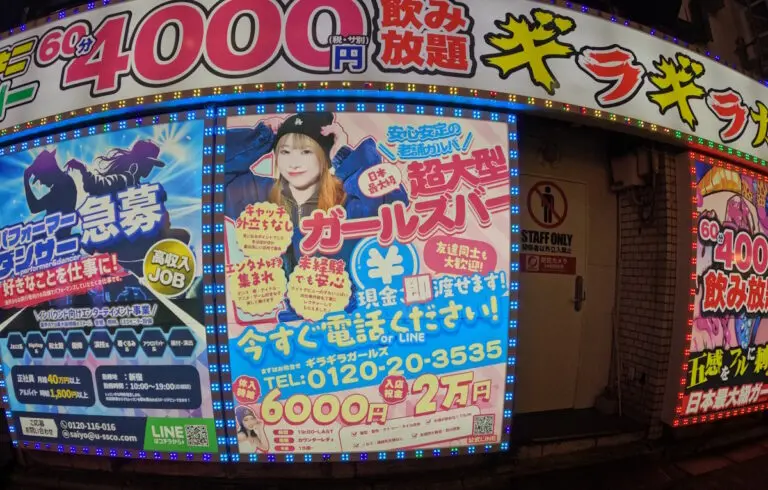
If you walk through the Toyoko area in Kabukicho, in front of the iconic Toho building with Godzilla looming over the street, you’ll see them. Rows of young women holding signs advertising the opportunity to spend an hour (or more) sitting and drinking with their shop’s kawaii staff.
But what are all these businesses being advertised? How do they differ from traditional maid cafes? And do you, as a foreigner, dare step foot in one?
In this article, I break down the differences between the three largest groups – maid cafes, concept (“con”) cafes, and girls’ bars – and cover which ones you can enjoy even if you don’t speak Japanese.
A word about settai
Before I get into the gritty details, a quick note about Japan’s Entertainment Law. And yes, this will be important later.
Legally, this law is called the 風俗営業等の規制及び業務の適正化等に関する法律 (Fūzoku eigyō tō no kisei oyobi gyōmu no tekiseika tō ni kansuru hōritsu). Since that’s a mouthful, most people just call it the Fuuei-hou (風営法).
This law gets little discussion in English. (Wikipedia has an abbreviated English version of the much lengthier Japanese article.) I’ve covered some of the basics in past articles on Japanese nightlife. For the purposes of this article, it’s important only to understand that it covers all nightlife businesses, including non-sexual businesses like bars, as well as sexual businesses such as love hotels and soaplands.
Among non-sexual entertainment businesses, the law makes a sharp distinction between those that offer settai (接待; entertainment) to customers and those that do not. Settai is defined as any customer contact, which can be as simple as sitting next to a customer and drinking with them. It may also include offering drinks, dancing, and light touching.
Businesses like cabaret clubs, host clubs, and unique attractions such as SOD Land, a bar that lets you drink together with working porn actresses, are classified as settai businesses. These businesses must conform to a slew of regulations that other nightlife businesses do not. The key limitation is restricted operating hours: unlike a normal bar, settai businesses must close by 12am or, in some cases, 1am.
Keep this in mind – it’ll prove important later! As we’ll see, the line between what constitutes a maid cafe vs. a con cafe vs. a girls’ bar isn’t a bright, solid one.
If you want to know what con cafes, girls’ bars, etc. you can go to in Japan as a foreigner, check out my Tokyo nightlife guide. I cover every type of venue in Japanese nightlife and provide 30+ recommendations for foreigner-friendly spots.
Maid cafes
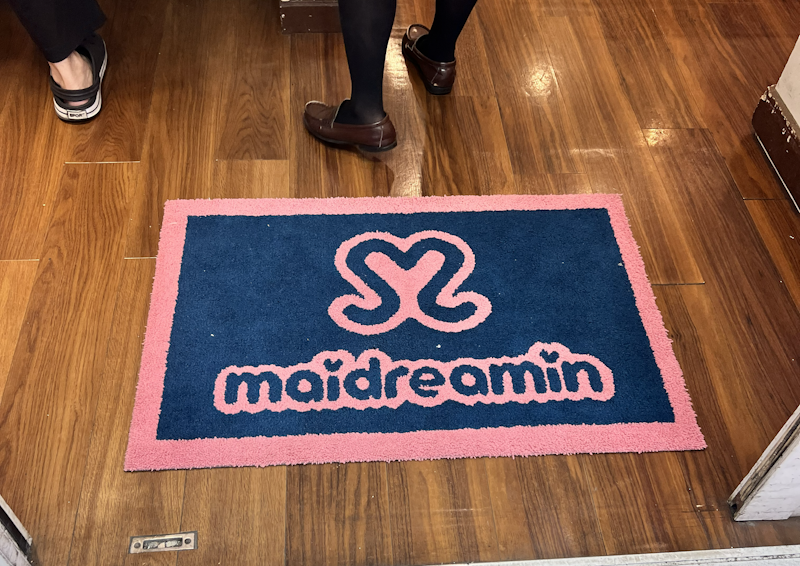
I won’t spend too much time on maid cafes, as I have a whole article dedicated to them. The concept of women serving customers in traditional Western maid outfits, which feels like a throwback to Japan’s Taisho era, took off in the 2000s. Maid cafes are now known worldwide as an indelible part of modern Japanese pop culture, largely thanks to anime.
As discussed in my previous article, maid cafe culture is more or less set in stone. Customers order food or drink and enjoy occasional banter with staff members. Maids refer to visitors as ご主人様 (goshujin-sama, master) or お嬢様 (ojou-sama, miss) and have set rituals, such as drawing hearts on omuraisu with ketchup and dousing them in “magic.”
In terms of charging structure, most maid cafes require a combination of a per-hour service charge as well as a stipulation that you order one drink every hour. For maid cafes, the per-hour service charge is much lower than con cafes and girls’ bars.
Staff have customers who make them their oshi and purchase additional items, such as Polaroid pictures (チェキ; cheki). Physical contact is forbidden, as is all non-purchased photography.
Concept cafes (Con cafes)
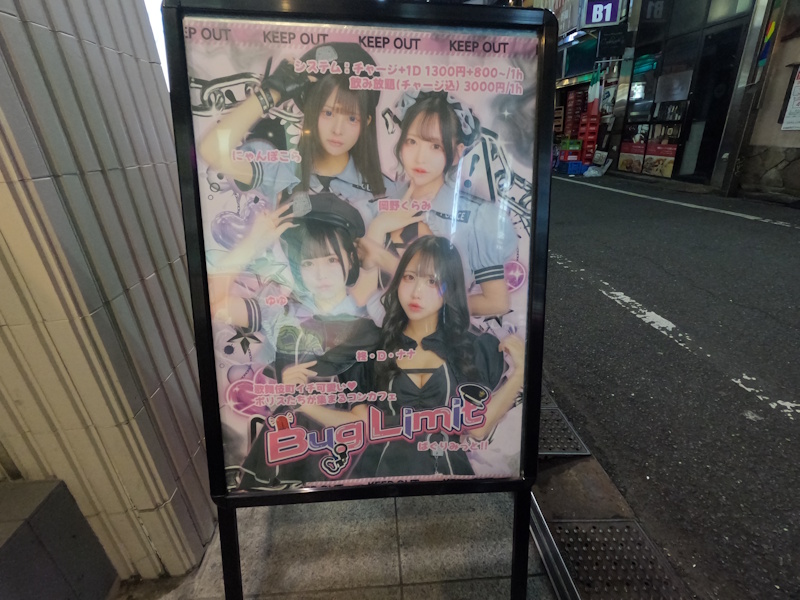
The simplest way to describe a con cafe is “maid cafe, but different.” Think of it as a more adult-oriented, free-form version of a maid cafe.
Building on the concept of a maid cafe, con cafes sub out the maid concept with a concept of their own design. Cosplay cafes, dolls, nurses, lolita/jirai-kei, vampires, animals, succubi, and aliens are just a few of the concepts you’ll see at con cafes around Japan.
There are a few key differences between con cafes and maid cafes. Maid cafes operate more like cafes. Con cafes, by contrast, operate more like bars. While the emphasis in maid cafes is on cafe-style table service, the emphasis in con cafes is on regularly talking and interacting with customers. Many stores also offer karaoke for a fee.
Like host and cabaret clubs, con cafes also encourage visitors to buy the “cast member” who’s talking to them a drink. Indeed, most con cafe workers and regulars consider it basic manners to buy your con cafe host/hostess a “cast drink.” You can also buy more expensive bottles of booze, including custom-labeled bottles (orishan, オリシャン) made for a special event such as the cast member’s birthday.
Like maid cafes, con cafe workers have fans who support them specifically. If you want to see a particular staff member on a given night, you can arrange that beforehand for a small designation fee (指名; shimei).
The operating hours and age of staff members at a con cafe can differ greatly (more about why below). Some stay open all night, while others close at midnight. All-night con cafes will employ staff over 18 years of age, while con cafes with shorter hours may employ workers under the age of 18.
A typical con cafe will charge a low hourly surcharge, up to 1,000 yen ($6.50) an hour.
Girls’ bars
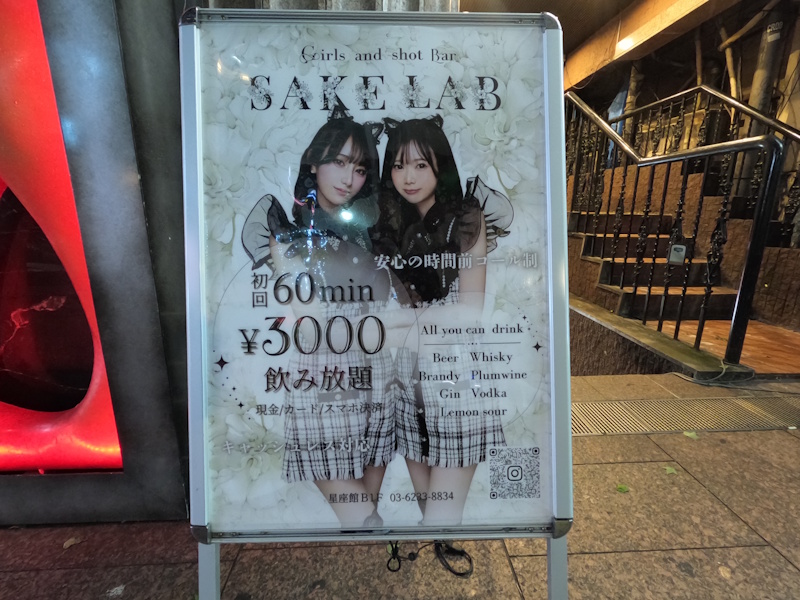
Girls’ bars are probably the business model with which Western tourists are least familiar.
The concept is simple: It’s women behind a bar, serving drinks. Unlike con cafes, there’s no “concept” distinguishing one girls’ bar from the next. There is also no table service: customers and staff are separated from one another by a counter at all times, meaning there’s zero settai.
Girls’ bars are even more about customer interaction than con cafes are. The primary attraction is chatting and drinking with staff. Karaoke may also be offered.
Girls’ bars differ from con cafes in another aspect: their price. A typical girls’ bar will charge 3,000 yen ($19) or more an hour. This may or may not include an “all you can drink” menu. Like con cafes, you can (and should) buy your hostess a drink for every hour you stay and chat.
The lines get blurry
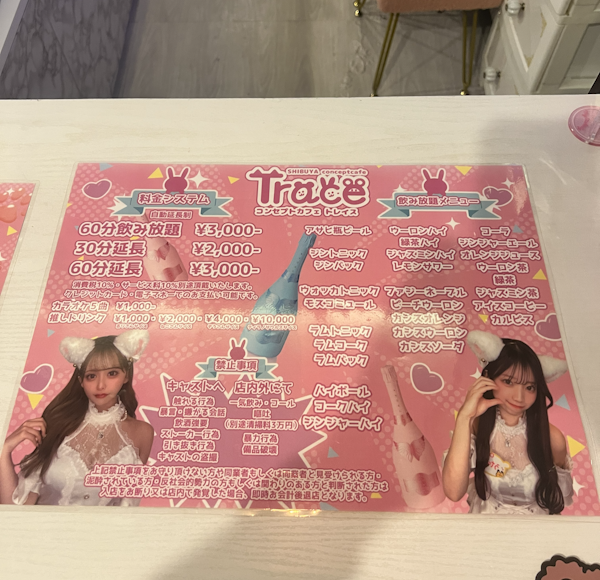
The differences between these businesses aren’t always cut-and-dried. One weird area: con cafes that are actually girls’ bars.
These businesses advertise themselves as concept cafes, with the hosts or hostesses adhering to a given theme. In reality, however, they work like girls’ bars. The workers stay behind the counter and have zero physical contact with customers.
Trace in Shibuya is a good example. Trace advertises itself as a “Cafe and Bar” and clearly operates as a girls’ bar. It’s even labeled a “Girls’ Bar” on Google Maps.
Why does this happen? Why would businesses structure themselves like this? How did a “girls’ bar” come to be a thing, anyway?
Here’s where we come back to settai.
Some con cafes are set up with tables where hosts and hostesses can mingle with customers. This makes them settai businesses. That means they can only operate until around midnight.
A girls’ bar, however, only has counter seating. That means there is zero settai, which means the bar can continue operating until 5am.
Now, to make this even more confusing, some con cafes do both! One con cafe my wife and I visit, for example, runs a non-settai business on Friday and Saturday nights from 12am to 5am, but closes at 12am the rest of the week.
And in case you were wondering: Yes, there are also “maid con cafes.” Because of course there are. If you want to know exactly what a specific cafe/bar offers, check out my extensive Tokyo nightlife guide for up-to-date descriptions of several stores, including the exact mechanics of how each one works.
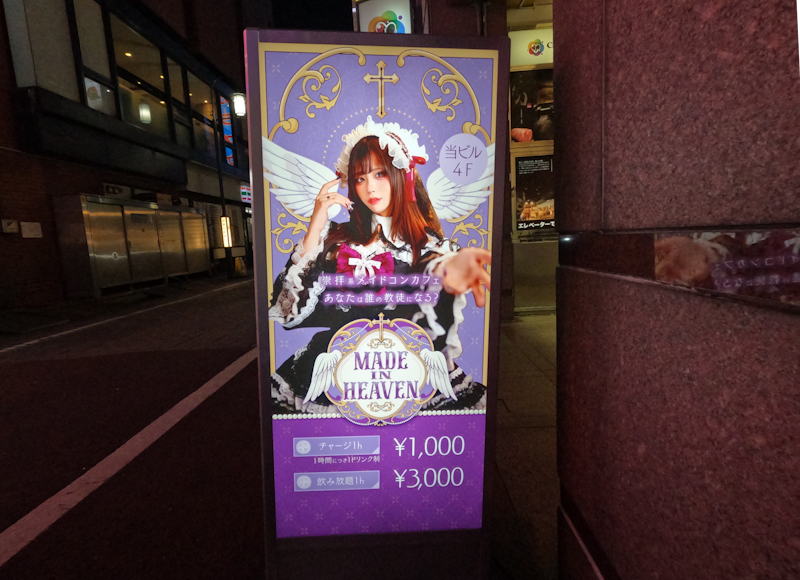
How do snack bars differ from con cafes and girls’ bars?
If you’re a regular reader, you may have caught my previous article about snack bars. Snack bars, which sprang out of 1960s-era bar legislation, are small shops run directly by an owner (usually a woman, the “mama”). They serve as neighborhood hangout spots where people get together to chat and drink.
To put it bluntly, the difference between the business models is objectification. Snack bars don’t make the appearance of either the owner or staff the center of attention. A snack bar’s mama can be a woman of any age, with many running their businesses for decades. By contrast, the point of going to maid cafes, con cafes, and girls’ bars is to pay to spend time in the company of conventionally attractive young women.
Can you go to a con cafe/girls’ bar if you’re a non-drinker?
Given how centered these businesses are on alcohol, you may wonder: can I go if I don’t drink booze?
The answer to that is an emphatic yes. While con cafes and girls’ bars make serious money off people who commit to expensive bottle purchases, the staff appreciates anyone who pays the hourly fee and buys cast drinks. Many locations will also have higher-end non-alcoholic drinks, such as Chammerry, if you want to do something a little extra to support your favorite cast member.
Can you go if you don’t speak/read Japanese?
One thing everyone wants to know is which nightlife businesses in Japan they can visit without a tour guide if they don’t speak Japanese. That’s part of why I wrote my Tokyo nightlife guide: to give people a map of the different business types that exist and where they can easily go.
My most up-to-date answers on where you can visit are in the guide, as I update it at least once a month (buyers get all updates free of charge, forever). Here’s some general advice on where you can go:
Maid cafes: Generally, yes. The larger chain maid cafes, such as At Home and Maidreamin, are set up to welcome and support foreigners. I’ve even written about how some are experimenting with new translation technology to make the experience even more enjoyable. Many of the larger cafes likely also have one or more English-speaking staff members on hand.
Con cafes: Varies. Unlike a maid cafe, communication is a big part of going to a con cafe. Some will offer English menus (usually auto-translated) and do their best to communicate with you if you know a smattering of Japanese.
Like maid cafes, occasionally, con cafes will have Japanese cast who speak some English, and may even hire foreigners who speak English natively. (Lalice in Okubo is a good example.) This is likely to increase as more foreigners wander into con cafes, intrigued by exactly what’s going on inside.
This is still the exception rather than the rule, though. Be warned that you may be refused service outright at a given con cafe if you don’t speak Japanese. Several that I’ve gone to have signs in English to reject non-Japanese speakers.
Besides the communication difficulties, such businesses often run into trouble with customers who don’t understand the hourly charging system. For many, that makes dealing with non-JP speakers more trouble than it’s worth.
Girls’ bars: Usually not. A girls’ bar is all about one-on-one communication. If you can’t speak Japanese (or you’re not with someone who can), there’s little point in going.
I’ve talked to a few staff members at girls’ bars who say some non-Japanese-speaking visitors have tried using AI translation tech on their phones. Even when this works, most don’t seem to find it a pleasant experience.
However! As with con cafes, this can differ by store and depends on the staff. Indeed, some girls’ bars, like the aforementioned Sakelab, advertise themselves explicitly as English-friendly. Other stores are actively recruiting English speakers to take advantage of Japan’s status as a tourist hotspot.
Keep reading


Sources
メイドカフェとコンカフェの違いとは?楽しむコツも紹介. Moe Global
ガールズバーとコンカフェの違いがわかる8つのポイント. Moe Global
シャンメリー. Wikipedia JP