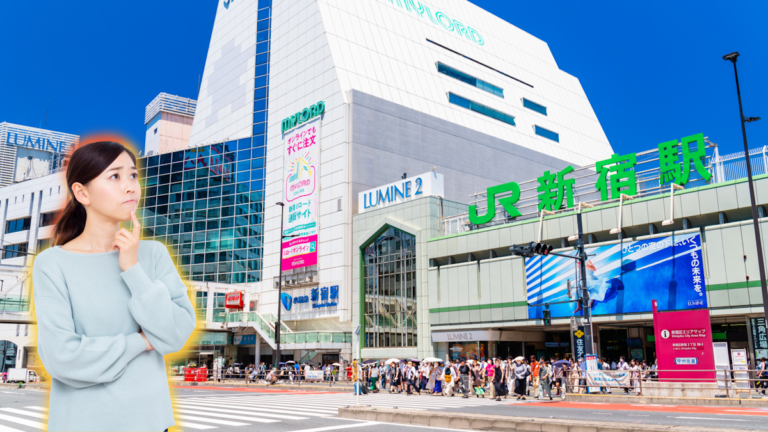
Shinjuku Station is as amazing as it is frustrating.
The beating heart of Tokyo’s public transit system, Shinjuku sees over 3 million users every day. Some of them are headed for Shinjuku itself. Many more use it as a transit point that connects multiple train companies.
While useful, even Tokyo natives find Shinjuku Station daunting. But it doesn’t have to be. You just need to memorize a few simple facts. Also, it helps to know where you’re going!
In this guide, I’ll cover:
- Arriving at Shinjuku Station – and which exit to take for what
- How to transfer to other train companies’ lines or a bus
- Getting around parts of Shinjuku from the station
- The magic trick that prevents you from ever having to leave the station to get to your destination
- A cheat sheet of the “must know” facts that will enable you to navigate Shinjuku Station like a pro
The structure of Shinjuku Station (and Tokyo transit)
One thing most of our tour clients don’t understand before arriving in Japan is that the “Tokyo transit system” isn’t a centrally governed entity. It’s a conglomeration of multiple private and public transit companies that share a single, sprawling train station.
As a result, the station has grown over time from a tiny, insignificant station to the monolith it is today. This organic complexity is why transit users frequently rate Shinjuku as Tokyo’s most hard-to-use station.
Each train company operates its own gate. That means, if you’re transferring trains at Shinjuku, it’s critical to know which company’s gate you need to enter. If you enter the wrong gate, you’ll have to ask a station attendant to clear your transit card and swipe you back out.
Another important point is that the different company’s train gates are spread out across the station. Make sure you allot yourself plenty of time to travel between gates if you’re transferring at Shinjuku.
Here’s a quick breakdown of the major train companies, lines, and popular destinations running out of Shinjuku Station.
JR East
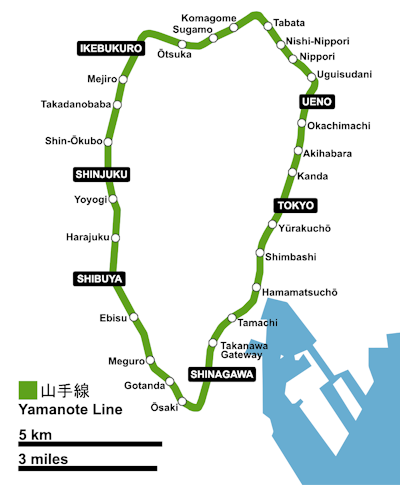
Runs the popular Yamanote line, which connects major Tokyo destinations in a bi-directional loop, the Outer and the Inner Lines. The Yamanote connects Shibuya, Harajuku, Shinjuku, Ikebukuro, Akihabara, Tokyo Station, and Shinagawa, among others. As a tourist to Tokyo, this will be the single most important line with which to familiarize yourself.
You can also catch the Saikyo with service to Ōmiya, the Shōnan Shinjuku, Seibu, and Chūō, as well as the Narita Express out to Narita Airport.
Toei
The Tokyo Metropolitan transit system, operating the Shinjuku Line to Motoyawata in Chiba. If you’re staying out in East Tokyo closer to Skytree, this is one of the lines you can catch to get to Shinjuku Station.
Toei also runs the Ōedo Line, which goes out to Nerima and also to popular destinations such as Kiyosumi-Shirakawa, Daimon, and Azabu-jūban.
Keio
Operates the Keio Line, with service to West Tokyo through Setagaya City out through to Hachiōji and Takao.
Odakyu
Operates the Odawara Line, which stretches out to the southwest into Kanagawa Prefecture. The company also operates its famous limited expresss Romancecar, which goes to popular day trip destinations such as the hot springs resort town of Hakone.
Tokyo Metro
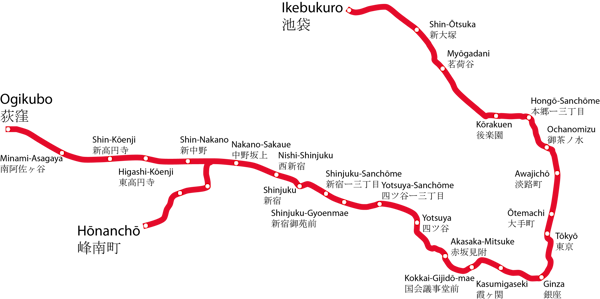
Operates the Marunouchi, which stretches in a u-shaped pattern from Ogikubo to Ikebukuro. In between, it hits Kōenji, Yotsuya, Shinjuku-Sanchōme, and Ginza.
Arriving at Shinjuku Station
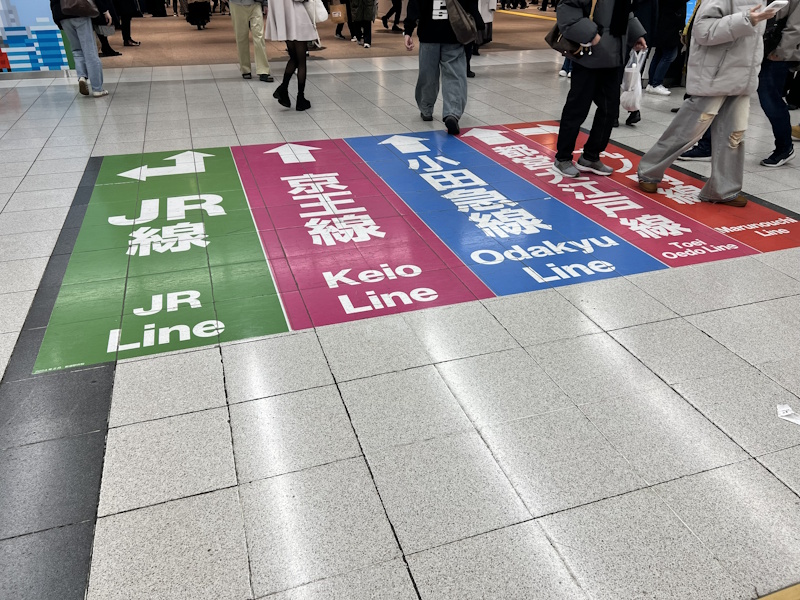
Once you’re at Shinjuku Station, you need to decide where to go next. If you’re staying in Shinjuku, that means deciding which exit you need. This determines the direction you head after alighting from your train.
Shinjuku Station is split into three levels: 1F, 2F, and B1F. JR East has a great zoomable map of each floor available on their website. 1F is the location of the train platforms, with B1F and 2F acting as exits, transit points, and the location of various shops and restaurants within the station.
West Exit
Level B1F. The West Exit is your major transit point for buses as well as for the Keio, Odakyu, Tokyo Metro (Marunouchi), and Ōedo train lines. Once in the concourse, if you’re catching a bus, you’ll want to head upstairs to get to the bus terminal (follow the signs).
In terms of local attractions, the West Exit will take you to Yodobashi Camera, a sprawling electronics store that occupies multiple floors and buildings. The Keio department store is also over this way, as well as the Tokyo Government Building and many local hotels, such as the Hyatt Regency, Washington Hotel, and others.
Past Yodobashi on the way to Nishi-Shinjuku is a fun back-alley maze of bars and restaurants that’s worth exploring. I highly recommend grabbing coffee at Tajimaya Coffee House, which has been operating in Shinjuku since 1964.
East Exit
Level B1F. East is where you want to go for Kabukicho or Shinjuku-Sanchōme (though there’s an easier way to get to both of these locations – see below). Leaving the East Exit, you’ll also see the area’s famous 3D cat billboard. Store-wise, the East Exit will put you near the larger Lumine department store building.
South and New South Exits
Level 2F. The South and New South exits will take you to the NewWoman shopping mall across the street (which you can also access from underground) and the Lumine shopping mall.
You can also go out the New South exit to get to Chūō-dōri, which is a fun walk jam-packed with cafes and restaurants. A little further to the south, you’ll find the Southern Terrace and the Takashimaya department store, along with a large Tokyu Hands. In the other direction, you’ll find Shinjuku Gyoen, a beautiful park that’s worth visiting whenever you need a break from the surrounding hustle and bustle.
Arriving from another line
Many folks will arrive on the Yamanote Line or one of the many lines that arrive on level 1F. From the Yamanote, Saikyo, and other lines, you can go either upstairs or downstairs. The rule of thumb here is:
- Upstairs for the South and New South exits (2F)
- Downstairs for the West and East exits (B1)
Navigating in and around Shinjuku Station
Those are the basics you absolutely need to know to survive. But there’s so much more to know. The station itself is a miniature city; you can shop, eat, and relax here for hours without once stepping foot outside.
Here are a few more tips and tricks to help you not only get around Shinjuku Station but also master it. I’ll also share some of my favorite places to shop and eat both around and inside the station.