
A bus drove around 20 journalists, including myself, to the CREVA Ōkuma Interim Storage Project Information Center in Fukushima Prefecture. There, we presented our IDs and received badges.
20 minutes later, we were in an area of Ōkuma where few people tread.
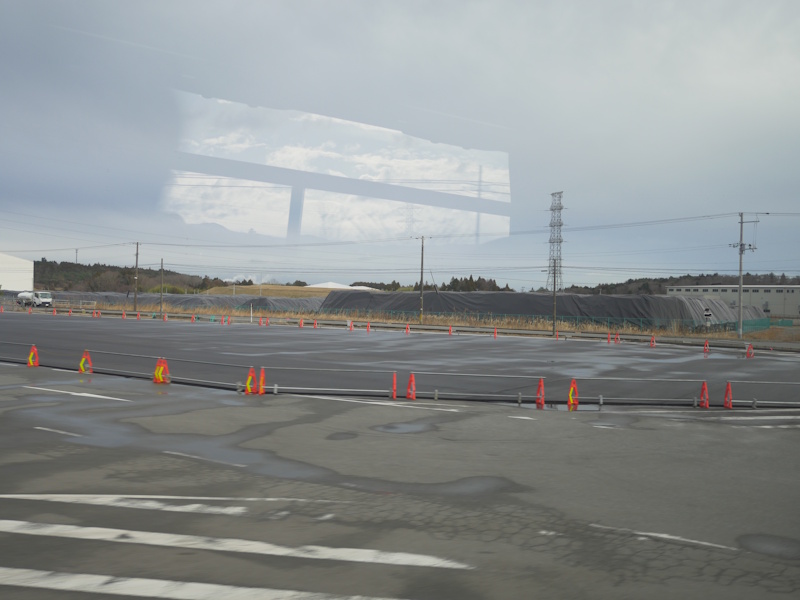
Our bus passed long rows of structures covered in black tarps. These, our guides told us, were packed containers of contaminated soil – about one cubic meter apiece. For obvious reasons, we weren’t allowed to step out of our vehicle here.
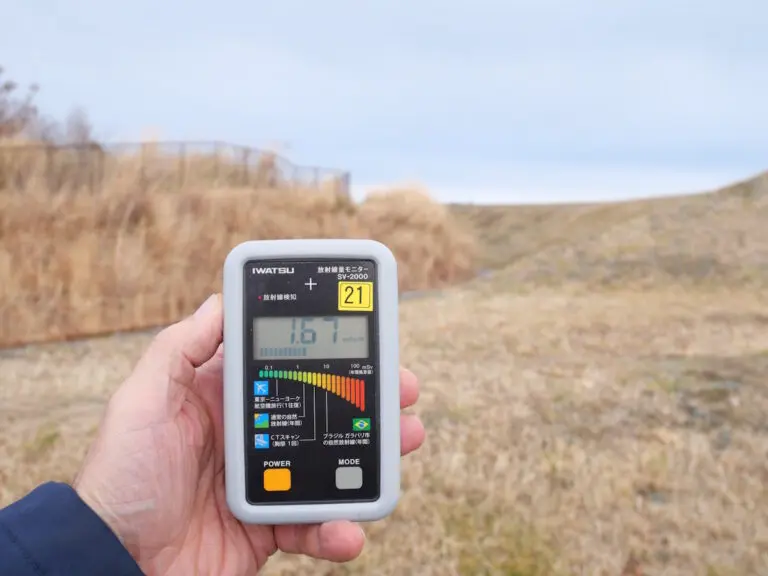
We finally did alight from the bus and climbed a hill of reclaimed land. Our guides gave each of us radiation counters so we could ascertain our safety. Most of my colleagues’ counters didn’t climb above 1 millisievert (mSv). Mine consistently registered around 1.6 mSv. Higher, but not above the global average background radiation of 5 mSv.
Our guides explained that radiation levels can fluctuate from spot to spot. They’re still most marked near trees and forests, which are difficult to decontaminate from nuclear spoilage.
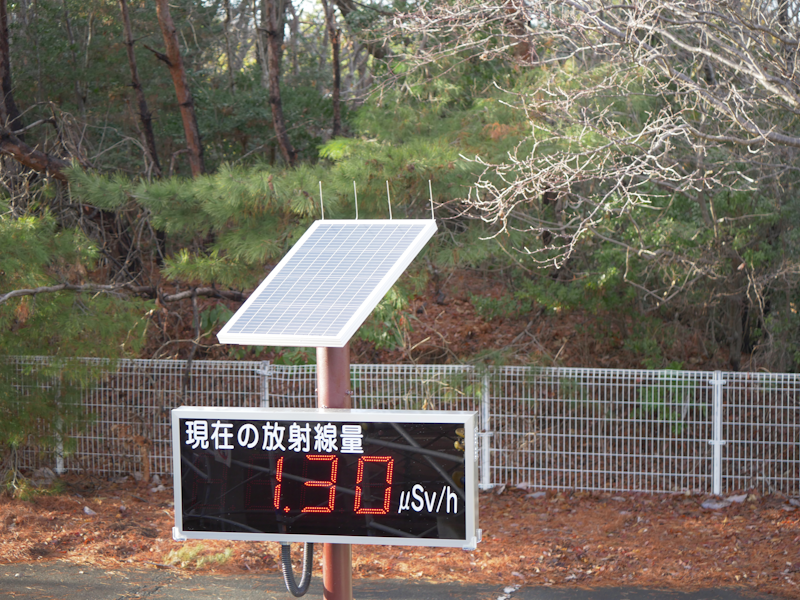
Anyone can sign up for a tour of the Interim Storage Facility in Ōkuma. Without this prior permission, however, no one is allowed inside the so-called “Difficult to Return” zone, an area blighted 15 years ago by the meltdown of the TEPCO Fukushima Daiichi Nuclear Power Station. This land, once thoroughly uninhabitable, is now owned by the Japanese government, which has legally committed to decontaminating and removing all contaminated land in Fukushima by the year 2045.
Most people, even in Japan, are unaware of the massive cleanup operation underway here 15 years after the Great East Japan Earthquake. Unseen Japan was recently invited to learn more about this effort and the promises the government had made to the people of Fukushima. We also heard from a survivor who tearfully recounted the worst week of his life – and why he came back to help rebuild.
Note: Information in this article is derived from a press tour sponsored by Japan’s Ministry of the Environment. We were compensated for expenses for this trip, but have received no cash remuneration for this article. The Ministry of the Environment exercised no editorial control over the content.
Survivor recalls the moment he knew everything changed
The Great East Japan Earthquake was a magnitude 9.0 quake on March 11th, 2011, that sparked a devastating tsunami. 19,759 people were officially declared dead. Another 228,000 were temporarily or permanently displaced from their homes.
The tsunami also cut power to the Fukushima Daiichi Nuclear Power Plant in Ōkuma, taking out both the main power and all backup power sources. Radiation spilled from overheated reactors, rendering the local environment uninhabitable. After the accident, residents as far north as Minamisoma, 10km north of Namie, were evacuated to emergency housing centers across the country.
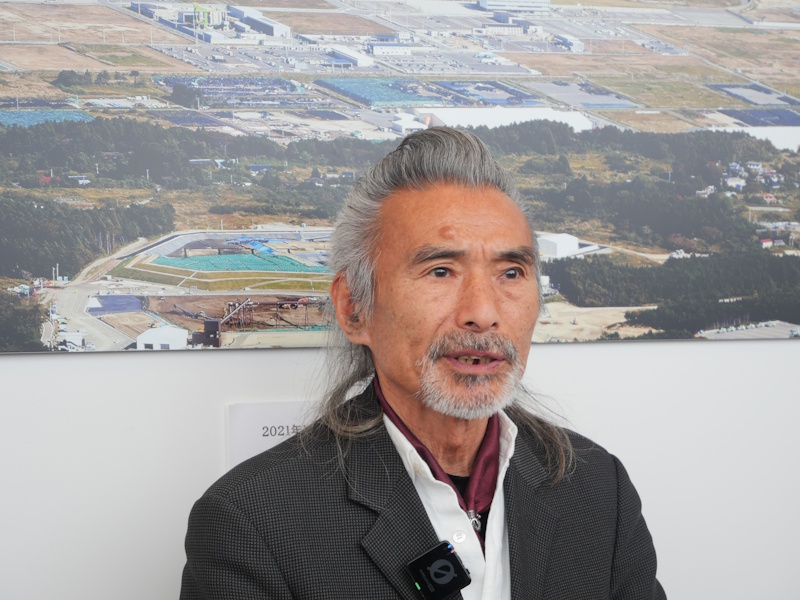
Landscaping technician Takakura Isuke, a resident of the Nakano district of Futaba, recalled the day the tsunami struck. He recalls the exact time as well: 2:46pm.
In the immediate aftermath, he went door-to-door and got as many people as he could to run with him to the nearest evacuation center. From the second floor, they watched as the initial wave struck.
Takakura estimates there were 50 houses in the area he gazed upon, including his own. Within minutes, they were gone.
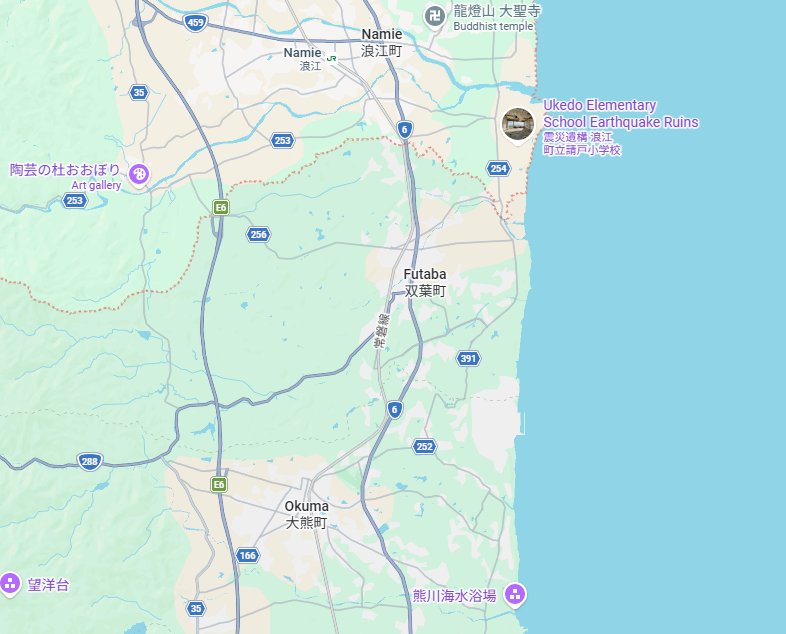
Immediately, he said, he and several fellow residents started talking about whether something might happen at the power plant. Their fears were confirmed the next morning. Around 7:30am, three police officers came by. But they weren’t wearing just their normal uniforms. They were dressed in protective clothing and gas masks.
“That’s when we knew that the worst had happened at the plant,” Takakura said.
Takakura and residents recall hearing the explosion that unleashed radiation across the region. The entire town of Futaba was contaminated, with some areas measuring 400 mSv. For context, the average US citizen is exposed to around 6.2 mSv of radiation yearly; a CT scan of your lungs may expose you to up to 7 mSv.
Takakura returned six years later to rebuild, when parts of the town were finally declared safe to return. Using donations and grants, in 2021, he spearheaded the reconstruction of the local Hachiman Shrine. He says some residents lambasted him for the effort. Today, however, he says the shrine serves as an important symbol and rallying point for the small community.
Now the mayor of the Hamano administrative district, he’s planning an exhibition of buildings damaged by the disaster. He is also honing his skills as a storyteller at the Great East Japan Earthquake and Nuclear Disaster Memorial Museum.
Takakura urges not just former residents of Futaba but all residents of Japan to consider moving to the area after learning more about the conditions there in the wake of the disaster. He vows to treat anyone who relocates as “equal Futaba residents.”
Question: do you like UJ's independent coverage of Japan? Our writers are supported by our members. Join Unseen Japan Insider to get bonus content every week, an ad-free website, and access to our large and growing Insider archive.If you love UJ's independent coverage of Japan, join Unseen Japan Insider to get content every week, an ad-free website, and access to our large and growing Insider archive.
The extensive soil reclamation operation
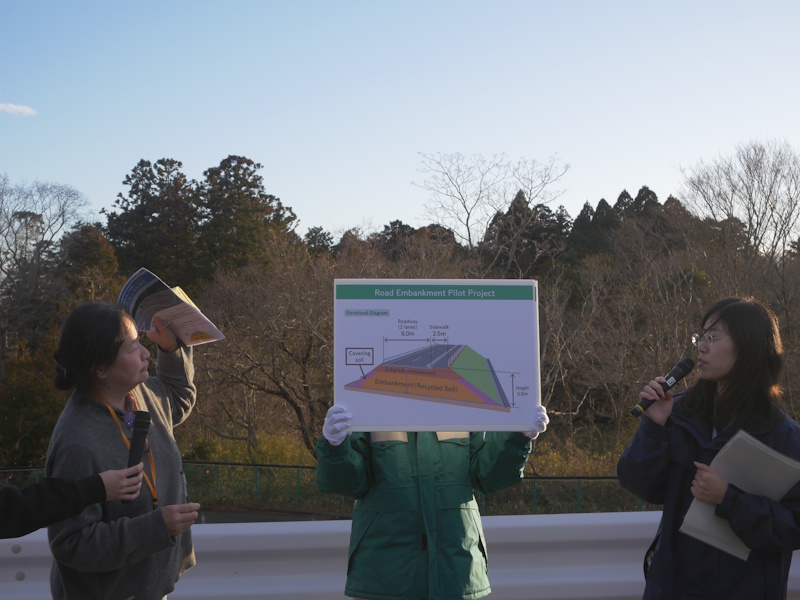
We got off our bus and walked up the world’s oddest road. Located in the middle of nowhere, the paved hill stretched for only about 100 feet. Below it, we were told, was reclaimed and decontaminated soil.
This is one of the many ways the Ministry of the Environment aims to rid Fukushima of radioactive land. The CREVA Ōkuma Interim Storage Facility spans a 16-kilometer radius across Ōkuma and Futaba. The MoE, using strict safety procedures, decontaminates the soil and disposes of it nationwide. Legally, the country is obligated to remove all such soil from Fukushima by 2045.
As of 2025, the MoE says it has removed approximately 14 million cubic meters of soil. If spread across 10 square kilometers, this soil would be about 1.4 meters deep.
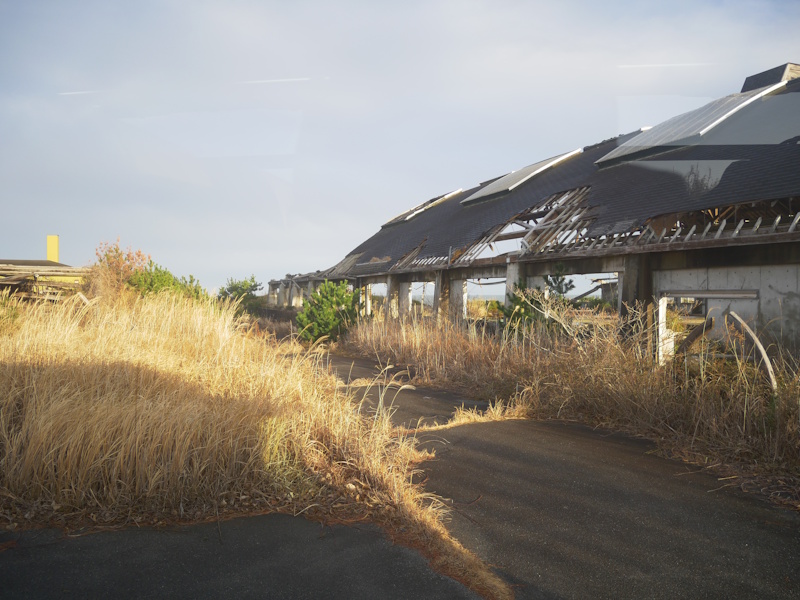
Despite decontamination efforts, soil from Fukushima does yield higher radiation levels than soil from elsewhere. However, MoE officials insist, this is at a level that’s negligible to human health. It further adds that the International Atomic Energy Agency (IAEA) has monitored the reclamation project and declared that it adheres to IAEA safety standards. On its website, the IAEA says it continues to provide monitoring and remediation support to Japan and the prefectural government.
The soil hasn’t just been used as embankments for roads. Some is used for landscaping, with soil from Fukushima even in use at the Japanese Prime Minister’s residence in Tokyo. Around 3/4 of the soil can be reclaimed; the other 1/4 must be disposed of outside of Fukushima.
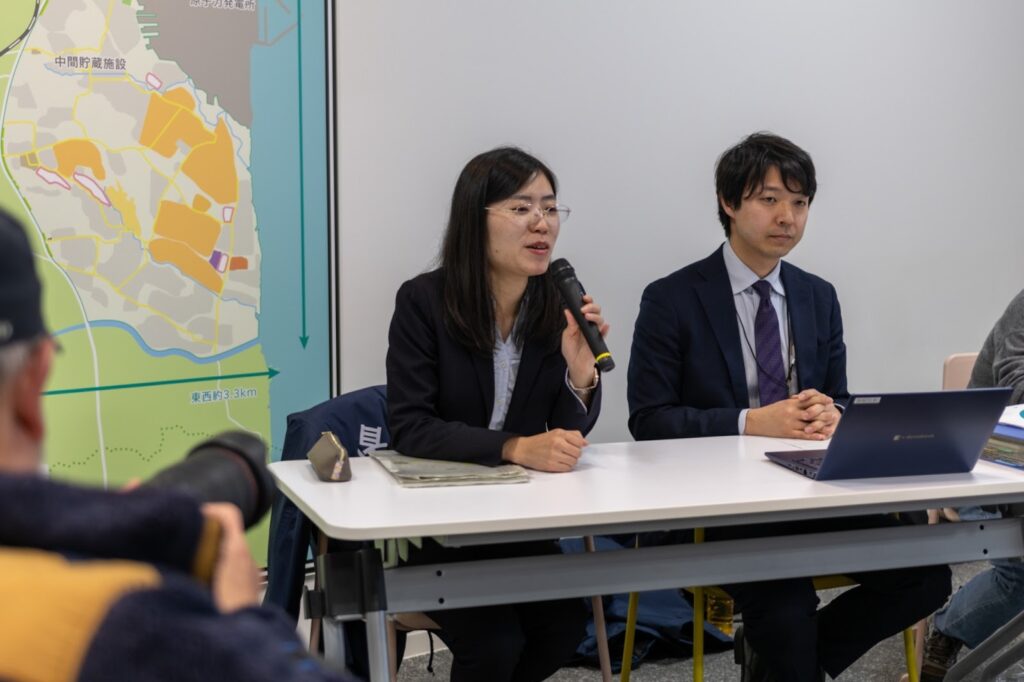
The government admits it’s still looking for innovative ways to use this massive amount of soil. To date, it’s only been used on lands owned by the Japanese government and its ministries.
Still, the Ministry says it’s made a lot of progress in the recovery effort. At the peak of the operation, there were 1,372 storage facilities for contaminated and decontaminated soil. That’s since been reduced to 10.
The project raised serious questions about radiation exposure, particularly among residents and workers. The MoE says resident exposure to radiation is minimal. Worker exposure is strictly monitored and regulated to ensure it doesn’t exceed 50 mSv over one year and 100 mSv over five years.
Worker safety, in particular, is a hot-button issue. In the wake of the meltdown, the government recognized that six cases of leukemia among decontamination workers should be classified as occupational accidents.
The dedication of a survivor
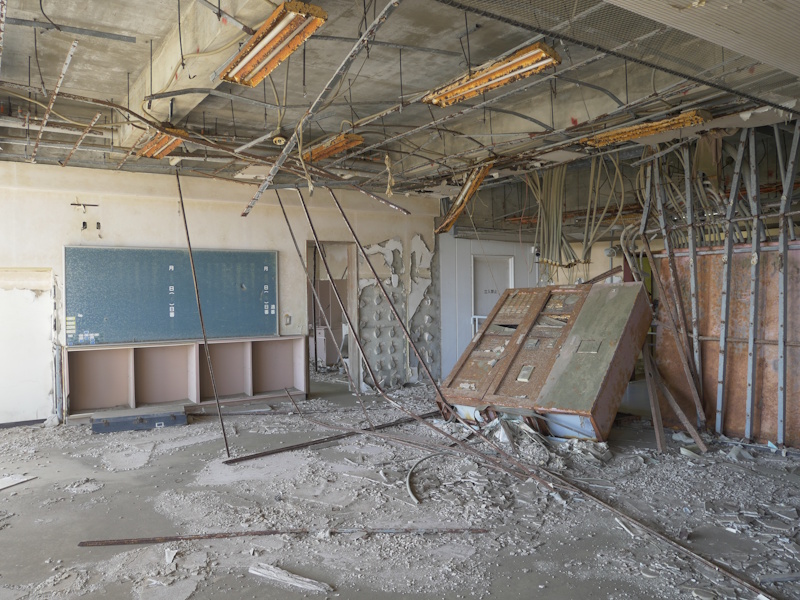
It’s hard to understate how eerie it felt at times walking through Ōkuma, Futaba, and Namie. I’ve walked through towns in Japan hit by depopulation and the flight to the city. These three were more empty, barren, and solemn.
The government-sponsored tour focused on the positive aspects of the cleanup operation. Officials repeatedly touted how they were dedicated to hitting the 2045 deadline for the treatment and removal of contaminated soil.
The Ministry of the Environment also introduced us to a number of commercial operations designed to stimulate the regional economy. Officials touted the new Futatabi Futaba luxury hotel, which aims to rekindle tourism to the prefecture. We were given a tour of Rice Resin, a local business that uses expired rice from the government’s rice reserves as a substitute for plastic.
Despite these investments, however, Futaba and the surrounding area are still a shadow of their former selves. Of Futaba’s 7,200 residents before the reactor meltdown, only 190 have returned.
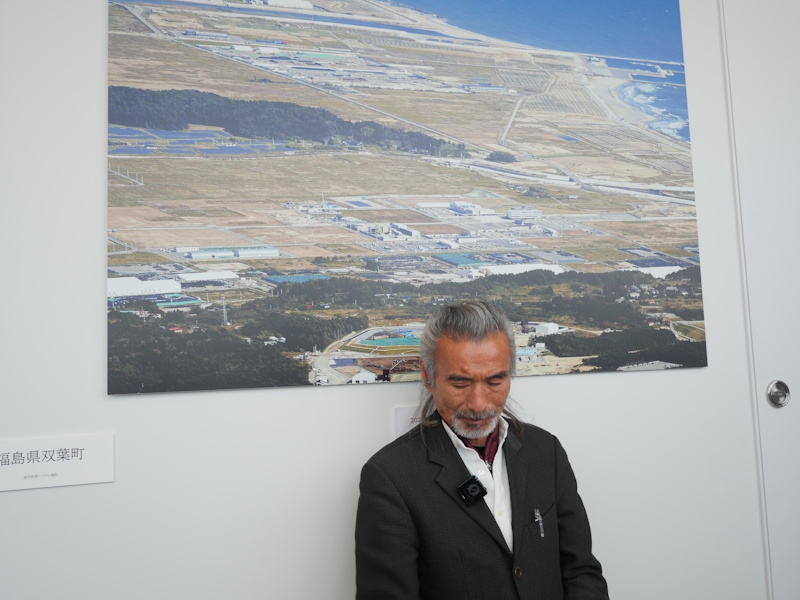
What does Takakura think about this gap between the investment in business and the lack of people?
“There’s a lot to be angry about, to anguish over,” he said. “This shouldn’t have happened, but it did. And now I want to see in what direction my hometown’s going to go.”
“When I came back, I was very angry. I was torn by regret and anguish. But if we don’t move forward, this will just remain a barren land. I became a representative for this area because, while I’m still living, I want to move us forward, if even a little.”
Keep reading

Sources
2011 Tōhoku earthquake and tsunami. Wikipedia
Various Ministry of Environment presentations
Radiation Sources and Doses. United States Environmental Protection Agency