
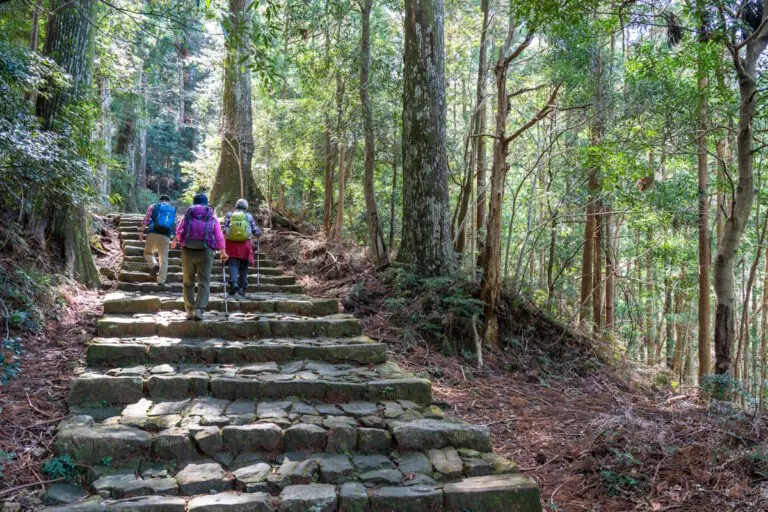
In a Japan dominated by bullet trains and crowded city centers, the country’s ancient pilgrimage trails offer a radically different experience: one measured in footsteps, not station stops. With everyone glued to screens, such nature walks are exactly what people need to refresh and feel less like a cog in the machine.
That chance to slow down and soak up the landscape is precisely what makes Japan’s pilgrimage routes so appealing. Their roots in nature and tradition make them hard to pass up for anyone who wants a genuine taste of Japan.
Kumano Kodo
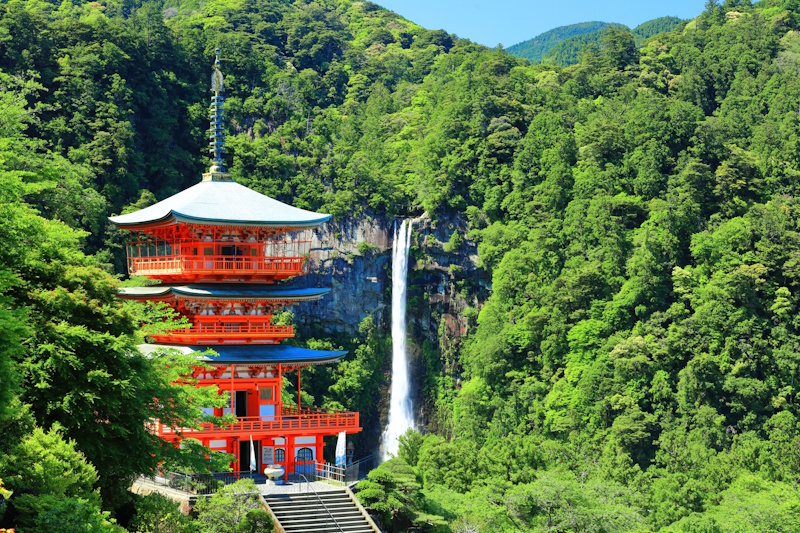
A UNESCO World Heritage pilgrimage route
The Kumano Kodo is a network of pilgrimage trails on the Kii Peninsula in western Japan and a UNESCO World Heritage site. It’s not a single trail, but paths linking villages, forests, mountain passes, and shrines. Walking along the Kumano Kodo has been an important religious rite for over 1,000 years.
The pilgrimage centers on three main shrines in the area collectively known as the Kumano Sanzan. These welcomed people from pretty much all walks of life, from commoners to emperors.
For your average Joe, going there was a chance to seek healing, guidance, or spiritual renewal. For court nobles, it could be a way to show off one’s devotion and status.
Picking a route and when to go
There are six routes in total, but the three main ones are Nakahechi, Kohechi, and Ohechi. You don’t need to be religious to go on any of these; just as the Kumano Kodo is welcoming to all classes, it doesn’t discriminate based on religion or spirituality.
Nakahechi is the best-known route and the easiest in terms of hiking difficulty. It’s about 70 km (43 miles) long and takes about four to five days to walk. Meanwhile, Ohechi follows the southern coast and spans 122 km (75 miles). It’s not as flat as Nakahechi, which makes it a bit more difficult, but it offers some amazing ocean views.
Kohechi is the steepest and most demanding of the three, being set along mountain paths. I’d suggest this only for advanced hikers ready to spend seven to eight hours per day on the trail for four days total. On the plus side, the views from up high are unbeatable.
Shikoku 88 Temple Pilgrimage
Kōbō Daishi and henro culture
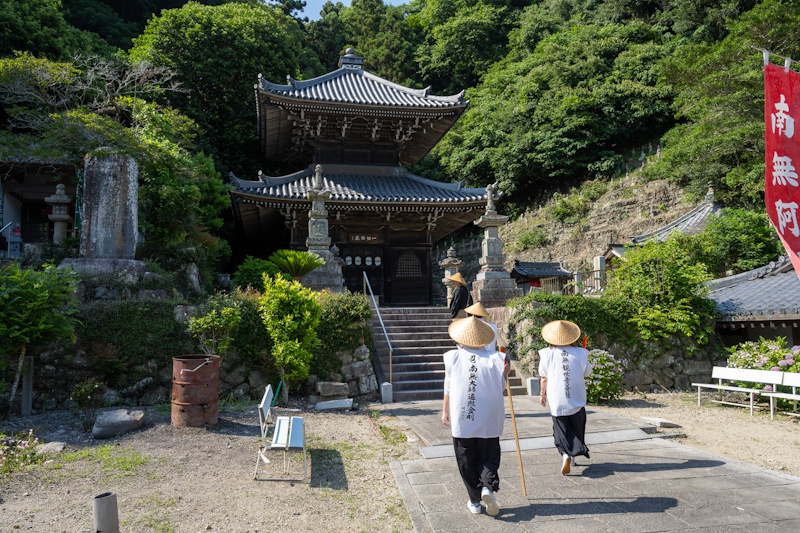
Further south on the island of Shikoku is a different sort of pilgrimage trail, one visiting Shikoku’s 88 temples. Also known as Ohenro (お遍路), this roughly 1,200-km (745-mile) circuit follows the footsteps of the Buddhist saint Kōbō Daishi, or Kūkai, a monk and poet who founded the Shingon school of Buddhism.
Henro culture dictates the proper etiquette on what to wear, how to behave upon entering a temple, and so on. The traditional clothing consists of a triangular straw hat and a white pilgrim coat. There are also important ritualistic items: a Buddhist rosary, a sutra book, candles, and a walking stick (also called “pilgrim sticks” or kongōzue, 金剛杖).
Those taking the pilgrimage also carry a stamp book, which helps pilgrims mark their journey as they visit each temple.
Not only for Buddhists and hardcore hikers
The traditional Shikoku 88 Temple Pilgrimage is a deeply religious one. However, everyone is welcome to join the pilgrimage, even if they don’t practice Shingon Buddhism. Just be sure to observe proper etiquette and be respectful. All the better if you can join a group tour, since the tour guide can assist.
If done on foot, this pilgrimage trail usually takes about six weeks. Purists may insist that this is the only true way to do it, but not everyone can take months off work. So, to shorten the journey to 9-12 days, one could instead use buses, tours, bicycles, or a combination of those.
The Nakasendo Trail
The samurai highway
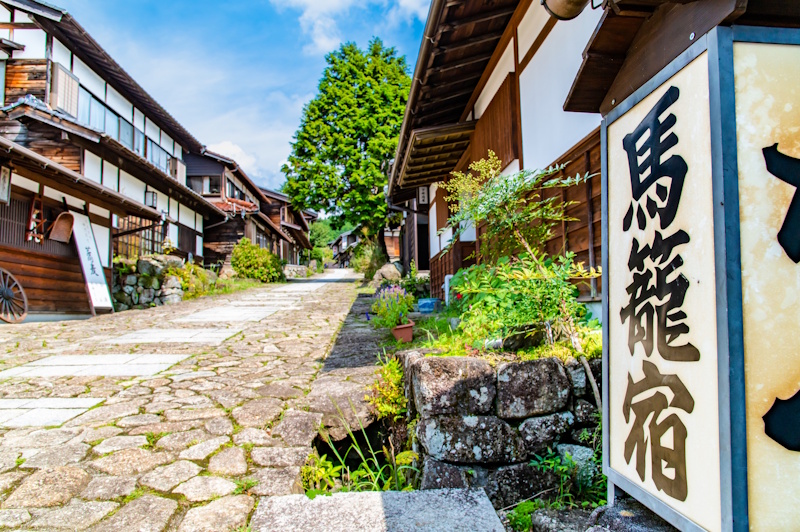
Found in central Japan, the Nakasendo was one of the major highways of the Edo period, connecting Edo and Kyoto inland rather than along the coast. It served samurai, merchants, messengers, and processions, and today it offers one of the best introductions to historic walking in Japan.
The trail is a massive 526 km (326 miles) long and consists of 69 post towns that help preserve the atmosphere of the old highway. They’re filled with wooden buildings, narrow lanes, and careful restoration that makes them feel suspended in time.
Length a bit daunting? Stick to Magome-Tsumago
For the average traveler, I’d recommend tackling the Magome-Tsumago section. It’s about 8 km (5 miles) and takes 2-3 hours at a gentle pace. Plus, since it’s well-maintained and has signage in both English and Japanese, it’s perfect for travelers who want a manageable day hike.
Overall, the Nakasendo Trail is less overtly religious than other pilgrimage routes, instead emphasizing its historical significance.
The nitty-gritty: when to go and where to stay along the way
Each route comes with its own unique selection of accommodations. Minshuku (民宿) are Japanese-style bed-and-breakfasts often positioned along pilgrimage trails. Other options include temple lodgings, ryokan (旅館), and your run-of-the-mill hotel.
As for when to try these ancient pilgrimage trails, aim for spring or autumn. Ideally, April, May, October, or November. Outside of that window, you may have to deal with typhoons, the brutal heat of summer, or the dangerous, icy conditions of winter.
Slow travel vs. “checklist Japan”
Travel can be many things, but for a lot of people, it’s a chance to relax away from the bustle of daily life. That’s why trails like these are surging in popularity. Instead of racing between landmarks and “must-sees,” visitors can take their time to absorb history, nature, and even solitude.
The very nature of such pilgrimage trails is an antidote to overtourism. They force people to slow down, put their phones away, and simply enjoy the moment.
Want to actually walk one of these pilgrimage trails on your next Japan trip? Routing a multi-day hike like the Kumano Kodo or Shikoku Henro takes some planning, and most of the logistics happen in Japanese. Unseen Japan Tours can design a custom itinerary around the trail you want to do, including lodging and transfers, and act as your Japanese-fluent expert guides. Chat with us today→
Keep reading



Sources
Sacred Sites and Pilgrimage Routes in the Kii Mountain Range. UNESCO
Kumano Sanzan. Wakayama Prefecture World Heritage Center
Customs and Etiquette of the Shikoku Pilgrimage. Henro
中山道とは?中山道六十三次の宿場町一覧とルートマップで詳しく解説! Nomichi