
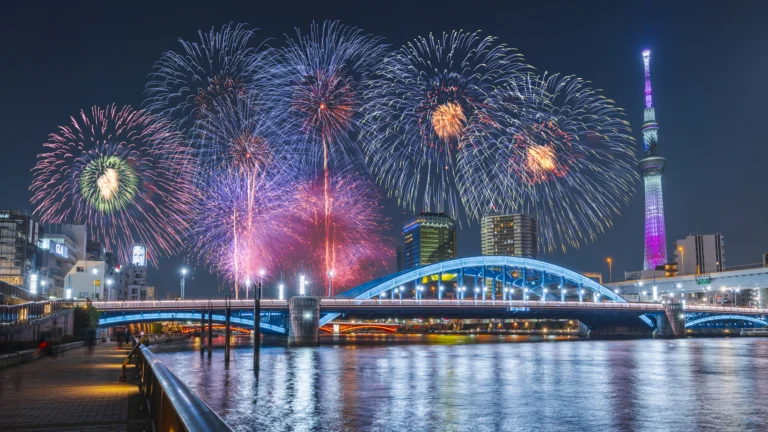
In Japan, you can’t have summer without hanabi taikai (花火大会), the fireworks festivals. As soon as July rolls in, riversides, bridges, and seawalls across the country start filling up with crowds in yukata, fans in hand, waiting for the first boom.
These aren’t small neighborhood displays, either. Japan’s biggest fireworks festivals routinely pull in crowds of 700,000 to over a million people. For many, they’re the main thing to look forward to in summer.
A tradition born 300 years ago… give or take a few centuries.
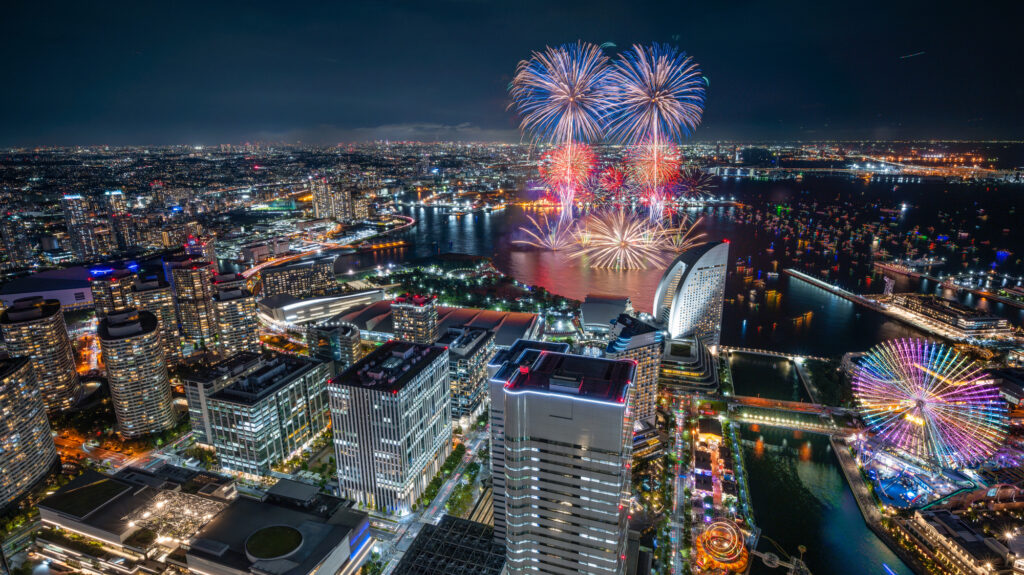
There are different stories about how the modern hanabi taikai started. The most famous says that it dates back to 1732, after Edo (present-day Tokyo) suffered many deaths from both famine and a cholera epidemic. That year, the shogun Tokugawa Yoshimune ordered fireworks along the Sumida River as part of a Buddhist memorial ritual called kawasegaki (川施餓鬼) to mourn the dead.
In reality, though, Japan wouldn’t see a cholera outbreak until a century later, and there are so many different legends about modern hanabi taikai’s origins that we may never know the exact truth.
What we know for sure is that the oldest record of fireworks in Japan comes from 1447. A foreigner visited a Buddhist temple and launched a few as a sort of performance. By the late 1500s, fireworks viewing became much more popular, with records of Sengoku warlords like Date Masamune enjoying them.
Hanabi taikai over the years: stopping and starting
By the late Edo period, two families, Kagiya (鍵屋) and Tamaya (玉屋), specialized in pyrotechnics and dominated the Sumida River. Kagiya handled the downstream side of Ryōgoku Bridge, and Tamaya the upstream, each taking turns launching increasingly elaborate displays.
Spectators would shout “Tamaya!” or “Kagiya!” depending on which side they preferred. You can see some echoes of this tradition even in modern times.
Sadly, a fire in 1843 wiped out Tamaya. Kagiya is alive and well, having transformed into a modern fireworks company.
As the years went by, hanabi taikai saw plenty of ups and downs. They were suspended on the Sumida from 1938 as Japan slid toward full-scale war, and didn’t return until 1948. They only revived for a couple of decades before halting again in 1962 because river pollution, traffic congestion, and increasing building density made conditions unsafe for large crowds.
Fireworks made an official return to the Sumida River in 1978 as the Sumidagawa Hanabi Taikai. Today, it’s held on the last Saturday of July and attracts nearly a million spectators, making it one of Tokyo’s most crowded nights of the year. Dealing with that requires knowing the ins and outs of how to get around Japan, something we address extensively in our free five-day Japan trip planner.
The three great fireworks festivals
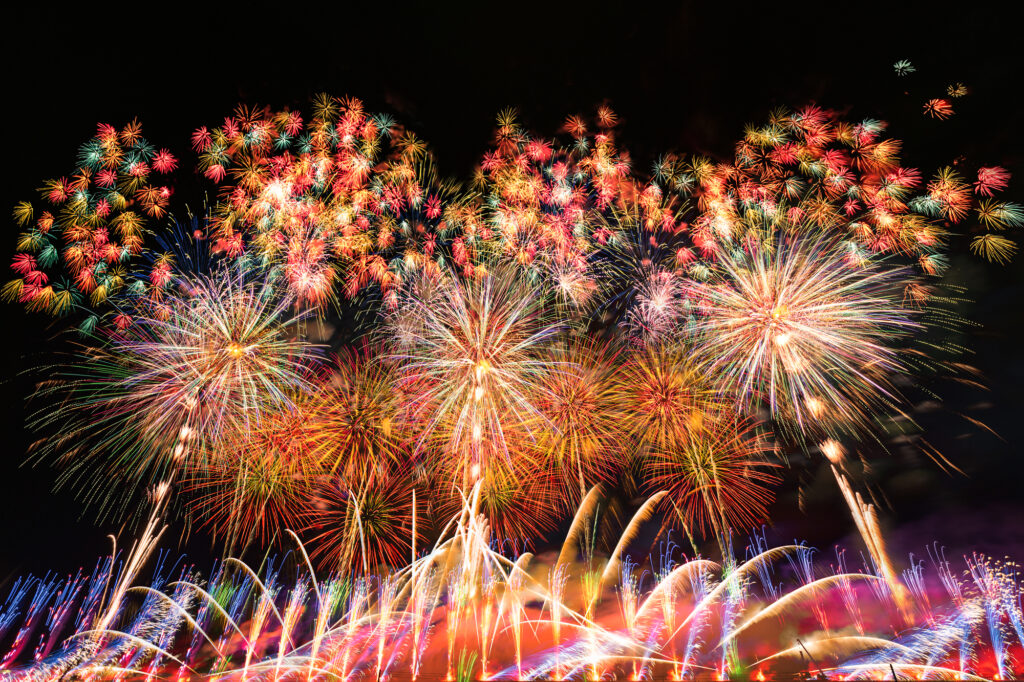
Beyond Tokyo, Japan’s fireworks culture spread far and wide. Its height of achievement is on display in what’s often called the “Big Three.” Each offers a slightly different take on hanabi taikai.
Ōmagari Hanabi, held in Akita on the last Saturday in August, is the most prestigious. It’s not just a show, but a national competition where top pyrotechnicians compete for the Prime Minister’s Cup. It has a formal structure and serious judging, with an atmosphere closer to a championship than a festival.
Ibaraki’s Tsuchiura All Japan Fireworks Competition takes place in autumn rather than summer. This competition has a strong focus on technical precision. While it draws a somewhat smaller crowd (though still around 800,000), it’s very much a “quality over quantity” kind of event.
Nagaoka Matsuri in Niigata, meanwhile, is more about tugging at people’s heartstrings. Held at the beginning of August, it focuses on large-scale, synchronized displays. It’s particularly famous for its memorial Phoenix fireworks, a mile-wide sequence created as a prayer for recovery after the 2004 Chuetsu earthquakes. The broader festival itself dates to the postwar period, honoring those lost in the 1945 air raids on the city.
Lesser-known must-see hanabi taikai
Some of Japan’s most interesting fireworks displays aren’t big and flashy, but quiet, with their own unique flair.
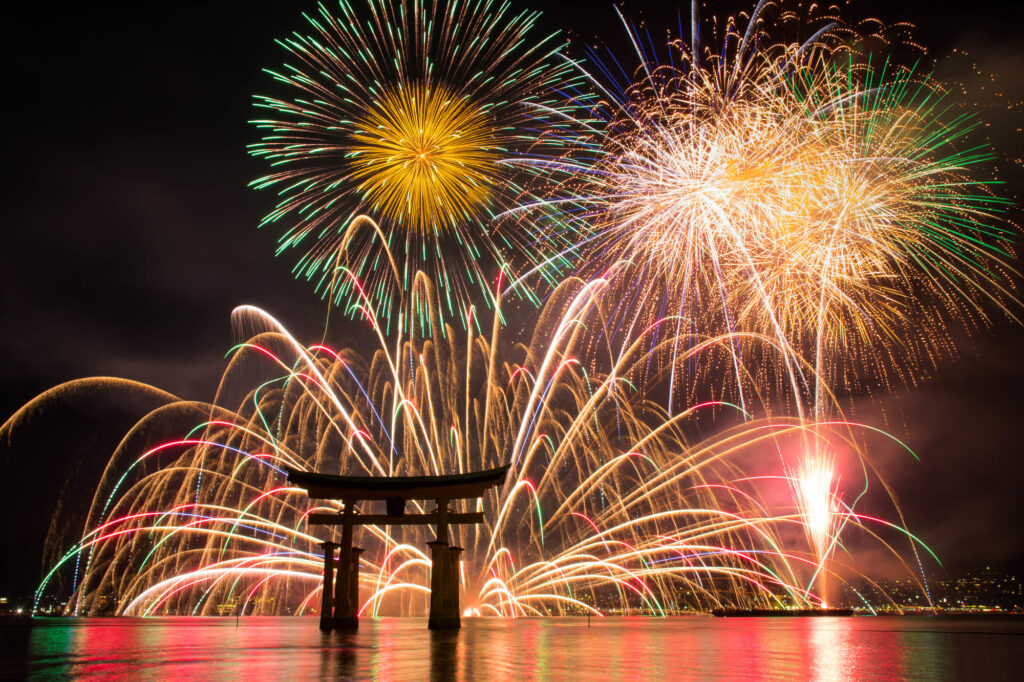
Suichū hanabi (水中花火), for example, are water-based fireworks tied to local festivals in coastal and lakeside towns. These give off a much different vibe from aerial displays because the shells detonate at or just underneath the water’s surface. They also don’t draw huge tourist crowds, so you don’t have to worry about getting crushed like a sardine.
One great example of these is the Itsukushima Underwater Fireworks Festival in Hiroshima, where the fireworks happen just above the surface of the sea, the Itsukushima Shrine torii silhouetted in the foreground.
Another notable variation is the Kōnosu Hanabi Taikai in Saitama, known for its yonshakudama, a massive shell about 120 cm (4 ft) in diameter.
Meanwhile, Hokkaido’s Lake Tōya flips the script entirely with its “Long Run” fireworks. This nightly 20-minute show launches fireworks from a boat drifting on a lake from late April through October.
Tips to properly enjoy Japan’s summer fireworks displays
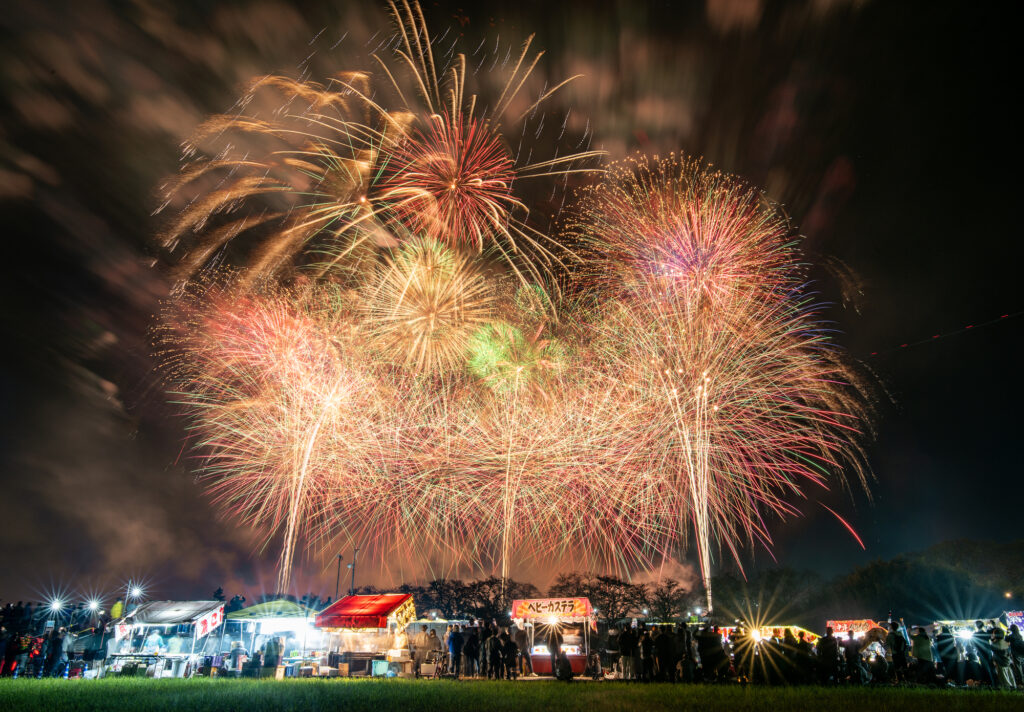
Some tips to keep in mind if you’re planning a hanabi taikai trip:
- Popular hanabi taikai may require reserved seating, and it’ll book up months in advance. Do your research early!
- Prepare for crowding. If you’re driving, scope out a parking spot and head there hours ahead of time. The same thing goes for public transport; expect there to be lines.
- Consider booking a hotel a few months in advance. Hanabi taikai go late into the night, and with train crowding, a day trip may not be practical (though this depends on a lot of factors).
- If you’re sitting on the ground, bring a tarp with you. Some people set tarps down the morning of or the day before hanabi taikai. It’ll save your spot so you can check out the yatai often set up for these festivals.
- Alternatively, bigger hanabi taikai might have other seating options, like ferry rides.
- Important: Japan’s summers are hot and humid. Protect yourself against heat stroke and dehydration by preparing drinks (water, tea, and/or sports drinks), sunscreen, hats, and taking plenty of breaks.
That’s only the tip of the iceberg when it comes to getting around Japan easily. Check out our Japan trip planner, a free five-day email series, to learn more tips and tricks.
All that being said, Japan’s fireworks festivals are loads of fun. They’re something that every visitor should experience at least once: light, sound, and a shared enjoyment of pyrotechnics going back centuries.
Need some help booking a one-of-a-kind summer Japan vacation, complete with fireworks display? Unseen Japan ToursContact Unseen Japan Tours[/uj_tours_link] – we’ll design a one-of-a-kind itinerary and serve as your Japanese-fluent guides.
Keep reading
Sources
隅田川花火大会 Wikipedia (日本語)
花火 Wikipedia (日本語)
日本三大花火大会 Wikipedia (日本語)
「日本三大花火大会」とは?日本最大規模の超大型花火大会をチェック! ウォーカープラス
隅田川花火大会 台東区 文化探訪
夏の風物詩!花火大会の起源と、江戸の夜空を彩った二大屋号「鍵屋」と「玉屋」 tenki.jp
日本三大花火大会はどこ?2025年の開催日や見どころ、花火の歴史を知って深く楽しもう。 OnTrip JAL
「たまや~」花火の掛け声が「鍵屋」より「玉屋」なのはなぜ? All About