
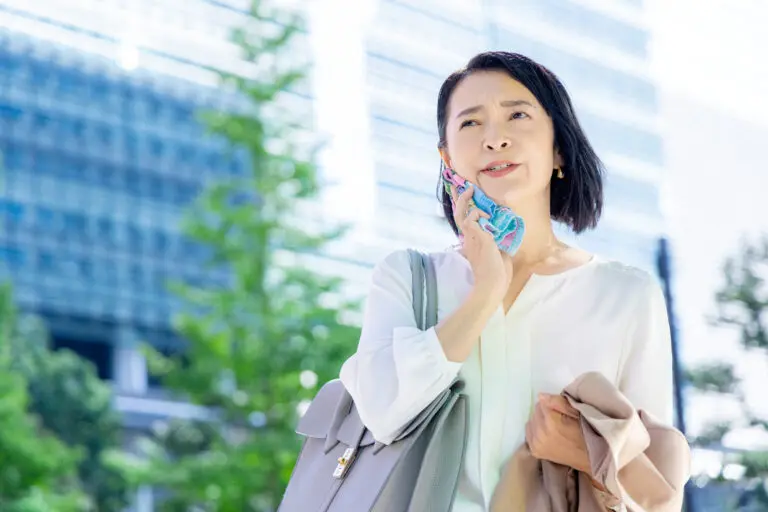
As the high season winds down, prices begin to ease, even as temperatures climb. For many travelers, summer may be the only time available to visit, making it an appealing window despite the heat. Eager to take advantage, many first-time visitors make the same assumption: heat is heat. If it’s manageable in places like Florida or Texas, Japan shouldn’t be much different.
In reality? It’s not even close. Even travelers and residents from hot, humid regions such as Malaysia and the Philippines struggle with how wickedly intense Japan’s summer can feel. As inbound tourism rises, so do cases of heat exhaustion and heatstroke, driven by prolonged outdoor exposure, dense urban environments, and humidity that makes even light activity draining. Japan treats summer heat not as an inconvenience, but as a public health concern.
As a result, the knee-jerk reaction to visiting Japan in the summer is often a simple, harsh “don’t”. But if someone dreams of seeing Gion Matsuri in Kyoto, or if August is the only month off, traveling in Japan during the summer isn’t impossible.
It just needs to be approached carefully.
Why Japan’s summer feels different
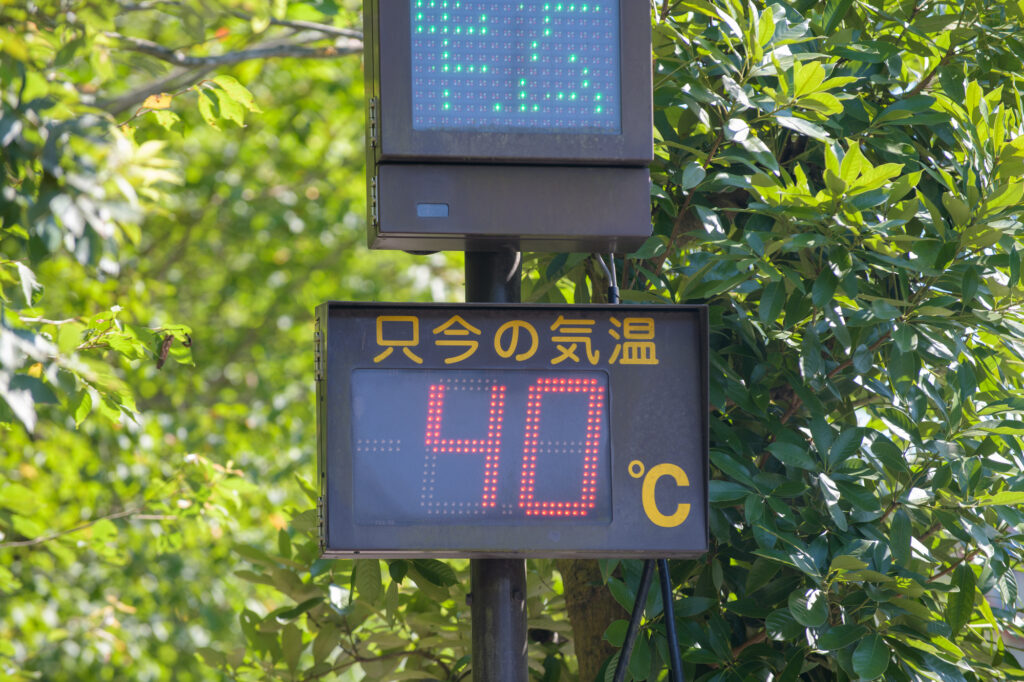
The issue isn’t just the temperature, but exactly how long people are exposed to it.
In many countries, time spent in the heat is limited. People move from air-conditioned homes to cars to indoor spaces, with only short walks in between. Even in busy cities, most time outdoors comes in brief intervals.
But sightseeing is completely different. Visitors spend hours outside walking between train stations, waiting on outdoor platforms, navigating crowded streets, and temples and shrines. Long, continuous exposure puts far more strain on the body, especially in peak summer. Many visitors do not realize they have been slowly dehydrating until symptoms appear. Halfway through their trip, they’re forced to an early return to the hotel, or even a hospital visit.
Japan’s climate is truly unforgiving in the summer months. High humidity levels reduce the body’s ability to cool itself through sweat, making even moderate temperatures feel oppressive.
At the same time, urban environments intensify heat even more. Cities on the Golden Route like Osaka and Tokyo are especially affected, being unforgiving concrete jungles. Kyoto, meanwhile, is located in a basin surrounded by mountains on three sides, effectively cooking the city. Outside of any breezes from Lake Biwa, there’s very little relief.
The heat’s gotten so bad here that it’s made headlines and inflamed social tensions. For example, parents have sued schools for refusing to let their kids hydrate during class, and complained about schools that enforce archaic rules around sunscreen use.
Because of this, under the Climate Change Adaptation Act, the Tokyo Metropolitan Government has designated cooling shelters and “cool share” locations across the metropolis. The initiative’s goal is to lower the Urban Heat Island (UHI) index, and help residents stay safe. Last year, they had a map for finding places to cool down, and 2026’s is forthcoming.
The message is clear across the nation: go inside during peak heat. Resume activity later in the day. No one wants to be yet another victim of Japan’s notorious heatstroke.
Hydration: More than just water
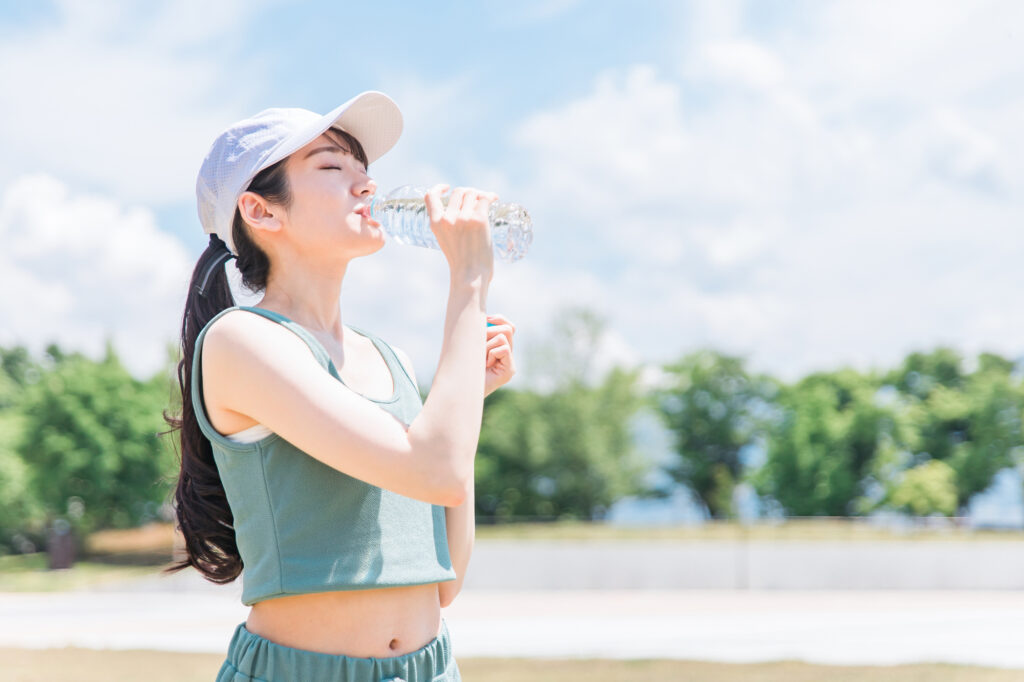
Avoiding the midday heat is only part of the equation. Proper hydration is equally critical, and often misunderstood by guests who insist they’ll be fine with water alone. In Japan, heatstroke prevention emphasizes not just fluid intake, but the replacement of salt and electrolytes lost through sweat. The Ministry of Health, Labour and Welfare recommends beverages containing approximately 0.1 grams of salt per 100 milliliters of water. Given how much sweat is lost, it’s a vital solution.
What to reach for beyond water? Electrolyte drinks such as Pocari Sweat, Aquarius, and Green DA•KA•RA. They’re not just sports drinks, but genuine necessities in hot weather. Around this time in May, many people buy them in bulk for the hotter months, preparing for vending machines to be mercilessly sold out.
Salt tablets and candies are widely available in convenience stores and drugstores. These products typically contain sodium, citric acid, and potassium, and are marketed explicitly for heatstroke prevention. Be on the lookout for terms such as 熱中症対策 (heatstroke prevention) and 塩分補給 (salt replenishment) when you’re browsing the shelves.
Practical ways to stay safe
Understanding how intense Japan’s summer can be is one thing. Navigating it safely over the course of a full week or two’s worth of sightseeing is another. Too many visitors base their sense of how much they can handle on what they are used to back home. Here are a few ways to stay safe and avoid spending the second half of your trip recovering in your hotel room, or worse.
Avoid the midday heat.
The period between 12:00 and 15:30 is the most dangerous time to be outdoors. Planning indoor activities during these hours can severely reduce risk. Go to a cafe, a museum, or even head to karaoke or a shopping mall. There’s no shame in taking an afternoon nap in the hotel room either. But no matter what, around 11:30 start getting ready to skip out on the sun.
Prepare your electrolytes.
Again, water alone is not sufficient over long periods of exposure. Alternating between water and electrolyte-rich beverages, or supplementing with salt tablets, helps maintain the body’s ability to regulate temperature.
Grab some in the convenience store the night before; don’t think there will be enough at the vending machines, even though they’re everywhere. Those drinks often get sold out before you even arrive.
Dress for the climate.
Lightweight, breathable fabrics are essential to surviving the brutal heat. Loose-fitting clothing that covers the skin can provide protection from direct sunlight while allowing airflow. Many visitors find specialized summer clothing to be life-savers. Uniqlo’s AIRism line is especially popular during the hottest months, and for good reason.
Be mindful of headwear.
If carrying a UV parasol is not your style of travel, it’s fine to wear a hat instead. But be careful: poorly ventilated designs may trap heat, dehydrating the body even worse than without any hat at all. Breathable materials and airflow are key.
Use cooling aids when needed.
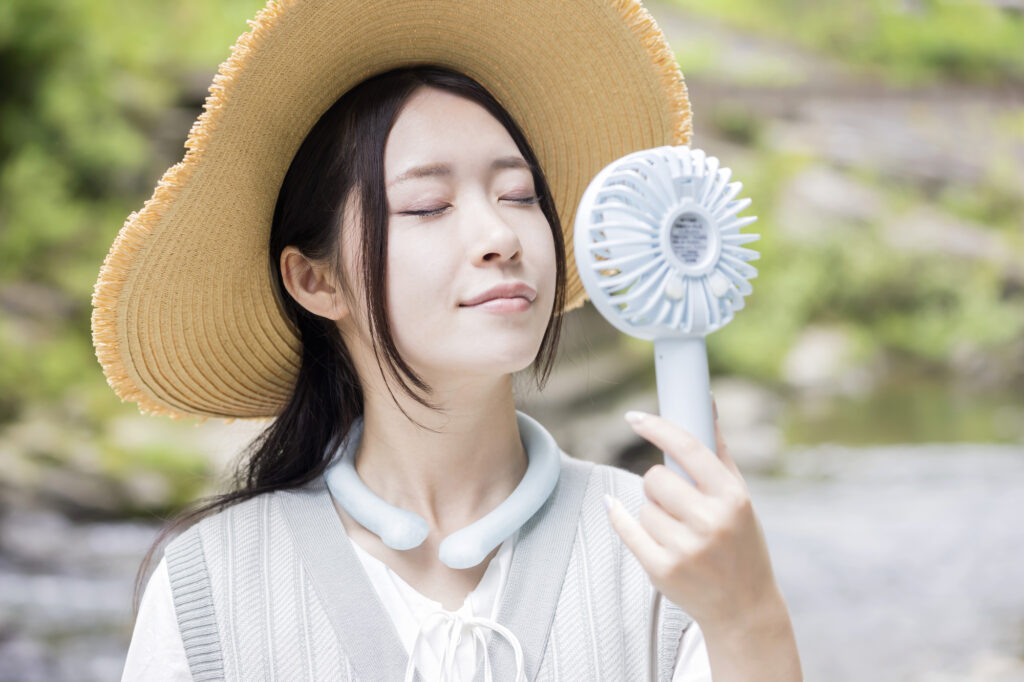
Portable fans, cooling neck rings, and cooling wipes are widely available tiny saviors. While simple, they can offer meaningful relief during extended periods outdoors. Some visitors even opt for fan-cooled vests, similar to those worn by construction workers, for additional airflow. They may not win any points for style, but they are undeniably practical.
For a full rundown of Japan’s cooling products and how well they work, check out Jake Adelstein’s comprehensive review.
Eat for the heat.
Japanese summer foods tend to be light and cooling, making them easier to handle in the heat. Options like sōmen or kakigōri are popular for a reason, and even simple snacks like chilled cucumbers on a stick, often found in tourist areas like Arashiyama, can help with hydration and a bit of salt intake. None of this is a replacement for proper hydration, but they can make long days outside more manageable.
Step away from the Golden Route.
Not all of Japan runs as hot as Tokyo or Osaka. Even a brief escape from urban madness can provide relief from more than heat. From Kyoto, a short trip to Lake Biwa in Shiga Prefecture offers access to water, open space, and a noticeable drop in intensity.
For those with more flexibility, heading north to regions such as Miyagi Prefecture, Aomori Prefecture, or Hokkaido can make a significant difference in comfort during the same period. Plus, it’s a good way to support local economies in regions that don’t always benefit from the same level of tourism.
You can also go off by staying close to the water or going to higher elevation. For some more tips on where to go, check out our rundowns of seaside towns as well as Japan’s best mountain towns.
Stay informed.
There are numerous maps designed to help keep you aware of the temperatures in Japan. This one for heatstroke is in English for foreign visitors. A bit minimal, but for a Japanese government website? It will do.
There is also a map for just Tokyo (Japanese only), and a list of cool spot shelters in Tokyo, also in Japanese. The Osaka Prefectural government launched their own Cool Oasis project aimed at helping residents and visitors find relief. Finally, the Ministry of the Environment also offers a LINE official account that provides free heatstroke alerts and daily heat index updates, making it easy to adjust plans when conditions become dangerous.
A question of approach, not endurance
Japan’s summers are rough, but they’re not unmanageable and don’t need to be endured with bared teeth and dripping sweat. The systems in place, from public messaging to cooling infrastructure and electrolyte-focused products, reflect a shared understanding: heat at this level demands adjustment, not resistance. Without it, the most ambitious trip can quickly turn into an exercise in recovery, and not at your hotel.
Knowing how to adapt, not just endure, makes the difference.
Stuck visiting Japan in summer but want help making it survivable? Unseen Japan Tours can design a custom itinerary built around early starts, indoor middays, and cooler regions, and act as your Japanese-fluent expert guides on the ground. Chat with us today→
Keep reading

Sources
最高気温が40℃以上の日の名称を「酷暑日」に決定 気象庁 (Japan Meteorological Agency)
気温40度以上は「酷暑日」 気象庁が新名称、暑さリスク明確に 日本経済新聞
気象庁、日最高気温40℃以上の日を「酷暑日」と決定 日本気象協会 (JWA)
Japan and South Korea record hottest summers in history Al Jazeera
環境省熱中症予防情報サイト (WBGT real-time map and multilingual leaflets) 環境省 (Ministry of the Environment)
令和7年度熱中症特別警戒アラート及び熱中症警戒アラートの運用を開始します 環境省 報道発表
二季化が進む日本、熱中症から命と暮らしを守る ~2025年救急搬送者数は過去最多~ 第一生命経済研究所
Avoid Heatstroke While Traveling in Japan Kyoto City Official Travel Guide