
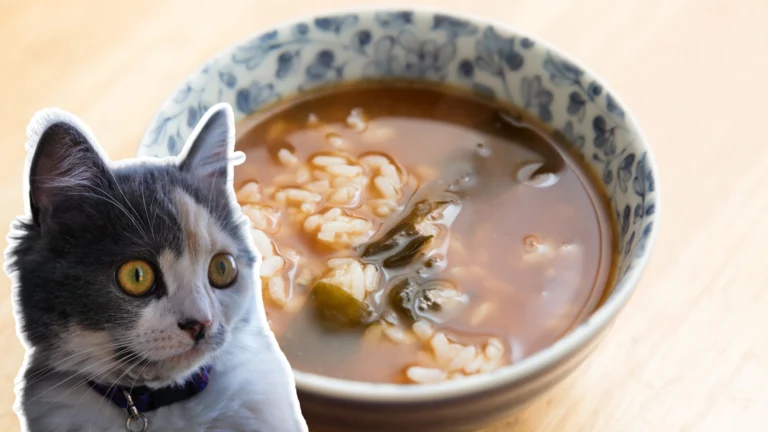
Recently, Marukawa Miso, a miso maker in Fukui Prefecture, reignited an age-old debate.
Their simple question: What’s wrong with nekomanma?
In modern Japan, the act of pouring miso soup over rice is considered bad manners. For hundreds of years, however, it was a staple food among commoners and even lower-rung samurai. What changed with this once-popular “cat food”? And why?
A dish with a 500-year history
Nekomanma combines two words: neko (猫) and manma (まんま), a baby-ish way of saying “food.” Nekomanma, then, is literally “cat food,” because the dish is made the same way that people made food for pets before the advent of commercial pet food.
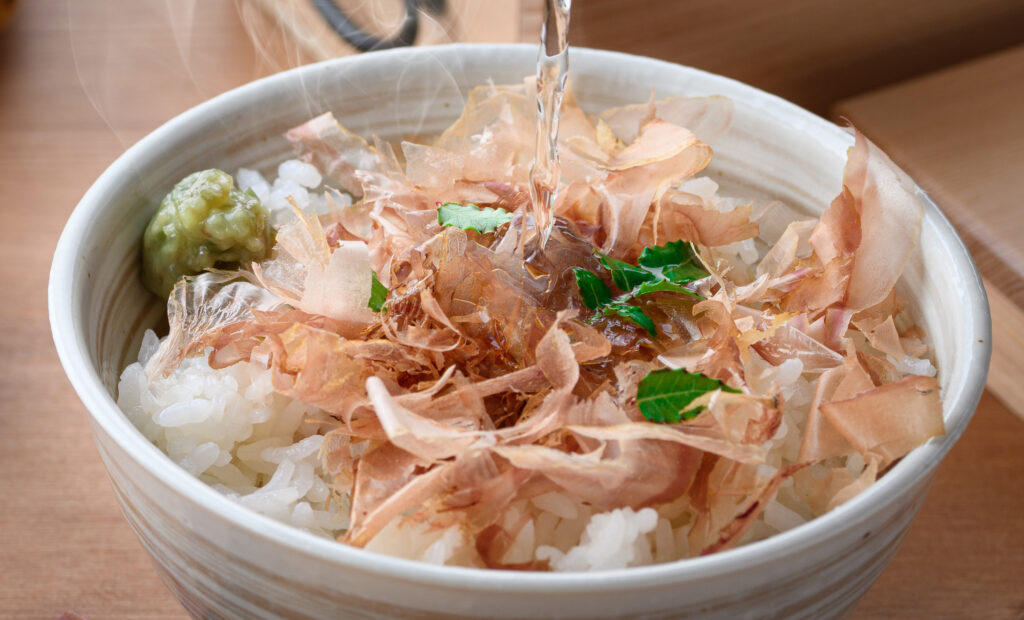
Nekomanma isn’t actually a single dish – it’s two. In the Kanto region (which includes Tokyo) and in Tohoku, it refers to dried bonito flakes (鰹節; katsuo-bushi) on rice. In Kansai, parts of Tohoku, and Hokkaido, it refers to putting miso soup on rice. When Tokyoites say “nekomanma,” they usually mean the former, while those in Osaka mean the latter. However, the definition can vary even from household to household.
(PSA: Don’t actually feed miso soup to cats. It’s too salty and onions are toxic to them. Thank you.)
The spiritual predecessor of nekomanma is shirukake-meshi (汁かけ飯), or simply soup poured over rice. The Aogen Miso brewery contends that shirukake-meshi was a staple food of warrior households during Japan’s Warring States period.
The two variations of nekomanma gained popularity (along with Edomae sushi) during the Edo period. The katsuobushi version was a solid, cheap way to ward off hunger. It remained a starvation staple through the end of World War II. Meanwhile, in the era before rice cookers and gas heating, pouring soup over the morning’s rice was a good way to reheat it.
A dish that reminds workers of death
So just when – and why – did nekomanma become stigmatized?
Some sources say it’s a post-World War II association born out of class snobbery as Japanese prosperity gained steam. The literal association with cats, combined with the association with common folk, conspired to make the custom taboo.
However, there’s long been a stigma among laborers against shirukake-meshi in general. Among coal-miners in Fukuoka Prefecture, the shape of the rice mounded in soup resembles the funerary mounds that were commonly used to bury workers before cremation became common in Japan. Back then, it was believed that it took 49 days for someone to completely die; they weren’t considered fully dead until the skeletonization process had completed. Burial mounds were shaped like a manjū (steam bun) with breathing tubes inserted (you know, just in case someone changed their mind).
Meanwhile, construction camp workers similarly avoided the dish. To them, the sight of rice crumbling under the miso soup was too evocative of a landslide.
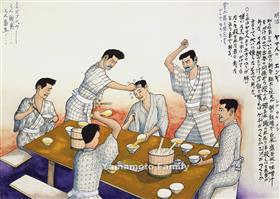
There’s documentary evidence for this stigma against shirukake-meshi. Coal-miner artist Yamamoto Sakubei (1892-1984) illustrated 11 coal mining-specific taboos. In one of them, a group of workers threatens to lynch their colleague because he tries eating the dish.
In fact, there’s an expression in Japanese – 味噌をつける (miso o tsukeru), to apply miso – that figuratively means “to eff up at work.” In the Tohoku mountain trades, this phrase framed the taboo itself: matagi (bear hunters), woodcutters, and ox-cart teamsters used it to explain why shirukake-meshi was forbidden. If a teamster in a group poured soup on his rice at breakfast, the whole day’s travel was cancelled, and the offender paid everyone’s lodging.
The phrase didn’t originate the taboo. But it was very much part of how laborers enforced it.
You can mix rice and soup, it’s fine (probably)
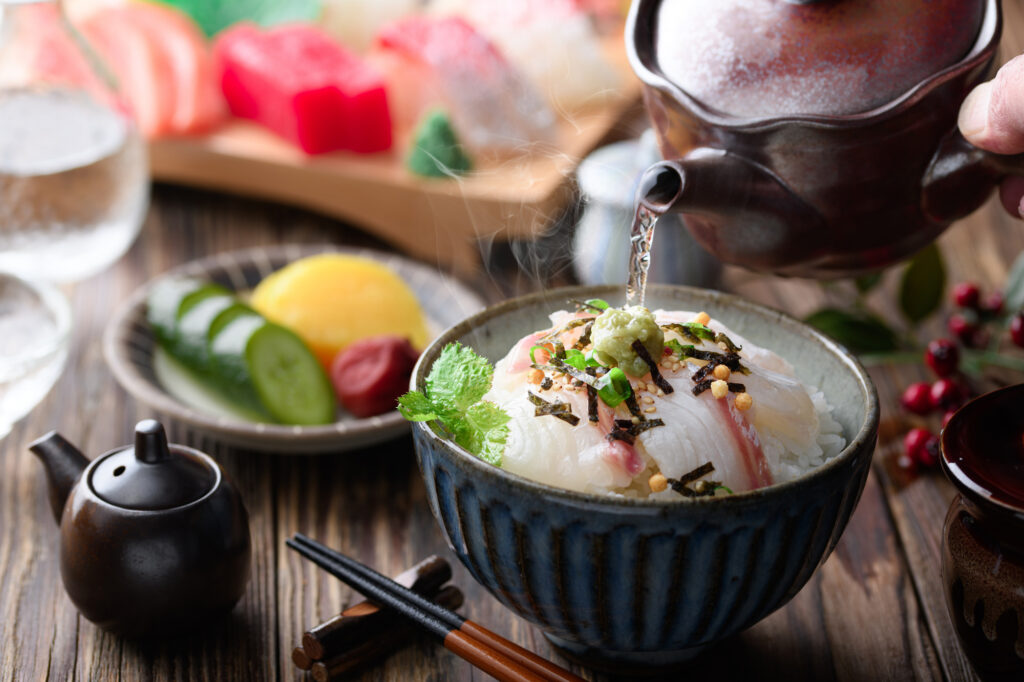
Among coal-miners and other laborers, the prejudice against nekomanma also extended to another beloved Japanese dish: chazuke. This dish of green tea poured over rice, long beloved as an after-dinner finisher, was considered taboo for the same reasons.
Among others across Japan, however, chazuke managed to escape the same fate as nekomanma and shirukake-meshi. The reason is likely because chazuke started, not as a commoner food, but as a dish of the elite, with yuzuke (湯漬け, hot water in rice) being depicted as eaten by Heian nobility in works such as Murasaki Shikibu’s Tale of Genji.
In recent years, however, some have pushed back on the prejudice against nekomanma itself. Entertainer Matsuko Deluxe ignited debate in 2023 when he asked what, exactly, was wrong with the dish. His comments led to a social media scuffle.
“It’s dirty,” one person sniffed. Others, however, admitted that they loved the dish. “But I wouldn’t eat it when dining out or in front of other people,” one sheepishly admitted.
All this said, if you catch a Japanese friend putting rice into their miso soup, there’s no reason to lecture them on the history of Japanese labor taboos. While pouring miso soup over rice is now considered ill-mannered, putting rice into miso is generally regarded as fine.
Or, hey, do whatever you want. Manners and etiquette around food are constantly changing. Even Japanese people don’t always agree on what’s right and what’s taboo. I have no doubt that, eventually, the social tide will turn back in nekomanma’s favor.
Keep reading
Sources
ねこまんま Wikipedia
一汁一菜 Wikipedia
茶漬け Wikipedia
食事は? 病気になったときは? 江戸時代の猫の暮らし NHKテキストビュー / BOOKSTAND
実は約500年の歴史がある身近な料理 あなたの猫まんまはどんなごはん? ママテナ (NTT docomo)
お茶漬け(お茶づけ)の歴史 永谷園 (Nagatanien)
汁かけ飯は「お行儀が悪い」? 青源味噌 (Aogen Miso)
マツコ「ねこまんまの何が悪い」発言で論争勃発…なぜご飯に味噌汁をかけた “ぶっかけ飯” は「行儀が悪い」のか Smart FLASH / 光文社
「ねこまんま」は関東と関西で違うメニュー? 「ごはんにみそ汁」派と「ごはんに鰹節」派で盛り上がる ねとらぼ (ITmedia)
ねこまんまとは?関東地方と関西地方で作り方が違うって知ってた? オリーブオイルをひとまわし
ねこまんまはマナー違反なの?なぜダメなのか考えてみた! みんなのマナー
ねこまんまとは?由来・地域ごとの違いとアレンジレシピをご紹介 デリッシュキッチン
ねこまんまとは?味噌汁それとも鰹節?地域で違う作り方とレシピ sole tokachi
図録番号506 タイトル:汁かけ飯(山本作兵衛コレクション). 福岡県田川市 山本作兵衛コレクション
味噌をつける/みそをつける. 語源由来辞典
土を丸く盛り上げて作る墓「土饅頭」ーー穴を掘らずに土を盛る理由とは?. 心に残る家族葬
一膳飯とは?茶碗を割る意味とは?葬儀でのしきたりについて. 小さなお葬式