
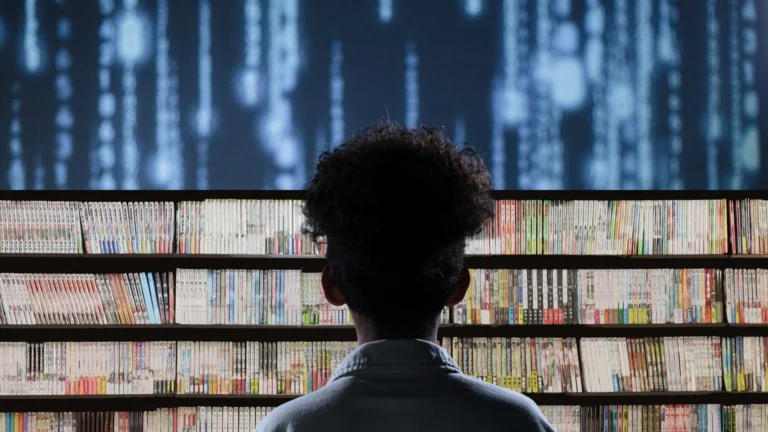
If you thought Japan was exempt from the war between artists and generative AI, let me assure you, it’s not. The creative industry in Japan is starting to show visible strain, and it’s hitting especially hard for manga artists and illustrators.
AI and its effect on freelance artists
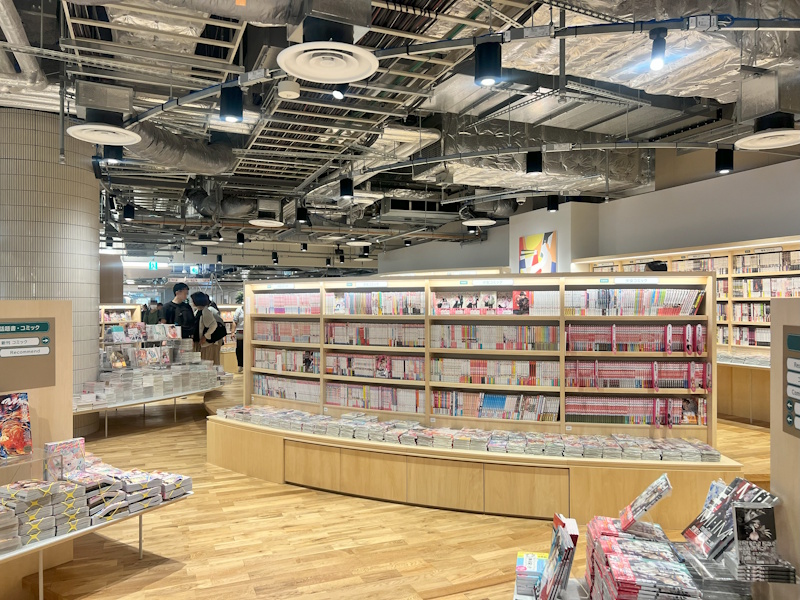
This is a topic we’ve covered before, and a recent article from Nikkei puts a number on something many freelancers have been saying for months: about one in five illustrators have seen their income in the past year drop because of AI.
The Japan Freelance League backed this up with another survey in January. They found that 12% of freelancers (including manga artists, authors, designers, and more) saw a decrease in income: 9.3% seeing a 10-50% loss, and 2.7% saying 50% or more. For a freelance workforce where margins are already tight, that’s enough to push some out of the industry entirely.
The why behind it is pretty clear. Much like how factories once displaced traditional craftspeople, competitors using AI can churn out a lot of cheap work very quickly. Some report being undercut by AI outputs that are much cheaper than traditional commissions.
Others say clients now question whether artist-made work is worth it, or accuse original art of being AI-generated. Some publishers have even rejected submissions based on flawed AI-detection tools, which is a whole other can of worms.
Of course, it’s all a matter of perspective. The Japan Illustration Association had its own survey that found 76% of manga artists and 59% of illustrators disliked AI. However, web and graphic designers tended to see AI as useful rather than threatening.
This certainly makes sense because the main point of a designer’s job is implementing art into digital or online spaces. In other words, it’s more about structure and organization rather than creating art itself. So, even if AI takes up all art jobs, they won’t lose out. Unlikely, sure, but it’s been winning contests, so you never know.
Copyright issues in output and when training AI
An even bigger concern is copyright. Specifically, the use of copyrighted material to train AI systems without permission.
It’s not a question of “maybe,” either, but something that has already been brought to court by three of Japan’s largest newspapers: Yomiuri, Asahi, and Nikkei. Each has filed lawsuits against Perplexity AI, claiming unauthorized use of their content. When put together, the companies are seeking roughly ¥6.6 billion (41 million USD) in damages.
In these specific cases, though, it’s not just about copyright infringement. Asahi and Nikkei argue that their content was used despite explicit opt-outs. They also said there were times when AI-generated outputs misattributed or fabricated information under their names, which may violate Japan’s Unfair Competition Prevention Act.
Question: do you like UJ's independent coverage of Japan? Our writers are supported by our members. Join Unseen Japan Insider to get bonus content every week, an ad-free website, and access to our large and growing Insider archive.If you love what we do, help us pay our writers to do more of it by joining Insider. You'll get bonus content every week, an ad-free website, and access to our large and growing Insider archive.
An official demand for AI opt-out systems

To address at least the training part of the copyright issue, the Japan Cartoonists Association and the Japan Animation Association released a joint statement on October 31, 2025, alongside 17 major publishers.
In it, they said that AI developers should obtain permission from rights-holders before using their work for training or generation. They also said that AI companies need to be transparent about what data they’re using, and should pay creators fairly to use their work for training.
The statement came shortly after the launch of OpenAI’s Sora2 video-generation tool, which folk online tested out and found they could create clips that strongly resembled specific copyrighted works. Sora was short-lived: OpenAI shut it down in March 2026, partly due to copyright issues. But it showed that AI was a serious threat to these industries.
It’s not just that official statement that’s come out. On Change.org, there’s a petition calling for stronger protections against AI training without permission. It has gathered thousands of signatures, which goes to show how uneasy people are about the technology outpacing legal rules and protections.
Creators vs. publishers: to protect against AI, or make use of it
However, not everybody agrees on the best way to handle AI. While the Cartoonists Association wants strict opt-in systems (i.e., no permission, no use), publishers are more open to AI use as long as there’s no clear copyright infringement.
This shouldn’t be a surprise. After all, some publishers have already embraced AI manga. Even in the worst-case scenarios, they can still profit by licensing past works to AI companies.
Freelance creators, on the other hand, don’t have that option. There will always be some willing to pay extra for something hand-drawn or human-made, but the demand for straightforward commissions is much lower than the supply.
To stay afloat, some might dive into zines and self-publishing. Others might give up and switch careers entirely. The art industry is going through a period of rapid change, and it’s still too soon to say how things will turn out.
Keep reading

Sources
漫画家やイラストレーター「AI普及で収入減」2割 著作権保護求める声 日本経済新聞
画像生成AIとクリエイターの現在地〜2025年12月実施【画像生成AIに対する意識調査】結果 JILLA 日本イラストレーション協会
イラストレーターなど芸術系フリーランスに聞く「生成AIで収入は増えた?減った?」 調査団体が約2万5000人にアンケート ITmedia AI+
生成AIの影響は「絵描き」を直撃、”創作の萎縮”も…クリエイター2万5000人回答のアンケート調査結果が発表 弁護士JPニュース
生成AI時代の創作と権利のあり方に関する共同声明 漫画家協会WEB
生成AIと著作権の狭間で揺れる業界 集英社と漫画家協会の声明に見える「決定的なズレ」 coki(公器)
朝日と日経、AI検索のPerplexityを提訴 44億円請求 Impress Watch
署名「画像生成AIからクリエイターを守ろう」が賛同1万件間近に 「AI生成物のみ非親告罪に」などを主張 ITmedia AI+
OpenAI Shuts Down Sora: Why It Failed and the Best AI Video Alternatives in 2026 Pixwit