

A now former teacher in Kanagawa Prefecture is under arrest after accusations he sent a student almost 200 sexually coercive and invasive emails. His arrest, however, comes well over a year after his school dismissed him over the incident. The gap raises questions about why the school didn’t involve police sooner. It’s yet another example of how many institutions in Japan, including schools, seem to refuse to take sexual assault seriously.
Student told to masturbate, report her periods
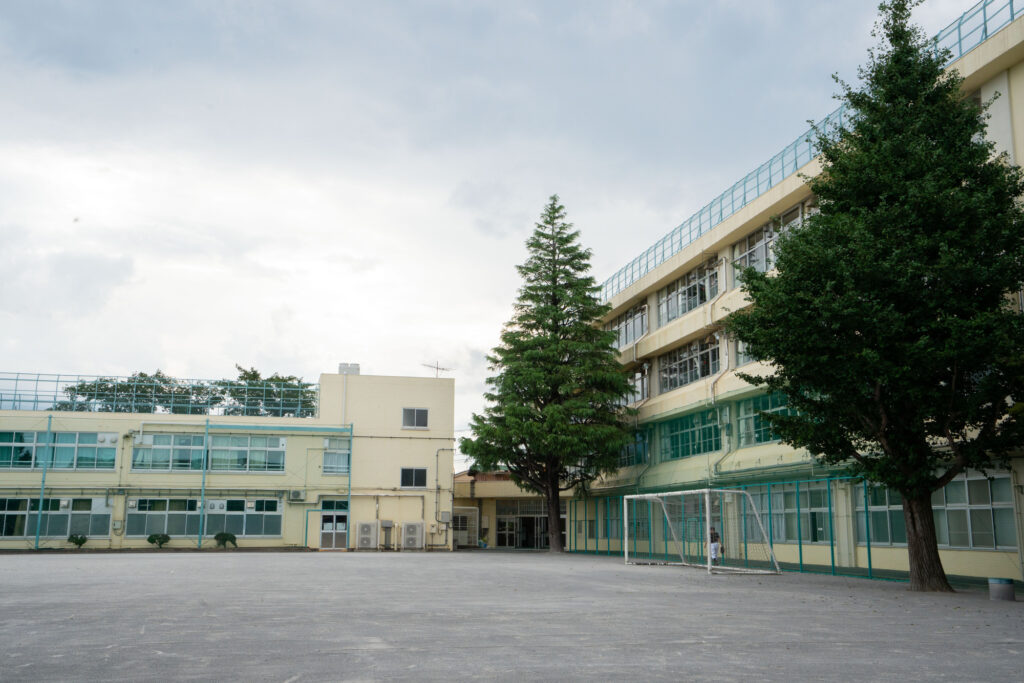
52-year-old Yamaguchi Mamoru (山口守, 52) was a teacher and club advisor at Odawara Public Middle School in Kanagawa Prefecture. Authorities allege that, between January 2022 and July 2023, he emailed a female student 192 times demanding sexual reports.
Different news outlets in Japan reported different aspects of what happened. Originally, LiveDoor News reported that the teacher had demanded that she log her periods and report them. However, Mainichi Shimbun and other outlets also maintained he demanded that she masturbate. The discrepancy led to an argument online over whether LiveDoor News was protecting the victim or shielding the male teacher.
The case is one of hundreds that occur yearly in Japan. In 2024, 281 public-school teaching staff were disciplined for sex crimes or sexual violence, down from a record 320 in the previous year. Roughly 98% of all offenders are men; over 60% of their victims are children at their own or another school.
Why the 18-month gap?
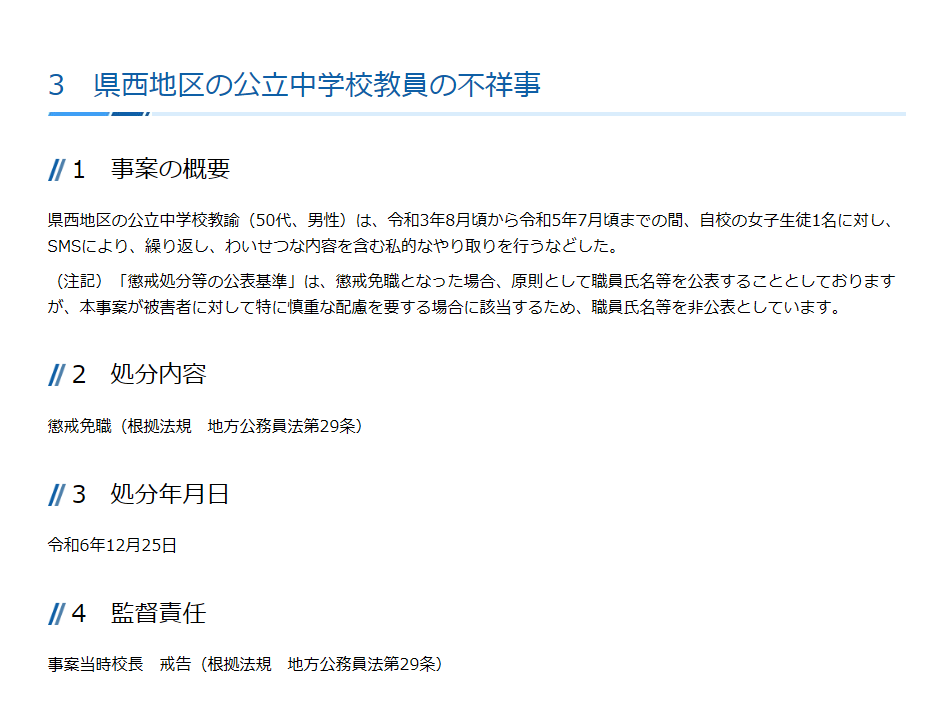
Yamaguchi’s school dismissed him in December 2024. The arrest didn’t come until 18 months later, however, after the mother filed a police complaint.
The LiveDoor News report says explicitly that Yamaguchi was fired “over this matter” (この事案で). A December 25th, 2024 disciplinary announcement from the Kanagawa Board of Education seems to confirm that the district fired Yamaguchi explicitly for crimes against children in his care. Kanaloco reported the following at the time:
県教委によると、県西地区の公立中の50代男性教諭は2021〜23年、顧問を務めていた運動部の女子生徒にショートメッセージサービス(SMS)で繰り返し生理の報告を求めるなどした。さらに、この生徒が教室内で着替える際に退室せず、スポーツウエアの上から下着が透けていないか目視したほか、自家用車に同乗させ「キスはしたのか」などの不適切な発言をしたとしている。男性教諭はわいせつの意図を否定し、「体の状況に応じた運動計画を立てるためだった」などと説明しているという。
According to the board, the 50-something male teacher at a public middle school in the western (Kensei) district, in 2021–23, repeatedly demanded that a female student in the sports club he advised report her menstruation via SMS. He also did not leave the room when the student was changing in the classroom, visually checking whether her underwear showed through her sportswear, and had her ride in his private car, where he made inappropriate remarks such as “Have you kissed anyone?” The male teacher denied any obscene intent, explaining that “it was to draw up an exercise plan suited to her physical condition.”
The report doesn’t discuss the forced masturbation. It’s unclear whether the board involved police in any manner as a result of this incident and what the result was.
In April 2024, Kanagawa Prefecture had passed a new ordinance dictating that child sexual violence would result in automatic dismissal. That policy worked here. But it’s still an open question why it took the victim’s mother filing a report 18 months later for the police to become involved.
Japan struggles to take sexual assault seriously

The case is another example of how Japan struggles to take sexual assault seriously, even when minors are involved.
Women in Japan have said for years, for example, that police refuse to take accusations of groping seriously. Schools in Japan have routinely penalized girls for being late to class if they went to the police to report an assault. Some women extract their own form of justice – for example, poking perpetrators with safety pins – rather than involve the cops.
Even in cases of rape, police often treat victims with a profound lack of respect. We wrote recently about how prosecutors and even some victim’s co-workers have punished them for daring to report a crime. Foreign residents who have experienced sexual assault in Japan report similar experiences. In one case, a member of the JET exchange program was explicitly told by her superior not to go to the police and let the school board handle it.
In perhaps the most horrifying example, around a decade ago, the father of a 12-year-old girl who she says repeatedly raped her was found not guilty. The judge’s reasoning? It wasn’t “believable” that the child resisted the assault since she lived in cramped quarters with her family and no one heard her struggle. Similar cases sparked so much outrage that Japan finally changed its sexual assault laws, raising the age of consent and redefining the definition of coercive sexual assault.
It’s also easy for sex offenders in Japan to get re-hired into jobs where they deal with children and vulnerable populations, as Japan has historically lacked a national sexual offender tracking system for professionals who work with kids. The country’s first such system, modeled after Britain’s Disclosure and Barring Service (DBS), is slated to begin operation on December 25th, 2026.
The DBS, however, won’t capture incidents where a teacher is dismissed but not criminally charged. In other words, another teacher like Yamaguchi could be free to offend at another school if his employers help him sweep his crimes under the rug.
Keep reading



Sources
部員に性的メール192回送信の疑い 元中学教員を逮捕 神奈川 毎日新聞
女子中学生に生理の報告させたか 元教員の男逮捕 運動部の顧問時代に約200回 「正当業務行為だと思っていた」と容疑否認. LiveDoor News
「正当業務だと」小田原の公立中学校で、生徒に性的メール要求か 男を逮捕 カナロコ(神奈川新聞)
複数回わいせつ行為の男性教諭ら懲戒免職 神奈川県教委、6件の処分発表 カナロコ(神奈川新聞)
児童生徒への性暴力は一律「免職」に 神奈川県教委、懲戒処分指針を厳格化 カナロコ(神奈川新聞)
教職員の性犯罪・性暴力281人 24年度、精神疾患で7087人休職―公立小中高など・文科省調査 時事ドットコム
日本版DBS、開始は来年12月25日 犯歴確認は27カ月かけ分散 教育新聞