
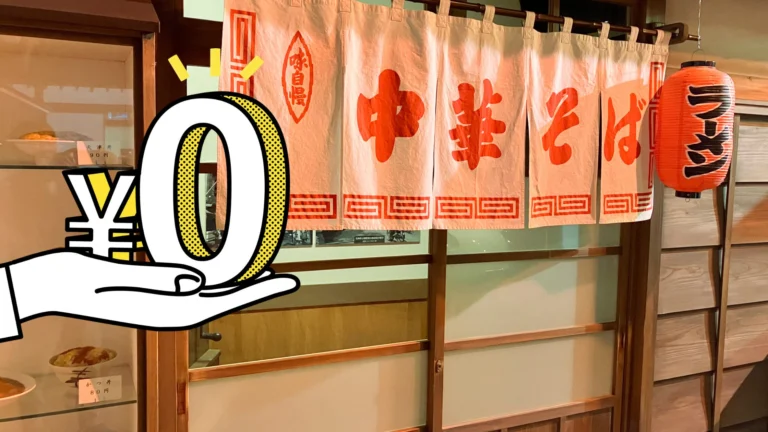
You read that right. Japan is, in fact, giving away businesses for free.
Over on the business succession marketplace Tranbi (トランビ), you can find all kinds of companies with asking prices of exactly ¥0. The sky seems to be the limit; restaurants, salons, bakeries, factories, even traditional inns complete with onsen are listed. Their owners are willing to transfer ownership without charging a purchase price. Everything is supposedly already set up for you, including loyal customers and employees just waiting for you to sweep in.
At first glance, it sounds like the opportunity of a lifetime, and that’s exactly how it’s been circulating on social media. Videos popping up on platforms like Instagram suggest that owning a Japanese business might really be that simple, and that cheap.
Sounds too good to be true? That’s where reality comes in.
These businesses aren’t being given away because Japan is overflowing with secret opportunities waiting for the right influencer to talk about it so you can jump in on it. Instead, the country is in the midst of an aging demographic crisis that’s leaving these companies with no one left to inherit them. And for the foreign audience such reels are clearly targeting, the biggest obstacle isn’t finding a ¥0 business just right for them.
It’s qualifying for the visa needed to legally run it.
The businesses are real. But they’re not giveaways

Tranbi isn’t the only platform offering such deals. Similar listings can also be found on other succession platforms such as BATONZ and through successor-matching programs supported by the Japan Finance Corporation.
Each has a similar process: prospective buyers register with the marketplace, submit a proposal explaining their business plan (and relevant experience), demonstrating they’re truly capable of taking over the company, including handling any existing obligations the business has.
Despite the way the situation has been presented on social media, owners aren’t simply giving perfectly run businesses away to anyone who asks. That’s far too much of a risk, even if the cost is ¥0. They’re looking for someone they believe can continue what they’ve spent years, and often decades, building.
Even if a seller agrees, the ¥0 purchase price doesn’t mean everything is truly free. Buyers are typically responsible for platform commission fees, legal costs, due diligence expenses, and any immediate capital needed to keep the business operating. That’s before considering whether the company carries debt, hidden liabilities, or other financial obligations that could ultimately cost far more than the acquisition price itself.
In short, these aren’t giveaways to the first to snatch them up. They’re succession negotiations.
A country running out of successors
The reason these ¥0 businesses exist has little to do with a booming economy with hidden investment opportunities. Instead, they’re the product of one of Japan’s most pressing demographic challenges.
For years, Japan has been grappling with an aging population, declining birthrate, and shrinking workforce. Those trends are now colliding with another reality: the generation that built much of the country’s small and medium-sized business sector is starting to finally retire. And far too many owners have no one left to take over.
According to Teikoku Databank, a staggering 50.1% of Japanese companies, from ramen shops to marketing firms, still have no designated successor. While that figure has improved considerably from its 2017 peak, thanks to government initiatives aimed at keeping those businesses afloat, it still means roughly one in two businesses in Japan lacks someone to inherit it.
The average company president is now over 60 years old. Among businesses that ultimately failed because no successor could be found, the average owner’s age was nearly 70.
Such consequences are becoming increasingly visible. In 2024, Japan recorded a record 62,695 voluntary business closures and dissolutions. Remarkably, more than half of those businesses were still profitable when they shut their doors.
Rather than failing financially, they simply reached the point where there was no one willing or even able to continue operating them. Japan even has a term for this phenomenon: kuroji haigyō (黒字廃業), or a “profitable closure.”
That’s the real story behind the ¥0 listings. These owners aren’t trying to cash out. Instead, they’re desperately trying to preserve businesses they spent a lifetime building before retirement leaves them with no other choice.
Nothing is more expensive than “free”

In Japan, there’s an old saying: タダより高いものはない, literally, “Nothing is more expensive than free.” An appropriate warning for anyone tempted by a ¥0 business listing without reading the fine print.
While the asking price may be zero, the cost of acquiring and successfully operating the business rarely is. Depending on how the transfer is structured, buyers may inherit existing debt, lease obligations, unpaid taxes, social insurance arrears, pending legal disputes, or other liabilities that don’t necessarily appear in the initial listing. In Japan’s M&A industry, these are known as off-balance-sheet liabilities (簿外債務), and uncovering them is one of the reasons due diligence is so critical before any acquisition.
Even healthy businesses often require significant new investment. Equipment may need replacing. Buildings may need repairs. Inventory has to be purchased. Employees may have been waiting for a new owner to finally get what salary has been owed to them. The truth is, while a ¥0 purchase price means the seller has decided not to charge for ownership, it says nothing about what it will truly cost to keep the company alive.
Japan’s own government has warned prospective buyers to proceed carefully. In 2024, the Small and Medium Enterprise Agency issued guidance cautioning both buyers and sellers about disputes arising from business transfers, particularly transactions involving financially vulnerable companies, hidden liabilities, and the handling of owners’ personal loan guarantees. In other words, the government itself recognizes that an attractive purchase price can mask substantial financial risk.
If any of this sounds familiar, it’s because Japan has another category of “free” assets that carry many of the same risks: akiya, or abandoned homes.
Just as homeowners sometimes give away vacant houses because demolition, taxes, and maintenance have become too expensive, business owners may decide that finding a willing successor is worth more than collecting a purchase price. In both cases, the recipient isn’t receiving a windfall. They’re accepting responsibility for an asset that someone else can no longer afford, or no longer wishes, to maintain.
Question: do you like UJ's independent coverage of Japan? Our writers are supported by our members. Join Unseen Japan Insider to get bonus content every week, an ad-free website, and access to our large and growing Insider archive.We manage to keep most of our content free thanks to the generosity of our members. Join Unseen Japan Insider and you'll get access to new, exclusive UJ member content weekly, an ad-free website, and access to our large and growing Insider archive.
The biggest catch isn’t the business. It’s the visa

Even if you found the perfect ¥0 business and convinced its owner that you were the right successor, and completed the transfer, there would still be one enormous hurdle standing between you and actually running it: you would need the legal right to remain in Japan.
That’s where such Instagram reels become particularly misleading. Japan has been a coveted destination for more than tourism for years; people don’t just want to visit. Many dream of moving here and making a life, or of doing more than entry-level jobs if they’re already working here.
Yet these videos leave out the single biggest obstacle they would face: qualifying for a Business Manager visa.
Bad timing, really. In October 2025, the Immigration Services Agency significantly overhauled the Business Manager visa. The minimum capital requirement rose from ¥5 million to ¥30 million, six times what it was before. Applicants must also have at least one full-time employee, a genuine physical office, a professionally prepared business plan, relevant management experience or an appropriate graduate degree, and, in most cases, Japanese language ability around the JLPT N2 level.
Existing visa holders have until October 2028 before the new standards begin affecting renewals. The new stipulations are already impacting long-term business holders. Some predict that businesses such as ethnic restaurants could be wiped out.
In other words, while viral Instagram reels tell viewers that Japan is “giving away businesses,” Japan’s immigration system has simultaneously made it substantially harder for foreigners to legally stay and operate one. That irony has already begun affecting real businesses.
For many entrepreneurs, the challenge isn’t finding a business to run. It’s meeting the increasingly demanding requirements to remain in the country long enough to run it.
The bigger picture
These aren’t businesses being abandoned because no one wants them. Many remain profitable. They’re being handed over because their owners have reached retirement with no one left to continue what they’ve built. It’s a challenge born of an aging population, a shrinking workforce, and decades of demographic decline, one that threatens jobs, local communities, and entire industries.
That’s also why anyone considering one of these opportunities should approach them with both excitement and caution. Not because they’re scams, but because they’re complex.
A ¥0 asking price says nothing about a company’s debts, future investment needs, legal obligations, or whether a foreign buyer can even qualify for the visa required to operate it. Those are questions no 60-second Instagram reel or TikTok can answer.
Perhaps that’s the broader lesson.
Social media is increasingly filled with creators promising shortcuts to life in Japan. Free houses. Free businesses. Secret visa pathways. All “hidden” opportunities that supposedly everyone else has overlooked, desperate to go viral. Sometimes the facts at the center of those videos are genuine. More often, what’s missing is everything that actually determines whether those opportunities are realistic.
Japan isn’t giving businesses away because the nation is suddenly overflowing with untapped opportunity. It’s doing so because one of its deepest demographic problems has created a crisis that no one has yet figured out how to solve.
The “free business” isn’t what should be going viral. The crisis that made it free is.
Keep reading



Sources
2024年の「休廃業・解散」企業、過去最多の6.26万件 高齢代表者の退出が加速、赤字率は過去最悪に 東京商工リサーチ (Tokyo Shoko Research)
全国「後継者不在率」動向調査(2025年) 帝国データバンク (Teikoku Databank)
後継者難倒産の動向調査(2024年度) 帝国データバンク (Teikoku Databank)
買収予算「0円」の事業承継・M&A売却案件一覧 トランビ (Tranbi)
簿外債務とは?具体例・偶発債務のリスク・対策について分かりやすく解説 バトンズ (BATONZ)
事業承継マッチング支援(後継者募集企業) 日本政策金融公庫 (Japan Finance Corporation)
M&Aに関するトラブルにご注意ください 中小企業庁 (SME Agency, METI) (archived)
「空き家差し上げます」はオトク?なぜ0円なのか・注意点も解説 不動産売却マイスター (Fudosan Baikyaku Meister / Taisei House)
Japanese family businesses are facing a succession crisis. That is fueling a private equity boom CNBC (archived)