

In an effort to appear as though it’s “cracking down” on foreign immigration, Japan’s government has pushed a series of “reforms.” Few (if any) of these punish bad behavior; most of them simply make life harder for immigrants.
One of the laws also may dampen Japan’s culinary diversity. Restaurant owners from Hong Kong, India, Nepal and elsewhere are shutting their doors in Tokyo. The reason? High capital requirements that make renewing their visas impossible.
The change to the business manager visa
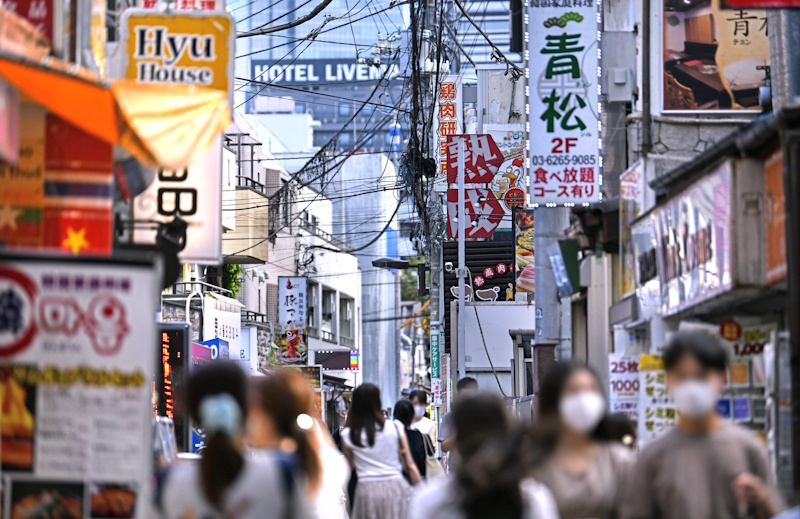
Historically, Japan’s business manager visa has been a way for people with a modicum of money and a love of Japan to set up roots here. With as little as a five million yen ($31,400) capital investment, you could start up or move your business here.
That changed in October 2025, when Japan’s Immigration Services Agency (ISA) overhauled the visa’s requirements. The new rules, which took effect October 16, 2025 – days before Prime Minister Takaichi Sanae took office – have since become a centerpiece of her government’s broader pivot on foreign residents.
The new business manager requirement is for 30 million yen ($188,000) in capital – a six-fold jump. Applicants must also hire at least one full-time employee and either the owner or employee requires certification at level N2 or higher on the Japanese Language Proficiency Test (JLPT).
Proponents of the change say this closes a loophole that made it easy for anyone to buy a visa to Japan. In particular, the far-right Sanseitō party has called repeatedly for a crackdown on this visa type.
The problem? Many foreign restaurant owners have used the business manager visa to set up shop in Japan. And 30 million yen is a high hurdle in such a tight margin business. The news could lead to a wave of closures in areas like Nishi-Kasai, Tokyo’s “Little India” in Edogawa City, which is home to Japan’s largest Indian population (8,400 people).
“I can’t prepare 30 million yen,” one 53-year-old anonymous owner in Nishi-Kasai told Asahi Shimbun. Despite making 40 million yen ($250K) a year, he said accumulating that much cash is impossible. “We’ll have to close.”
Some places have already been forced to make the bitter decision. Sanmaisan, a Hong Kong-style porridge restaurant in Nerima City, will close on May 20th. Owner Chan Kah-yee, who grew up watching Japanese dramas in Hong Kong and dreamed of living in Japan, set up shop with a 9 million yen ($56,600) investment after attending Japanese language school and working for years at Japanese-affiliated companies.
Despite turning a profit for years, she says she can’t make the new investment requirement. The new law has a three-year grace period: operators will be judged by the old standard until October 16th, 2028. After that, however, renewal will be solely at the discretion of ISA. That uncertainty led Chan to make the painful decision to close up shop.
Question: do you like UJ's independent coverage of Japan? Our writers are supported by our members. Join Unseen Japan Insider to get bonus content every week, an ad-free website, and access to our large and growing Insider archive.If you love UJ's independent coverage of Japan, join Unseen Japan Insider to get content every week, an ad-free website, and access to our large and growing Insider archive.
A blow to ethnic communities and businesses
The trend could devastate communities like Little India. Jagmohan S. Chandrani, an Indian tea importer who chairs the Edogawa Indian Association and has lived in Nishi-Kasai since 1978, told Asahi Shimbun that many Indians will have to leave Japan, and that the community he’s spent decades building will be lost.
The price hike also promises to chill new foreign investment in Japan. Yamada Kazuhiko, an administrative scrivener (notary public who can assist in processes such as immigration) in Tokyo, says he’s seen his number of new-acquisition consultations drop from two or three a month down to zero.
Yamada said the high price makes Japan an unattractive market for investors. “Anyone with ¥30 million would go to America or Europe, where prices are higher and they speak English.”
A survey by Tokyo Shoko research of 299 foreign-managed companies between March and April bears this out. 45.2% of respondents expect the new visa rules will impact them negatively. 5.3% said they may close up shop and leave Japan.
Why foreign workers may stop coming to Japan

The business manager rules aren’t the only change Japan has made to immigration. The Takaichi government is significantly raising visa fees and considering new language testing requirements to ensure adequate Japanese ability. It’s all part of her “new foreigner policy,” which she’s pushing as a way to shore up her poll numbers and mollify the country’s right-wing.
While it’s helping Takaichi in the polls, Japan’s online right isn’t impressed: they want to see more foreigners kicked out so that Japan can, in their eyes, return to being an ethnically homogenous nation.
Such moves, however, are likely to bite Japan in the ass. Asahi points out the larger potential impact of these changes: foreign workers could stop coming to Japan at a time when the country needs them the most.
Thanks to population decline, Japan is experiencing labor shortfalls in several key industries. One of them is elderly care, where foreign workers make up an increasing percentage of the labor force. Some nursing home owners have called them indispensable and warned that, without them, the nursing care industry would collapse.
The crackdown on business manager visas, however, threatens to take away not just the food, but the communities that help support foreign workers. That’ll make it harder to hire overseas labor to sustain chronically short-handed roles like nurses and bus drivers.
Japan’s hard right doesn’t seem to care, of course. On April 13, 2026, Japan stopped accepting new Specialized Skilled Worker visa applications for the restaurant industry, after the sector approached its 50,000-worker cap set when the program launched in 2019. The suspension is hitting izakaya and family-restaurant chains hard.
When izakaya chain Isomaru Suisan said the suspensions could force it to shorten hours and pull back expansion plans – SSW workers make up around 40% of its staff – right-wing users on X shot back that the suspensions were good. A majority said they’d rather see restaurants shorten their hours or even close than allow more immigrants.
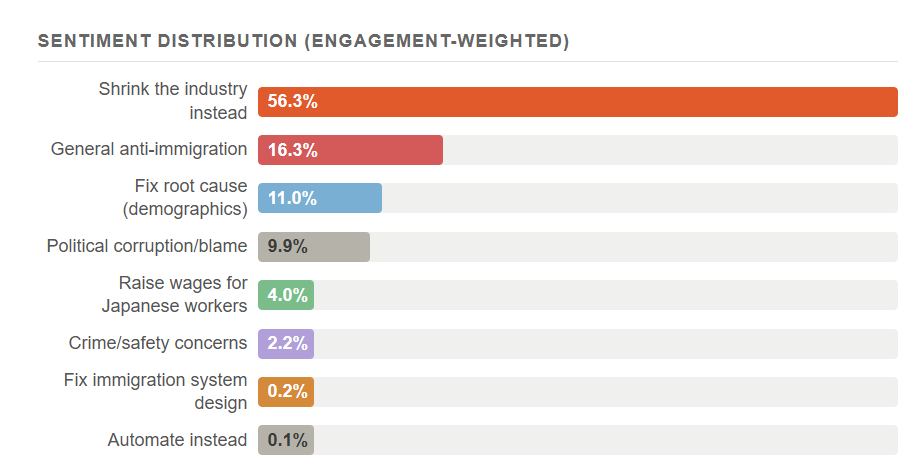
Of course, restaurants are, up to a certain point, an expendable luxury. People can eat at home or bring their lunch to work. It’s harder to cut bus and taxi service. And it’s not like Japan is going to stop producing more senior citizens in the foreseeable future.
Unless population decline suddenly stops, Japan will need to rely on foreign labor for decades to come. At the same time, the country is doing everything it can to convince immigrants who love Japan that they should give up and go elsewhere.
Keep reading



Sources
「店を閉じるしか」インド料理店が悲鳴 外国人に資本金3千万円の壁 朝日新聞
在留資格「経営・管理」に係る上陸基準省令等の改正について 出入国在留管理庁
政府、外国人の「経営ビザ」要件を厳格化 資本金500万円→3000万円に 日本経済新聞
東京商工リサーチ、2026年「経営・管理の在留資格の厳格化に関するアンケート」調査の結果を発表 日本経済新聞
「在留資格の厳格化」企業の5%が廃業検討 ビザの厳格化で、外国人企業の半数近くが影響 東京商工リサーチ
外国人起業家向け「経営管理ビザ」取得要件厳格化…資本金3,000万円・日本語能力N2を新要件に…10月16日施行 Yahoo!ニュース/THE GOLD ONLINE
外国人経営者が「経営・管理ビザ」の厳格化で国外退去の危機 全国商工新聞
「同じ人間として考えてほしい」――「リトル・インディア」西葛西でコロナ禍に苦しむインド人たち Yahoo!ニュース
西葛西【江戸川区】東京のリトルインディア、西葛西でインド旅気分 東京新聞
Nishi-Kasai: A Slice of South Asian Culture at Tokyo’s Waterside. Tokyo Updates
街場のエスニック料理店が消えていく — 経営管理ビザ「資本金3,000万円」が問う多文化共生の本気度 ISVD
「経営・管理」の在留資格を悪用した外国人移住の実態に関する質問主意書 参政党
「特定技能」外国人受け入れ停止、外食に打撃 磯丸水産は時短も視野 日本経済新聞