
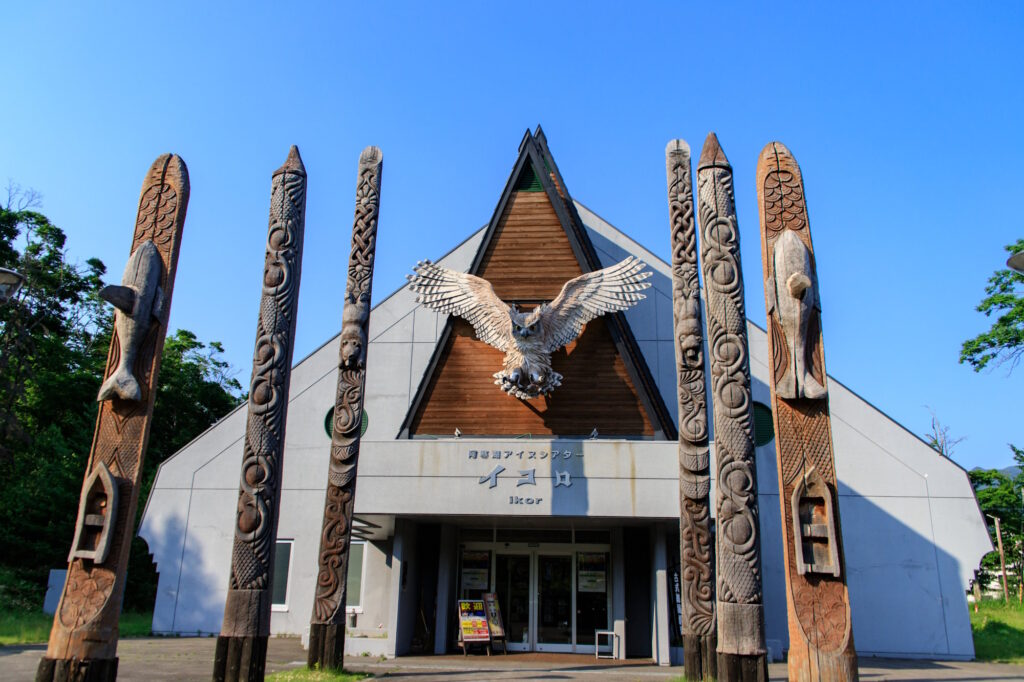
On May 8, 2026, an Indigenous Ainu group from Hokkaido filed Japan’s first lawsuit of its kind, demanding that the national government return 279 ancestral skeletal remains to their descendants. The remains in question are stored at the state-run Upopoy Memorial Site, located just outside Upopoy National Ainu Museum and Park.
The plaintiff (the Sibechari Ainu Tribe, founded in 2019) argues that Ainu burial tradition vests the right to manage their remains in the kotan (community), and not with the state. They emphasize that current consolidation policies by the government deny descendants of their rightful authority.
This lawsuit highlights decades of ongoing tension between the Ainu people, research institutions, and the Japanese government.
Historical strains
Why aren’t the 279 ancestral remains with the Ainu people in the first place? The story begins in the 19th century.
When the Japanese government colonized Hokkaido in the 1860s, Meiji-era authorities exploited and oppressed the native Ainu living there. Beyond the forced assimilation campaigns that banned Indigenous languages and customs, scientific elites from prominent universities conducted what they framed as anthropological research. Researchers from such institutions plundered Ainu graveyards without consent.
“In effect, a lot of what they were doing was studies aimed at demonstrating what they thought to be the inferiority of the Ainu people to justify the colonial project,” said Mia Kivel, a PhD candidate at Ohio University whose research focuses on contemporary Ainu art. “This wasn’t a value-neutral scientific endeavor.”
Roughly 1,600+ Ainu remains have been documented at 12 Japanese universities. In fact, the 279 sets of Ainu skeletal remains and burial goods were originally taken from the Shinhidaka-area kotan by research institutions such as Hokkaido University and the University of Tokyo.
Journey to Upopoy
So how did the remains end up in the Upopoy memorial facility?
In 2019, the Japanese government passed the Ainu Policy Promotion Act, officially recognizing the Ainu as an “Indigenous people” of Japan for the first time.
Then on July 12, 2020, in Shiraoi, Hokkaido, Upopoy opened its doors to the public to coincide with the Tokyo Olympics. Also known as the National Ainu Museum and Park, Upopoy serves the dual function of cultural symbol and remains-consolidation site. The memorial where human remains are stored sits at a separate facility about a mile up the road from the main tourist attraction.
“This is a time at which the Japanese government, at least on the surface level, wants to demonstrate a more concrete commitment to promoting Ainu culture, to recognizing Ainu rights,” said Kivel.
While Upopoy looked good on paper, the site provided an easy way out for research institutions and the government to gesture at repatriation without returning the remains to the Indigenous communities they’re from.
“It’s much easier to set up this one massive memorial hall where they can send the remains of almost 2000 people than it is to, one, have to change certain provisions about how the law works to accommodate these community actions and, two, to have to deal with all these negotiations as well,” said Kivel.
Legal gaps
Now that the remains are collected in Upopoy, another Pandora’s box of legal questions has opened.
While past precedent on Ainu reparation rights exists, previous cases were filed against universities directly and ended in settlements. This lawsuit is the first against the national government over remains already consolidated at Upopoy.
The problem lies in Japan’s legal frameworks that prioritize the rights of individuals over groups or collectives. While Japanese civil law allows direct descendants of the deceased the right to possess the remains of their ancestors, the legality muddies when reparation to collective groups, like an Indigenous community, comes into consideration.
“If you know for sure that your great-great-grandfather’s remains were stored in some university library, you could demand that,” said Kivel. “But if you’re just a representative of, for example, the Nibutani Ainu community without a provable lineal connection to the person, it’s much harder to have those remains repatriated.”
There have been exceptions. In 2016, a landmark out-of-court settlement repatriated 12 Ainu individuals to their home communities. The Sapporo District Court allowed a representative group, the Kotan no Kai, to qualify as the proper caretakers of the village’s ancestors.
Although legal progress has been made, navigating communal rights for Indigenous peoples is still uncharted territory for Japanese law. Case in point, the 279 remains in question under the current lawsuit are considered “unidentifiable,” making it harder to draw distinct relational lines, especially compared to the 2016 settlement.
Question: do you like UJ's independent coverage of Japan? Our writers are supported by our members. Join Unseen Japan Insider to get bonus content every week, an ad-free website, and access to our large and growing Insider archive.We manage to keep most of our content free thanks to the generosity of our members. Join Unseen Japan Insider and you'll get access to new, exclusive UJ member content weekly, an ad-free website, and access to our large and growing Insider archive.
International fault lines
Unlike other countries that engage with Indigenous communities as semi-sovereign nations, the Japanese government interprets rights differently.
“The government recognizes individual Ainu who have a right to express their individuality as members of the Ainu culture,” said Kivel. “But there is no legally recognized sovereign Ainu nation. And that makes it difficult to engage in a lot of these legal battles because everything is framed on a very individual basis.”
To put it simply, “Ainu Indigeneity is affirmed at the level of individual expression, but at this point really not in the realm of collective legal protections,” said Kivel.
The government’s historically narrow interpretation of Indigenous rights has come into conflict with international law. In 2007, Japan voted in favor of the United Nations Declaration on the Rights of Indigenous Peoples (UNDRIP), which demands that human remains be repatriated to the communities that they come from under Article 12.
But the court tends to cherry-pick alignment with international provisions. In a 2024 judgment about salmon fishing rights of the Raporo Ainu Nation, the Sapporo District Court “rejected the UNDRIP as the basis for the Ainu’s fishing rights, stating that it is not legally binding” (Osakada, 2026).
Moving forward
As conservatism rises in Japan, the fate of the current lawsuit regarding the 279 remains hangs in purgatory. In April 2026, the Conservative Party leader Hyakuta Naoki rejected the Indigenous rights and status of the Ainu. In the same month, the Sapporo city government approved an “Ainu aren’t Indigenous” panel exhibit.
Despite the harsh political backdrop, the goal remains the same: to get the remains back to their communities.
“Non-Indigenous people who want to do the right thing by these communities need to start by listening to them and internalizing what they want and what they need,” said Kivel. “Listening and respecting the wishes of these communities is the most important ethical consideration that non-Ainu can have with regard to this conversation.”
Keep reading
Sources
アイヌ遺骨返還求め提訴 ウポポイ保管の279体―札幌地裁 時事ドットコム (Jiji)
ウポポイ保管のアイヌ民族遺骨 279体返還求め国を提訴 新ひだかの団体 北海道新聞デジタル
アイヌの遺骨返還求め国を提訴 新ひだか町の団体 NHKニュース
「国は上から目線ですよ」アイヌ遺骨の返還求め、国を初提訴「静内の土に戻したい」ウポポイ集約の279体 HTB北海道ニュース
「盗ったものは謝って返して」アイヌ民族が求める遺骨返還 「慰霊施設」に集めて移管じゃ浮かばれない 東京新聞デジタル
持ち去られたアイヌの遺骨が子孫に返還されない 「一刻も早く土に」を阻む背景とは 東京新聞デジタル
アイヌ・琉球…先住民族の遺骨、なぜ故郷に帰れない? ウラに世界と逆行する日本政府の「植民地主義的」姿勢 東京新聞デジタル
<社説>アイヌ民族遺骨 全大学は謝罪と返還を 北海道新聞デジタル
大学が保管するアイヌ遺骨の返還について 文部科学省 (MEXT)
Memorial Site 慰霊施設 ウポポイ National Ainu Museum and Park
国際水準の遺骨、土地返還の権利 反差別国際運動 IMADR
Act on Promoting Measures to Achieve a Society in which the Pride of Ainu People is Respected Japanese Law Translation
Ainu Indigenous group demands return of ancestors’ remains The Japan Times
America’s Biggest Museums Fail to Return Native American Human Remains ProPublica
Criticizing the Colonialist Origins of the New National Museum Upopoy HURights Osaka
English Translation of Sapporo District Court Ruling in Raporo Ainu Nation’s Salmon Fishing Rights Lawsuit AinuToday
Struggle of the Ainu for Their Salmon Fishing Rights: Learning from the Sámi Experience Australian Journal of Asian Law
The Thorny Ethics of Displaying Egyptian Mummies to the Public Undark
Towards a Respectful Repatriation of Stolen Ainu Ancestral Remains ANU Press
United Nations Declaration on the Rights of Indigenous Peoples United Nations
Regarding the presentation of Ainu Culture and the Upopoy Symbolic Space for Ethnic Harmony at the Tokyo Olympics 2020 Embassy of Japan in Canada
Rethinking Japan’s Constitution from the Perspective of the Ainu and Ryūkyū Peoples Asia-Pacific Journal