
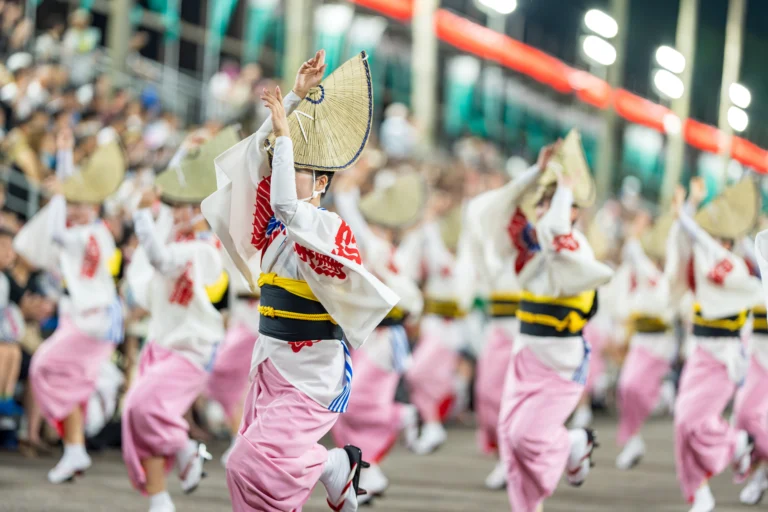
Every summer, dances to honor ancestors called Bon Odori (盆踊り) turn streets, temple grounds, and tiny village squares into one big shared performance.
On the surface, it’s just a lot of folks dancing and having a good time. However, if you look beyond that, you’ll find a tradition with deep roots in religion and community.
The Buddhist roots of Bon Odori and its modern revival
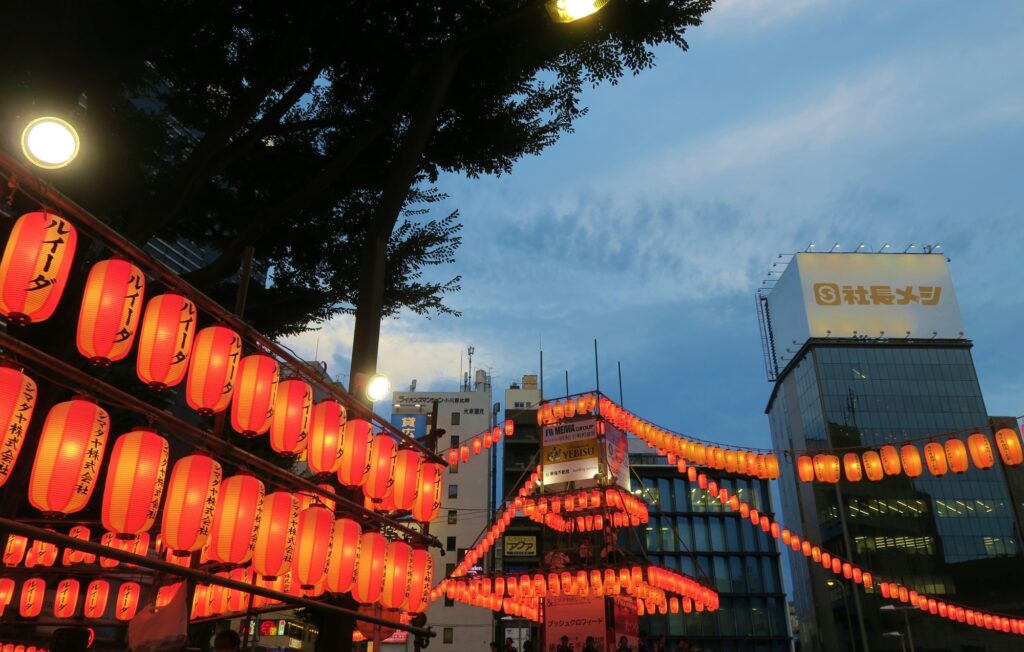
Bon Odori likely started from odori nenbutsu (踊り念仏), a Buddhist chant-and-dance practice linked to the Heian-era monk Kūya in the 10th century. It later spread nationwide through the monk Ippen during the Kamakura period.
Over time, that religious style of dancing blended with urabon-e (盂蘭盆会) and the wider Obon custom, a Japanese holiday where many return to their family’s hometown and pay respect to their ancestors. Because of this, Bon Odori carries the idea of welcoming the dead home before sending them off again. It’s an example of a religious practice that never fully stopped being religious, even as it expanded outside temples.
By the Edo era, this dance had become much more than a temple ceremony. For example, in farming villages, it turned into the biggest community event of the year, allowing people to reconnect, eat, drink, and catch up after months of hard work.
During the Meiji era, though, the Japanese government wanted to modernize and started banning what they deemed as “outdated” customs left and right. Bon Odori got put on that hit list, too. Though the restrictions were eventually lifted, for a while there, it almost disappeared entirely. (Not that they could stomp out dance entirely.)
Luckily, it regained popularity in the 20th century and continues to grow in the 21st. Nowadays, there are many different Bon Odori celebrated throughout Japan, each with its own regional flair.
The Three Great Bon Odori (plus one)
Some of these celebrations stand out above the others, but people have a hard time agreeing on which ones constitute the top three.
The most common trio are Nishimonai Bon Odori in Akita, Gujō Odori in Gifu, and Awa Odori in Tokushima. However, a few quibble about including Awa since it’s more accurately a parade-style nagashi-odori (流し踊り). Nippon.com, for example, replaces its position on the list with Ōita’s Himeshima Bon Odori.
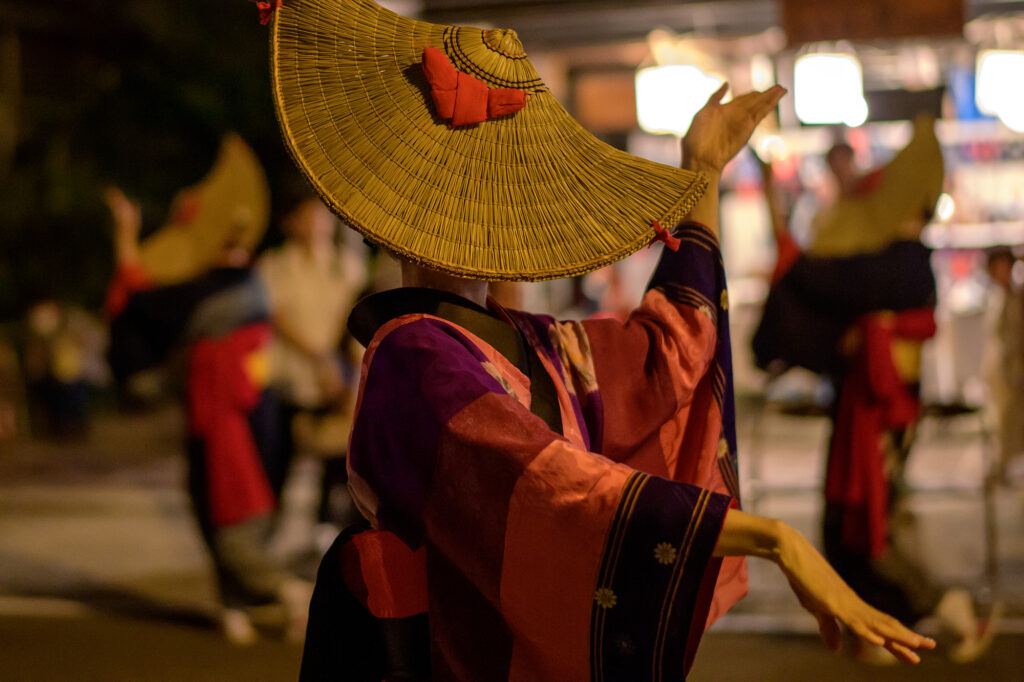
Nishimonai’s celebration arguably honors the religious side of the tradition, showcasing the “dance of the dead” (亡者踊り, mōja odori). Accomplished performers earn the right to wear hanuii, elegant patchwork kimono stitched from multiple silk fabrics. Others dance in indigo-dyed yukata paired with black hoods that obscure the face, evoking the spirits of the dead. It’s meant to appease the dead, much like how other festivals chase off demons. The dance itself is graceful, with more intricate moves than your typical country jig.
Address: Honcho Nishimonai, Ugo-machi, Akita
Gujō Odori lasts 31 days and centers around 10 folk songs that have been a part of the region for centuries. Unlike Nishimonai, the dance here is simple, inviting everyone to join in. Thanks to this and its all-night dance held over four days, it upholds the “community gathering” vibe that made Bon Odori so popular in the first place.
Address: Gujō City, Gifu (exact location varies throughout the 31-day schedule)
Finally, Awa Odori features a dance that steadily marches forward, and performers wear traditional uniforms inspired by the region’s culture. It can draw as many as a million visitors, so it’s no wonder that people often categorize it as one of the big three.
Address: 1-4 Minamiuchi-machi, Tokushima City, Tokushima
Meanwhile, in Ōita Prefecture, you have the island of Himeshima. The local population is small (under 2,000), but this festival attracts thousands of tourists.
Address: Himeshima Port Ferry Plaza and designated Bon Festival areas, Higashi-Kunisaki District, Ōita
Lesser-known variations, from Aichi to Toyama
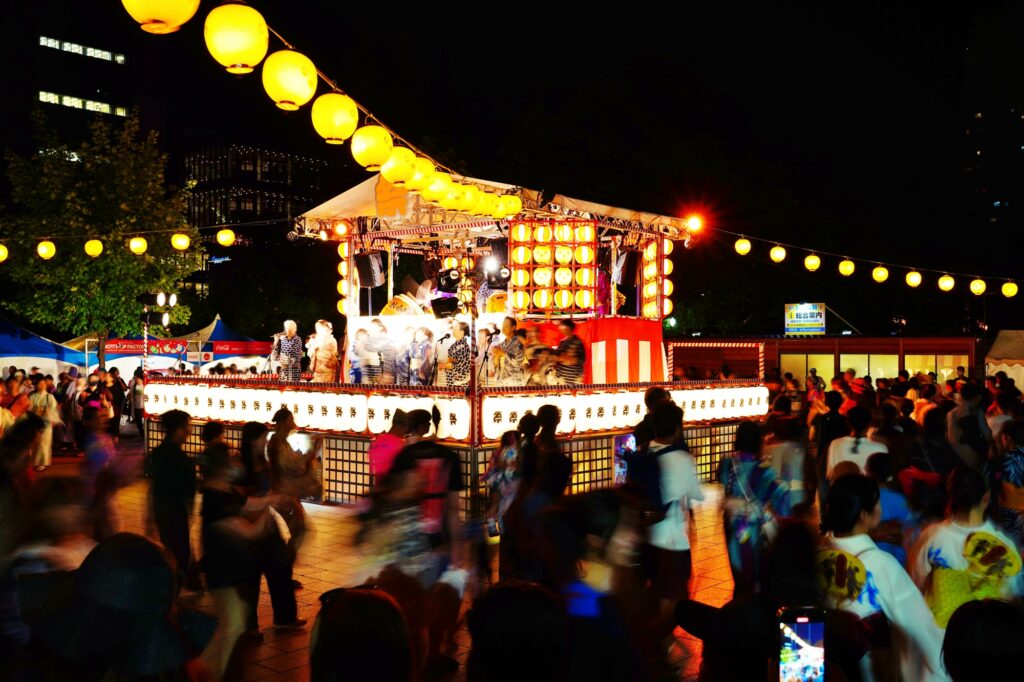
While other Bon Odori might not be as well known, they’re still worth checking out. Aichi Prefecture’s Ayado Yonenbutsu, for example, is an Important Intangible Folk Cultural Property. It keeps alive a near-extinct odori nenbutsu from which Bon Odori originated.
Address: Ayado-cho, Toyota City, Aichi
Akita has another notable celebration held further north than Nishimonai, the Kemanai Bon Odori. Kemanai distinguishes itself by having its dance around a bonfire (the “bon” here being a lovely bilingual coincidence). The dance has two distinct parts: one with drums and flute to accompany, and one with singing only.
Address: Kemanai, Kazuno City, Akita
Over in Toyama Prefecture has Owara Kaze no Bon. While technically a nagashi-odori rather than bon, it has a dignified procession that is very striking. People decorate the town with paper lanterns, and then sing and dance to traditional Japanese instruments. These include taiko drums and two different three-stringed instruments, kokyū (胡弓), which is played using a bow, and shamisen (三味線), which is plucked using a Japanese-style pick.
Address: 11 neighborhoods in Toyama City, Toyama
Just a small taste of traditional Japanese culture
Bon Odori is just one of many examples of this country’s cultural traditions. Another one with deep roots in Buddhism would be embarking on ancient pilgrimage trails.
Of course, it’s also important to keep in mind that these particular festivals take place in the height of summer. If you’re thinking of checking them out yourself, be sure to look up our guide on surviving the sauna-level heat!
Want to actually catch one of these festivals in person? Timing a trip around regional Bon Odori like Nishimonai or Gujō isn’t easy to do from search results. Unseen Japan Tours can design a custom itinerary around the festivals and regions you want to see, and act as your Japanese-fluent expert guides on the ground. Chat with us today→
Keep reading


Sources
盆踊り Wikipedia (日本語)
【日本三大盆踊り】秋田「西馬音内盆踊り」・大分「姫島の盆踊り」・岐阜「郡上おどり」:先祖の魂と陽気に楽しむ日本独自の風習 nippon.com
三大盆踊り 藤沢宿遊行の盆
盆踊りの歴史 盆踊りの世界
西馬音内盆踊りの文化・歴史 羽後町
郡上おどり 郡上八幡観光協会
阿波踊り Wikipedia (日本語)
おすすめ盆踊り20選!【全国編】定番から秘境まで! オマツリジャパン