

Japan is home to tens of thousands of Buddhist temples and Shinto shrines, each with their own unique history and architecture. Some have stood for centuries, bearing witness to wars, natural disasters, and generations of social change. Yet even these historic structures aren’t immune to one of the oldest threats on planet Earth.
Fire.
Almost any historical building is susceptible to fire, and on varying scales; Nara’s famous Tōdai-ji lost its main buildings to fire twice, in 1180 and 1567. Most traditional structures are made of wood. Shrinking congregations and clergy shortages have also left an increasing number unattended, with a single priest sometimes responsible for multiple religious sites. Add dry, windy conditions to an old wooden building without anyone regularly present, and fire remains a serious threat.
So, when flames broke out on the grounds of Kyoto’s famous Kōdai-ji temple on August 3, the news was alarming, but hardly unprecedented.
The accusations that followed, however, were another matter entirely.
Within hours, posts on social media claimed that the historic temple had been deliberately “lit on fire.” One English-language post, viewed nearly a million times, asked why churches and temples supposedly kept burning in Japan while mosques did not. Others went further, linking the fire to Muslim immigration and an alleged “Islamic invasion” of Japan.
Shocking headlines. Comments flooding the replies section, boosting engagement. There was just one rather important problem.
Investigators hadn’t determined that anyone had set the fire at all.
The truth is simple: there’s no evidence that Muslims are behind a supposed wave of shrine and temple fires in Japan. Official fire statistics put these incidents in a very different context, with police and other officials making it clear that these are baseless rumors.
Still, this isn’t the first time Muslims have been blamed for a shrine fire without evidence. Last year, a Shinto organization in Osaka made almost exactly the same claim. After Osaka Prefectural Police debunked the claim, the Shinto organization later apologized and retracted it.
This isn’t the first time Muslims living in Japan have been thrown under the proverbial bus, and social media isn’t helping. But what exactly is going on? What’s driving this trend online?
What actually burned at Kōdai-ji?
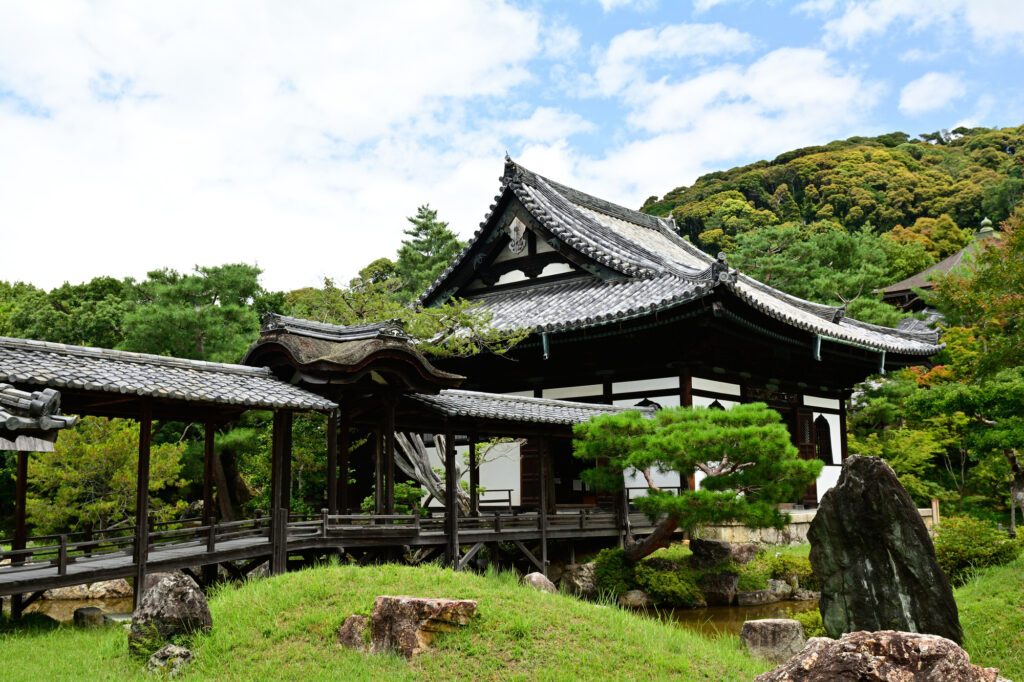
Despite what some viral posts suggested, Kōdai-ji itself did not burn down. The fire broke out at a reception facility belonging to a tatchū (塔頭), or sub-temple, located on the Kōdai-ji grounds in Kyoto’s Higashiyama Ward.
The two-story wooden building was approximately 120 square meters in size, with around 60 square meters destroyed by the blaze. No one was injured, and the building was unoccupied at the time. It was also not a designated cultural property.
Police and firefighters began investigating the scene the following morning. As of this writing, the cause of the fire remains undetermined. A nighttime lantern illumination event was underway on the temple grounds when the fire occurred, but authorities have not established whether it had any connection to the blaze.
That distinction matters. Saying a building “caught fire” describes what happened; saying someone “lit it on fire” introduces something investigators have yet to establish: that the fire was deliberately started. Identifying that someone as Muslim goes another considerable step further.
So far, authorities have established neither.
How often do temples and shrines catch fire?
More often than one would think.
According to figures from Japan’s Fire and Disaster Management Agency, fires at shrines and temples have remained remarkably consistent in recent years. Japan recorded 61 in 2019, 64 in 2020, 68 in 2021, 67 in 2022, 59 in 2023, and 58 in 2024. With many in remote areas, it can be difficult for emergency responders to get there in time.
This means that on average, Japan sees roughly five shrine or temple fires every month. In fact, 2024 had the fewest of any year in that six-year period.
In the first five months of 2026, at least nine religious sites were destroyed by fire across Japan. Among them was the roughly 300-year-old Atago Shrine in Niigata Prefecture – ironically, a shrine dedicated to a deity associated with protection from fire. Less than two weeks later, fire destroyed Daihōji, a 573-year-old temple in Takaoka, Toyama Prefecture.
Then came another painful loss. On May 20, fire destroyed Reikadō Hall at Daishō-in on Miyajima, near Hiroshima city. The hall housed the famous kiezu-no-hi (消えずの火), or “eternal flame,” traditionally said to have burned continuously for approximately 1,200 years.
These aren’t imaginary incidents. They’re genuine losses to Japan’s religious and cultural heritage, and concerns about protecting historic temples and shrines from fire are entirely justified.
Still, that’s not evidence of a coordinated campaign against them.
Have investigators uncovered the religious motive suggested by social media posts? Not really. Most of the 2026 fires remain under investigation. Arson is suspected, but not confirmed, in one case: the fire at Atago Shrine. At least one temple fire in Toyama Prefecture is believed to have begun in a kitchen.
Not one has been attributed to a Muslim or foreign suspect.
We’ve heard this story before
Let’s return briefly to June 2025 in Osaka City. A few days after a shrine caught on fire, the Osaka Prefectural Shinto Association sent a warning to shrines across the prefecture with an alarming explanation: the perpetrator was Muslim and claimed that Shinto was a “heretical religion.”
After the notice was posted to X, the story quickly spread. Plenty of netizens were eager to chime in, with some voicing support and echoing the negative sentiments against this so-called perpetrator.
Except that wasn’t what happened.
According to the shrine’s chief priest, several elementary school children had been using matches to set fire to fallen leaves on the grounds. Osaka Prefectural Police reached the same conclusion: children had been playing, setting leaves on fire on the shrine grounds. Reporting on the incident indicates that the chief priest had seen the children on security-camera footage and interpreted their clothing as potentially Muslim. Potentially.
But no record of any Muslim deliberately attacking a Shinto shrine because of his religion.
Still, thanks to swift police correction of the facts, on June 16, the Osaka Prefectural Shinto Association retracted the notice and apologized for circulating incorrect information. While the quick apology was welcome, the story it helped create proved far more difficult to kill.
Question: do you like UJ's independent coverage of Japan? Our writers are supported by our members. Join Unseen Japan Insider to get bonus content every week, an ad-free website, and access to our large and growing Insider archive.If you love what we do, help us pay our writers to do more of it by joining Insider. You'll get bonus content every week, an ad-free website, and access to our large and growing Insider archive.
Why does this claim keep resurfacing?
By June 2026, blaming Muslims on social media for incidents in Japan had become common enough that NHK published its own fact-check. The broadcaster reported that fires at temples, shrines, and even pig farms were being followed by unsupported allegations of Muslim involvement, often accompanied by discriminatory comments targeting Muslims and other foreign residents.

The formula is remarkably simple. A fire breaks out. Nobody knows what caused it yet. Investigators may need days, weeks, or longer to determine what happened.
Social media needs only minutes to find the perfect scapegoat to go viral.
We’ve seen the same phenomenon following other fires in Japan: an incident happens, reliable information remains scarce, and people with an existing political narrative rush to fill in the blanks. By the time authorities determine what actually happened, the accusation may already have reached hundreds of thousands of people.
The Kōdai-ji fire demonstrates this remarkably well. Within hours of the fire being reported, the undetermined cause had become arson. Then the story acquired a culprit. A religious motive. Then it became evidence of Muslim immigration supposedly threatening Japan. Not one of those details came from investigators.
But they fit neatly into a broader collection of false or misleading claims about Muslims and foreign residents that have circulated in Japan, from claims that Kitakyushu planned to introduce special school lunches for Muslim students to misleading assertions that foreign residents receive preferential access to expensive healthcare.
While the individual rumors change, the mechanism behind them doesn’t. And like any trend that gets a little too much attention, the consequences aren’t always confined to social media doomscrolling.
The lies don’t stay online
It’s easy to dismiss social media misinformation as just that: something happening online, and only those chronically glued to their phones will care. For Muslims actually living in Japan, however, the consequences don’t necessarily stay there.
That became particularly clear this year in Ichikawa City, Chiba Prefecture. For around 30 years, a local mosque had participated in a community festival held at a nearby park. On May 27, 2026, roughly 200 people planned to hold a group prayer there lasting about 15 minutes.
But this time, the city said no.
The decision came after criticism of the prayer spread on social media. Ichikawa’s mayor initially defended the restriction while referencing those online concerns, although the city later partially walked back its reasoning.
The controversy also didn’t happen in isolation. Plans for Muslim cemeteries have faced organized opposition, while burial practices have become enough of a political issue that Japan’s national government has surveyed municipalities about accommodating Muslim burials.
While not every dispute involving Muslim communities in Japan stems from social media misinformation, repeatedly portraying Muslims as a threat to Japanese culture isn’t harmless. A rumor doesn’t have to become true to change how people are treated.
And for those spreading it, there may be few consequences at all.
Fire doesn’t need a culprit
Despite the country being famous for its strong libel laws, Attorney Sugiyama Daisuke of Veribest Law Office explained to Bengoshi JP News that Japan has no law specifically punishing dema (デマ), or false rumors. Defamation and insult laws within Japan generally require harm to an identifiable individual.
That’s why accusations aimed broadly at “Muslims” are another matter. Because no particular individual is necessarily being targeted, Sugiyama says such claims may fall outside the reach of Japan’s defamation and insult provisions.
That leaves an uncomfortable imbalance.
For now, the cause of the fire on the Kōdai-ji grounds remains undetermined, which is an unsatisfying answer for those looking for a culprit. A viral post on social media can offer something much more compelling within hours: a culprit, a motive, and a sweeping explanation for why Japan’s temples and shrines are burning.
Investigators can’t. They have to find out what actually happened and are burdened with the task of finding and providing evidence. In the meantime, the accusation can reach hundreds of thousands of people before authorities have even determined what caused the fire. The correction comes later, if it comes at all.
Fires don’t always come with a culprit. If there is one, then of course Japan’s temples and shrines deserve protection from any real threats. But for Japan’s resident Muslims, they should not be the target of constant defamation, and shouldn’t have to defend themselves against accusations for which there is no evidence.
Keep reading


Sources
「養豚場が…」「お寺が…」火災で根拠ない情報拡散 何が? NHK
「イスラム教徒が神社に火をつけた」文書がXで拡散… “デマ”そのものを処罰できない法律の欠陥とは 弁護士JPニュース
神社でぼや「邪教だから放火」と供述…大阪府神社庁が誤情報 文化時報
神社や寺の火災ニュースが気になって、消防庁の公式データを見てきた note
京都市東山区の高台寺塔頭付近で火災「すごい火柱と黒煙」 2階建て建物全焼、観光客らで周囲は一時騒然 京都新聞
高台寺の塔頭「岡林院」の施設全焼 けが人なし 京都・東山区 毎日新聞
出火の原因は?京都・高台寺の敷地内で火事 警察・消防が4日朝から実況見分 塔頭の一部約60平方メートルが”全焼” 関西テレビ
Nine Japanese Shrines and Temples Lost to Fire in First Five Months of 2026: Context and Ongoing Protection Efforts Fire Risk Heritage
Sacred ‘Eternal Flame’ Hall Destroyed in Miyajima Fire Tokyo Weekender
消防統計(火災統計) 総務省消防庁
神社敷地でボヤ、「犯人が『邪教だから放火』と供述」とSNSで拡散…大阪府警「そうした事実はない」 読売新聞
東大寺 – 世界遺産 奈良市