
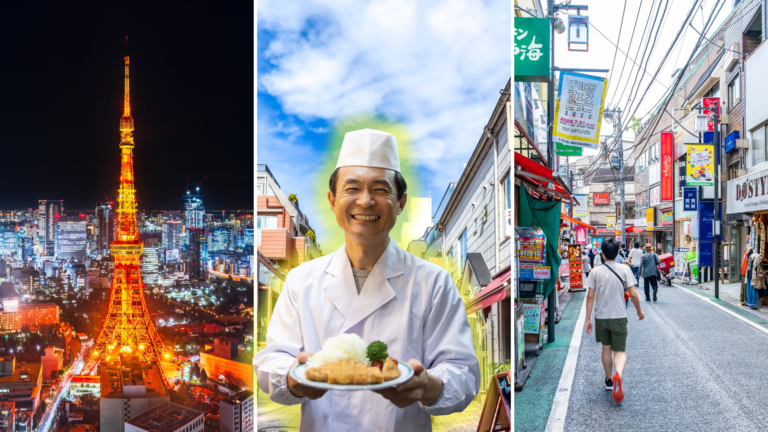
Ask a foreign visitor where to find Tokyo’s best food, and the answer usually comes from Google reviews, Instagram, or sheer geography: whatever neighborhood happens to contain their hotel. An understandable approach, but not how locals judge restaurants.
This begs the question: which Tokyo neighborhoods actually have the strongest food scenes?
To find out, we used scores from Tabelog, the Japanese restaurant-review platform favored by foodies. And for anyone familiar with the popular perceptions of each of these neighborhoods, the results might surprise you.
A more “Japanese” style of food ranking
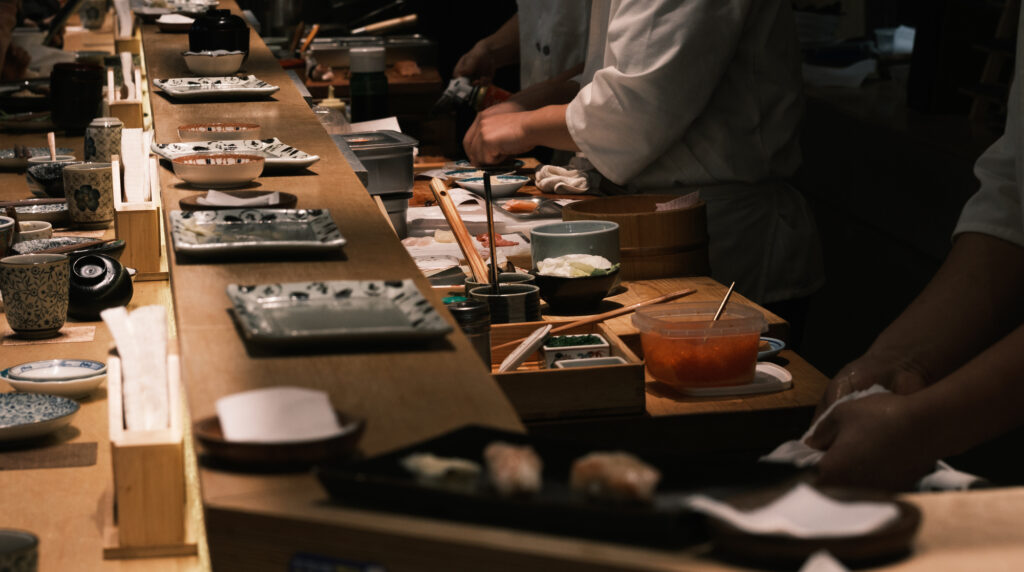
To compile our list, we analyzed Tabelog’s restaurant-listing pages for roughly 40 restaurants in each of 20 Tokyo neighborhoods. These pages are tied to Tabelog’s location-based area codes, which helped us avoid pulling same-named chain restaurants from completely different wards.
In total, the sample included 794 restaurants across six neighborhood categories. These ranged from old-money embassy districts to a deliberately ordinary residential control.
Why Tabelog? Two main reasons. First, Tabelog is built around Japan’s local dining culture. While it provides auto-translation features for English and Chinese, it primarily serves a Japanese audience. Users need a Japanese phone number to post reviews. This basically guarantees that every opinion comes from a resident of Japan rather than a tourist passing through. Tourists can still browse, of course, but they’re not influencing the rankings.
Second (and perhaps more importantly), Tabelog applies a “user influence degree” (ユーザー影響度, yūzā eikyōdo) that puts less emphasis on inexperienced reviewers and removes suspected fraud, restaurant staff, and corporate accounts from the scoring system. It also ranks users by the type of cuisine they rate. A review of a ramen restaurant, for example, doesn’t count as much if it comes from a user praised for their sushi reviews. This ensures that the only reviews you see are both authentic and from connoisseurs of cuisine.
It can be fun to explore on your own. Tabelog is great for that. If you want a curated and informed introduction to Japanese food, our publisher, Jay Allen, runs a Tokyo nighttime food tour. He can introduce you to various cuisines and Japanese sake for a fixed price, with options for vegetarians, vegans, and non-drinkers.
The results are clear: money beats fame
When looking at the results of our research, wealthy districts, rather than popular ones, were at the top.
Azabudai, the neighborhood built around Mori Building’s luxury complex, ranked first with an average score of 3.47. Of its sampled restaurants, 40% scored at least 3.5. Azabudai Hills opened on November 24, 2023, meaning its restaurant scene is younger than most smartphones. Yet it already outranks Hiroo, the established old-money neighborhood that has hosted embassies and wealthy residents for generations.
Hiroo placed second with a 3.42 average. It also had the highest percentage of restaurants clearing 3.5 at 42.5%. In other words, it had the highest number of highly praised eateries.
The results at the bottom were even more surprising. Ikebukuro, one of Tokyo’s biggest shopping and entertainment centers, ranked last of twenty. Its average score was 3.20, and none of the 40 sampled restaurants reached 3.5. It was behind even Kita-Senju, the unglamorous residential neighborhood selected as a control.
On the flip side, popular areas got ordinary scores
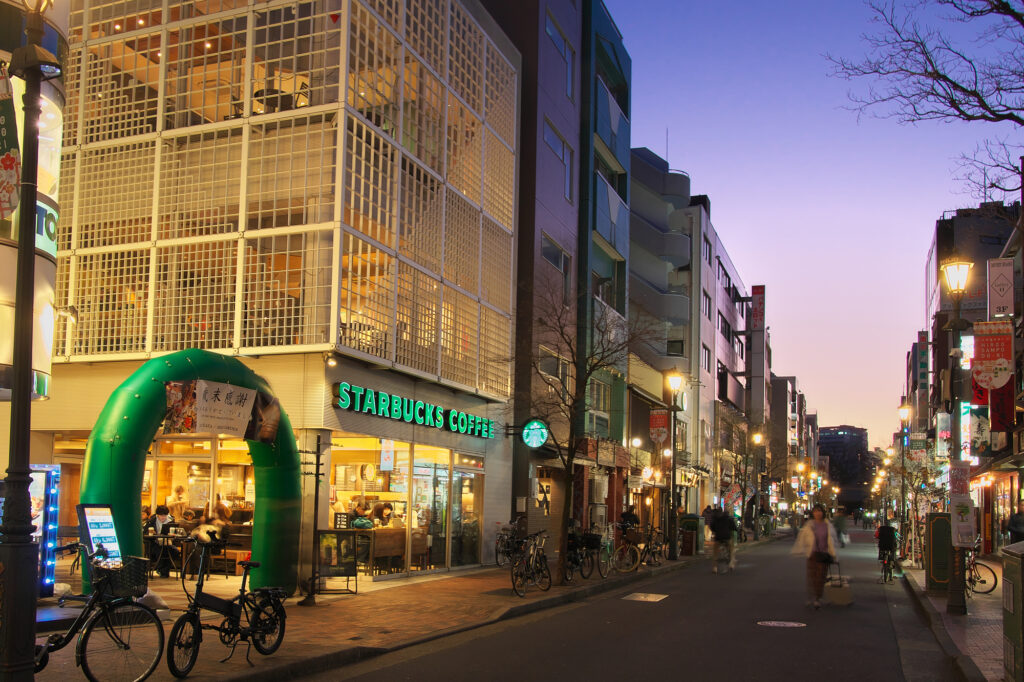
For some perspective, Kichijōji ranked third nationally (and first among neighborhoods in Tokyo) in SUUMO’s 2026 “town you want to live in” ranking. It’s topped the Kanto region’s version of that survey for years. On Tabelog, however, it ranked tenth among the 20 areas studied, with a 3.28 average. Only 5% of its sampled restaurants scored 3.5 or higher.
Shimokitazawa performed almost identically. It’s famous for vintage clothing, live music venues, and small theaters. But in terms of restaurants? It ranked thirteenth, with a 3.26 average and 5% clearing 3.5.
The lesson is not that these neighborhoods lack good restaurants. Rather, a beloved neighborhood doesn’t guarantee that every street, or even most of its restaurants, will impress Japan’s most demanding food reviewers.
How each neighborhood’s individuality affects its ranking
Richer districts, including new-money areas like Daikanyama, tended to rank higher. Kagurazaka (an old-money district) ranked ninth with a 3.31 average and 10.3% of restaurants clearing 3.5.
Kagurazaka was once a major hanamachi (花街), or geisha district. Nowadays, it’s known for a small number of excellent, reservation-only restaurants hidden in back alleys. Its ranking might have been higher, but a broad sample of the entire neighborhood naturally diluted the results a bit.
The dense commercial and nightlife districts also split sharply. Roppongi scored well, ranking sixth with a 3.36 average. But Tabelog’s Roppongi area includes nearby Nogizaka and Nishi-Azabu, both known for upscale dining. Shibuya ranked 11th, Shinjuku 16th, and (as mentioned) Ikebukuro last.
In other words, foot traffic and scale do not automatically produce higher food scores. The precise boundaries of a neighborhood made a pretty notable difference.
Tokyo’s shitamachi (下町), or working-class and artisan districts, offered another useful contrast. Yanaka, Nezu, and Sendagi (collectively known as Yanesen) ranked eighth with a 3.34 average. The area is famous for its prewar streetscape, which survived both the 1923 Great Kanto Earthquake and the firebombing of World War II. It outscored more heavily touristed Asakusa, which ranked 17th, and Ueno, which ranked 15th.
Why do we keep bringing up the 3.5 ranking?
In the U.S., people tend to dish out 5-star ratings like candy, but that’s not the case in Japan. Here, 3.0 really is “average,” and getting a foodie to give out more than that is a significant achievement. Regular users are generally aware that reaching 3.5 or above on Tabelog requires a restaurant to give good food, service, atmosphere, and value. You can’t do it just by excelling in one category.
The sample makes the difference clear. In Ikebukuro, Kita-Senju, and Tsukishima (a shitamachi/tourist area that ranked 14th), none of roughly 40 restaurants cleared 3.5. In Azabudai, 40% did.
There were some unavoidable judgment calls. Azabudai has no dedicated Tabelog area code, so we used its administrative-boundary listing. For Aoyama, we used the closest matching code, anchored to Aoyama-itchōme and Gaienmae. Tabelog’s Roppongi, Yanaka, and Kinshichō clusters also include adjacent areas such as Nishi-Azabu, Nezu, Sendagi, and Ryōgoku. These choices were not attempts to cherry-pick results, but reflect the way Tabelog itself maps Tokyo.
The Michelin Guide Tokyo 2026 crowned Tokyo the food capital of the world, listing 160 starred restaurants. Tabelog is a different, more democratic instrument, but both systems point toward the same conclusion: Tokyo takes food seriously.
For visitors, this means you shouldn’t assume the best meal is waiting in the most famous neighborhood. Look beyond the hotel district, check the local map, and let the less glamorous parts of the city surprise you.
For more insider travel like this, check out our Japan trip planning email guide – it’s free and chock-full of advice on everything from what to pack to how to get out of the airport.
Keep reading

Sources
点数・ランキングについて 食べログ (Tabelog official help page)
なぜ私は、食べログ3.5以上😋のお店にこだわるのか。評価の裏側を知ると見え方が変わる..! note
「麻布台ヒルズ」2023年11月24日開業 森ビル株式会社
神楽坂 (花街) Wikipedia
谷根千さんぽコース|ノスタルジックな谷中・根津・千駄木を巡る大人の休日【前編】 東京新聞デジタル
SUUMO住みたい街ランキング2026 首都圏版 ~住みたい街(駅)1位は?~ SUUMO
【下北沢って、どんな街?】音楽、演劇、古着に映画、あらゆる文化がぎゅっとひしめく街。再開発で新旧入り混じる街並み、その雑多さも魅力! さんたつ by 散歩の達人
ミシュランガイド2026 東京が19年連続「美食都市」世界一を堅持、インバウンド誘致に強み やまとごころ.jp