
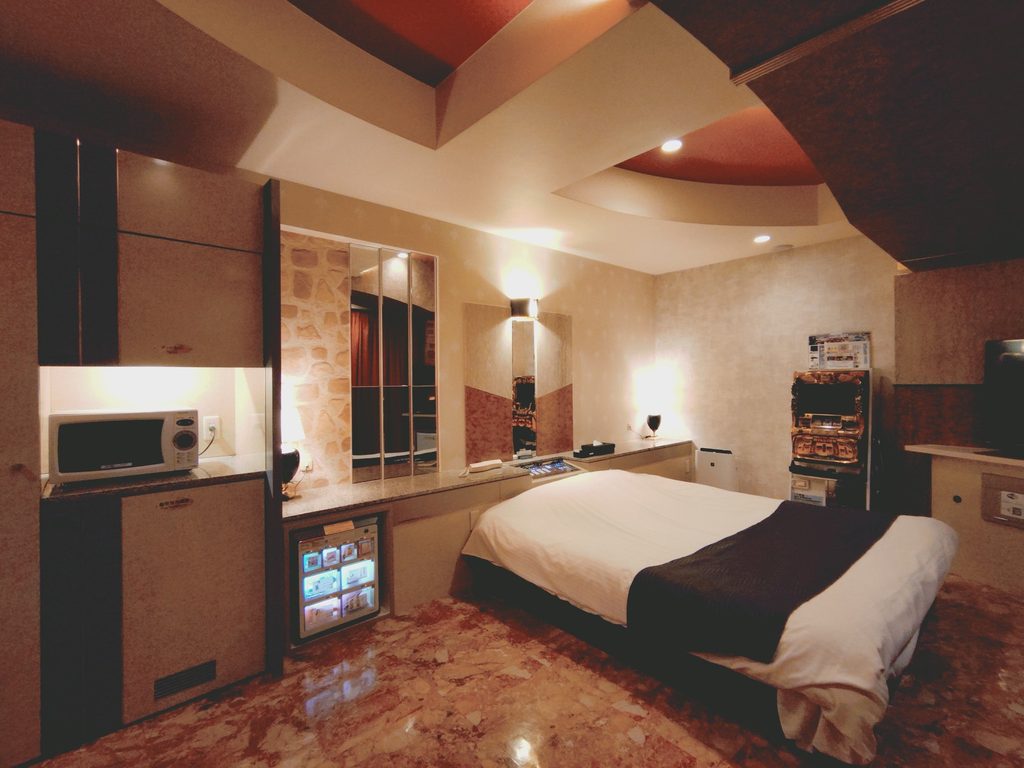
On September 14, Japanese TV personality Takei Sō posted a photo from a work trip with a fairly simple complaint: he had booked a business hotel and apparently ended up in what looked suspiciously like a love hotel.
The photo did most of the talking. There were mirrored panels running along the wall, a marble console, a bedside control panel with a numeric keypad, a tissue box on a tray, and, most importantly for anyone actually planning to work, no desk. Takei’s post quickly picked up more than 19,700 likes and hundreds of replies.
What actually makes a love hotel?
The reason this sort of mix-up can happen comes down to the slightly strange way Japan defines a love hotel.
The Act on Control and Improvement of Entertainment Business, nicknamed fūeihō (風営法), which regulates the adult industry, doesn’t actually use the phrase “love hotel.” Instead, it regulates a category of businesses offering lodging or short “rest” stays under specified conditions.
And it really isn’t about what the hotel is “for.” It’s about how the physical space is set up. A property can fall into this category if it has certain combinations of facilities, layouts, or equipment. These include a small lobby, a screened entrance, a front desk designed to prevent face-to-face contact, or a system that lets guests reach their rooms without meeting staff.
Then there are the more obvious clues: a powered rotating or vibrating bed, a large mirror positioned to reflect someone lying down, adult vending machines, or payment equipment that allows guests to pay without facing an employee. Even just one room containing one of the above-mentioned fixtures can be enough to push the hotel into that category.
If you’re interested in love hotels specifically, we talk a lot more about them in our guide to Tokyo nightlife. Find out how they work and which ones in Tokyo you can visit for a unique experience.
How love hotels masquerade as regular hotels
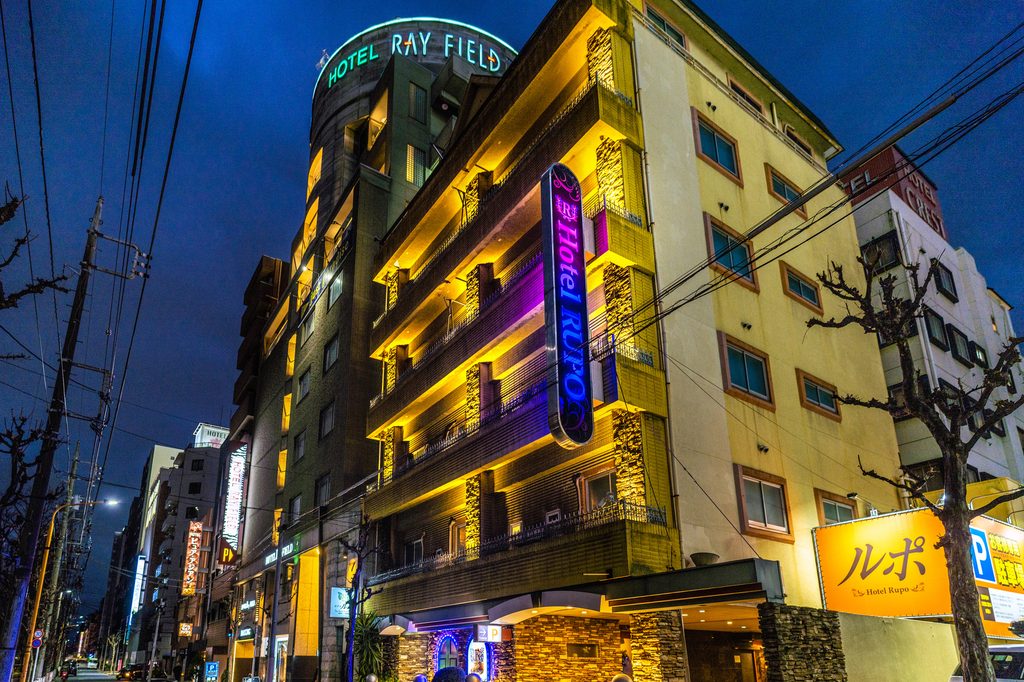
Plenty of hotels that the public would describe as love hotels operate under the Hotel Business Act, or ryokan-gyōhō (旅館業法), rather than as registered love hotels. A former love hotel can also be converted into a conventional hotel and still keep some of that visual je ne sais quoi that’s so instantly recognizable.
At least one commenter on Takei’s viral post suggested that was the case there. That’s just speculation, though; Takei never mentioned which hotel he was staying at, so there’s no way to verify.
If you think about it, it’s easy to see why. The 1985 revision of the fūeihō made opening a registered love hotel more difficult. So, some operators decided to skirt around it by building or registering properties as ordinary business hotels and modifying them afterward. These became known as gisō rabuhoteru (偽装ラブホテル), or “disguised love hotels.”
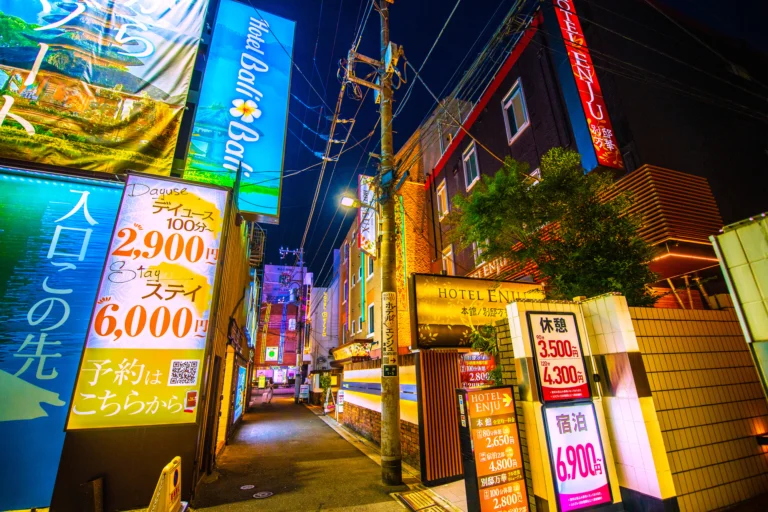
You’ll find some of these on foreign booking sites. On Booking.com, for example, you can book the popular Shinjuku hotel Bali An, which is unmistakably a love hotel. That doesn’t make it bad, of course. In fact, it comes with numerous perks, including snacks and drinks in the lobby, entertainment options such as karaoke and billiards rooms, and spacious rooms that can sleep up to 10.
How former love hotels become ordinary hotels
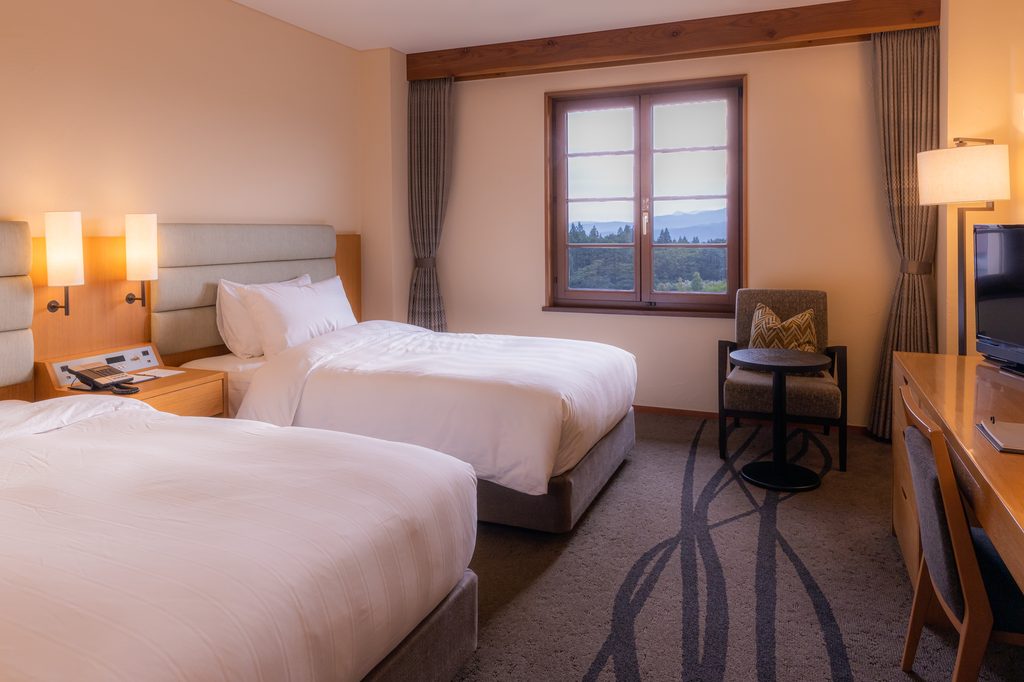
The government later pushed in the opposite direction, encouraging love hotels to convert into ordinary accommodation. In April 2016, amid concerns about Japan’s hotel room shortage ahead of the Tokyo Olympics, the government encouraged government-affiliated lenders to respond favorably to financing applications from love hotels converting into general hotels.
There was a practical reason for the push. Business and city hotels reported occupancy rates of around 70–80%, while love hotels averaged roughly 40% on weekdays. Conversions could turn underused properties into accommodation for tourists and business travelers.
The booking industry further blurred things. Almex, the company behind the HappyHotel portal, partnered with Rakuten Travel in 2017 to bring love hotels onto a mainstream Japanese online travel agency. LINE Travel followed, while Expedia and Booking.com had already been taking bookings from the sector.
New measures further blurred the line between regular and love hotels
Then came another important change: check-in. A 2018 revision to the Hotel Business Act allowed hotels to operate without a traditional staffed front desk under certain conditions, including measures for emergency response and identification.
On April 1, 2025, revised operating standards went further, allowing automated check-in systems that match identification against booking information.
That creates a pretty funny overlap. A feature that’s always been associated with love hotels (i.e., checking in without speaking face-to-face with staff) can now be found in pretty much any hotel. Perfect for introverts and those wary of discrimination.
Price gap can make love hotels seem the more attractive option
There’s also a financial reason travelers might find themselves tempted by a less-than-usual hotel: business hotel prices have gone way up. HotelBank’s data put the national average daily rate for business hotels at ¥14,860 (~$95) in July 2026, with Kyoto and Tokyo considerably higher. That’s a contrast to 2019, when the national average was around ¥11,000 (~$70).
Love hotels, meanwhile, can offer more space for less money. Japanese booking site Couples even has a category for solo business use, highlighting large rooms, spacious baths, Wi-Fi, breakfast, massage chairs, and corporate-name receipts.
Sure, some (like Takei) might be put off by the mirror placement in the room, but there are plenty of travelers who would willingly accept it for the accompanying amenities and affordable price.
How to avoid the surprise
The thing is, while some might be okay with it, there are plenty of reasons not to book a love hotel. The biggest one, especially for families, is that registered love hotels can’t admit anyone under 18.
Others might simply be embarrassed by the idea of staying at one, particularly if they have any nosy relatives that might comment on it. Or, alternatively, if you’re booking for a business trip and need a desk, a love hotel might be lacking.
So, just as with navigating nightlife districts, if you want to avoid accidentally booking a love hotel, there are a few things to look out for. First, a kyūkei (休憩), or “rest,” rate. An hourly or short-stay price is one of the clearest signs of a love hotel.
Room photos are another dead giveaway: mirrored walls, oversized baths, elaborate bedside controls, and giant screens. This is especially true if all these features are present despite being listed as a business hotel. And if a supposedly business-oriented room has no desk, that is probably worth thinking about before clicking “book.”
But just like how capsule hotels might be a great option depending on your needs, booking a love hotel isn’t automatically a bad thing. For solo adults, the idea of bigger rooms, bigger baths, and lower prices presents a tempting offer. And there are plenty of other Japanese travelers who already use them for work trips.
Want more tips on how to prepare for your vacation to Japan? Our free five-day travel planner helps you with everything, including what to pack, where to stay, and what to do once you get settled in.
Keep reading


Sources
「仕事の前乗りでビジネスホテルを予約したら完全にラブホで沈」という投稿に様々な反応が集まる…部屋やお風呂が広くて激安、一方で親子で泊まる時は注意して検索したい Togetter
武井壮、予想外のラブホ泊を報告 ネット爆笑「ほんとに?」「落ち着かなそう」「改装かな」 ENCOUNT
令和7年における風俗営業等の現状と風俗関係事犯等の取締り状況について 警察庁生活安全局保安課
「ラブホテル」「普通のホテル」何が違う? 風営法と警察通達による“意外な判断基準”とは 弁護士JPニュース
ラブホテル等(店舗型性風俗特殊営業4号)の営業開始の届出 千葉風俗営業許可取得代行センター
風営法が適用されるラブホテルとは つちはし行政書士事務所
偽装ラブホテル ウィキペディア日本語版
ラブホテル ウィキペディア日本語版
政府の大号令で進む「ラブホテル改造計画」 現代ビジネス(講談社)
楽天トラベル、ラブホテルを掲載へ。訪日客増加で Airstair
エクスペディア、ラブホテルなど「レジャーホテル」の掲載拡充へ、訪日外国人向けサイトと提携 トラベルボイス
旅館業法とは?2026年最新版の要点と「1室営業解禁」の影響を新規開業554軒データで解説 HotelBank
ビジネスホテル相場は1泊いくら?2026年全国ADR実測と安い県 HotelBank
ラブホテルが訪日外国人に人気だが……「フロントの窓が小さすぎて困惑」問題 文春オンライン
全国のビジネス利用ができるラブホテル カップルズ