
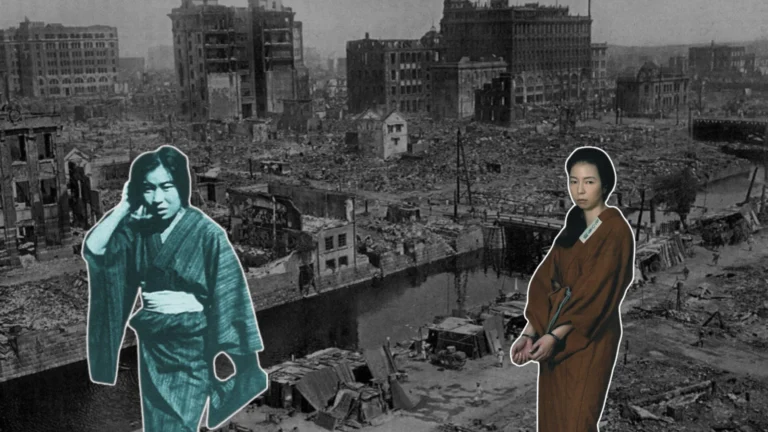
It’s never safe to pit yourself against the power of the state. Even less so when the state deifies its leader as a living god.
That’s exactly what Kaneko Fumiko (1903-1926) did. Kaneko was born so far outside of Japan’s system that her birth officially didn’t even exist. After enduring years of brutalization, she spent the remainder of her life cursing and defying Japan’s imperial system. She hated the emperor so much that she spat his offer of clemency back in his face.
Now, 100 years after Kaneko’s death, a new book and film take an unvarnished look at her life, including her own self-admitted flaws. Biographers are also taking a renewed look at her death, and asking: Did Kaneko choose to die? And why?
Mukoseki: Born but not born
Kaneko Fumiko was born in Yokohama in 1903, near the end of Japan’s Meiji Era. She would come of age during the Taishō Era (1912-1926); in fact, she would end her life the same year that the era ended.
The Taishō Era was one of rapid modernization and continued Westernization, even as the fist of Imperial rule tightened further. It would see the country embrace Western fashion and music, such as jazz. Ginza became Tokyo’s center of flashy wealth. The “modern girl” became a flashpoint for debate among feminists, while the cafe waitress would help inspire the maid and concept cafes of the late 20th century.
Kaneko Fumiko would not become a modern girl. In fact, legally, she wasn’t born at all.
Kaneko’s birth parents never filed her birth registration, so Kaneko never appears on their family register (戸籍; koseki). That made her “mukoseki” – an unregistered individual.
Japan implemented the modern family registry in 1872 as a way to track needed demographic information about its people to help it build economically and ward off colonization from the West. By the time Kaneko was born, being mukoseki was more than a mere inconvenience.
Kaneko Fumiko ended up slipping through the cracks due to her parents’ irregular relationship. Her father, Saeki Bun’ichi, was a laborer who moved from Hiroshima to Yamanashi to mine tungsten. Her mother, Kiku, was a local farmer’s daughter. She and Saeki eloped but never formally registered their marriage – or their daughter Fumiko’s birth.
Kaneko’s grandmother had to explain to her that she couldn’t go to school like other kids because her parents failed to register her. In her memoir What Made Me This Way (何が私をこうさせたか), she recalls her grandmother telling her this meant she was “born, but not born.” The lifelong alienation that flowed from her precarious status would fuel her bitterness towards what she regarded as a fundamentally corrupt system.
How the Korean occupation shaped Kaneko Fumiko’s anarchism
Fumiko had a rough childhood. Her father left when she was young, and her mother moved between lovers.
But it was at age nine that Kaneko began suffering the worst abuse in occupied Korea. It was this experience above all others – both experiencing and witnessing massive oppression – that would fuel her political beliefs.
But to understand what Kaneko’s family did to her, we first have to step back and understand what Japan did to Korea.
Japan had had colonial aspirations on Korea for years. The Imperial government explicitly sought to dominate and colonize Asia in order not only to make itself a world power, but to protect itself beyond its borders. Meiji strategist Yamagata Aritomo repeatedly referred to Korea as “a dagger pointed at the heart of Japan.”
Japan made its initial move in 1876, using the Treaty of Ganghwa to force Korea to open itself to Japan (just as, ironically, America had forced Japan to open up to the West). It made further gains during the First Sino-Japanese War of 1894-95, pushing China out of Korea.
In 1904-1905, Japan emerged victorious from the Russo-Japanese War. The 1905 Eulsa Treaty made Korea a protectorate of Japan under the supervision of a Resident-General. Voices inside Japan, such as Black Dragon Society leader Uchida Ryōhei, called for the complete annexation of the country.
In 1910, after the 1909 assassination of Resident-General Itō Hirobumi led to the Japan-Korea Annexation Treaty, which subjugated Korea as a colony. Japan would spend the next several decades until the end of World War II attempting to wipe out Korean culture and make Korea Japanese.
Abused by a family of colonial oppressors
Kaneko was sent to live with her paternal grandmother’s family, the Iwashita, in Korea in 1912. The family were Japanese settlers in Korea, profiting off of stolen farmland and using Koreans for their labor. In the estimation of Yasumoto Takako, a researcher who’s written a book on Kaneko’s life, Fumiko’s grandmother viewed Koreans as little more than slaves.
The family treated Kaneko little better than they treated their workers. She later wrote that she was subjected to frequent beatings.
The abuse was so horrid that Kaneko nearly gave up. At her lowest point, she went to a riverbank intending to drown herself.
But she couldn’t do it. She wrote that she realized in that moment that “the world still holds countless things worth loving.”
The spark of rebellion: The March 1st Movement
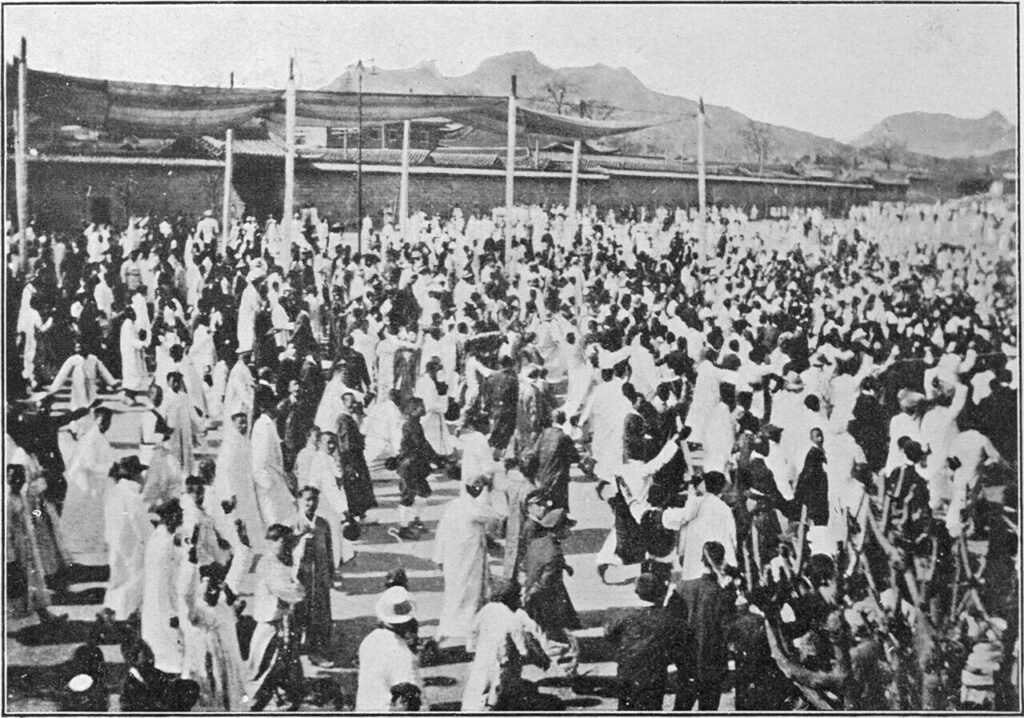
On March 1st, 1919, Koreans rose up against their oppressors. The March 1st Movement was an uprising of Koreans (and, worldwide, of the Korean disapora) against the Japanese occupation.
Protests roiled Korea, with between 1,500 and 1,800 protests totalling between 0.8 and 2 million participants. At the time, Korea had 16 to 17 million people. While the protests were largely peaceful, Japan suppressed them violently, killing an estimated 7,509 people by Korean nationalist counts.
The resistance left a lasting impression on Kaneko. She wrote that she would climb to a hilltop, where she could see the local gendarmerie, and watch Koreans shout “Daehan Dongnip Manse!” (“Long live Korean independence”).
“when I think of the independence movement the Korean people were carrying out, an emotion welled up in my chest,” she wrote. “I couldn’t dismiss their protest as other people’s business.”
Kaneko could also sympathize with the oppressed Koreans in a way few others could. After all, she herself was an abused, unregistered Japanese girl whom even her own family treated as a non-person.
Question: do you like UJ's independent coverage of Japan? Our writers are supported by our members. Join Unseen Japan Insider to get bonus content every week, an ad-free website, and access to our large and growing Insider archive.If you love what we do, help us pay our writers to do more of it by joining Insider. You'll get bonus content every week, an ad-free website, and access to our large and growing Insider archive.
Pak Yeol and the Futeisha
In 1920, at age 17, Kaneko made her way back to Japan. She delivered newspapers while attending co-ed private cram schools. During this time, she started associating with local socialists, and was drawn to the writings of various anarchists and the Russian Narodniks.
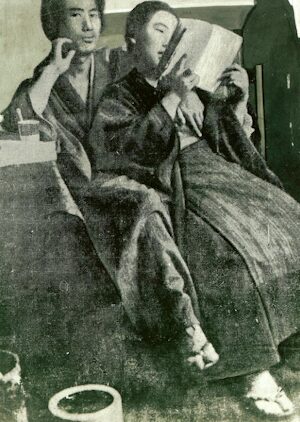
Two years later, she met Korean anarchist Pak Yeol. Pak, a Korean anarchist, moved to Tokyo in October 1919 in the wake of the March 1st Movement. They became common-law partners that May, although Kaneko described their bond as more ideological than romantic.
The two would consummate their relationship by forming an anarchist group, the Futeisha (不逞社), an outgrowth of Pak’s Black Wave Society (黒濤会, Kokutōkai). The group’s name was a pun on the insult 不逞鮮人 (futei-senjin), “insolent Koreans.”
Kaneko wrote for the group’s magazine, originally called Futoi Senjin (太い鮮人). Both she and Pak, however, had already drifted away from anarchism; their goals at this time were closer to nihilism. Kaneko herself described the group as “a gathering of people who embrace the nihilism and anarchism of rebellion against power.”
Kaneko Fumiko, in other words, was intent on burning down the system. Authorities accused her of attempting to do just that.
The Kanto Massacre, and charges of high treason
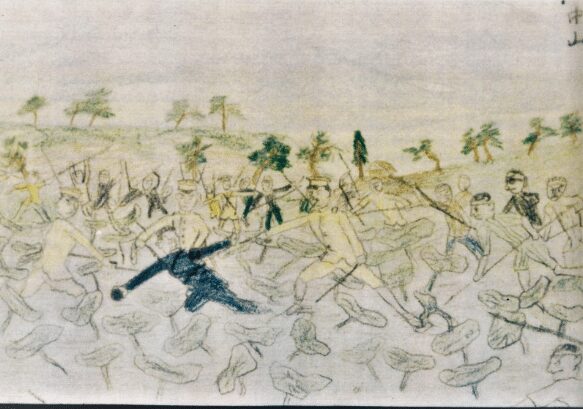
In 1923, the Great Kanto Earthquake wrought devastation in Tokyo and the surrounding region. In the weeks that followed, disinformation campaigns accused Koreans of poisoning wells and committing arson. The fervor led to the Kanto Massacre, which claimed thousands of Korean lives.
Kaneko and Pak were swept up in this wave of arrests. Authorities charged them under Article 73, capital high treason, with attempting to murder Japan’s Crown Prince. This was Hirohito, the future Emperor Shōwa – the man who would ironically, renounce his godhood and bring an official end to the Empire of Japan.
The evidence for these charges was spurious at best. Authorities said the two intended to kill Hirohito during the procession for his imperial wedding, and that Pak tried to source the bombs through a militant Korean group.
The thing is, there was never any physical evidence. No bombs, no devices, no attack. The only thing close to physical evidence was a detective describing Pak stabbing a photo of the Emperor Taishō with a knife.
Whatever the truth was, Kaneko and Pak embraced the charges in court, using their trial as a political platform. “The Emperor is sick,” Kaneko testified, referring to the Emperor’s ill health, “so we aimed for the young master.”
Historians who’ve studied the trial say the charges were an overreach fostered by the anti-Korean fervor that gripped Japan in the aftermath of the earthquake. The two may have had intent and aspirations, but they didn’t seem to have anything amounting to a plan.
Kaneko Fumiko throws the Emperor’s clemency in his face
That didn’t matter to the court at the time. On March 25, 1926, the Supreme Court convicted the pair of high treason and sentenced Kaneko Fumiko and Pak Yeol to death.
While in prison, Kaneko wrote her memoir, “What Made Me This Way.” It opens with her reflecting on the wound of being an unregistered person in Japan, talks about periods of starvation, and how socialist and anarchist thought influenced her thinking. She had high praise especially for the German philosopher Max Stirner, whose concept of “the Unique One” she embraced, and the Russian novelist Artsybashev.
On April 5th, 1926, after she’d finished her memoir, Japan’s imperial government granted both her and Pak clemency. Their death sentences would be commuted to life imprisonment. At this time, Hirohito was running the government as regent. In other words, the pardon came from the very man they were accused of trying to kill.
Pak Yeol accepted the deal. He would be released in 1945 by the Occupation authorities after serving one of Japan’s longest terms as a political prisoner. He headed up the first ever Korean Residents’ Union of Japan before moving back to Korea. He was captured by the North during the Korean War and lived there until January 17th, 1974, when he died at age 71.
Kaneko, however, refused to accept the clemency. While contemporary press reported that both she and Pak gratefully accepted it, in reality, she tore the document to pieces. She repeatedly refused to bow to pressure from prison officials to show gratitude to the Emperor for sparing her life.
Kaneko Fumiko died in prison by hanging on July 23rd, 1926, at the age of 23.
Historians have debated the nature of Kaneko’s death ever since. In her book, Yasumoto concludes that Kaneko took her own life, not out of despair, but as an act of ideological self-completion, the only way she could stay true to herself. Yasumoto’s book examines her life unflinchingly, looking not just at her positive traits, but at Kaneko’s “vanity” and superiority complex, especially towards other women.
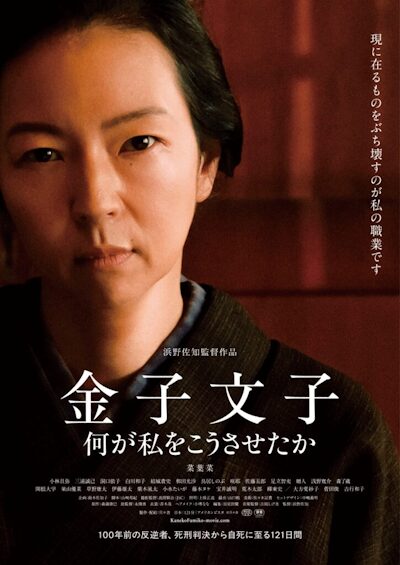
A February 2026 film, Kaneko Fumiko, looks at the last 121 days of her life from her sentencing to her death and is structured around eight surviving tanka poems she wrote. Coincidentally (or maybe not), the film runs exactly 121 minutes.
One of Kaneko Fumiko’s tanka, says Yasumoto, leaves behind a powerful message. It signals her will to fight on at the same time, it seems, as she resolved to die:
指に絡み/名もなき小草/つと抜けば/かすかに泣きぬ/「我生きたし」と
Clinging to my fingers, a nameless blade of grass; when I pluck it, it faintly weeps, “I want to live.”
Keep reading


Sources
「無籍者」の少女が国家にあらがうまで 反逆の思想をひもとく 毎日新聞(石川将来)
金子文子 Wikipedia(日本語)
朴烈事件(1923-26年の大逆事件・不逞社) Wikipedia(日本語)
朴烈(パク・ヨル、1902-1974) Wikipedia(日本語)
金子文子 何が私をこうさせたか(2026年・浜野佐知監督) 映画.com
金子文子と朴烈(パクヨル)/Anarchist from Colony(2017年) 映画.com
何が私をこうさせたか 獄中手記(岩波文庫) 岩波書店
「死刑の恩赦を拒み23歳で獄死」金子文子の虐待・無籍者・貧困の人生 草の実堂
何が私をこうさせたか(獄中手記・全文/青空文庫) 青空文庫
金子文子 反逆の思想:「人間の絶対平等」を求めて(安元隆子・2026年3月6日刊) 皓星社
金子文子の朝鮮時代 ―戸籍を得たことで知った日本と朝鮮―(安元隆子、2021年) 日本大学国際関係学部