
If you started planning your trip to Japan before July 2026, that trip may end up costing a little more than you expected.
On July 1, Japan rolled out a pair of fee increases for those crossing its borders: the international departure tax and visa fees. That departure tax tripled, and the visa one jumped fivefold. However, for its own citizens, Japan reduced passport fees.
No, it’s not because of xenophobia. Rather, it’s a strategy to raise money to manage overtourism, which is straining popular destinations, without discouraging travel altogether.
The departure tax: what it is and what it costs
Japan’s International Tourist Tax, better known as the departure tax, increased from ¥1,000 (USD $6) to ¥3,000 (USD $18) per person on July 1, 2026.
The tax, officially called the kokusai kankō ryokakuzei (国際観光旅客税), is charged whenever someone leaves Japan by international flight or cruise ship. Airlines and shipping companies collect it as part of the ticket price, so most travelers never see a separate bill.
At least anyone who bought an international ticket on or before June 30, 2026, only had to pay the old ¥1,000 rate, even if their departure is set after July 1. Only tickets purchased from July onward are subject to the full ¥3,000 charge. And, unlike visa fees, the departure tax applies to everyone leaving Japan, including Japanese citizens.
A notable bump to annual revenue
That last little fact has prompted some complaints online from Japanese travelers. They question why they’re paying for measures largely aimed at managing inbound tourism.
However, there’s a reason for it: the tax is charged on the act of departure, not on the traveler’s nationality, so citizens and visitors pay the same ¥3,000. International aviation norms discourage charging travelers different rates by nationality, even though a handful of countries still impose exit taxes on their own citizens alone.
Because of the number of travelers going through Japan, the government expects annual revenue to rise from roughly ¥50 billion (USD $310 million) to around ¥130 billion (USD $806 million). The government plans to use that money for overtourism countermeasures, improvements to immigration facilities, better safety measures for travelers, and efforts to encourage tourists to visit regional destinations instead of concentrating in hotspots like Tokyo, Kyoto, and Osaka.
With inbound tourism continuing to set new records, officials argue that the additional funding is necessary to keep Japan’s tourism industry sustainable.
A fivefold increase in visa fees? Not as unreasonable as it sounds
Revenue won’t just come from that, though. From July 1, a standard single-entry visa rose from about ¥3,000 to ¥15,000 (USD $93). Multiple-entry visas doubled from ¥6,000 (USD $37) to ¥30,000 (USD $186).
According to the Foreign Ministry, this is the first revision to Japan’s visa fees in almost 50 years. So, it makes sense why the cost went up so much. It’s not just a random upcharge; it’s reflecting half a century of inflation and major changes in exchange rates. The old fees just didn’t cover the bills anymore.
With the increase, Japan’s visa fees are now about the same as those charged by other first-world countries. A comparable short-stay visa costs roughly $185 in the United States and about £135 (USD $180) in the United Kingdom.
The thing is, this increase won’t even affect all overseas travelers. Japan has visa-waiver agreements with dozens of countries (the U.S., the U.K., the European Union, South Korea, etc.), so many people don’t have to worry about applying for a visa (or paying the visa fee) at all.
The travelers most affected will be those coming from China. Because Chinese nationals generally can’t enter Japan visa-free, they account for the overwhelming majority of visa applicants. Of the nearly eight million visas Japan issued in 2025, about 73% went to Chinese nationals. Japan’s busiest visa-processing posts were its consulates in Shanghai and Guangzhou and its embassy in Beijing.
JESTA: jumping through loopholes
It’s important to keep in mind what these fee increases are ultimately for, though: managing overtourism. To that end, making too many exceptions hurts that goal. So, Japan started a new system called JESTA in March of this year, similar to the Electronic System for Travel Authorization (ESTA) in the U.S.
JESTA is another administrative step added to the customs process. It requires travelers from visa-waiver countries to obtain online authorization before traveling to Japan. The authorization carries its own administrative fee. (And that’s how they getcha.)
Because JESTA is an immigration screening process rather than a departure tax or visa fee, it allows Japan to collect revenue specifically from foreign visitors without running afoul of international rules requiring equal treatment of departure charges.
It also provides a loophole for Japan to collect fees from travelers coming from visa-waiver countries. They still won’t be affected by the visa fee increase, but they will have to deal with JESTA.
Passport fees for Japanese nationals just got cheaper
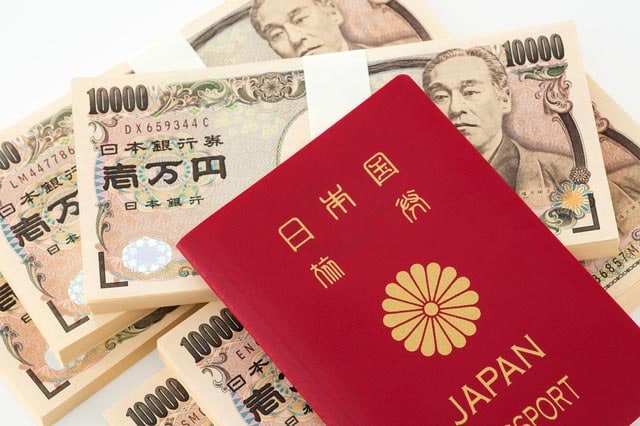
Japanese citizens can avoid costs in another way: lower fees when applying for a 10-year passport. Beginning July 1, it went down to ¥8,900 (USD $55) for online applicants, a massive reduction of ¥7,000 (USD $43). At the same time, the five-year passport option for adults was straight-up discontinued.
The timing creates an interesting contrast. On the very day Japan increased the cost of entry for foreigners, it lowered one of the costs associated with leaving for its own citizens.
The question is, will these changes discourage inbound tourism? Honestly, probably not. Even with higher fees, Japan is still relatively cheap because the yen is so weak right now, hovering around ¥160 per U.S. dollar. Thanks to that, hotel rooms, meals, shopping, and transportation remain perfectly affordable despite the new fees for many overseas visitors.
Taken together, Japan is making international travel to the country modestly more expensive while generating more revenue to manage record-breaking visitor numbers. Whether those added costs are enough to slow demand is another matter entirely, but for now, the government appears willing to bet that Japan remains a bargain.
Keep reading


Sources
訪日外国人のビザ手数料値上げ、7月1日から5倍、1回有効は1万5000円、2025年発給は中国が73% トラベルボイス (Travel Voice)
外国人ビザ手数料を値上げ 48年ぶり、7月以降 時事ドットコム (Jiji.com)
外国人訪日ビザ手数料5倍、米欧並み価格に値上げ 中国人向けが7割 日本経済新聞 (Nikkei)
出国税3000円「インバウンド対策になぜ日本人が払うの?」国際ルールの壁と、動き出した新制度JESTA トラベル Watch
出国税の引き上げは26年7月 政府・与党方針、1000円から3000円に 日本経済新聞 (Nikkei)
7月から旅客税3,000円に引き上げ方針 オーバーツーリズム対策などの財源確保へ 訪日ラボ (Honichi Lab)
7月1日から 外国人向け査証(ビザ)は5倍 値上げ 旅券(パスポート)手数料は減額 外務省 NPO いけぶくろねっと (Ikebukuro Net)
国際観光旅客税の税率が3,000円に引き上げられます(令和8年7月1日以降) 観光庁 (Japan Tourism Agency)