
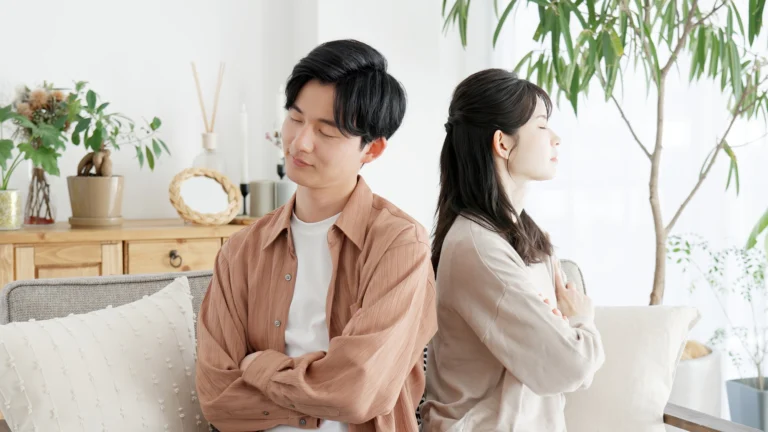
In Japan, there’s a term for couples who stay legally married despite having little or no emotional or physical relationship: kamen fūfu (仮面夫婦).
These “masquerade couples” appear to be a normal husband and wife in public. However, behind closed doors, they live largely separate lives, sharing a home and not much else. In other countries, such couples might be encouraged to exit. In Japan, they’re encouraged to endure.
Fractured homes, kept intact

This concept has been around for a while, but it was recently spotlighted on a July 4th segment on ABEMA Prime. It showed several couples whose marriages had pretty much ended without either party filing for divorce.
One example was a husband who said he and his wife hadn’t had a genuine conversation in years. After a blow-up fight where the wife accused him of not doing enough around the house, their relationship fractured.
Now, they talk exclusively through LINE, Japan’s most popular messaging app. However, her replies are mainly shio taiō (塩対応), “salty responses,” a phrase describing a cold, minimal, or dismissive tone.
According to the husband, the emotional distance extends beyond just the two of them. The wife is close to their daughter, and since she has no problem speaking badly of him to her, he now has a strained relationship with his child.
To clarify, kamen fūfu isn’t simply an unhappy marriage. It describes a couple who share a home, attend family events together, and maintain appearances for relatives, coworkers, and neighbors. However, internally, they live almost entirely separate lives. In every meaningful sense, they are masquerading as a happily married couple when the reality is anything but.
Many reader comments connected the idea to another increasingly familiar phrase: katei-nai bekkyo (家庭内別居), or “in-house separation.” Rather than moving out, spouses simply divide their lives under the same roof. They eat separately, sleep separately, and interact only when necessary.
This isn’t an unfamiliar concept in other countries. The United States, for example, has phrases such as “loveless marriages” and “staying together for the kids.”
The difference is that, in countries like the US, the social tendency is to encourage unhappy couples to call it quits. Japan’s social, economic, and legal structures push the same couples to remain trapped. That’s one reason Japan’s overall divorce rate (~1.7 per 1,000) sits well below the US (~2.4).
In other words, couples are encouraged to put on a “mask” (仮面) and put on a good show for society.
One in five couples encouraged to endure, not exit
The numbers suggest that kamen fūfu are far from unusual.
Links Inc. conducted a survey with 3,000 married Japanese adults in 2025. One in five respondents said they consider themselves part of a masquerading couple.
Being young didn’t save people from this problem, either. While couples in their 40s had the highest rate of masquerading couples, around 14% of those in their 20s also identified with that label.
The main reasons that couples cited for their emotional separation varied. They ranged from small things that built up over time like poor communication, mismatched lifestyles, or unequal sharing of housework and childcare (like in the example story above); to big things like the birth of children or infidelity.
The survey also asked what should be done to avoid becoming a masquerading couple, and the majority (65.3%) answered, “be considerate of your partner.” Following this suggestion was “communication” and “don’t forget physical intimacy.”
Why stay together? The kids
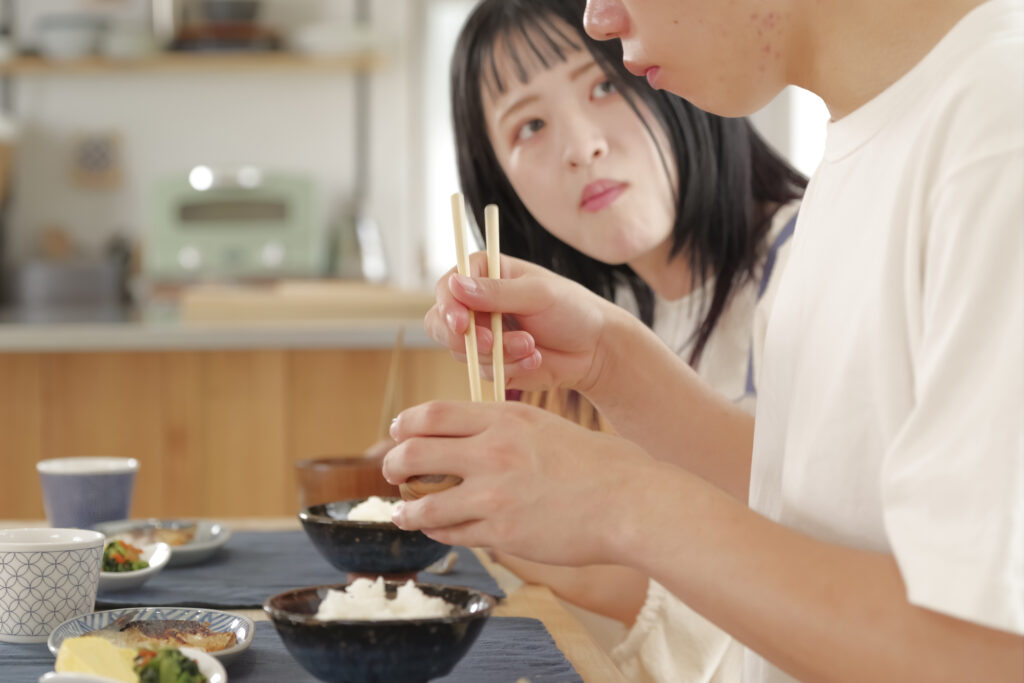
Of the 638 respondents in the Links survey who identified as a masquerading couple, around 86% (roughly 551 people) had children. This led to speculation that couples might avoid divorce for the sake of their kids.
Several other surveys back this up. Many respondents say they’re worried about disrupting family stability or putting their kids through the stress of divorce.
However, from another perspective, having and raising children itself can be a sort of “make or break” in a relationship. Having children introduces a lot of stress. If a couple doesn’t work together to manage that stress, it can expose and worsen the weaknesses in their relationship.
Children were far from the only reason to keep up a marriage, though. Others included financial dependence, not wanting to give up their current lifestyle, and seken-tei (世間体), the Japanese concept of maintaining appearances to avoid social embarrassment. In the latter case, remaining married might feel easier than explaining a divorce to extended family, neighbors, and coworkers.
Question: do you like UJ's independent coverage of Japan? Our writers are supported by our members. Join Unseen Japan Insider to get bonus content every week, an ad-free website, and access to our large and growing Insider archive.If you love what we do, help us pay our writers to do more of it by joining Insider. You'll get bonus content every week, an ad-free website, and access to our large and growing Insider archive.
Legalities of divorce add another layer of complication
Another reason couples stay together is that ending a marriage in Japan isn’t always a simple legal matter. In the US, all 50 states offer “no-fault divorce,” which allows courts to grant a divorce without any breach of marital contract (for example, through cheating, abuse, etc.).
However, this isn’t a universal concept. In Japan, if only one person wants to get divorced and the other doesn’t agree, the court will ask them for a clear reason. “Falling out of love” isn’t enough by itself. There needs to be infidelity, malicious abandonment, severe mental illness, or domestic abuse. In other words, they have to prove the marriage has seriously broken down.
If both parties agree to the divorce, then hey, no problem. But as mentioned, there are plenty of reasons why a person might not agree.
Backlash to the expert advice
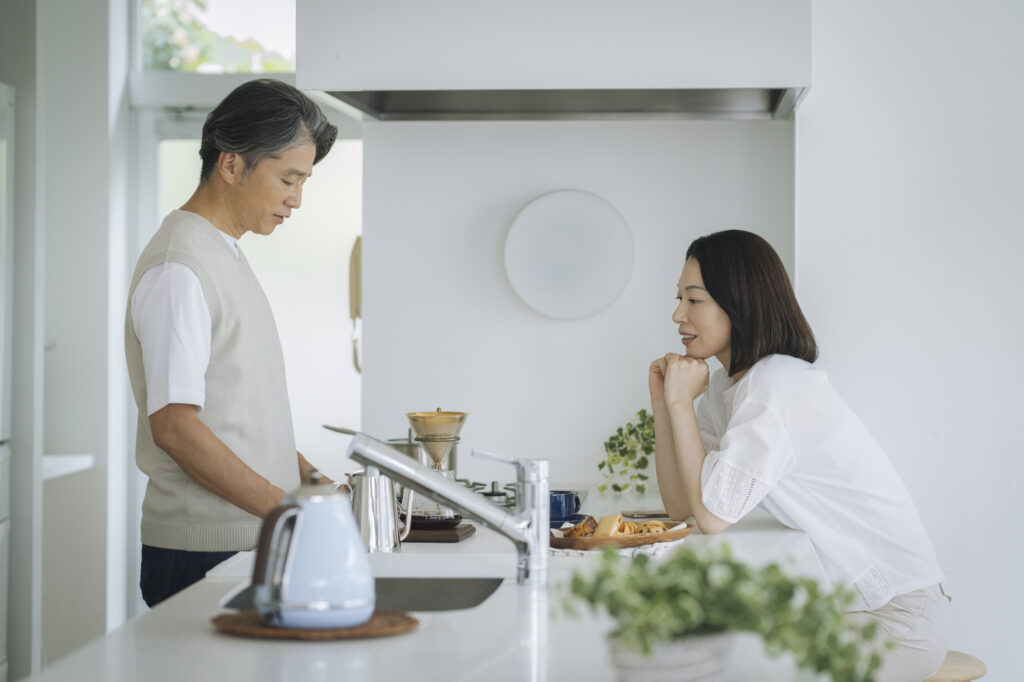
The most controversial part of the ABEMA Prime segment wasn’t actually the real-life kamen fūfu stories. Many people online were upset because their featured expert, Okano, tried to put the burden of “fixing” the relationship on a wife whose husband was ignoring her.
A top comment on Yahoo! News read, “The advice basically amounts to ‘she’s the only one who can change.’ But keep piling up tiny gestures for a man too proud and petty to budge? What wife would do that? It really drives home how much a woman’s own earning power matters.”
Other common responses were suggestions to “just divorce” or to simply keep on as they are, coexisting without complaint and without trying to fix things. Some even talked about how people they knew were in that exact situation, with some saying it felt inevitable.
It’s certainly a sad reality when divorce happens, but even the survey’s results aren’t quite that bleak. After all, 80% of people in marriages don’t consider themselves masquerading. While that doesn’t necessarily mean they’re all happy, we can take some comfort in the fact that the majority of couples find ways to work things out.
Keep reading



Sources
円満にみえて実は不仲…仮面夫婦の実態は?4年前から妻との会話ゼロの男性「LINEでやりとりするも塩対応」 ABEMA TIMES / Livedoor News
【夫婦の現実】“仮面夫婦”は5組に1組──見て見ぬふりの家庭、その実態とは?【既婚者3,000人調査・第1報】 株式会社リンクス (DreamNews press release)
【仮面夫婦】を自認する夫婦は「5組に1組」…既婚男女600人超が明かす「仮面夫婦になった最大のきっかけ」生々しいトップは? オトナンサー (Otonanswer)
【仮面夫婦の深層】22%が“別のパートナーあり”──それでも離婚しない理由は「子ども」だった【第4報】 株式会社リンクス (DreamNews press release)
既婚女性100名のうち「自分たちは仮面夫婦」と答えた人は2割! その理由と原因は?【専門家監修】 Domani (小学館)
子どものいる家庭といない家庭〝仮面夫婦〟の割合が高いのはどっち? @DIME
Divorce in Japan: A Savvy Tokyo Guide Savvy Tokyo
Vital Statistics: Divorces Ministry of Health, Labour and Welfare (MHLW)
FastStats: Marriage and Divorce CDC / National Center for Health Statistics