
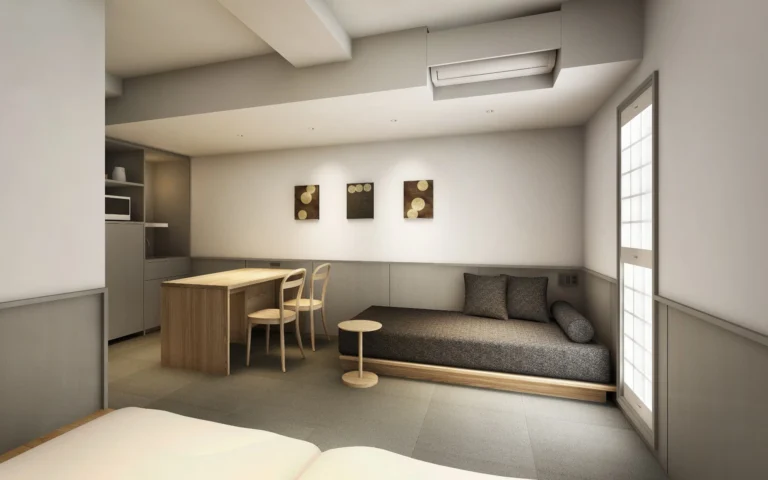
Besides running one of Japan’s most popular home goods retailers, the company behind the MUJI chain also operates hotel chains. Its latest is opening in Kyoto. But the marketing angle – a so-called “anti-tourism” hotel in the middle of Kyoto’s most popular destination – has some raising their eyebrows.
Fifth MUJI BASE is near Kiyomizu-Dera
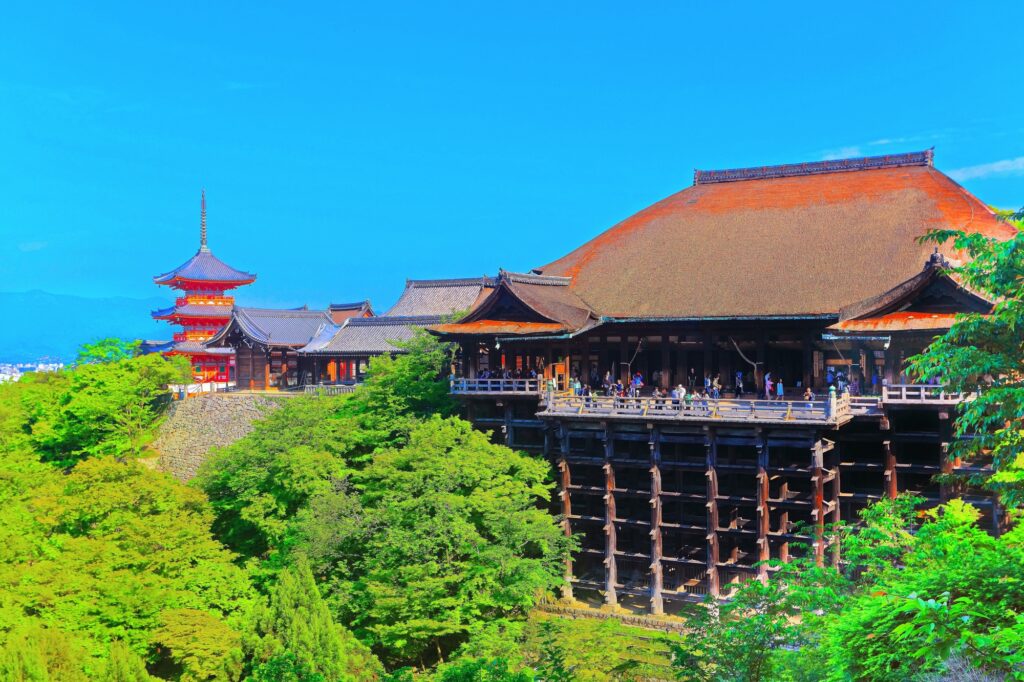
MUJI’s parent company, Ryōhin Keikaku (良品計画), runs two hotel chains. Its first, MUJI HOTEL, focuses on optimized city travel. With the slogan “anti-gorgeous, anti-cheap,” it promises to offer optimized (and affordable) city travel starting at around ¥14,900 ($93) a night. There are only three worldwide: One in Tokyo’s Ginza and two in China (Shenzhen and Beijing).
Its second line, MUJI BASE, focuses on providing regional experiences by renovating dormant regional assets, such as a shuttered school. It previously touted four hotels across Japan.
The latest BASE Hotel is MUJI Kiyomizu in Kyoto’s Higashiyama-ku, a short walk from the famous Kiyomizu-dera Temple known for its spectacular view of Kyoto. For this latest addition, which opened in May, MUJI renovated the former Amenity Hotel Kyoto. It also added several other twists.
First, 90% of the products in all rooms are from the brand’s home products line. While the brand’s name (it literally means “no brand”) implies a plain-jane approach, its product line adheres to an art-directed philosophy curated by famous designers, including original designer Tanaka Ikkō and art director Hara Kenya.
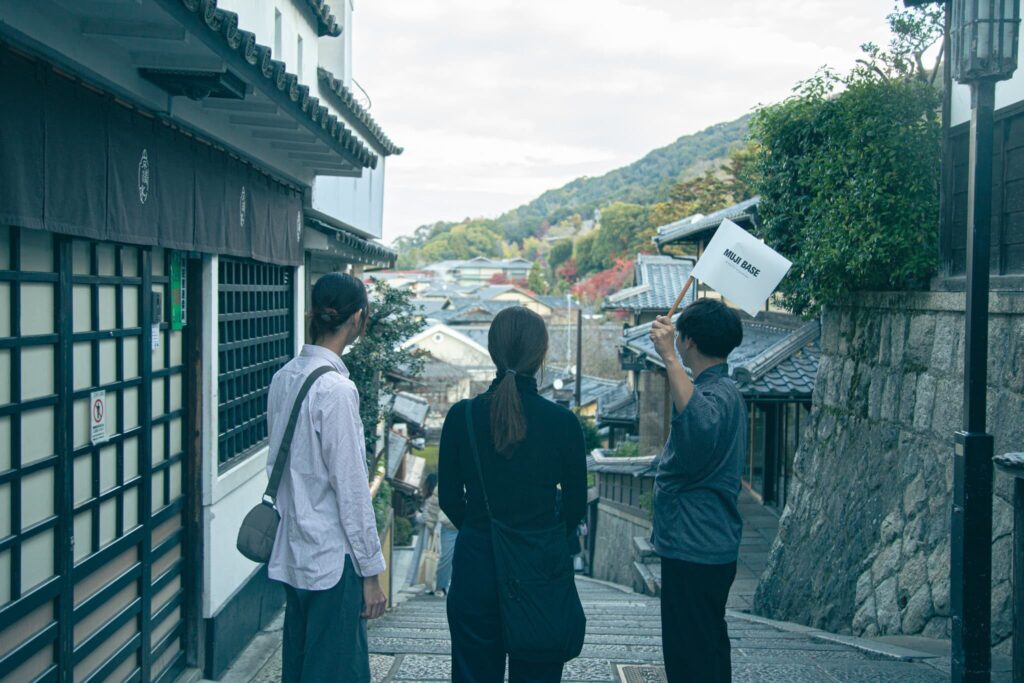
Second, the new hotel offers an “outing kit.” It includes a MUJI water bottle, tote, and a map to nine local neighborhood experiences, including kintsugi (金継ぎ) pottery repair, a tofu shop, and more. The hotel also offers a morning Kiyomizu walk at 5:40 am that goes to Kiyomizu-dera before the crowds arrive. For those who want a full Japan experience, you can also do radio calisthenics (ラジオ体操; rajio taisō).
Finally, there’s the food. Long-established Kyoto roaster Ogawa Coffee occupies space on the 1st floor. It provides breakfast in the Kyoto obanzai (おばんざい) style, featuring a series of frugal side dishes made with seasonal vegetables.
What’s so “anti-tourism” about Kiyomizu?!
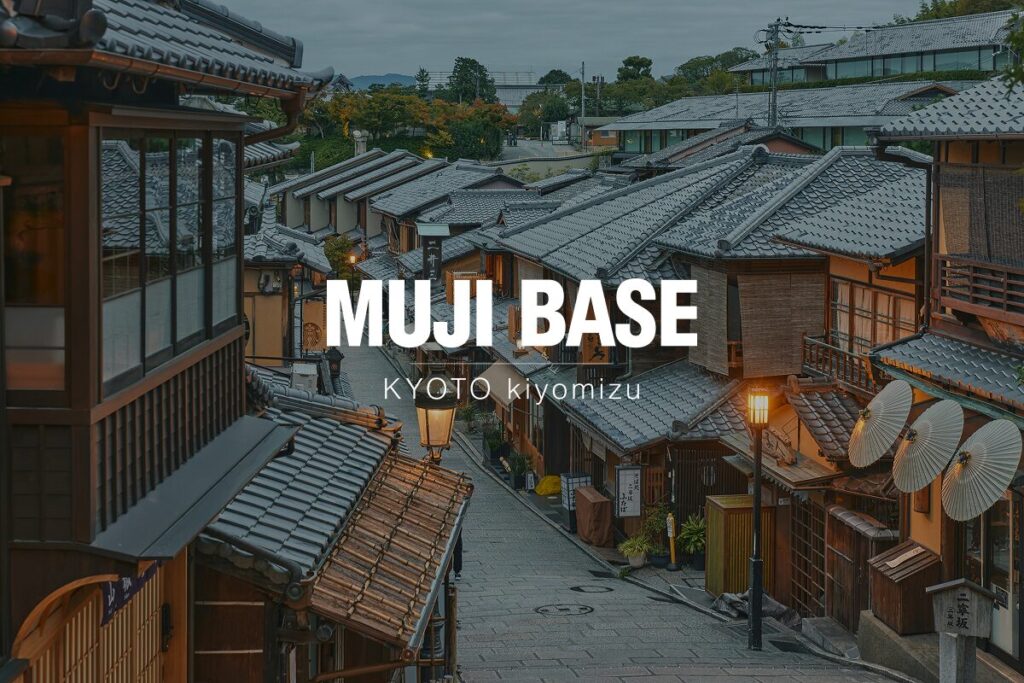
I have to admit that this actually sounds sort of cool. For those who’ve never been to Kyoto before, a visit to Kiyomizu-dera is something you should do at least once. Being at a nearby hotel that also works to connect you to local experiences and cuisine is a step above what most hotels offer.
However, some are questioning how MUJI is marketing its latest foray into the hospitality space.
A recent NIKKEI article, for example, touted the hotel as an “anti-tourism” hotel. This drew scoffs from many Japanese social media commenters. After all, if there’s a location in Japan that typifies “overtourism” right now, it’s Kyoto.
As Japan welcomes over 40 million visitors every year, multiple locations are struggling to accommodate the crowds and the damage they cause to local attractions. The city of Kyoto itself has taken several measures to alleviate transit congestion, such as adding tourist-only buses and raising transit fees for non-residents.
The hotel differs radically from other MUJI BASE concepts, which are in more rural areas. MUJI BASE KAMOGAWA, for example, is in a renovated 100-year-old farmhouse in Chiba Prefecture. MUJI BASE OIKAWA, also in Chiba, is in an old school.
In addition, KAMOGAWA requires a minimum two-night stay to rent out the house and get a truly “local” experience.
A cool experience – or an intrusion on residents?
On a Yahoo! News thread about the hotel, most of the comments took jabs at MUJI’s attempt to paint hotel stays as an “everyday experience.”
“You can’t get the real experience of living somewhere without staying multiple nights,” said one commenter, who said that MUJI should make three-night stays the minimum.
Others said the hotel would just be another intrusion into the daily lives of residents who are already feeling the impact of overtourism.
“This isn’t anti-tourism,” shouted one. “It’s full-on sightseeing. Why here of all places??”
It’s an odd choice indeed. As we reported recently, Japan’s “overtourism” problem is actually a dispersion problem. There are plenty of unique places in the country to visit. The issue is that tourists crowd into just seven of Japan’s 47 prefectures. 25 of the country’s prefectures have no entry on the top 100 list.
If you truly want to help address overtourism, a better idea is to include more remote locations, such as rural mountain towns, on your trip. You can also work with a custom Japan tours provider to design an itinerary that takes you off the beaten path.
Keep reading

Sources
無印良品「アンチ観光」でオーバーツーリズムに一石 京都に宿、売りは日常体験 日経ビジネス
5/20(水) 地域体験型宿泊施設「MUJI BASE KYOTO kiyomizu」オープン 良品計画(公式ニュースリリース)
MUJI BASE KYOTO kiyomizu(公式宿泊ページ) MUJI STAY / 良品計画
京都・清水寺徒歩圏内に無印良品のホテル「MUJI BASE KYOTO kiyomizu」開業。宿泊者限定の地域体験も トラベル Watch
無印、京都・清水寺に宿泊施設「MUJI BASE KYOTO kiyomizu」 Impress Watch
京都・清水に誕生した無印良品のホテル「MUJI BASE」に泊まってみた。全4タイプの客室と館内サービスをまるごと紹介 トラベル Watch
「オーバーツーリズム」対策を京都市が発表 人気観光地だけに停車『特急バス』の導入 関西テレビ放送(カンテレ)