
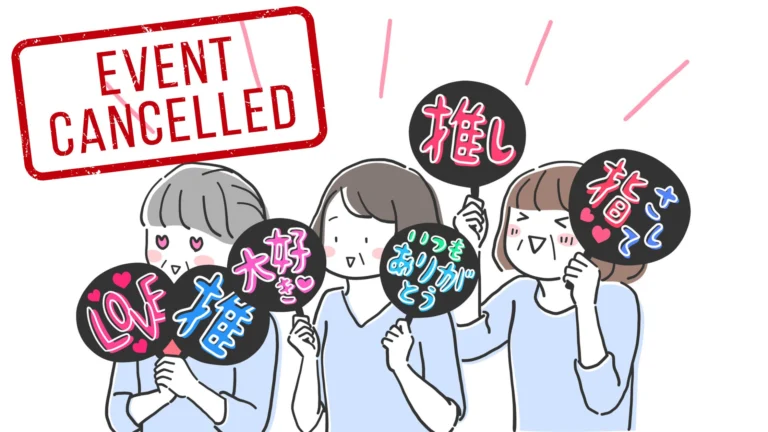
Japan’s oshikatsu (推し活), or “fandom activity,” has become such a major part of everyday life that it now has something few people would have expected a few years ago: its own insurance policy.
It’s not some scammy or super niche company offering it, either. In fact, one of Japan’s biggest credit card companies, JCB, is taking charge. The policy is straight-up called “Oshikatsu Cancellation Insurance” (推し活キャンセル保険), and it’s offered through JCB no Hoken, the company’s insurance service for cardholders.
JCB officially announced the launch on July 7, and the news spread quickly online.
Insurance for fans is no joke
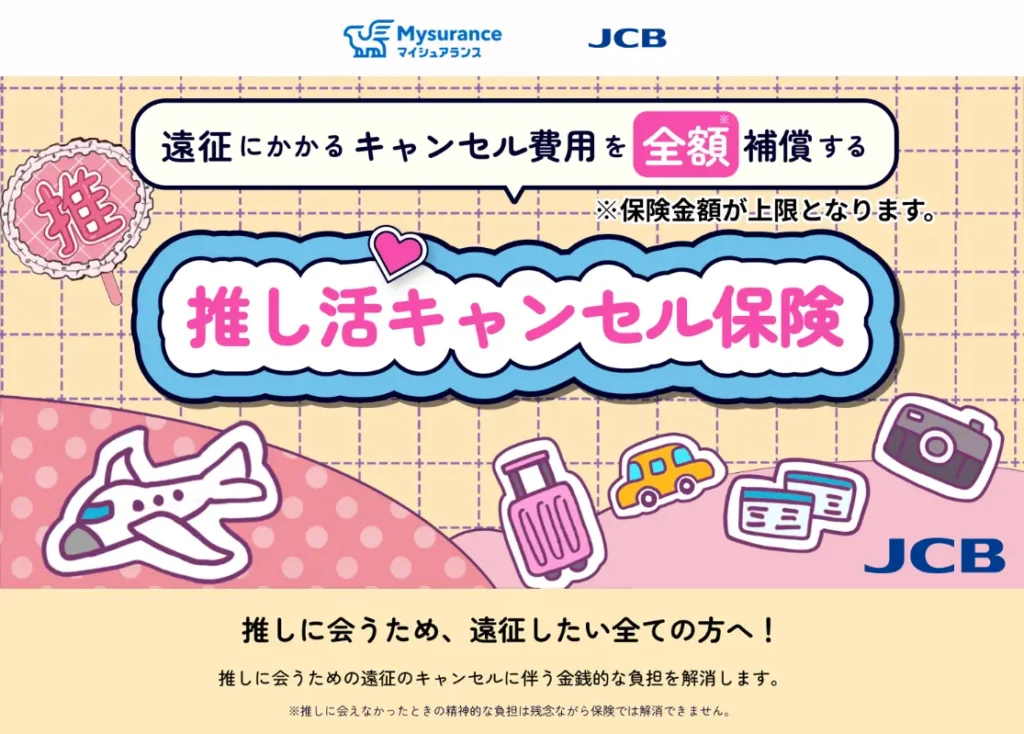
The idea sounds almost funny. People used to mock otaku culture, but now it gets its own insurance? But it makes sense when you think about it. Oshikatsu isn’t just a niche hobby. It’s an industry in which Japanese fans put an immense amount of time, effort, and money.
In Japanese, an oshi is the idol, singer, actor, VTuber, anime character, sports player, or other favorite that someone passionately supports. Oshikatsu refers to all the activities surrounding that support, whether that’s buying merchandise, attending concerts, visiting themed cafés, or traveling across the country for live events.
Those trips, known as ensei (遠征), have become an expected part of fandom culture. Fans regularly board bullet trains, book flights, and reserve hotels just for a single concert or stage performance. But if something goes wrong, those travel costs can quickly disappear.
That’s exactly the problem this insurance is designed to solve.
Where this new oshikatsu insurance came from and what it covers
Interestingly, JCB didn’t create the insurance itself. The product was developed by Mysurance (マイシュアランス), a micro-insurance company backed by Sompo Japan. JCB simply became another sales channel, making the insurance available through its website and smartphone app.
The policy reimburses cancellation fees for transportation and accommodation when fans can’t make their trip. (With some caveats.) Situations that are covered include: concerts or events being cancelled or postponed, flights or trains being significantly delayed or grounded, and the policyholder (or even a close family member!) requiring sudden medical treatment or hospitalization.
However, the insurance does not reimburse the cost of an event ticket itself unless the fan bought it as part of a travel or hotel package. It also doesn’t help fans who might want to cancel travel after losing one of the increasingly competitive ticket lotteries common in Japan, since they never actually bought a ticket in the first place.
Likewise, if an event still takes place but one performer is replaced by someone else, the policy won’t pay out simply because your favorite isn’t appearing.
And it’s affordable, to boot!
The pricing is relatively modest. For a domestic trip worth ¥30,000 (USD $185), the premium is ¥900 (USD $5.50). If the covered circumstances occur, the policy will reimburse cancellation fees up to the insured amount.
International trips cost a little more, but still nothing crazy. A simple overseas plan costs ¥1,360 (USD $8) for a ¥50,000 trip, while a wider coverage option costs ¥2,560 (USD $16).
To qualify for the policy, applicants must be at least 18 years old, purchase the insurance within 14 days of booking their trip, and no later than nine days before departure.
It’s even quite lenient for those who change their mind about insuring their trip. As long as they cancel the policy at least 16 days before the trip without making a claim, the premium is refundable.
Question: do you like UJ's independent coverage of Japan? Our writers are supported by our members. Join Unseen Japan Insider to get bonus content every week, an ad-free website, and access to our large and growing Insider archive.We manage to keep most of our content free thanks to the generosity of our members. Join Unseen Japan Insider and you'll get access to new, exclusive UJ member content weekly, an ad-free website, and access to our large and growing Insider archive.
The research behind the product
Although JCB’s announcement made headlines, the insurance itself isn’t actually that new. Mysurance first launched a dedicated Oshikatsu Cancellation Insurance website in April 2025 in partnership with fan platform Oshicoco.
Before developing the policy, the company surveyed fans who regularly travel for oshikatsu. The results showed that one in five had to cancel a fandom trip at least once before. Among those fans, roughly one-third lost more than ¥30,000 in transportation and hotel cancellation costs alone.
Thanks to that research, Mysurance understood exactly what needed insuring: not the event tickets themselves, but the travel expenses.
The company also realized that the traditional spiel to get people to buy insurance wasn’t exactly appealing to oshikatsu folk. Instead of filling the website with technical legal terminology, Mysurance rewrote the information into language familiar to the otaku community. It even used four-panel manga comics and real-life oshikatsu cancellation stories to explain how the insurance works.
The unusual approach attracted attention well beyond the insurance industry. The product has received several honors: the 2025 Good Design Award, the Shogakukan DIME Trend Award in the Life Design category, and the 12th Micro-Insurance Award.
A former niche becoming mainstream
Fandom culture has steadily normalized over the years. According to Japan’s Ministry of Finance, roughly one in three people between the ages of 15 and 79 has an oshi. About 20% actively participate in oshikatsu during their free time. Among women in their 20s, that number shoots up to 45%.
Actual annual spending on oshikatsu culture is a bit harder to measure, as it varies depending on the fandom. Fans of domestic idols spend an average of about ¥48,000 (USD $300) per year, while music fans average around ¥34,000 (USD $210) and K-pop fans about ¥27,000 (USD $167). A lot of that is from travel.
On top of that, Oshicoco (i.e., the fan platform) conducted a survey in January 2026. That survey suggests that oshikatsu culture has a market share of ¥4.1 trillion (USD $25 billion). Considering that the number of people participating in oshikatsu in 2026 has almost doubled compared with 2024 (going from 11 million to almost 20 million), business is booming.
Given all that, an insurance policy for fans is the next logical step. When millions of people regularly travel to support their favorite performers, protecting those travel expenses is just common sense.
Keep reading



Sources
JCB、「推し活キャンセル保険」の販売を開始 Mysurance
JCB、「推し活キャンセル保険」の販売を開始 PR TIMES (株式会社ジェーシービー)
JCBが「推し活キャンセル保険」の販売開始 遠征のキャンセル料を補償 損保ジャパン系 ITmedia NEWS
JCBが「推し活キャンセル保険」 遠征費のキャンセル料を補償 Impress Watch
JCB、「推し活キャンセル保険」の販売を開始 国内・海外遠征版を用意 ORICON NEWS
推し活の“遠征”トラブルでキャンセル料を全額補償 損保ジャパン系とJCBがオタク層にリーチする保険商品販売 オタク総研 (Otaku Souken)
推し活で遠征する旅行者向け「キャンセル保険」専用サイトを開設、公演中止も支払対象、損保ジャパン子会社 トラベルボイス (Travel Voice)
コラム 経済トレンド 137 推し活~若年層を中心に急成長する消費形態~ 財務省 (Ministry of Finance)
推し活人口2000万人へ!市場規模は4.1兆円に! 第3回 推し活実態アンケート調査結果を公式noteで公開。 PR Times