
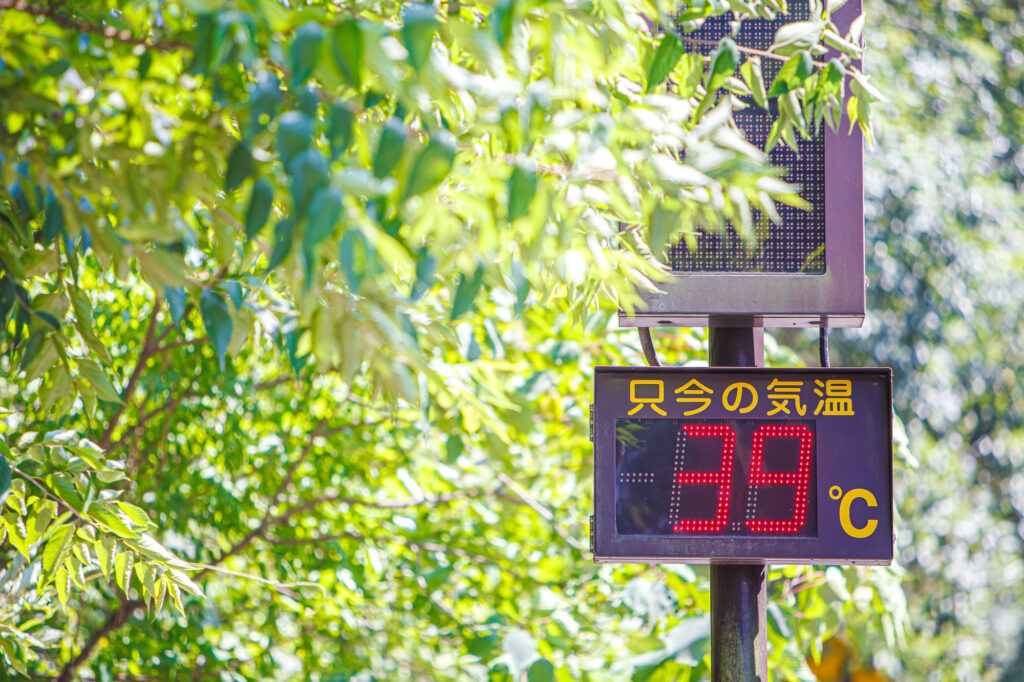
It’s hotter than it’s ever been in Japan.
While this summer has felt relatively cool to me here in Tokyo compared to last year, the Japan Meteorological Agency begs to differ: western Japan’s mean temperature in July was the hottest since the agency began keeping records in 1946. Last year, says Nikkei, the mean ran 2.36C above normal.
It’s so hot that Japan is inventing new words for how hot it is. Earlier this year, the JMA introduced 酷暑日 (kokushobi) for days over 40C, the result of a national vote after three consecutive summers of above-average heat. The previous hottest level was 猛暑日 (mōshobi) for days over 35C.
Japan’s Fire and Disaster Management Agency says the heat’s so extreme that “it’s no exaggeration to call it a disaster.” Indeed, the heat is putting people’s health at risk. It’s also changing Japanese culture. Several vaunted Japanese traditions are on the decline because it’s too risky to be outdoors between June and August (and September, really).
Radio taisō is saying sayonara
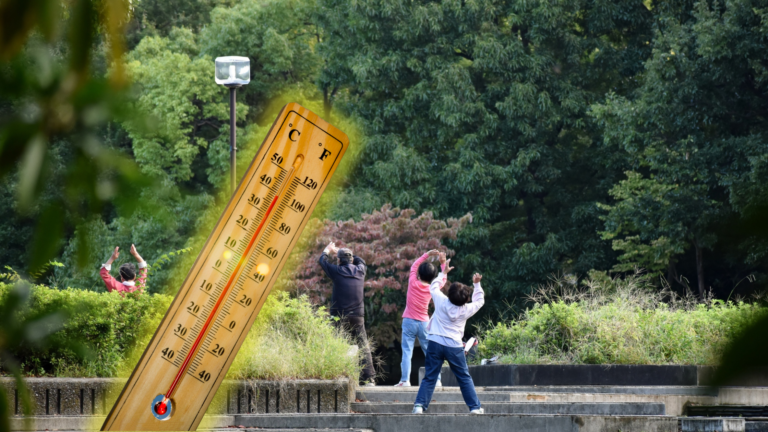
One of those customs is radio taisō (ラジオ体操), or radio calisthenics. What began in 1928 as a plan by the government’s postal life insurance bureau to reduce claims steadily became such a vaunted tradition that it survived an attempt by the occupying American forces after World War II to cancel it.
Climate change is now trying to finish what the Americans started. And it’s working.
In 2020, according to Postal Life Insurance Policyholders’ Association, 63.2% of elementary schools still performed radio taiso. That was a drop from 76.4% in 2004. Today, some kids interviewed by TV programs say they don’t even know what radio taiso is.
Why the decline? It’s not because radio is outdated in the Internet age. Most of these radio taiso programs were organized and led by elderly people. As the members of neighborhood associations have gotten older, and the weather has gotten hotter, it’s become too dangerous for them to be outdoors. As a result, many programs that were suspended during COVID-19 never restarted.
The beach trip decline is accelerating
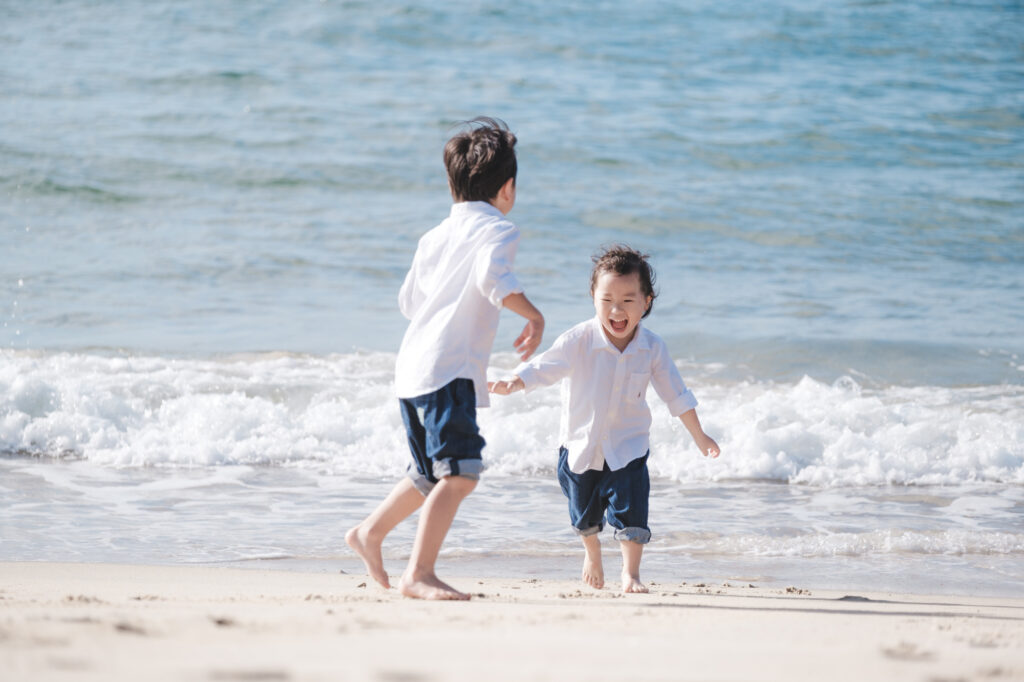
Sea bathing has taken an even larger hit. While not all of it is attributed to the heat, the heat isn’t helping.
At its peak, the Japan Productivity Center estimated that 37.9 million Japanese people hit the beach in 1985. By 2024, that number had collapsed by 88% to 4.4 million. The number of official swimming beaches fell as well, down 30% from its peak to 969 in 2024.
That collapse can’t be attributed entirely to the heat. It represents a long-trending shift in leisure patterns. But the rising heat, combined with the declining numbers, is convincing some beaches that they can no longer justify the cost of opening.
In Osaka, Hannan City canceled the season for Pichipichi Beach, a 700-meter stretch of white sand, saying that “extreme heat and diversifying leisure” meant it couldn’t justify opening. The numbers back it up: visitors fell from 200,000 in 1990 to a mere 20,000 in 2025.
Meanwhile, neighboring Misaki canceled the season for Tokimeki Beach after visitors dropped from 101,700 in 2016 to 33,400 in 2025. The beach has posted signs warning that “swimming is extremely dangerous” with no lifeguards on duty.
Question: do you like UJ's independent coverage of Japan? Our writers are supported by our members. Join Unseen Japan Insider to get bonus content every week, an ad-free website, and access to our large and growing Insider archive.If you love what we do, help us pay our writers to do more of it by joining Insider. You'll get bonus content every week, an ad-free website, and access to our large and growing Insider archive.
Obon is also changing
It’s so hot, even the dead can’t rest.
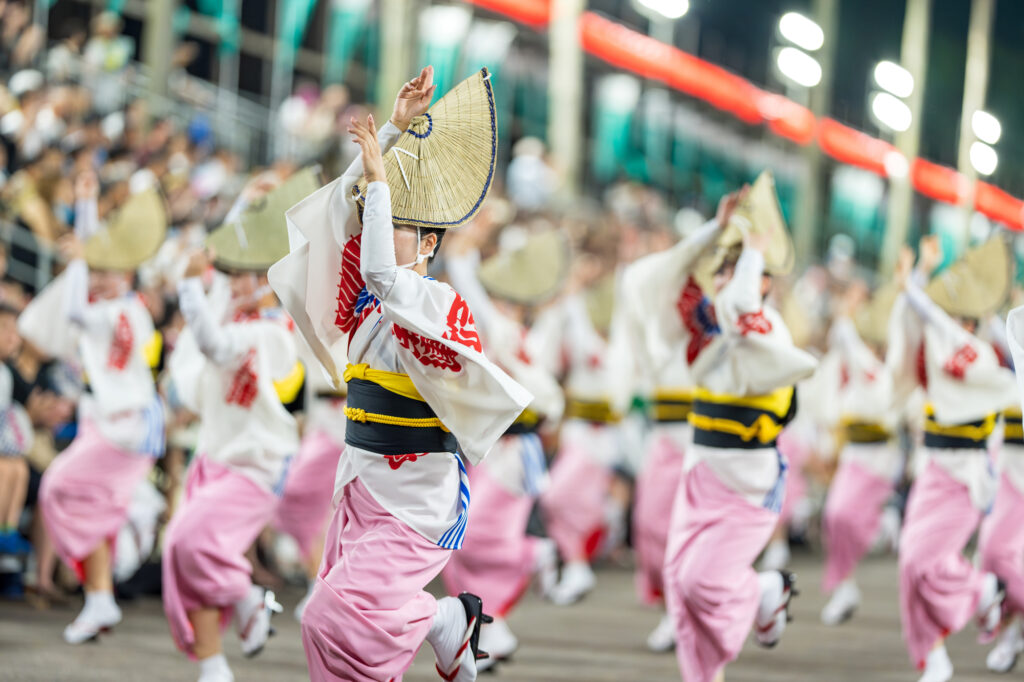
Obon is Japan’s summer holiday where people return home and pay respects to their ancestors. Bon Odori is a popular Japanese summer dance festival originating in Buddhist practices.
Obon festivals don’t appear to be shuttering. But some are moving their hours of operation to after dark, so that families can celebrate Obon in the cool evenings (夕涼み; yūsuzumi). Shōdaiji (證大寺), a Jōdo Shinshū temple that dates back to 835 CE, has moved lantern lighting to 6:30pm and is serving shaved ice to help people stay cool.
The temple’s explanation was blunt: “Dying on an Obon grave visit defeats the purpose.”
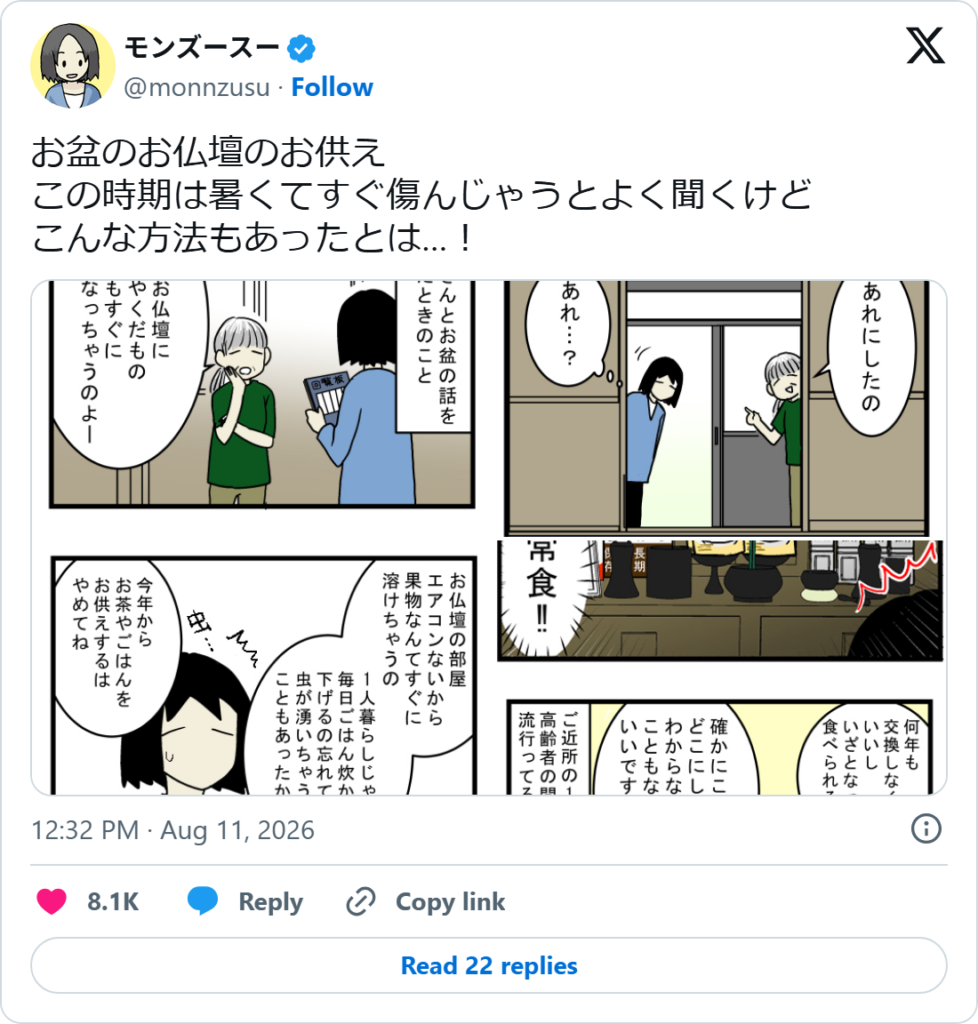
The heat may also be affecting how people privately practice Obon. It’s common to place tea and rice on an ancestral altar (仏壇; butsudan) during the season. However, in a hot apartment where older people refuse to turn on the air conditioning due to the cost, these items spoil within hours.
One person found a handy solution for that. Essay-manga artist Monzūsū relates how an elderly neighbor began putting emergency provisions on the altar. They don’t spoil in the heat, and they can be eaten afterward.
The best strategy: don’t go outside
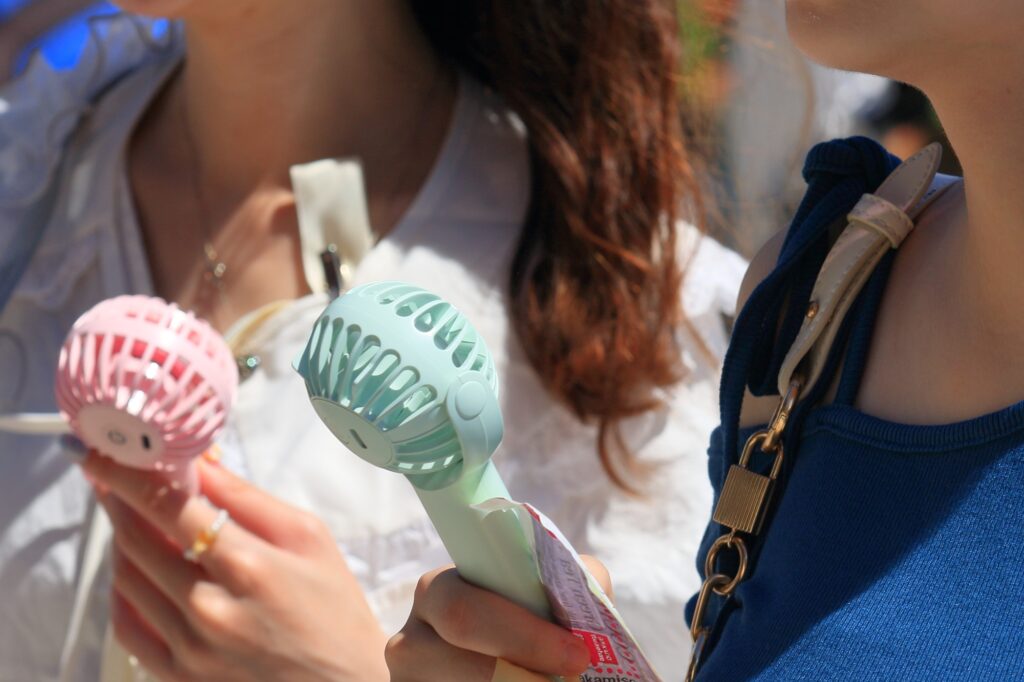
The heat is also changing how companies and government offices run. Recently, Tokyo governor Koike Yuriko announced that government employees could wear T-shirts and, depending on their role, half-pants. Many outside workers wear fan-cooled vests to spare themselves from the heat.
Some institutions are slow to change, though. I wrote three years ago about how Japanese parents were up in arms because some schools forbid students from wearing sunscreen to school.
Ultimately, however, all these protective measures have limits.
On August 6th, a man in his 50s who worked for Chugoku Electric Power Network died of suspected heatstroke in Shimane Prefecture. His fan-equipped jacket and frozen drinks in a cooler were no match for the heat.
Users on X argued that, if the outside temperature exceeds your body temperature, a fan-equipped jacket makes you hotter. In these conditions, they said, there’s only one safe option: don’t work in the heat.
Unfortunately, even staying inside is no guarantee of safety. Air conditioning is the one proven device that reliably beats the heat. But in a June 2026 survey by shopping app operator Kauche, 88% said they felt burdened by summer utility bills. 73.8% reported cutting back on air conditioner usage due to cost concerns.
To be fair, the shift in summer activities isn’t entirely due to the heat. The Zushi Water Park, an inflatable waterpark, logged a record number of visitors in 2025. Population decline, drunk-driving enforcement, and a proliferation of leisure options are all offered by commentators as factors shaping how Japan spends the summer.
It’s clear, however, that the heat is accelerating the decline of once-popular pastimes. If the summers here become any more brutal, we may see even bigger changes.
Obon in October, anyone?
Keep reading

Sources
ラジオ体操「知らない」子ども 猛暑などで開催減――アサガオ枯れ、市民ナイトプール…変わる夏休みの風物詩【なるほどッ!】 日テレNEWS NNN
夏休みの”ラジオ体操”に異変…「うちの子は一度もやったことがない」 小学校での実施率は約6割、背景には猛暑、世話人不足、騒音苦情も 集英社オンライン
ラジオ体操を知らない子どもたち 夏休みの風物詩が変化、時代に合った新たな在り方は AERA with Kids+
2026年7月中旬~下旬の顕著な高温と今後の見通しについて 気象庁
最高気温が40℃以上の日の名称に関するアンケートについて 気象庁
気象庁、40℃以上の日の名称を「酷暑日」に決定 日本気象協会 tenki.jp
熱中症搬送、1週間で1万人突破 暑さ「もはや災害」―総務省消防庁 時事通信
海水浴客ピークから9割減 猛暑や日焼け敬遠、開設中止も 日本経済新聞
海水浴客が激減、酷暑の熱中症・日焼け敬遠 大阪「ぴちぴちビーチ」などで海開き見送り 産経新聞
令和8年度箱作海水浴場(ぴちぴちビーチ)開設中止について 阪南市
淡輪海水浴場(ときめきビーチ)開設中止のお知らせ(令和8年度) 岬町
連日の40度超え!1200年の伝統ある寺院が、猛暑のお墓参りは日中ではなく夜間にシフトすることを提案 2026年は新たに縁日を開催!家族で楽しめる参拝イベントへ @Press
【第4回】改葬・墓じまいに関する実態調査(2026年) 株式会社鎌倉新書
補助があっても約9割が「夏の電気・ガス代は重い」と回答…猛暑でも「冷房を控える」人が7割超に まいどなニュース
大阪270駅で日傘シェア開始|アイカサと関西鉄道8社が熱中症対策 TABI LABO
東京都が解禁した短パン勤務…若いころ法廷で革ジャン・ジーパン姿の橋下徹弁護士は「絶対ダメ」と一蹴 J-CASTニュース
ファン付き作業服、スポーツドリンクを持ってきても、山中で作業をしていた男性が熱中症になり死亡…→40℃近い気温ではファン付き作業服も役に立たず、何をやってもダメ Togetter