

Booking a hotel in Japan through Agoda has become something of a gamble. You might reserve a room that doesn’t exist, find out your reservation never reached the hotel, or arrive expecting a swimming pool, restaurant, or open-air hot spring bath the property never actually had.
The booking platform has spent the past year and a half promising Japan’s government that it would do better. And yet, it’s still having problems.
Inaccurate listings: pools, buffets, and onsen baths that aren’t there
In October 2026, J-CAST reported several cases in which Agoda’s hotel descriptions appeared to promise amenities that simply didn’t exist. At one hotel in the Chūkyō region, J-CAST found that its Agoda listing advertised a restaurant serving buffet breakfasts, even though the hotel didn’t have a restaurant.
A staff member told J-CAST that the property had repeatedly requested corrections, only to find that the revised listing contained different inaccuracies.
J-CAST found a similar problem at a chain hotel in Osaka. When it checked the hotel’s Agoda listing on October 29, 2026, the description said there was a pool. Except it doesn’t. At all.
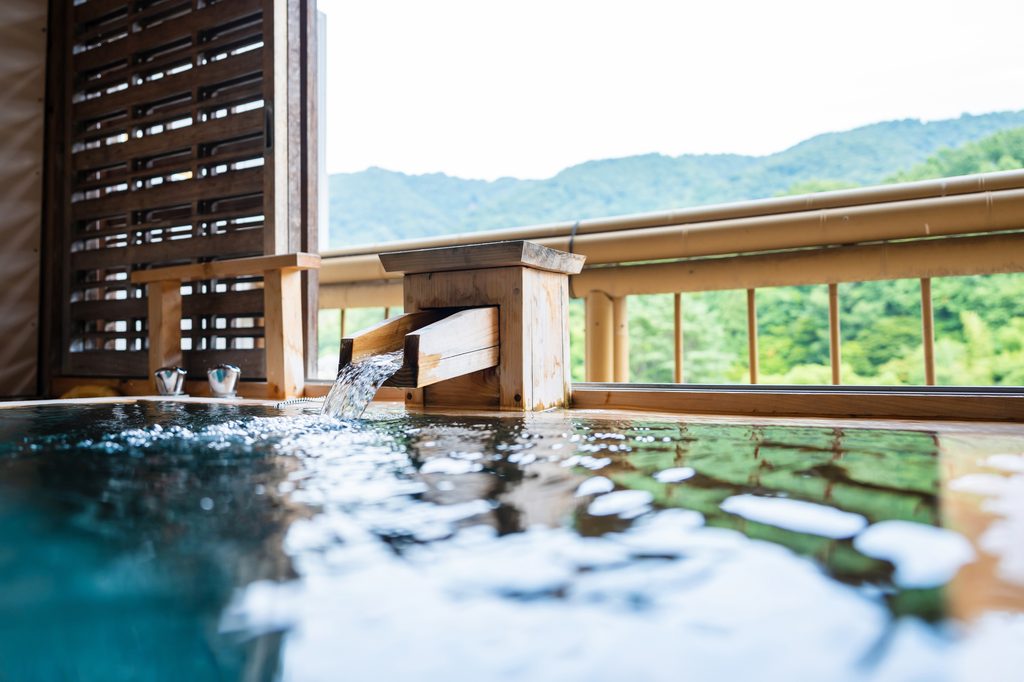
Other hotels have reported discrepancies with room types. In January 2026, Shōensō Hozugawa-tei, a ryokan (旅館) or traditional Japanese inn in Kyoto Prefecture, warned customers that Agoda had sold a basic double room with a shower as a Western-style room with rotenburo (露天風呂), a private open-air hot spring bath. The listing even used pictures of a different room.
In February, Setouchi Resort Hotel in Matsuyama reported that a room advertised as a suite didn’t match the actual accommodation. The hotel also said some customers had been charged different prices.
We don’t know exactly how many Agoda listings contain this sort of error, but the problem is clearly bigger than a few careless typos.
Misleading descriptions are just one of the issues you’re likely to face on your Japan trip. Avoid the others by signing up for our free five-day Japan trip planner, which covers everything from what to pack to how to escape the airport.
Exactly who is writing Agoda’s hotel descriptions?
The worst part is that hotels have little control over the wording of their Agoda listings. According to Agoda, the platform automatically generates hotel descriptions using information properties enter into its administrative system. Agoda then reviews the resulting text.
Hotels can’t edit that wording directly. They can only update the underlying information in the admin panel, and Agoda says changes take up to about 14 days to appear. The Chūkyō hotel, for example, told J-CAST that it didn’t remember registering a restaurant in its administrative panel.
The cherry on top is that some Agoda hotel pages include a disclaimer saying portions of their content were created using generative AI and may not be accurate.
Now, we don’t know for sure whether AI invented the nonexistent swimming pools or restaurants, or whether hotels accidentally entered the wrong information. However, given AI’s tendency to hallucinate, it wouldn’t be surprising if AI use carried most of the blame. Either way, travelers are left with descriptions that may not reflect reality.
The older problem: reselling rooms through middlemen
The inaccurate descriptions are only part of the problem. In June 2025, Toyoko Inn publicly warned customers that rooms it supplied to business partners were being resold on overseas booking platforms, including Agoda, through third-party companies.
This can lead to a range of problems: reservations might never reach the hotel, the third party might advertise or book the wrong room type or date, booking notifications might be delayed, and in some cases, prices might be much higher than the hotel’s actual rates. In some cases, customers might even arrive at properties closed for maintenance.
The underlying issue involves two different ways online travel agencies sell accommodation. Under the agency model, a booking platform lists rooms on behalf of a hotel and receives a commission. Under the merchant model, the platform or another third party purchases rooms and resells them, often with a markup.
The difference with the merchant model is that it adds layers of complexity that make it easier for booking information to become outdated or be transmitted incorrectly. And wouldn’t you know it, Agoda operates both models, with its merchant-model business, Beds Network, launching in 2022.
A year and a half of promises
The Japan Tourism Agency formally asked Agoda to address its booking problems in March 2025. Agoda subsequently announced several measures, including removing certain third-party suppliers, introducing AI-powered monitoring, strengthening supplier requirements, and providing round-the-clock Japanese-language support.
Some progress has been made. Hoshino Resorts signed a direct partnership with Agoda in November 2025, covering all six of its brands. By July 2026, the resort group said the direct arrangement had largely resolved its major booking problems.
However, it seems only hotels with a direct agreement with Agoda benefit from fewer issues. In September 2026, Yamagata ryokan Tōfuya publicly asked travelers not to use Agoda or other overseas booking platforms to reserve its rooms, explaining that unauthorized resales were still occurring.
Another hostel issued a similar warning in October, saying guests sometimes never received the access codes needed to enter the property.
What should travelers do before booking?
Frankly, if you ask any hotel employee, they’ll almost always recommend booking directly through the hotel’s website whenever possible.
This is a good rule of thumb for a few different reasons. Not only does it help ensure you won’t fall victim to an unauthorized third-party sale, but booking through a third party also means the hotel can’t modify or cancel your reservation directly. You have to go through the third party to do that.
Of course, booking directly is not always practical when planning an international trip. So, the next-best thing is to use a domestic third-party website like Jalan or Rakuten Travel. These aren’t infallible, but they’ve had fewer problems than sites like Agoda.
To be extra safe, you can also double-check the hotel’s official website. That way, as you compare room descriptions and photos with a third-party website, you can spot red flags. Contacting the hotel directly right after booking is also a good idea to make sure your reservation went through.
Don’t want to book yourself directly? Let Unseen Japan Tours book for you as part of our itinerary planning services. Our Japanese-fluent planners and guides will handle all arrangements with local providers at places we’ve personally vetted.
No booking method guarantees a perfect experience. However, if you do your research and double-check your information, you’re more likely to secure a proper stay for your travels.
Keep reading
Sources
Agodaのホテル紹介に「存在しないレストランやプール」が書かれていた 「困惑している」とホテルスタッフ J-CAST ニュース
「Agoda使わないで」温泉旅館が注意喚起 観光庁の改善要請から1年半も…「CM流すより先にトラブル解決して」 J-CAST ニュース
Agodaの予約トラブル、星野リゾート代表も苦言 空室転売が原因?運営会社「業務改善進めている」 J-CAST ニュース
東横インで空室「転売」トラブル…部屋確保されないことも 異例の予約サイト「名指し」で注意喚起 J-CAST ニュース
星野リゾートもアパホテルも被害….識者が語る「アゴダ」予約トラブルの構造的問題とは Business Insider Japan
アゴダCEOがサービス改善へ声明、トラブル原因の事業者の取扱い停止、AI事前監視システムや補償オプションなど導入へ トラベルボイス
OTAアゴダ、第三者サプライヤーに厳格な基準を設定、AIによる課題検知ツールの導入や24時間365日サポート体制も整備 トラベルボイス
アゴダと星野リゾートが包括的パートナーシップを締結 星野リゾート
ある旅館が「Agodaなどの海外のホテル予約サイトを使わないで」と注意喚起→宿泊トラブルが相次いでいるので何かしらの法的な対応が必要では? Togetter
agodaで予約した宿に着いたら「当ホステルではagodaと契約しておりません」という貼り紙が貼られていて横転→同様のトラブルに遭った人の報告が寄せられる Togetter
「国内旅行は国内サイトを使ってください」現役ホテルマンから国内の宿泊予約に対して海外サイトを使うのに悲鳴が、宿泊業界で働く他の人からも賛同が集まる Togetter
今夜泊まるはずのホテルが閉館? 楽天トラベルで予約したのに……代わりの宿探しに奔走する他の客も 安さを理由に選んだ投稿主も困惑 ライブドアニュース