

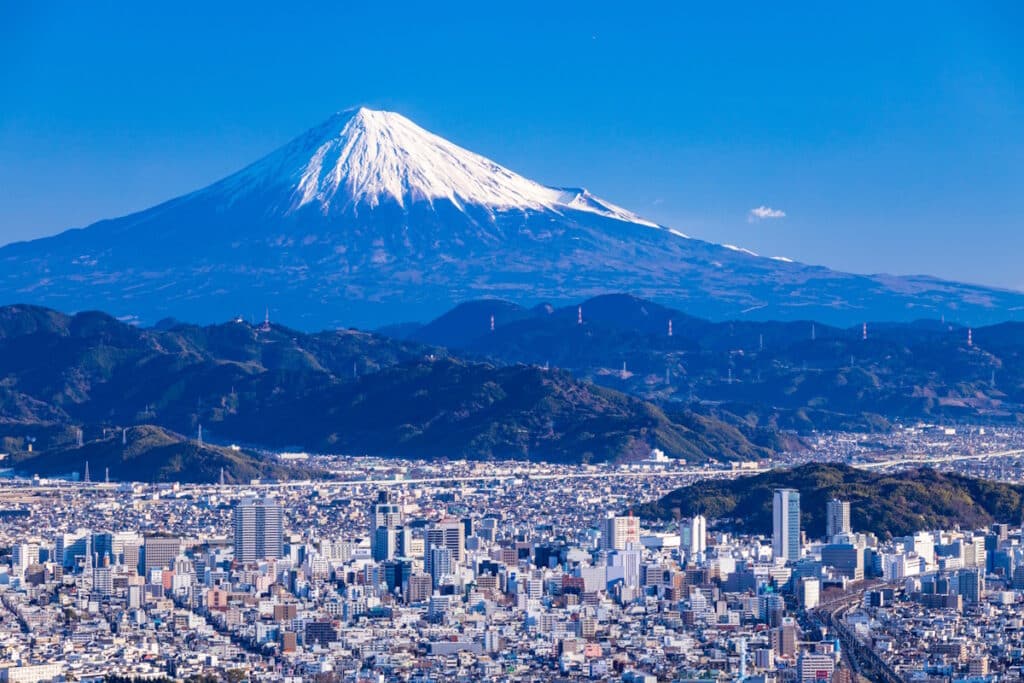
With the Mt. Fuji hiking season officially commencing, officials in Shizuoka Prefecture are debating what to do about the off-season. The number of hikers who have to be rescued because they make an unprepared trek during the more treacherous months is climbing. That’s forcing prefectures like Shizuoka and Yamanashi to launch more costly rescue missions.
Now, Shizuoka Prefecture officials are debating pushing those charges back on off-season climbers. Some pundits and politicians say the problem is so severe it needs a national solution.
Many both inside and outside of Japan assume these issues are caused by the increase in inbound tourism. However, some experts say the worst offenders aren’t who you think they are.
Number of rescues increases

Mt. Fuji’s official season runs from early July to September 10th. Hiking on Mt. Fuji trails from September 11th on is strictly forbidden. Theoretically, violators can be hit with up to six months’ imprisonment or a ¥300K ($1,850) fine.
In practice, however, this is rarely enforced. Some adventurous climbers take the risk anyway, lodging a climbing plan with local authorities so that, if they don’t make it back, the prefecture can recover their remains. Yamanashi Prefecture makes filing such plans mandatory between December 1st and March 31st.
Currently, if someone needs to be rescued from the mountain, the prefectures pick up the cost. Shizuoka Prefecture has now started formal discussions to force hikers to foot this cost as the number of rescue missions mount. The move comes almost one full year after both Shizuoka and Yamanashi officials said they’d consider such legislation.
Shizuoka is likely motivated by a spike in off-season climbing. The number of people climbing after the September 11th closure in 2025 rose by 30%.
Experts: Reckless Japanese climbers are the bigger headache
The spike is being framed in the Japanese press as an inbound travel problem. FNN Prime Online, for example, led with a headline that the number of foreigners stuck on off-season hikes has reached its highest level ever.
And that’s true. Foreigners in distress accounted for 246 people in 2025 across all of Japan’s mountains. That’s the highest level it’s ever reached.
What the headlines bury, however, is that this is only a fraction of total climbers. In 2025, there were 3,623 total climbers in distress. That means over 3,300 of them weren’t foreign tourists, but citizens and residents.
The net share of mountain distress involving tourists has risen. The number of foreign climbers in distress dropped to 135 in 2024 (down from 145 in 2023). But it spiked in 2025, taking the overall share of tourist-related calls for help from 4% to 7%.
In other words, the number of tourists experiencing distress has risen as tourism to Japan has risen. That’s not shocking. What’s shocking is that 93% of all mountain distress calls are coming from inside the house.
These figures are backed up by interviews with rescue experts. One mountain-safety official told the site Ben54.jp that “the problem is the Japanese more than inbound.” They reported Japanese citizens engaging in all sorts of foolish escapades, such as making the ascent in running shoes and hiking while intoxicated.
It’s incidents involving foreign travelers and residents, however, that tend to make headlines. Last year, Japanese media widely reported on a Chinese resident who not only had to be rescued, but had to be rescued a second time when he went back for his smartphone.
Other headlines paint a more nuanced picture. In 2024, the Mt. Fuji climbing season got off to a deadly start as four hikers died within a week. Of those, two were confirmed to be Japanese citizens.
A foreign tourist problem? Or a self-responsibility problem?
Charging people for rescue wouldn’t just save the prefectures money; it could save lives. Above the treeline in the winter, the ground on Fuji freezes “like an ice skating rink,” rescue-squad leader Shiokawa Yoshimasa said. With temperatures at -9°C and strong winds, even hikers with crampons can slip.
Both Shizuoka and Yamanashi Prefectures have already taken steps to improve safety by reducing overtourism. Each side now charges an entrance fee, with Yamanashi requiring advance reservations. The prefectures also actively discourage “bullet climbing,” or pushing yourself through the dark to see the early morning sunrise.
It’s not a given that Shizuoka will actually start charging. The prefecture’s governor, Suzuki Yasutomo, has come out saying he thinks policy around rescues should be set nationally, not by one prefecture. Nationally, however, rescue is regarded as a free public service. Mountaineering-law attorney Mizote Yasushi said carving out a Fuji-only paid exception would be “extremely difficult,” as it’s hard to define where flatlands end and the “rescue zone” should begin.
Charging stranded hikers for their rescue isn’t without precedent in Japan. Since 2018, Saitama Prefecture has charged climbers ¥8,000 (~$50 USD) per five minutes of helicopter rescue in six designated zones. In 38 cases through early 2026, Saitama charged people an average ¥72,000 (~$450 USD) to get them out of trouble.
The difference here is that the prefecture owns the disaster-prevention helicopter and thus has legal authority to charge for it. In Fuji’s case, the more dangerous and expensive rescue operations are ground operations, where using helicopters is impractical due to the ice and wind.
Either way, national headlines framing this as an inbound tourist problem aren’t accurate, or helpful. It’s clear there’s a long-standing self-responsibility issue that needs to be addressed, not just among foreign tourists, but all Mt. Fuji off-season climbers.
Keep reading

Sources
富士山“救助有料化”静岡県が本格協議へ “通行禁止”の登山道に外国人観光客が次々と…訪日外国人の遭難は過去最多に FNN プライムオンライン
山岳救助ヘリ「有料化」すぐできない事情とは 遭難相次ぐ閉山期の富士山、地元の救助隊員が伝えたい危険性 東京新聞
閉山後の富士登山、25年は3割増 遭難の危険性高く救助有料化も検討 日本経済新聞
富士山救助費用、「国で議論を」 静岡知事が持論 日本経済新聞
「問題はインバウンドよりも日本人のほう」外国人登山者の遭難多発で“救助有料化”議論も…山岳事故が相次ぐ「根本的な課題」とは 弁護士JPニュース
富士山で相次ぐ外国人の“無謀登山” 救助費用の有料化はできない? 専門家は「極めて難しい」 ENCOUNT
閉山期の富士登山について(夏山期間以外の登山道は通行禁止) 富士登山オフィシャルサイト
静岡県各3登山口における登山規制の実施 静岡県