
Finding an apartment in Japan can be difficult enough. Add children, a limited income, or reliance on public assistance, and the search gets much harder. For single mothers, the problem isn’t necessarily finding an affordable place. It’s finding a landlord willing to rent to them in the first place.
Yamanaka Mana (山中真奈), 40, knows how this works from both sides of the rental counter. After four years at a real estate agency in her 20s, she saw firsthand how companies sometimes repeatedly rejected single mothers trying to secure a home for their families.
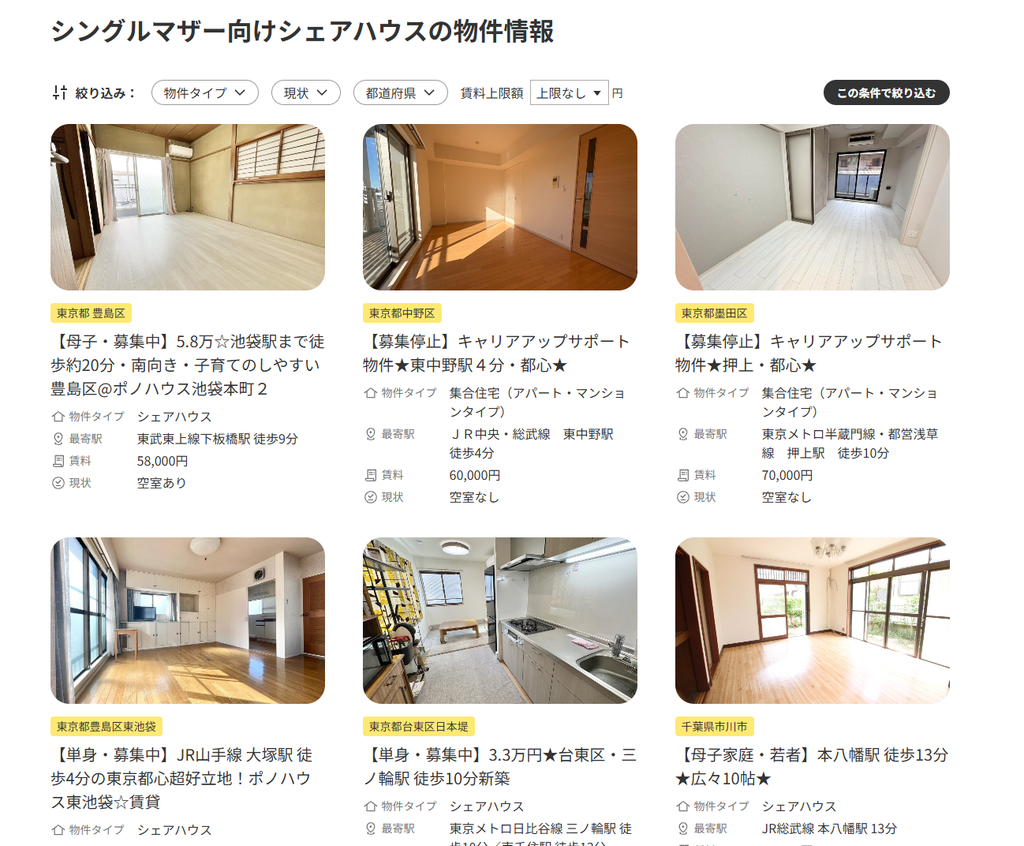
Now, through her company, Single’s Kids, she operates shared housing for single mothers across Tokyo, Chiba, and Kanagawa. Her approach is simple: make housing for single mothers more available by changing how rental risk is managed.
Why single mothers struggle to rent in Japan
Yamanaka’s motivation came from one particular customer she encountered while working in real estate. The woman was raising three children alone and receiving seikatsu hogo (生活保護), Japan’s public assistance. Despite making hundreds of inquiries, landlords kept turning her down.
Yamanaka recalls being unable to do much more than apologize and tell the woman no properties were available. Property owners just weren’t willing to accept her application.
Landlords often worry about unpaid rent or tenants disappearing overnight, a practice known as yonige (夜逃げ). Applicants receiving public assistance or without conventional employment can seem financially risky.
Real estate agencies also have little incentive to spend extra time helping difficult-to-place applicants. The brokerage fee is essentially the same whether an agent finds an apartment for a straightforward customer or spends considerably longer trying to accommodate someone who has been rejected elsewhere.
As Yamanaka explains, agents don’t have much financial motivation to go the extra mile.
The numbers behind the problem
Single fathers don’t seem to have the same problem. According to Japan’s 2021 national survey of single-parent households, approximately 36.7% of mother-led households lived in privately rented accommodation, while 34.4% owned their homes, compared with 66.0% of single fathers.
However, it’s not accurate to say that landlords discriminate against single parents. A 2018 survey by the Japan Property Management Association found that only 1% of reported tenant restrictions specifically targeted single-parent families.
Rather, it’s more likely about income. Japan’s 2021 single-parent survey put single mothers’ average annual income at ¥2.72 million (~$17K), against ¥5.18 million (~$33K) for single fathers; around 44.5% of single-parent families live below the poverty line. One of the main reasons landlords gave for rejecting tenants was concern about rent payments. In their view, someone who’s barely scraping by is more likely to skip out.
That’s not the only factor, though. People receiving public assistance accounted for 11.3% of tenant restrictions, and being homeless (as a single mother fleeing a domestic violence situation might be) accounted for 20.2%. The statistics look even worse since, according to the 2016 Nationwide Survey on Single-Parent Households, 90% of all single-parent households were led by single mothers.
So, single mothers aren’t necessarily experiencing discrimination. They just tick all the “wrong” boxes.
From gyaru to housing entrepreneur
Yamanaka’s own background is somewhat unconventional. During her teenage years, she was a gyaru, a member of a Japanese fashion subculture associated with flashy clothing, elaborate hairstyles, and a distinctive nightlife scene.
She has spoken openly about a difficult childhood, spending much of her teenage life away from home, working in hostess clubs after graduating from high school and eventually starting her own gyaru circle. She also experienced an eating disorder and a period of withdrawing from society.
After working several jobs, including in real estate, she decided to address the housing problem she had witnessed.
In 2017, she opened her first boarding house for single mothers in Tokyo. The property also accommodated older residents and welcomed people from the surrounding neighborhood. The business has since expanded into several types of accommodation, including multiple share houses and other residential units across the greater Tokyo area.
Her work also attracted national attention when Fuji TV’s documentary series The Nonfiction featured her in an episode titled “Living Together: An Ex-Gyaru and the Single Mothers’ House” in June 2025.
Question: do you like UJ's independent coverage of Japan? Our writers are supported by our members. Join Unseen Japan Insider to get bonus content every week, an ad-free website, and access to our large and growing Insider archive.If you love what we do, help us pay our writers to do more of it by joining Insider. You'll get bonus content every week, an ad-free website, and access to our large and growing Insider archive.
Why shared housing makes a difference
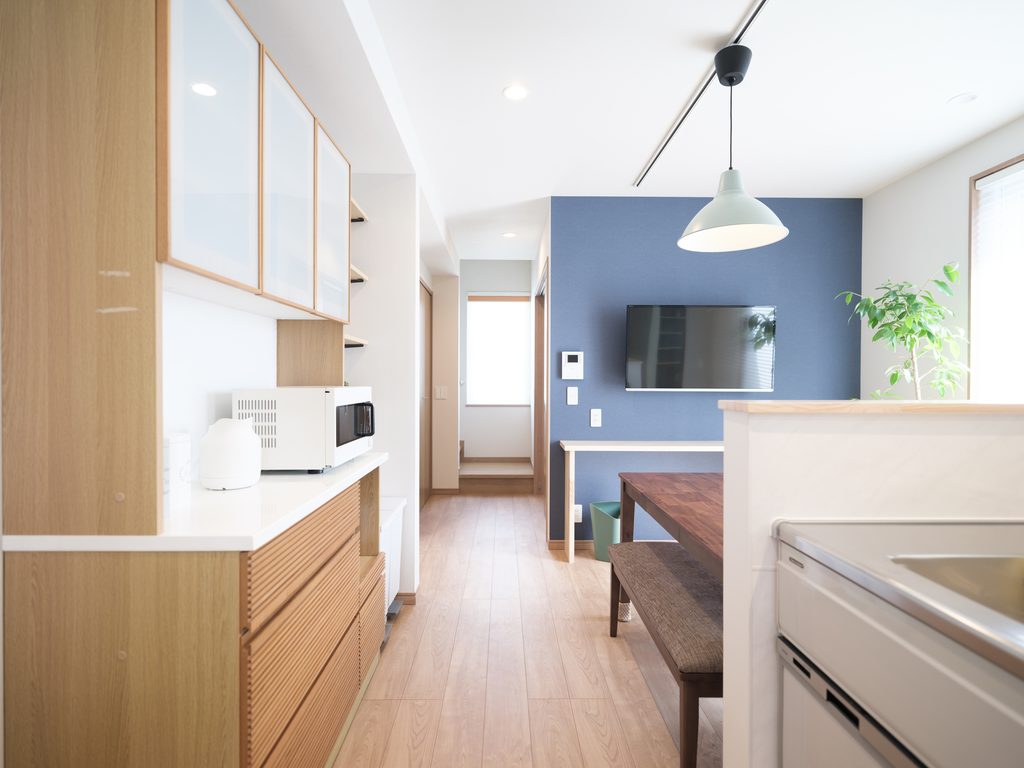
The key to Yamanaka’s business model isn’t charity; it’s spreading financial risk. A conventional rental apartment represents one tenant and one rent payment. If that tenant stops paying or disappears, the landlord potentially loses the entire monthly rental income.
A share house works differently. Each resident rents an individual room, so one person’s unpaid rent doesn’t necessarily affect the income everyone else generates. This arrangement makes landlords more comfortable accepting tenants who might otherwise be deemed “undesirable.”
She also believes personal relationships matter. By regularly visiting properties, cleaning communal areas, and getting to know residents, she can tackle problems before they become serious. If someone is sick and worried about paying rent late, they’re more likely to contact her rather than simply disappear.
Japan has also started recognizing the potential of this approach. Since April 2021, share houses accommodating single-parent households have been eligible for registration under the government’s Safety Net Housing system, which supports rental properties that accept people who have difficulty securing accommodation.
A further revision to the Housing Safety Net Act took effect in October 2025, introducing certified housing with regular tenant check-ins and connections to welfare services when necessary.
Mizuho brings institutional investment into the picture
Yamanaka’s work is also becoming part of a larger effort to address the housing needs of single-parent families.
Mizuho has established two private real estate investment funds to provide housing for single-parent households. The first launched in October 2025, and the second followed in August 2026.
Single’s Kids and the Japan Single Mothers Support Association provide residents with career development and independence support. Mizuho Real Estate Investment Advisors manages the funds, with Mizuho Bank providing financing.
The initiative is particularly relevant to mothers who earn too much to qualify for full child-rearing allowance but still struggle to afford conventional housing.
Ultimately, Yamanaka says her goal isn’t simply to fight rental discrimination. She wants children to be happy and to grow up in environments where they feel secure. She’d like to see more apartments where several generations live together at a comfortable distance.
Keep reading

Sources
「何百件問い合わせても断られる」シングルマザーの“賃貸難民”問題。元ギャルが挑むシェアハウスの解決策 日刊SPA!(ライブドアニュース)
『ザ・ノンフィクション』で話題の元ギャル。シングルマザー用シェアハウスを作った彼女の現在と放送後の反響 日刊SPA!(ライブドアニュース)
元ギャルが作る母子家庭のシェアハウス、新たな挑戦に応援続々…『ザ・ノンフィクション』 マイナビニュース
住まいの支援策(ひとり親家庭・社会的養護経験者等)について こども家庭庁
社会・援護局関係主管課長会議資料(国土交通省住宅局安心居住推進課) 厚生労働省
Research Report on Financial Health among Low-Income Single Mothers and Youth 日本NPOセンター
ひとり親世帯向けシェアハウスの基準を新設します! 国土交通省
住宅確保要配慮者に対する賃貸住宅の供給の促進に関する法律(住宅セーフティネット法)について 京都府
ひとり親家庭居住支援第1号ファンドの立ち上げについて リコーリース
ひとり親家庭の住居提供と自立支援を行う「ひとり親家庭居住支援第2号ファンド」を組成 リコーリース