
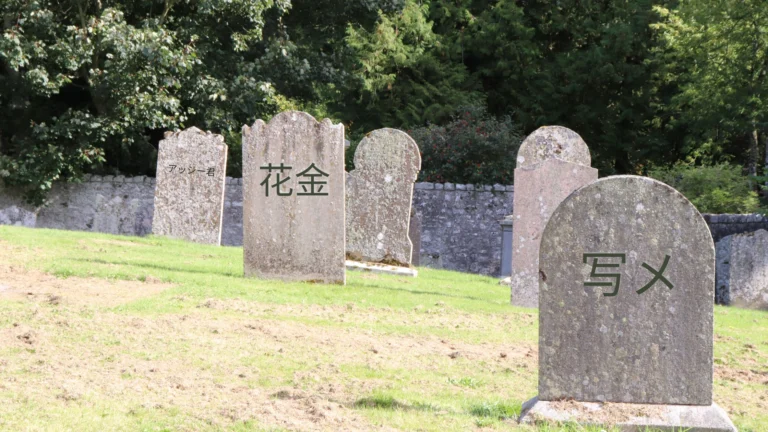
Recently, a celebrated Japanese voice actress took to X to date herself with a piece of slang that’s been abandoned by Gen Z. That’s not the only Japanese slang, however, to have died in recent years.
In fact, a few years ago, one of Japan’s major dictionaries staged a public execution of over 1,000 dated words – a mass de-languaging almost unheard of in the West. The words that became “dead words” highlight what language in Japan falls out of favor, and why.
O-nyū you don’t
Voice actress Chihara Minori, who played the role of Nagato Yuki in the anime The Melancholy of Haruhi Suzumiya, took to her account on social media site X to share “my o-nyuu (brand new) shirt. I fell in love with it at first sight, turns out it’s the same brand I wore on my tour.”
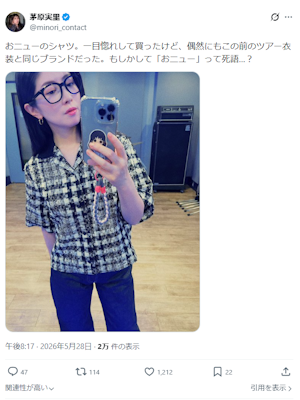
“Wait, is o-nyū a dead word?” she added.
Fans pitched in with their two cents on this now seldom-heard word, which applies the honorific suffix “o” to the English word “new” and is used to refer to something one just very recently bought.
“I use it,” one said, “but I feel it’s going out of style.”
“It’s a word for princesses,” one remarked, “so for the great Chihara Minori, it’s an o-fabyurasu (おファビュラス) way of speaking.”
Chihara still using o-nyū in The Year of Our Buddha 2026 is impressive. Sources date the appearance of おニュー to around the 1970s, giving it a 50-year history.
Articles dating back to 2017 were talking about this as a “dead word.” Katayama Miki of ReRise Consulting says she used the word to refer to her colleague’s new laptop, only to later look it up and realize the word “officially” died around 2007.
As the exchange above shows, however, some people are still working to keep おニュー alive in the digital age.
Question: do you like UJ's independent coverage of Japan? Our writers are supported by our members. Join Unseen Japan Insider to get bonus content every week, an ad-free website, and access to our large and growing Insider archive.If you love what we do, help us pay our writers to do more of it by joining Insider. You'll get bonus content every week, an ad-free website, and access to our large and growing Insider archive.
Sanseidō’s Great Slang Defenestration of 2021
Not all words fade with age, of course. Some get stronger. Yabai, for example, is currently at Power Level 9000, having become the Swiss Army knife of Japanese words. And egui has found a second life as yabai-adjacent utility slang.
The death throes of おニュー, however, shows how some words in Japanese just don’t stand the test of time.
In this case, the word is still hanging on strong enough that you can readily find its meaning. You can still find おニュー, for example, in the Sankoku, Sanseidō’s popular general-use dictionary.
There are a lot of other words, however, you won’t be able to find.
English language dictionaries tend not to delete words. They will shorten a word’s definition to save space and possibly mark it as “archaic.” But the word sticks around as linguistic history and reference.
Not so in Japan. It’s not uncommon in Japanese for dictionary editors to decide that a word has outlived its usefulness and should be chucked out the window.
This happened en masse in 2021, when Sankoku, under editor Iima Hiroaki, added 3,500 new words – and ejected 1,100. It was the largest deletion in the dictionary’s history.
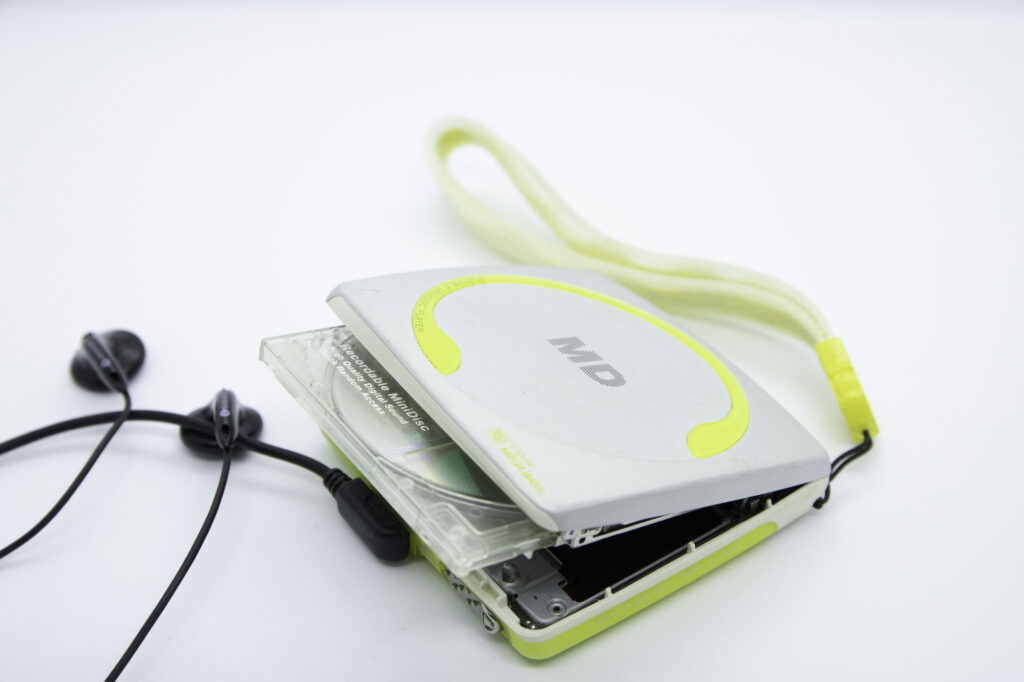
Iima later took to X to defend the cuts, which he says were based on contemporary usage frequency and search patterns. For example, “MD” (MiniDisc) was removed because the MiniDisc is dead tech, with Sony discontinuing manufacture in 2013. By contrast, カセットテープ (cassette tape) wasn’t cut because nostalgia keeps it alive.
In other words, words don’t “age out.” They get cut when the general populace stops using them.
“Words are fated to be born and die”
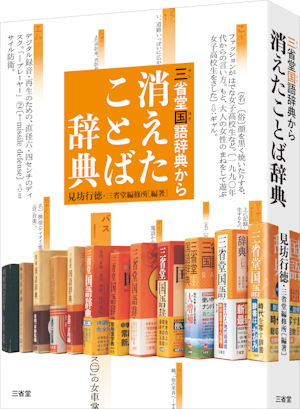
Fortunately, these dead words aren’t lost to time. In 2023, Sanseidō published what amounts to a memorial album: the 三省堂国語辞典から消えたことば辞典, or Dictionary of Words That Disappeared from the National Language Dictionary. As a sign of the times, they even released a “dead words” sticker pack on messaging app LINE. (Yes, you can still buy it!)
Sanseidō isn’t the only one cataloging dead words. Yonekawa Akihiko, a professor emeritus at Baika Women’s University, is the author of the 2016 俗語発掘記 消えたことば辞典 (The Dead Words Dictionary: A Forensic Journal of Slang). The words cut between the two dictionaries are revealing, as they show how language vacillates alongside the trends of the day.
Some of the clusters of words eliminated include:
Bubble-era (late Showa) vocabulary. Language from before the economic bubble of the 1980s and 90s popped. Terms like hana-kin (花金) – “Flower Friday,” the Japan Showa equivalent of “TGIF,” reflect the insane work culture of the time. itameshi (イタメシ), “Italian food,” reflects how Italian restaurants were seen as high-end dining and a status symbol. And then there’s スッチー (sutchī) for “stewardess” – a pre-equality relic that got chucked as Japan crawled its way into the Heisei era.
Mid-90s kogal words. With the gyaru era officially over, words like チョベリバ (cho-beriba, “very bad”), 写メ (sha-me, flip phone photo mail), and, yes, even コギャル (ko-gyaru) found themselves on the chopping block.
The boyfriend words. Yonekawa documents a set of words that reflected the extravagant spending of the late bubble period. For example, women used to talk about having three boyfriends: the アッシー君 (asshī-kun) who drives you home; the メッシー君 (messhī-kun) who pays for dinner; and the ミツグ君 (mitsugu-kun) who buys you presents. These days, it seems, women are more intent on avoiding the Three Cs than on finding the Three Ks.
Those aren’t the only relationship words to die. As I discussed in my last write-up about dead Japanese language, for decades leading up to World War II, アベック (abekku), from the French “with,” was used to refer to a couple. This usage petered out sometime in the 1970s.
Press accounts talk about “Showa dead words” or “Heisei dead words.” But some linguists argue that the dead word phase is much tighter – about five to 10 years – and isn’t clearly bounded by imperial eras, which often last decades.
Maybe some of these words, like Heisei retro loose socks, will come back into fashion at some point. Or maybe they’ll stay dead as new trendy words, like kaiwai, take their place.
After all, “words,” as Yonekawa likes to say, “are fated to be born and die.”
Keep reading



Sources
コギャル、MD…三省堂「新・国語辞典」で消えた”死語”の世界 NEWSポストセブン
消えたほうに興味ある〜⁉ テレビ・SNSで話題集中の〝削除語だけ〟を集めた「三省堂国語辞典から消えたことば辞典」爆誕! 株式会社 三省堂 / PR TIMES
改訂に伴い三省堂国語辞典から「コギャル」や「スッチー」が削除されることに関して、飯間浩明氏による解説ツイート Togetter
俗語発掘記 消えたことば辞典 講談社
豊かなる死語の世界がよみがえる 『俗語発掘記 消えたことば辞典』 HONZ
企業戦士、コギャル――三省堂、消えた言葉だけ集めた辞書を発売 ITmedia ビジネスオンライン
飯間浩明 Wikipedia (日本語版)
おニューって死語。。。ReRise Consulting
「おニュー」の意味と使い方とは?もう死語?方言|例文。語彙力.com