For visitors to Kyoto or even Kanazawa, it’s impossible to wander the streets without running into a kimono rental shop. Mannequins seem to be planted on every block, displaying bright patterns and promises of being totally transformed in 20 minutes or less. Some even declare walk-ins welcome; a rarity in Japan.
To many travelers, these shops are synonymous with kimono culture itself. Pick one of many bright kimono sitting on a rack, select an obi, stroll through a historic district while taking gorgeous photos, and voilà! You can now cross that off your bucket list.
But as a certified kimono stylist, I can tell you that these rental shops represent only one small corner of a much larger world.
Truthfully, “kimono rental” is not a single experience. The shop on the corner offering a quick transformation before strolling through Gion is only one branch of a surprisingly large family tree. Behind those storefronts blasting ¥3000 rentals lies an entire world of seasonal rules, fashion subcultures, and aesthetic choices that most visitors never realize exist.
To understand what makes these other experiences different, let’s first examine the version most tourists know… and what they don’t.
Fast fashion, traditional dress
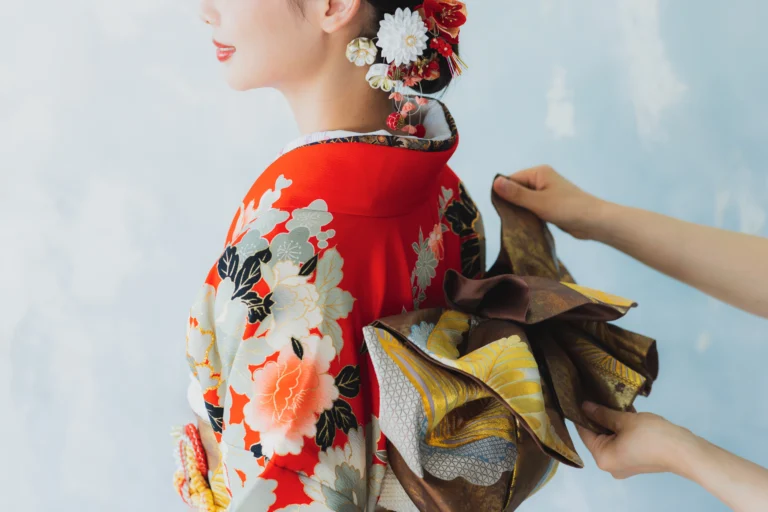
Everyone starts with kimono somewhere. This is the most common introduction, especially for foreign visitors. After choosing a kimono from a rack, you’ll move from station to station while staff help you select accessories, style your hair (if you like), and dress you before sending you off to explore the city. In popular areas such as Kyoto’s Higashiyama district, some shops may dress dozens, even hundreds of clients in a single day.
To make the process faster and more comfortable for beginners, many rental shops rely heavily on hanhaba obi, the type of obi often paired with yukata in the summer. Softer and easier to tie than formal obi, they’re practical for both dressers and clients alike. The musubi knots are quick and easy to tie, and easier to bear for kimono newcomers spending the rest of the day walking, climbing stairs, and sitting in cafés.
Such efficiency isn’t necessarily a bad thing. Many travelers simply want a memorable afternoon and a few beautiful photographs. Yet for those trained in the art of kimono dressing, kitsuke, it is often easy to identify a tourist rental coordinate at a glance.
Many rental shops cater to what foreign visitors expect a kimono to look like: bright colors, large floral motifs, and eye-catching patterns that stand out in photographs. Kimono enthusiasts, meanwhile, tend to focus on less obvious details such as seasonality, formality, textile techniques, and the overall balance of a coordinate.
In the world of kimono, the most impressive garment is not always the loudest one.
A more personal, professional approach
At the opposite end of the spectrum are private kimono stylists, such as myself. Rather than selecting a garment from a rack and moving quickly through a series of stations, clients typically work directly with a trained stylist who helps build a coordinated outfit based on their preferences, body type, and the occasion.
Naturally, this level of personalization comes at a higher cost. While tourist-oriented rental shops often advertise packages starting around ¥3,000 ($18.80), certified stylists generally start at a higher price point due to the time, expertise, and consultation involved. The goal is not simply to dress a client quickly, but to create a coordinate that feels intentional and harmonious.
This is where many visitors discover that kimono styling involves far more than choosing a garment they find attractive. Experienced stylists consider factors such as seasonality, formality, color balance, textile techniques, and the relationship between the kimono and obi. What appears to be a simple outfit is often the result of dozens of small aesthetic decisions based in a long tradition of Japanese aesthetics.
Stylists like me also often take an educational approach while dressing, explaining the motifs, fabrics, and accessories being used. For visitors interested in learning about kimono rather than simply wearing one for an afternoon, this can transform the experience from a photo opportunity into a deeper introduction to Japanese kimono culture.
This is also where many visitors are introduced to concepts such as TPO (Time, Place, and Occasion), seasonality, and formality. A private stylist might steer a client away from a brightly patterned furisode and toward an iromuji if they were attending a formal tea ceremony, or suggest motifs and colors that better suit the season. The deeper one ventures into kimono culture, the more one discovers that colors, fabrics, patterns, and accessories all carry their own meanings and conventions.
Yet even traditional kitsuke represents only one branch of a surprisingly large family tree.
Beyond the standard: a journey through time
Of course, neither factory-line rental shops nor private stylists represent the full extent of Japan’s kimono culture. In recent years, a growing number of specialized experiences have emerged that allow visitors to explore different periods of Japanese history, fashion trends, and aesthetics. Some focus on historical accuracy, while others are decidedly modern.
Jūnihitoe
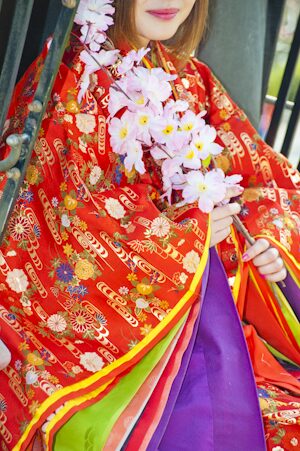
It would be remiss to not mention one of the most spectacular kimono experiences available: the jūnihitoe. This elaborate, multi-layered court dress is associated with the Heian period (794–1185) and was once worn by aristocratic women at the imperial court. The jūnihitoe consists of numerous layers of silk robes whose colors were carefully chosen to reflect seasonal aesthetics and social status.
Unlike a standard kimono rental, a jūnihitoe experience is less about sightseeing and more about historical immersion. Dressing can take upwards of thirty minutes, and the finished ensemble may weigh between 15 and 20 kilograms. As a result, most experiences take place in photo studios, shrines, or traditional gardens rather than wandering on city streets.
For guests interested in Japanese history, however, few experiences offer a more dramatic glimpse into the world of classical court culture.
Nara Period
Visitors to Nara can also find experiences inspired by the Nara period (710–794), centuries before the modern kimono took shape. While many travelers assume Japanese clothing has always looked roughly the same, Nara-period court dress was heavily influenced by China’s Tang Dynasty. Rather than a single wrapped garment secured with an obi, aristocrats wore layered ensembles consisting of separate robes, skirts, and trousers.
The result is a silhouette that feels surprisingly different from the kimono most people recognize today. Long before the elegant T-shaped garments associated with later Japanese fashion emerged, the courts of Nara looked outward to the continent for inspiration. For visitors interested in the cultural exchange between Japan and China, Nara-period dress offers a fascinating glimpse into an often-overlooked chapter of Japanese history.
Unfortunately, these experiences remain far less common than standard kimono rentals, even within Nara itself. Many operate on an appointment-only basis, and some cater primarily to a Japanese-speaking clientele. As a result, they can be surprisingly difficult for overseas visitors to discover and arrange independently.
Edo-Period Uchikake
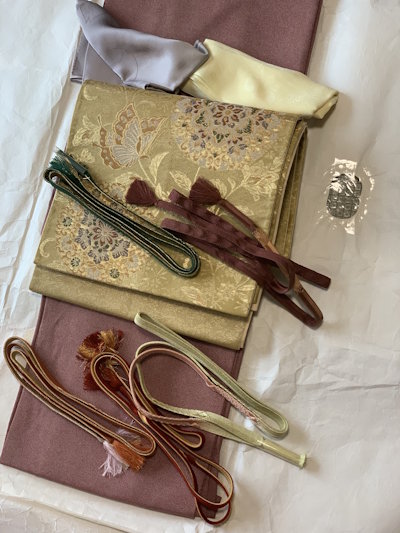
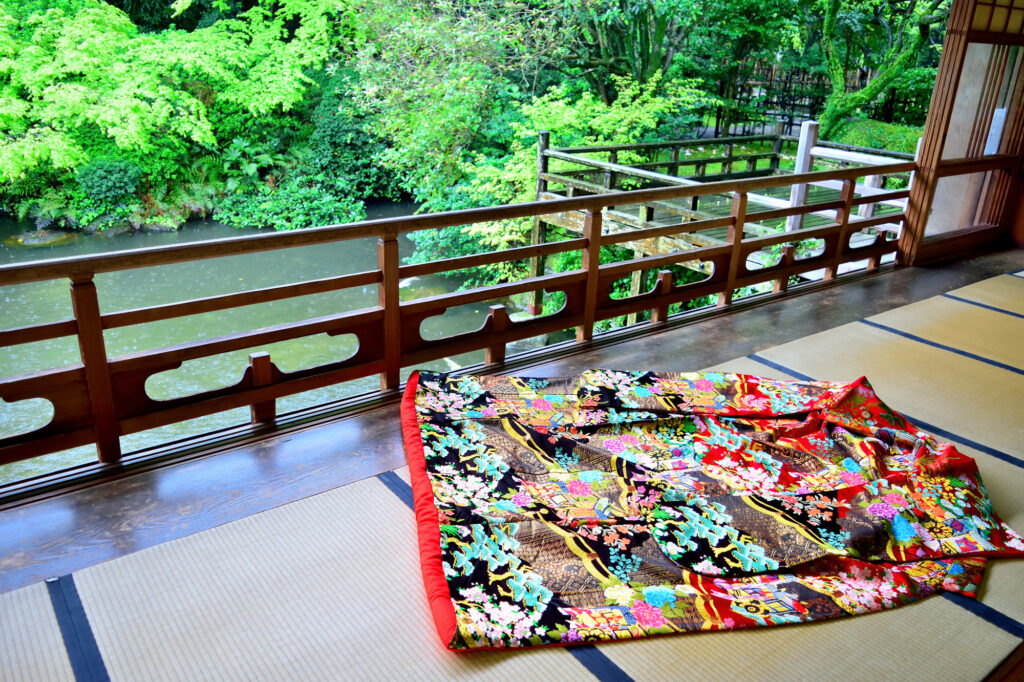
Another lesser-known option allows visitors to step into the world of the Edo period (1603–1868) through the uchikake, a lavish outer robe now most commonly associated with Japanese weddings. Historically, however, the uchikake was not bridalwear at all. Instead, it functioned as a status symbol worn by samurai wives and women from wealthy merchant families, draped over other garments to display the wealth and prestige of their household.
Today, uchikake experiences allow visitors to wear garments inspired by these historical fashions while learning about the role clothing played in Edo-period society. Characterized by sweeping hems, elaborate embroidery, and richly detailed designs, these ensembles are among the most visually dramatic traditional dress experiences available in Japan. While modern versions are often lighter and more comfortable than their historical counterparts, they retain the sense of grandeur that made them symbols of status centuries ago.
Many providers also offer complementary experiences for men, including samurai attire or formal garments inspired by members of the warrior and noble classes. For couples, these experiences can provide a unique alternative to the more commonly seen kimono rental packages found in Japan’s major tourist districts.
Taisho Roman: Where east meets west
Popular with young Japanese women, this style was inspired by the Taisho period (1912–1926), a time of rapid modernization where Western fashion and culture were influencing everyday life in Japan. The term Taisho Roman (大正ロマン) derives from the word “romantic” and evokes a nostalgic vision of the era’s fashionable young men and women. The result is a style that blends traditional Japanese garments with distinctly Western elements such as lace collars, pearl jewelry, hats, gloves, and leather boots.
Unlike more formal forms of kitsuke, Taisho Roman styling encourages a greater degree of personal expression. Bold patterns, contrasting colors, and vintage-inspired accessories are all part of the appeal. The aesthetic has become particularly popular among visitors looking for a more fashion-forward alternative to traditional kimono rentals, as well as younger Japanese enthusiasts drawn to its nostalgic charm.
Kyoto and Tokyo’s Asakusa district have become especially popular destinations for Taisho Roman experiences. In Kyoto, historic machiya townhouses, stone-paved streets, and temple districts create the impression of stepping into another era. Asakusa, meanwhile, offers its own blend of old and new, with retro cafés and historic streetscapes providing the perfect backdrop for this uniquely modern interpretation of Japanese dress.
Ironically, despite being marketed as a “traditional” experience, Taisho Roman fashion is perhaps one of the clearest examples of how Japanese clothing continues to evolve. Rather than preserving the past exactly as it was, it reimagines it through a distinctly contemporary lens.
Lace Kimono: Kimono as contemporary fashion
If Taisho Roman demonstrates how Japanese fashion absorbed Western influences a century ago, lace kimono demonstrates how it continues to evolve today. Particularly popular among younger Japanese women, lace kimono have become a staple of social media platforms such as Instagram and TikTok, where wearers combine delicate fabrics with pearl accessories, ribbons, lace gloves, and other contemporary fashion elements.
Unlike more formal kimono styles, lace kimono are often approached as everyday fashion rather than traditional dress. Their lightweight construction and romantic aesthetic make them especially popular for café outings, sightseeing, and photoshoots. Many rental shops offer coordinated packages that include hair styling and accessories, making the style both accessible and highly customizable.
For visitors expecting kimono culture to be entirely focused on preserving the past, lace kimono can come as a surprise. Yet their popularity serves as a reminder that kimono remains a living fashion tradition, one that continues to adapt, reinvent itself, and find new audiences with each generation.
More than the bucket list
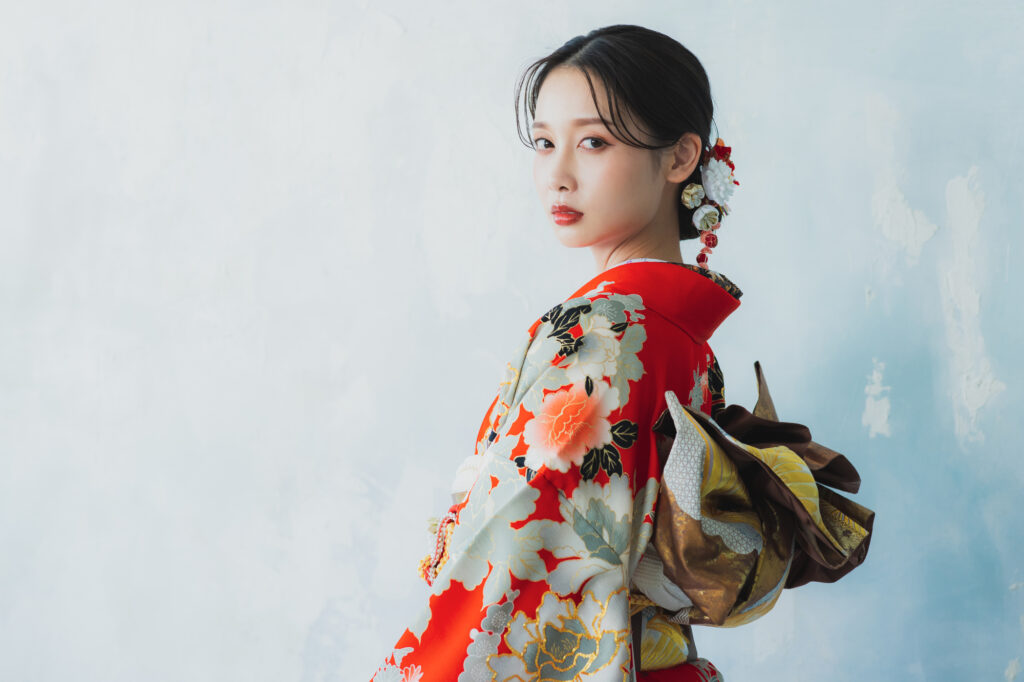
For many visitors to Japan, renting a kimono begins as a fun activity to check off the list. But the world of kimono extends far beyond the racks and the factory-line dressing. From the layered elegance of the Heian court and the continental influences of Nara-period dress to Taisho Roman fashion and contemporary lace kimono, there is no single “kimono experience” in Japan.
If you find yourself wanting to explore the world of traditional kitsuke more deeply, consider going beyond the factory-line experience. There is something uniquely rewarding about helping someone discover not just how to wear a kimono, but the stories, aesthetics, and traditions woven into it. After all, a kimono is never just a garment.
It’s a waltz between history, fashion, and the person wearing it.
Want a unique, local kimono experience at shops that usually only see Japanese clientele? For those interested in exploring these lesser-known corners of Japanese dress culture, we here at Unseen Japan Tours can assist, opening doors to experiences that might otherwise remain hidden. Contact us today→