
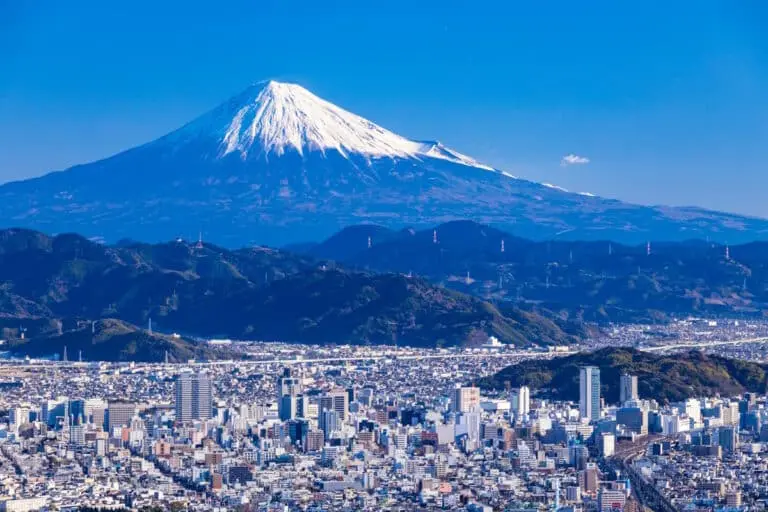
Japan’s Mt. Fuji is a popular tourist destination. These days, it’s a little too popular. Fortunately, there are other locations where you can get spectacular views of the mountain with less effort.
Mt. Fuji’s tourist problem
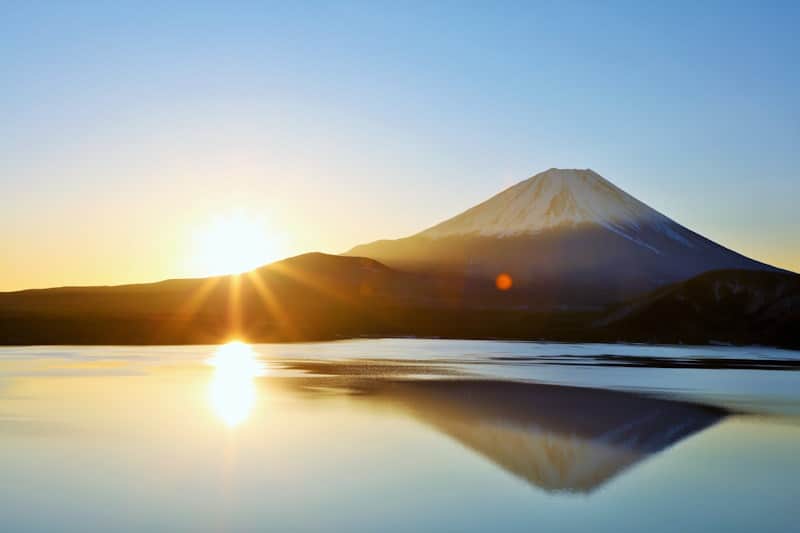
Located in Shizuoka and Yamanashi Prefectures, Mt. Fuji towers 3,776 meters (12,388 feet) above sea level in Japan’s Chubu region. On a clear day, you can see it from numerous locations, including Tokyo.
Given its prominence and beauty, it’s no surprise that one of the most popular tourist activities in Japan is hiking the mountain. However, Japan’s tourist boom has hit Fuji hard.
With so many people wanting to climb Fuji, the 2023 climbing season was congested and chaotic. To address the issues, Yamanashi’s governor proposed installing a light rail system to guide passengers up to the mountain’s fifth station. (The prefecture abandoned the light rail in November 2024 after roughly 70,000 residents signed a petition against it, and is now pursuing a rubber-tired “Fuji Tram” instead.) Since then, both prefectures have acted. All four trails now charge a 4,000 yen entry fee, Yamanashi’s Yoshida Trail caps climbers at 4,000 per day and requires an advance online reservation, and Shizuoka requires climbers to pass a rules-and-etiquette quiz before setting out.
There are also safety issues. Many climbers, tempted to catch the sunrise from the summit, push themselves to hike overnight. (Prefectural officials now bar anyone without a mountain hut reservation from the trails between 2 p.m. and 3 a.m., specifically to stop this.) These “bullet climbers” put themselves at risk and are also taxing the mountain’s understaffed support system.
Enjoying Fuji from a distance
That said, you can enjoy Mt. Fuji plenty without hazarding this huge hike. Just going near the mountain in either Yamanashi or Shizuoka Prefectures will yield some spectacular views. If you want a more scenic view, several spots are popular among tourists and locals alike.
Arakurayama Sengen Park (新倉山浅間公園)
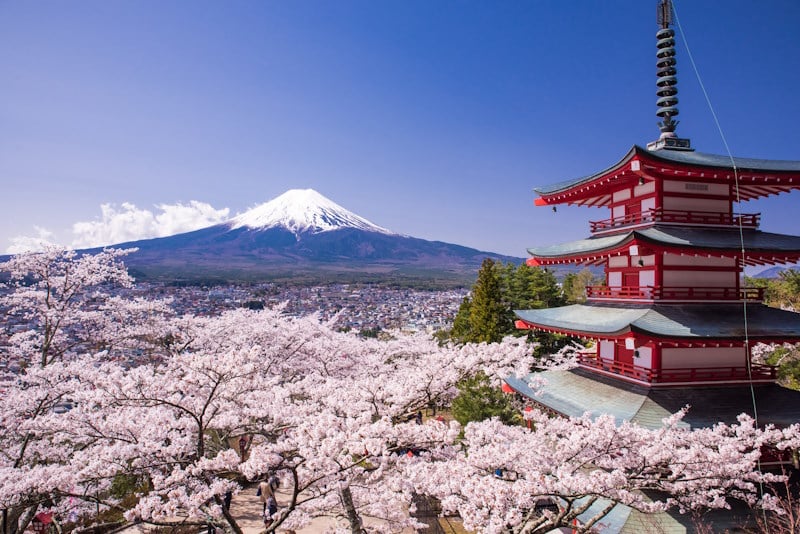
This spot needs little introduction. If you’ve seen pictures of Japan, you’ve seen the pagoda at Arakurayama Sengen Park with Fuji looming large and in charge in the background. The observation platform for these views is a short climb up 398 stone steps, with a gentler sloped path alongside for anyone who’d rather skip the stairs. On a clear day, the view of Fuji is breathtaking.
Be warned this is a very popular tourism spot, so you’ll be dealing with crowds. Doubly so if you fancy a visit during cherry blossom season, which at this altitude peaks in mid-April rather than in March. This is the time to go for the most scenic views, though, as the park’s 650 cherry trees will be in full bloom. Note that Fujiyoshida canceled its cherry blossom festival outright in 2026 over overtourism, has charged for park parking since April 2025, and runs the observation deck on a timed rotation with waits of one to three hours at peak bloom.
Mishima Skywalk (三島スカイウォーク)
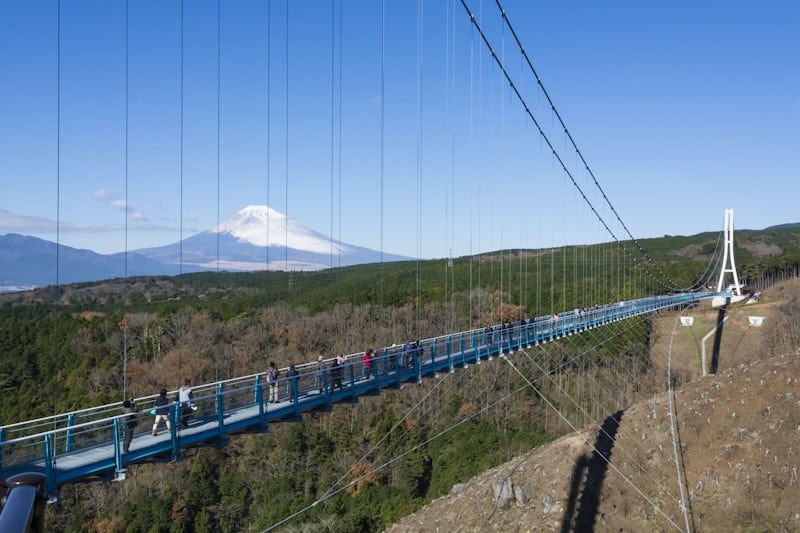
If you’re looking for something ridiculously fun and tourist-y to do while seeing Mt. Fuji, Mishima Skywalk is right up your alley. Billing itself as Japan’s longest pedestrian suspension bridge, the bridge itself offers wonderful views of the mountain. Mishima Skywalk also sponsors a number of other tourist activities, including a “forest athletics” adventure, Segway rides, dune buggy riding, and fine dining.
Lake Kawaguchi/Fuji’s five lakes (河口湖)
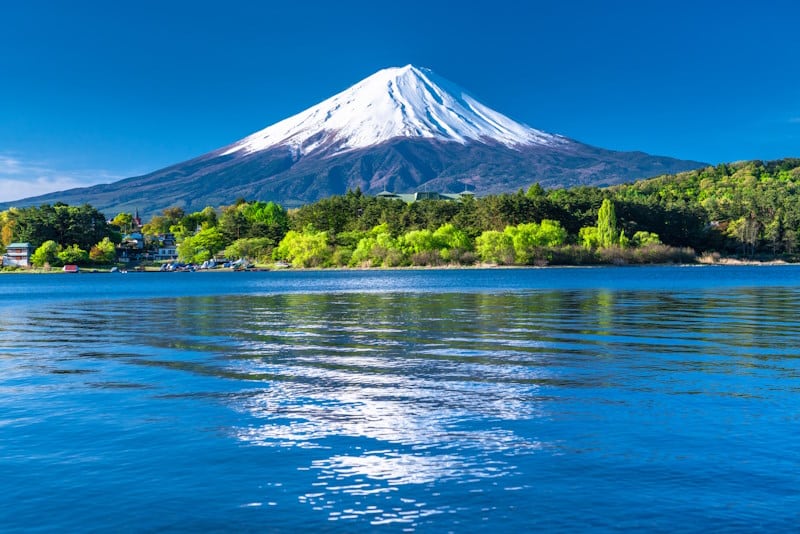
Another option is to find a spot near one of the five lakes of Mt. Fuji – Kawaguchi, Motosu (本栖湖), Shoji (精進湖), Sai (西湖), and Yamanaka (山中湖) – and drink in the natural beauty. On bright, clear days, Fuji reflects in the lake like a mirror, creating a tranquil and breathtaking scene. There are multiple parks and grassy areas along the lake suitable for viewing, making it easier to find a location to relax even during peak tourist times.
Fuji Panorama Ropeway (富士山パノラマロープウェイ)
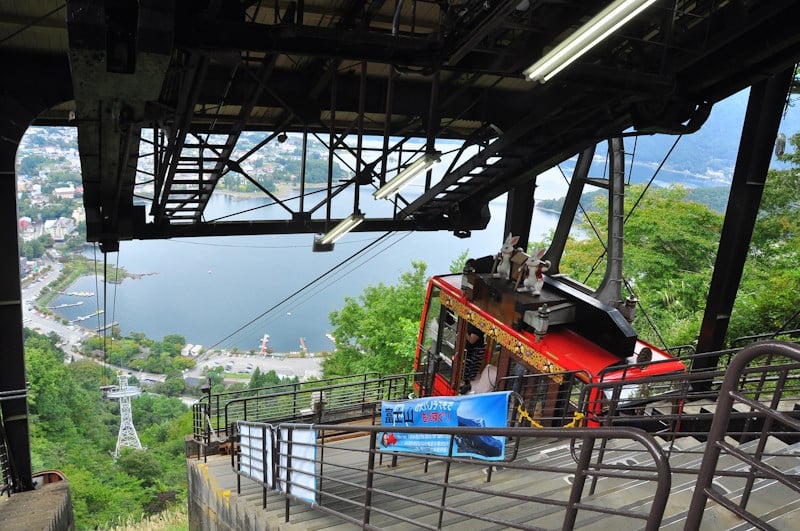
Another busy attraction – but one worth the effort! – is the Panorama Ropeway gondola in Yamanashi Prefecture. The gondola climbs neighboring Mt. Tenjo to a summit station 1,075 meters above sea level, providing a 360-degree view of Mt. Fuji, Lake Kawaguchi, and the surrounding area. On a good day, you can also see the Minami Alps, a mountain range extending across Yamanashi, Nagano, and Shizuoka Prefectures.
Nihondaira Yume Terrace (日本平夢テラス)
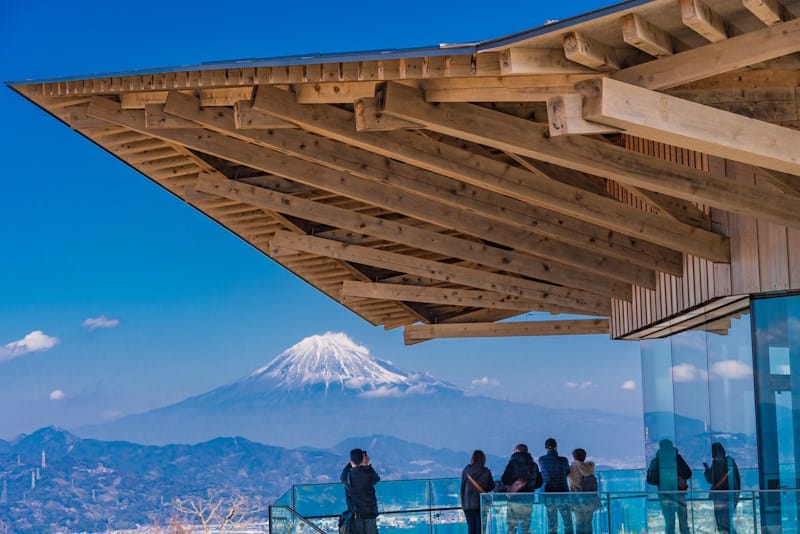
Located in Shizuoka Prefecture, Nihondaira is a plateau that sits about 307m above sea level. It provides viewing, not just of Mt. Fuji, but also of the Minami Alps and the surrounding area.
Nihondaira Yume Terrace is a beautiful structure in its own right. It’s even more beautiful when the sky is clear and you can see Mt. Fuji and the surrounding area. Open 9 to 5 (9 to 9 on Saturdays) and closed the second Tuesday of each month, the Terrace is free for anyone to visit until October 1, 2026, when admission becomes 100 yen for adults and high schoolers and 50 yen for younger students.
Oshino Hakkai (忍野八海)
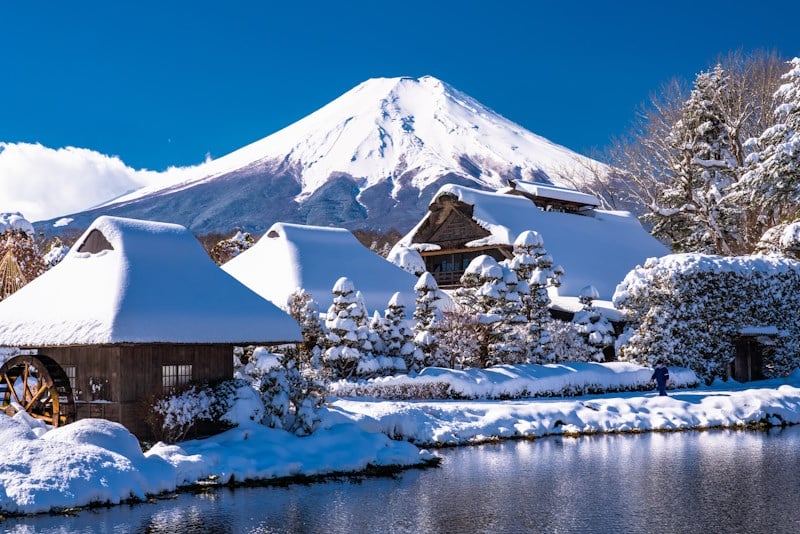
Oshino Hakkai, a set of eight ponds fed by underground water from Mt. Fuji, offers a spectacular view of the mountain from Yamanashi Prefecture. Winter snowfall provides some especially attractive scenery juxtaposed with the snowy mountaintop. The village of Oshino also offers other sightseeing attractions and lodging. Sadly, most of the information the village prints for tourists appears to be in Japanese. (But contact us and we can assist you in finding accommodations and putting together a tour plan!)
Tenkachaya (天下茶屋)
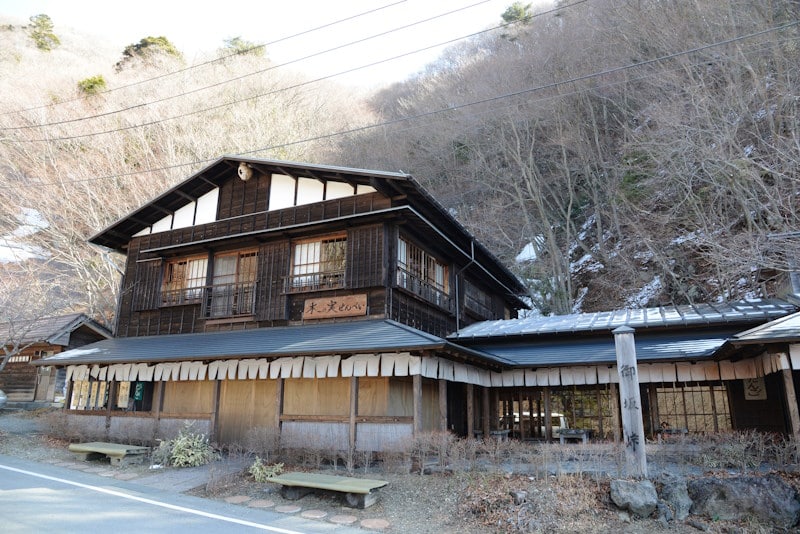
Built in 1934 (Showa 9), Tenkachaya is famous as the location where Japanese novelist Dazai Osamu stayed while writing his short story Fugaku Hyakkei. Located on the old Misaka Pass road, Yamanashi Prefectural Route 708 just off Route 137, Tenkachaya remains a popular tourist location where visitors can enjoy a tranquil cup of tea. Some seats also offer premium viewing of Mt. Fuji.
Panorama Platform (パノラマ台)
This little spot sits on Yamanashi Prefectural Route 730 and is reachable by car or on foot via the Mikuni Pass trail, and it offers stunning views of both Lake Yamanaka and Mt. Fuji. You can only fit about eight cars at a time here, though, so it’s something of a dice roll. But if you’re touring Yamanashi by car, this is a nice place to drive by to see if you can’t sneak a gaze.
Seeing the mountain from Tokyo
What if you don’t have time to get out to Yamanashi or Shizuoka? No worries – there are still several spots from which you can catch Fuji on a nice day from within Tokyo’s 23 wards.
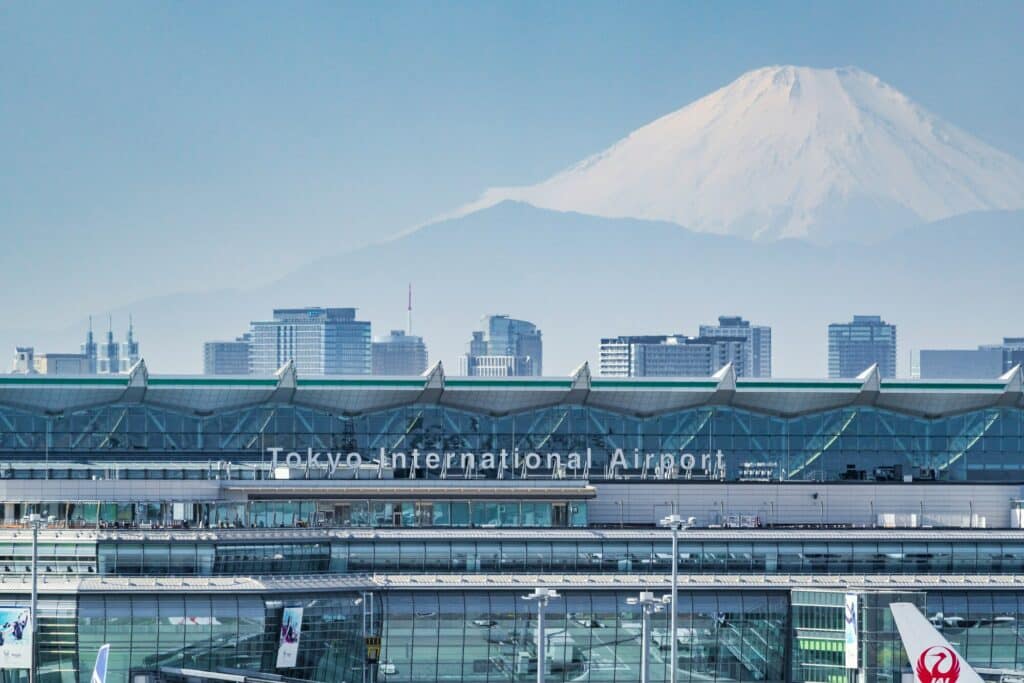
One easily accessible spot for most travelers? The observation deck at Haneda Airport’s Terminal 3. If you didn’t get a chance to catch Fuji while you were in Tokyo, you still have an opportunity to gaze upon it before you ship back home.
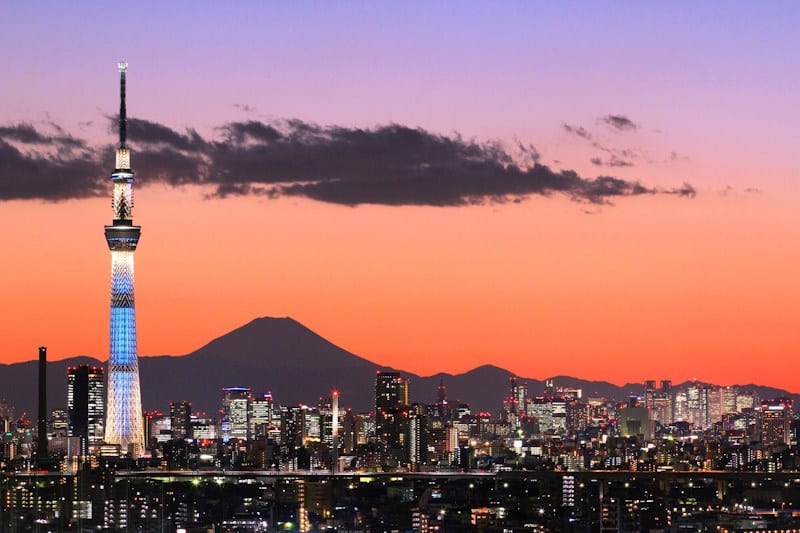
Depending on the day, both Tokyo Skytree and Tokyo Tower provide views of the magnificent Mt. Fuji. Both are also great tourist destinations in their own right, with Skytree sporting an aquarium, restaurants, and special events such as night viewing tickets.
There are also several hills scattered around the city where you can get a glimpse of the mountain. One of them is even named for the practice: Fujimi-zaka (富士見坂) in Meguro, which you can reach by going to Meguro Station and walking towards Ebisu Garden Place.
Keep reading

Sources
富士山が望めるオススメ撮影スポット24選(東京、神奈川、山梨、静岡). Matcha JP
富士山が見える絶景スポット26選!きれいな写真が撮れるおすすめも【関東・東海】. Jalan
富士山を眺めるならここ!おすすめの絶景スポット9選. Relux Journal