Just south of Kyoto city lies the home of green tea and the Phoenix Hall of Byōdōin: Uji. Located less than 30 minutes away, the matcha capital is a convenient escape from heavier crowds in Gion and Arashiyama. For many visitors, it’s a brief stop, a place to sip tea, see one of Japan’s most iconic temples, and return to the city.
But Uji has far more to offer than matcha and a single temple. Once you venture beyond the temple grounds and cafes, a different Uji comes into view: one shaped by literature, quiet riverside paths, and moments in history that feel almost hidden in plain sight. Like Otagi Nenbutsuji, it’s another Kyoto alternative that lies slightly off the beaten path.
So let’s wander a little further together, into the corners of Uji where the city’s deeper character begins to emerge.
Byōdōin: A vision of the pure land
For many, Uji means one place above all: Byōdōin.
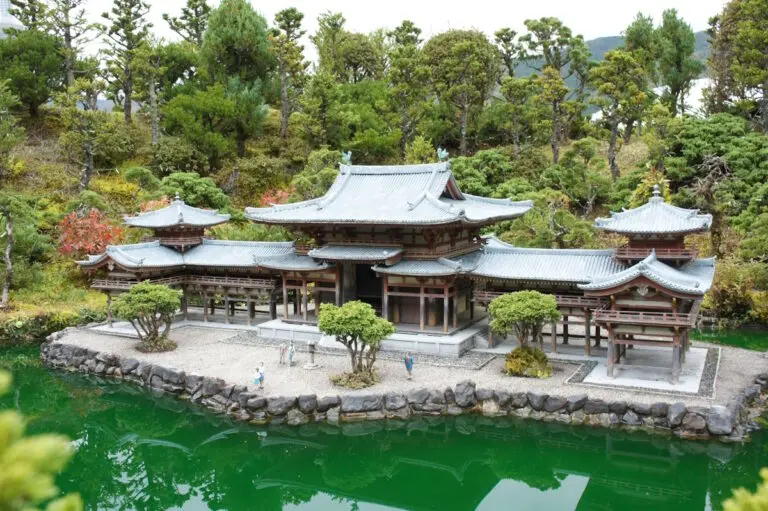
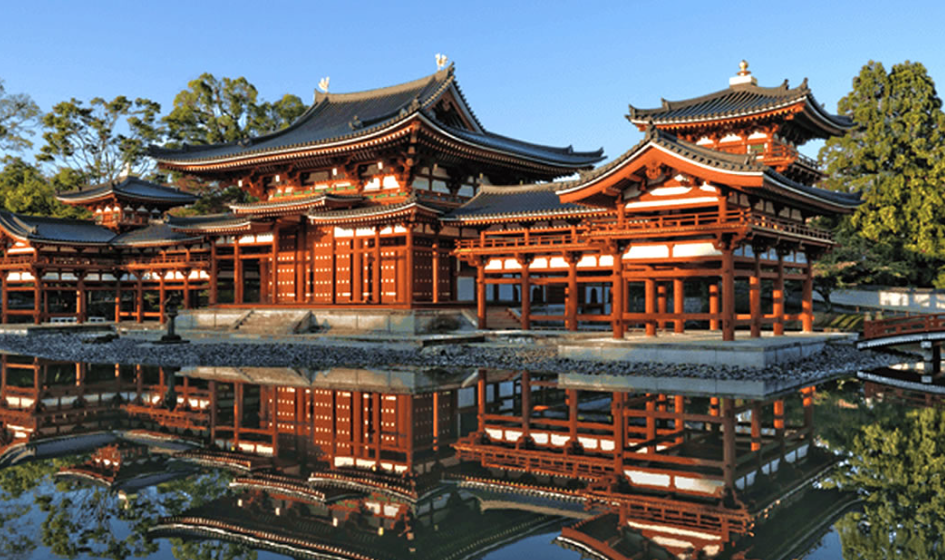
Appearing on the face of the ¥10 coin, Byōdōin is one of Japan’s most recognizable temples. The Phoenix Hall was designed as a representation of the Pure Land, a place believers hope to be reborn into after death. That vision is reflected in every aspect of its design: the hall seemingly floating above the surface of Aji Pond, its reflection carefully incorporated into the landscape. All was crafted to evoke a sense of symmetry and stillness.
Inside the hall sits a statue of Amida Buddha, carved by the master sculptor Jōchō. Though access is limited to guided tours, the figure remains one of the most celebrated examples of Heian-period Buddhist art.
Many of the details visitors see today are carefully preserved or reconstructed. The gilded phoenix statues atop the roof are replicas; the originals are housed in the nearby Byōdōin Museum Hōshōkan. Visitors can view them up close alongside other temple treasures.
Beyond the main hall, the temple grounds are also worth the stroll. While the temple proudly displays a wide variety of blooms, Byōdōin’s most iconic are its wisteria. These almost 300-year-old vines drape over three main wooden trellises, making a stunning contrast with the Phoenix Hall. One of the trees, around the same age, stretches gracefully beside the pond, adding another layer of seasonal beauty.
But serene beauty is not the only thing the temple has to offer.
Echoes of war: Yorimasa’s final stand
Tucked within the Saisho-in subtemple is the grave of Minamoto no Yorimasa, a samurai, court noble, and poet whose final moments helped shape the course of Japanese history.
In 1180, tensions between the Minamoto and Taira clans erupted into what became the Genpei War. The uprising was sparked in part by the Taira’s consolidation of power, including challenging Prince Mochihito’s claim by placing the two-year-old Emperor Antoku on the throne. Yorimasa ended up joining Mochihito in an attempt to overthrow the Taira-led government.
It did not go well. Yorimasa retreated to Uji, making his final stand at Byōdōin. Rather than be captured, Yorimasa withdrew into the temple and took his own life. His death is often regarded as one of the earliest recorded instances of seppuku. Today, his grave sits as a quiet contrast to the rest of the temple’s splendor. There are no crowds, no grand displays, just a modest marker as an ode to a tumultuous time in a serene place.
Beauty in impermanence: The Tale of Genji
It is here in the matcha capital that the final chapters of The Tale of Genji unfold. These concluding chapters, often referred to as the “Uji chapters,” carry a tone shaped by distance, uncertainty, and emotional restraint.
At the center of this shift is Ukifune, whose story stands in contrast to the earlier, more elaborate romances. Rather than offering clear resolution, her arc lingers in uncertainty, highlighting themes of Buddhist impermanence and the difficulty of escaping suffering. Truly fitting for the somber atmosphere of the Uji landscape.
Today, the Tale of Genji Museum offers an immersive introduction to the story, with exhibits that go beyond text alone. Visitors can explore recreated scenes, interactive displays, and even sensory elements such as incense, bringing the world of the Heian court into closer reach.
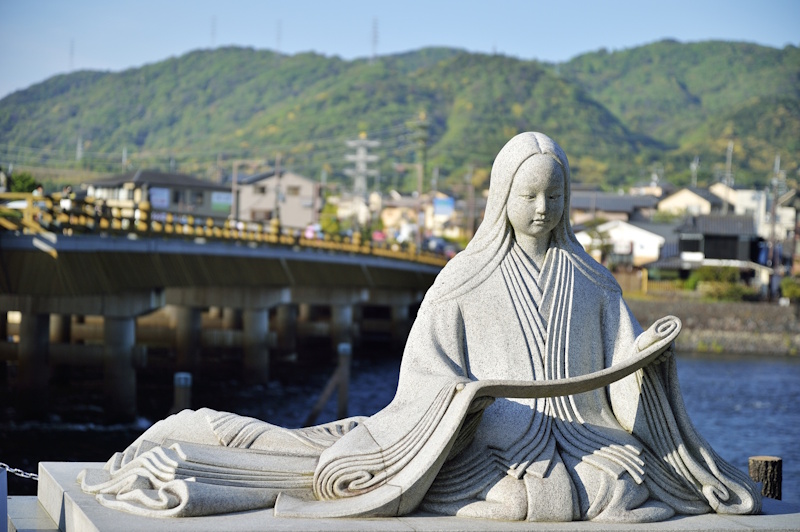
Along the Uji River, statues of Ukifune and Murasaki Shikibu quietly mark the connection between place and narrative. Walking these paths, it becomes easier to see why the story’s final chapters were set here. The gentler, more subdued landscape mirrors the tone of a tale that does not end with resolution, but with rumination.
Uji River: Where history and landscape converge
Running through the city center, the Uji River has long shaped both the physical and cultural landscape of the area. Its bridge, constructed in the 7th century, is one of the oldest in Japan. While today the bridge offers a quieter experience, it was here in 1180 that the Battle of Uji took place, marking the start of the Genpei War.
Just downstream, the river splits around small islands such as To-no-shima and Tachibana Island, creating gentle walking paths. Hidden along the riverbanks are smaller details that are easy to miss. One such example is the aptly named “turtle stone,” or 亀石 (Kameishi). Local legends link it to figures such as Toyotomi Hideyoshi, who is said to have used it to conceal waterworks connected to Fushimi Castle, though other stories trace its origins back even further.
Like much of Uji, the river resists a single narrative. It is at once a site of battle, a setting for literature, and a place for quiet walks. To follow its path is to move through layers of history that reveal themselves gradually, carried along by the steady flow of water.
Tea, cafés, and local tables: Tasting Uji beyond matcha
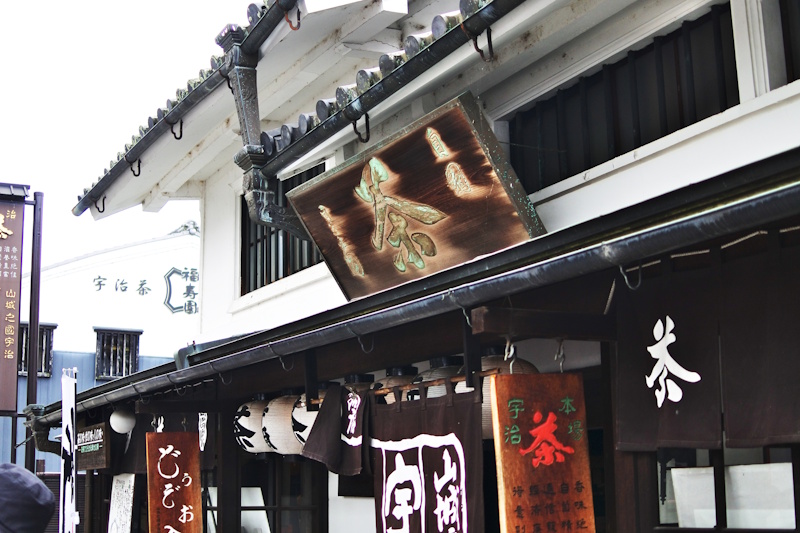
For many, Uji begins and ends with matcha. Approaching Byōdōin lies a steady stream of cafés and specialty shops on Omotesandō offering everything from whisked bowls of tea to elaborate matcha desserts. It’s an easy place to pause and consider.
One of the most well-known is Itoh Kyuemon Uji, a tea shop whose roots trace back to the late Edo period. Today, while its parfaits and sweets draw in crowds, the main shop near the Keihan station also offers a more traditional tea experience.
Just steps from Uji Bridge, Tsuen Chaya Tea House offers a different kind of connection to Uji’s tea culture. Established over 850 years ago, it’s considered the oldest tea house in the city, and among the oldest in Japan. Originally serving travelers crossing the bridge, it continues to operate in much the same spirit today, a place to pause, take in the view of the river, and experience a tradition that has endured for centuries.
For a more substantial meal, Kyōryōri Ujigawa sits in a prime riverside location that might suggest a typical tourist stop, but proves to be a pleasant surprise of well-prepared seasonal dishes highlighting local ingredients. Nearby, Daiki Unayoshi offers grilled eel in a quieter setting just off the main road, rewarding those willing to step slightly away from the busiest areas.
Further along, restaurants like Byōdōin Omotesando Chikurin combine kaiseki-style dining with views of the river, echoing the broader rhythm of Uji itself. Taken together, these spaces reflect a different side of Uji beyond its famous tea.
Looking beyond Byōdōin
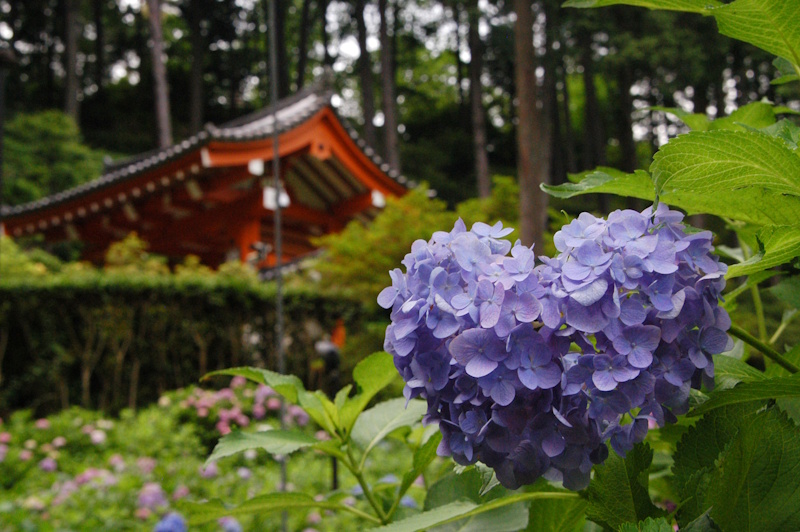
While Byōdōin Temple draws the majority of visitors, Uji is home to a number of smaller temples and shrines that offer a quieter, more contemplative experience.
A short distance away, Mimuroto-ji is often referred to as the “Flower Temple,” known for its seasonal displays. In early summer, its grounds are filled with thousands of blooming hydrangeas. Even outside peak seasons, the temple retains a sense of calm that invites visitors to slow their pace.
Closer to the river, Kosho-ji Temple offers a different kind of historical presence. Its approach, lined with maple trees, is especially striking in autumn, but the temple is one of seven temples featuring a “blood ceiling.” Repurposed floorboards from the 1600 siege at Fushimi Castle, the ceiling still bears faint impressions said to be left by those who met their end there. It is a subtle but powerful reminder of the human cost behind historical events often reduced to names and dates.
Nearby, Hōjō-in Temple sits quietly along the Uji River. Associated with Shingon Buddhism and closely tied to the history of Uji Bridge, it offers a peaceful vantage point from which to reflect on the events that once unfolded in the surrounding area.
Finally, Ujigami Shrine stands as one of Japan’s oldest surviving shrine structures, its simple architecture contrasting with the more elaborate sites nearby. Scattered throughout the grounds are small rabbit motifs, adding a gentle, almost unexpected charm to a place rooted in deep history.
Taken together, these sites reveal another side of Uji existing just beyond the main paths. Here, the crowds thin, the pace slows, and the experience becomes less about checking off landmarks and more about noticing what lingers in between.
A city shaped by moments
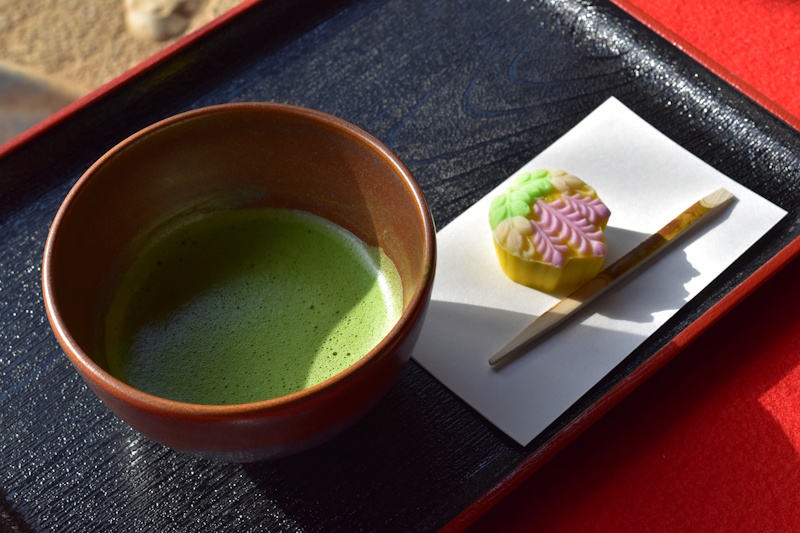
Uji may be best known for a handful of iconic images: the Phoenix Hall reflected in still water, a bowl of vivid green matcha, the quiet curve of the river. But there is just as much found in what lies beyond them.
Here, history does not announce itself loudly. It dwells in smaller places: a modest grave tucked within temple grounds, in the final pages of a thousand-year-old novel, in the steady flow of a river that has witnessed both beauty and conflict. Even its most famous sites, like Byōdōin Temple, reveal more when approached slowly, with time to notice what surrounds them.
As Kyoto continues to draw record numbers of visitors, Uji offers a different rhythm. It invites you to pause rather than rush, to sit rather than simply see. While it may be easy to visit in an afternoon, it is much harder to fully take in.
For those willing to move beyond the surface, Uji is not just a quick detour from Kyoto, but one that stays with you long after you leave.
Looking for other quiet travel locations across Japan? Check out our guide to the country’s best mountain towns.
Want to work a side trip like Uji into your Kyoto plans without losing a day to logistics? Unseen Japan Tours can design a custom itinerary around the quieter corners you actually want to see, and act as your Japanese-fluent expert guides on the ground. Chat with us today→