
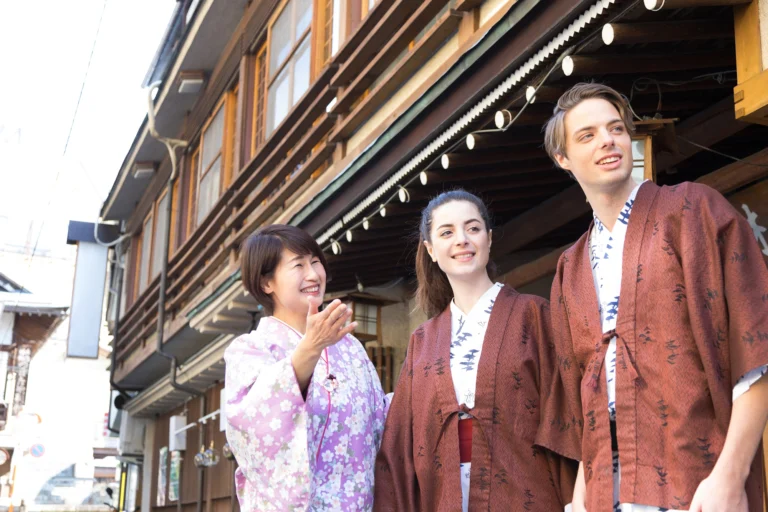
So, you’re looking to book a vacation to Japan. You call up two different travel agents: one charges a fee to build each day of the itinerary, while the other says they’ll plan the trip for free.
That second offer sounds pretty sweet. But, as they say, nothing in life is free. That doesn’t necessarily mean the free itinerary will be bad, but it does beg the question: who is paying this agent to plan this trip, and how will that impact your itinerary?
Who’s paying the travel agent to make “free” custom itineraries?
Before answering that question, it’s important to understand that there are three ways for a travel agency to make money.
One, the customer (i.e., you, the traveler) pays a direct planning fee to create an itinerary and book everything. This is the only method that’s fully transparent, although a lot of people balk at such a direct, “on top of everything else” fee.
Two, the travel agency gets a wholesale net rate from hotels, ryokans, airlines, and rental services, and adds its own markup fee when charging the customer. This is most common for multi-day package tours, where the traveler pays a lump sum for a combination of, say, a hotel, a car rental, flights, and tour guides.
Three, a given property (be it a hotel, attraction, or otherwise) pays the agency a commission. This is the most common among independent travel advisors working under larger agencies such as Fora, InteleTravel, Nexion, and others. The client is charged the commercial rate for, say, a hotel booking, and then the hotel pays a 5% to 15% commission to the agency, of which the advisor gets a cut.
Breaking down the pros and cons
The commission method can be a genuinely amazing deal for things like simple hotel bookings. There’s no upfront cost to the traveler, so if the travel plans fall through, they’re not out any money.
Agencies specializing in luxury travel can do even better. Those affiliated with networks like Virtuoso or Signature can add preferred-partner amenities at participating hotels. Virtuoso says that these can be worth over USD $550 per stay, including perks like breakfast for two, a room upgrade (based on availability), early check-in, late checkout, and even USD $100 in food and beverage credit.
The agency Fora says advisors generally do not charge for hotel bookings because properties pay commission. However, some may charge a planning fee (which is transparently presented upfront) for complicated multistop itineraries.
The thing is, trips to Japan almost always become complicated multistop itineraries. That’s why we at Unseen Japan created our free five-day trip planner itinerary to help people out. No matter what travel planning service you’re using, our trip planner can help you prepare for the things most travelers don’t expect on their first (or even second) time here.
How Japan itineraries can get complicated fast
It doesn’t take a brain surgeon to see that a trip that includes Tokyo, Kyoto, Osaka, Hakone, Kanazawa, rural ryokan, rail passes, luggage forwarding, and regional transfers is a completely different rodeo from booking a beach hotel. Free itineraries exist everywhere, but a traveler may discover that the trip they want requires a planning fee after all. Commonly cited fees of around USD $350 per week would make a two-week trip roughly USD $700.
We also end up circling back to agency’s earning method number two: markup fees. Japan destination management companies, known in the trade as DMCs or land operators (ランドオペレーター, lando operētā), hold direct net-rate contracts with hotels, ryokan, and transport providers. When booking trips, overseas agents buy those services and add their own retail price.
As a result, there’s pretty much zero transparency with the price. The traveler never sees the true cost. It doesn’t help that Japan’s accommodations market is pretty opaque to begin with.
The lodging and accommodations market in Japan
For a better example of how opaque the market can get, let’s look at the numbers. Japan currently has 98,338 licensed lodging businesses. Of those, 52,946 are hotels or ryokan, with the remaining 44,901 ranging from mountain huts and guesthouses to youth hostels and capsule hotels.
How much do international distributors see of those nearly 100,000 licensed accommodations?
Booking.com shows roughly 3,000 properties tagged as ryokan, a tiny fraction of the actual number. Thousands more appear primarily on Japanese-language platforms such as Jalan, Rakuten Travel, Ikyu and Relux. Some family-run properties take direct bookings only and prioritize returning guests. (That doesn’t even mention the various accommodation fees.)
So, for most agencies based overseas, they’ll only see a tiny fraction of the properties actually available. And that will narrow down the traveler’s choices significantly.
Full transparency doesn’t equal a lower price
Now, if you go with the first payment method (i.e., straightforward planning fee to build an itinerary), pricing will be more straightforward. But cheaper? Not necessarily. Visible fees can add up.
For example, a full-day Tokyo guide typically costs ¥60,000 to ¥80,000. And since Japan tour guides have been deregulated since 2018, this creates a wide range of prices under the same label.
The real advantage of direct fees is predictability. A commission is generally capped at the percentage paid on commissionable lodging. A DMC markup is utterly unpredictable. A stated planning fee is the only cost of the three that a traveler can forecast before committing.
A comparison: not so black and white
We’ll be honest. None of this means commission-based advisors are bad or acting in bad faith. It doesn’t mean you’ll have a bad trip, either. You may use these services and have a fantastic trip to Japan.
However, a system that pays on commissionable properties will, over thousands of itineraries, naturally favor those that pay the best commission. They’ll also be limited to sending travelers to spots with whom they have a financial relationship.
This results in funneling travelers to the same old spots in the Golden Route, anchored by major cities and international-brand hotels. That isn’t always a problem, but it exacerbates problems like crowding and overtourism. It can also create an unpleasant experience for the traveler.
Additionally, you’re not getting an objective, unbiased recommendation. The travel planner is recommending you places because it benefits them, not because it’s the best experience for tourists.
Meanwhile, if you pay an upfront fee, you can trust that your trip is truly tailor-made for you. (Especially handy if you have a specific special interest or specific dietary needs.) You can go off the beaten path and stay in places that the average international distributor would never find.
Mind you, these services aren’t mutually exclusive, either. You may use a commission-based agency for most of your trip, but then use a specialized Japan itinerary and guiding service to get an in-depth experience from someone who’s lived here and conducted tours for years.
At the end of the day, if you’re going overseas, you should go where you want to go.
Interested in a tailor-made Japan trip that doesn’t play favorites? Contact us at Unseen Japan Tours and ask us to design an itinerary suited to your unique interests and travel needs.
Keep reading

Sources
How Virtuoso Travel Agents Offer Extra Perks At Luxury Hotels One Mile at a Time
Virtuoso: How It Works, Travel Advisors, Upgrades & Benefits Upgraded Points
The Okura Tokyo Accepted into Global Luxury Travel Group Virtuoso The Okura Tokyo (press release, PDF)
Japan DMC for Travel Agents: B2B Net Rates Explera DMC
Japan B2B Travel Agent Portal: Wholesale Hotels, Tours & JR Pass DMC Quote
How To Book a Certified Tour Guide JNTO (Japan National Tourism Organization)
令和6年度衛生行政報告例(就業医療関係者を除く。)の概況 厚生労働省 (Ministry of Health, Labour and Welfare)
旅館業のページ 厚生労働省 (Ministry of Health, Labour and Welfare)
Japan hotels and places to stay, Ryokans property-type filter Booking.com
OTA手数料を比較|楽天・じゃらんなど主要OTAまとめ【2026年版】 リロホテルソリューションズ
【保存版・2026年1月 更新】宿泊予約サイト(OTA)手数料一覧表 プライムコンセプト
旅館の予約経路別比率、約半数がOTAに 日本旅館協会「営業状況等統計調査」 観光経済新聞
営業状況等統計調査 日本旅館協会