
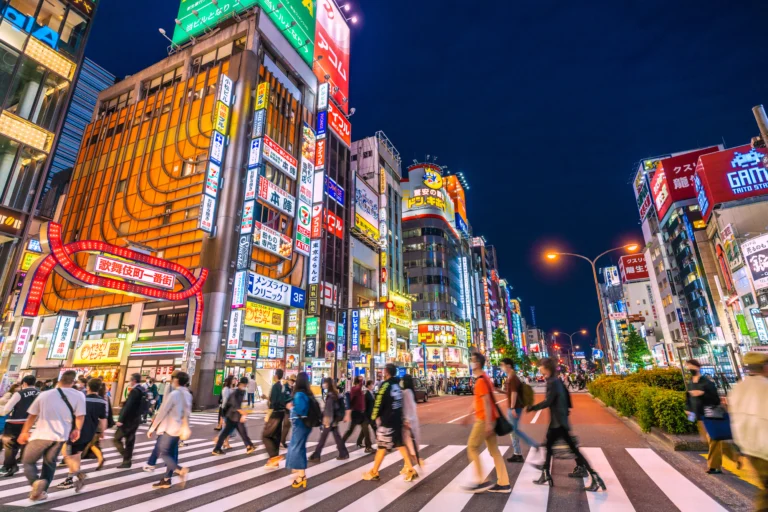
Recently, a Kabukichō sekukyaba (セクキャバ), a.k.a. an oppai bar, openly admitted to something that breaks Google’s rules outright: going a tad bit too far in asking customers to post reviews.
But while they’re one of the few being open about it, they’re far from the only business in Japan trying to game their own ratings, especially on platforms like Google Maps. And that’s a problem for travelers, because many inbound visitors to Japan use it as a quick, easy, and foreigner-friendly tool to figure out where to go. And yet, that Google star rating might not be as organic as you would hope.
Laws around manipulating a business’s reputation online

Turns out, the business of manufacturing online reputation by soliciting reviews is surprisingly popping. So, Japan has been busy the past few years setting up some rules to keep things fair and transparent. That way, there’s less likelihood of people getting scammed.
Since October 1, 2023, for example, the government has implemented Article 5(3) of the Act against Unjustifiable Premiums and Misleading Representations, which is basically Japan’s main false-advertising law. This article prohibits businesses from disguising paid endorsements as ordinary customer opinions. Any business that violates it and ignores a corrective order can face up to two years in prison or up to a ¥3 million (~$19.5K) fine.
And since Google Maps is the go-to for foreign tourists looking up reviews, it’s been involved in a few cases under this law.
Avoiding nightlife traps: the two things to avoid
There are a couple ways this can bite you when visiting an area known for its nightlife like Kabukichō.
One is bottakuri (ぼったくり), or “rip-off” bars. One newer version of the scam, which lures customers in through dating apps, had racked up around ¥140 million (~$911K) in damages as of late October 2024. They do a similar thing to businesses that pad their reviews. They appear, on the surface, to be pristine and courteous. They might advertise all-you-can-drink sets or cheap cocktails.
Sometimes they have touts who lure people from outside, pretending to be part of a legitimate bar or restaurant, only to drag you to a supposed “sister” bar that is, in reality, completely unrelated, with pricing that charges an arm and a leg.
A lesser, but equally vexing, problem is the venues that pad out their reviews. Recently, when scoping out locations for UJ’s comprehensive guide to Tokyo nightlife, publisher Jay Allen noticed one oppai bar in Kabukichō that had a 4.8 rating on Google Maps. Pretty good, right?
On further digging, however, it turned out the business was asking customers in-store to write reviews. The company even admitted this in response to one Google Review user who called them out on it.
The same business also built out dozens of English-language explainers on its own site, targeting keywords like “oppai bar” and “sexy cabaret.” So when customers search those terms, one of the answers they get is a page written by a business selling the service, and you have to scroll two-thirds of the way down before it admits that.
(And yes, full disclosure: UJ sells our own nightlife guide and nightlife tours. The difference is we don’t take any commissions from the stores for this. We’re just taking you to places we really enjoy ourselves.)
This isn’t an uncommon pattern. Many concept cafes, girls’ bars, and other Japanese nightlife hot spots ask customers to leave 5-star reviews, sometimes in exchange for a freebie (e.g., a free drink or food).
The result is that, without a trusted guide or reviewer helping them out, customers don’t know who they can trust.
Businesses caught soliciting reviews
The very first stealth-marketing enforcement action involving Google Maps happened in June 2024. Yūshinkai, the operator of Machinoma Ōmori Internal Medicine Clinic in Tokyo, had offered flu-shot patients a discount from the ¥1,650 (~$10.75) vaccination fee in exchange for posting a four- or five-star review.
The Consumer Affairs Agency identified 44 five-star reviews posted under that offer. And the thing was, they might have had a better defense if they had simply encouraged reviews in a general sense. But bribing clientele for good reviews? Yeah, no bueno.
The second enforcement case was even clearer about what people were being paid to leave reviews. In March 2025, the Consumer Affairs Agency caught Smile Square, an orthodontic clinic in Tokyo, over a scheme offering patients either a ¥5,000 (~$32.50) QUO gift card or ¥5,000 off their treatment bill for posting five stars and a comment. The agency identified nine qualifying Google Maps posts.
The legalities: how reviews get turned into false advertising
Legally, the important question for these cases isn’t simply whether money changed hands. It was about who controlled the content. Because Smile Square established the conditions, the agency concluded that the clinic was involved in determining the content of the representation.
In other words, once a business attaches a reward to what customers post, those supposedly independent reviews basically become paid advertising for the business. Which wouldn’t be a problem… except, as discussed, companies have to be transparent about advertising. Masking it as a supposedly impartial third-party review is illegal.
Google’s rules are even more direct. Businesses cannot offer discounts, free goods, or other incentives for reviews, selectively solicit positive reviews, or pressure customers to leave ratings while they are on the premises.
So if someone hands you a QR code after paying and says, “Please give us five stars,” that is not just a harmless request. It is exactly the kind of behavior the platform rules are designed to prevent.
Red flags to look out for
There’s a useful Japanese rule of thumb that follows from this: read the distribution. A venue with 20-plus reviews containing almost nothing but one-star and five-star ratings should make you suspicious.
Now, on the one hand, you might reason to yourself that, hey, most people who decide to post reviews are either those who have very positive or very negative experiences. So, seeing an extreme distribution does not automatically mean that the business is padding its reviews.
However, as a traveler, you should definitely clock it. A healthy collection of reviews contains plenty of mediocre experiences in between. This is doubly true in Japan, where Japanese people tend to adhere a bit more strictly to the idea of “three stars means average,” and a business has to really wow to get a higher score.
Also: be wary of businesses that post “No. 1” badges on their website, such as “No. 1 in customer satisfaction.” A Consumer Affairs Agency survey published in September 2024 found that many No. 1 claims were based on “image surveys.” Respondents were shown competitors’ websites and asked which service they thought was better.
The thing is, with these image surveys, respondents did not necessarily need to have used any of the businesses. They voted purely off of vibe. Meaning, a No. 1 badge on its own tells you very little about how good it actually is.
This problem cuts across all Japanese business types, but it especially plagues both nightlife and restaurants. That’s why, in addition to our nightlife guide, Unseen Japan sponsors tours such as our Yurakucho dinner tour, which takes you only to venues that our guides have personally vetted firsthand themselves.
The takeaway for travelers
While laws forbid false advertising, enforcement has so far focused mainly on medical clinics. Not bars, restaurants, or nightlife establishments. So, travelers essentially have to fend for themselves when researching on Google Maps.
Fortunately, that task is easier than it sounds: don’t be fooled by the first glance. A high average rating and a polished search result are useful, but they’re also easy to manipulate. Instead, look for spread-out ratings and middle-of-the-road reviews with a lot of detail.
Keep reading




Sources
医療法人社団スマイルスクエアに対する景品表示法に基づく措置命令について 消費者庁
医療法人社団祐真会に対する景品表示法に基づく措置命令について 消費者庁
歯列矯正歯科の“ステマ”に消費者庁が措置命令 Googleマップの星5評価でQUOカード5000円分など ITmedia NEWS
「値引きするから」と口コミ「星5」を荒稼ぎしたクリニック 「ステマ天国」日本、やらせ規制はまだユルい 東京新聞
根拠乏しい「No.1」広告、消費者庁が調査へ 違反相次ぎ 日本経済新聞
食べログ、評価点の計算手法変更で勝訴確定 「目的合理的なら妥当」 日本経済新聞
歌舞伎町の新たなぼったくりは「丁寧な接客と料金説明」 被害1億4000万円、都条例をすり抜ける巧妙な手口とは 東京新聞
Prohibited and restricted content: Maps User Contributed Content Policy Google
Spam policies for Google web search Google Search Central
グーグル、今度こそ寄生サイトを検索結果から排除へ。まず手動対策から【SEO情報まとめ】 Web担当者Forum (archived)
Googleマップの病院の口コミ、20件以上あるのに星1と5しかないところは行かない方がいい説「人が口コミを書くのはめっちゃ腹立ったとき」 Togetter
食べログの口コミが良かったお店の接客が最悪だったので口コミに書いたら、食べログから「内容変えなければ削除する」と来た話 Togetter
盛り場トピックス(最近の盛り場の被害事例). 警視庁