
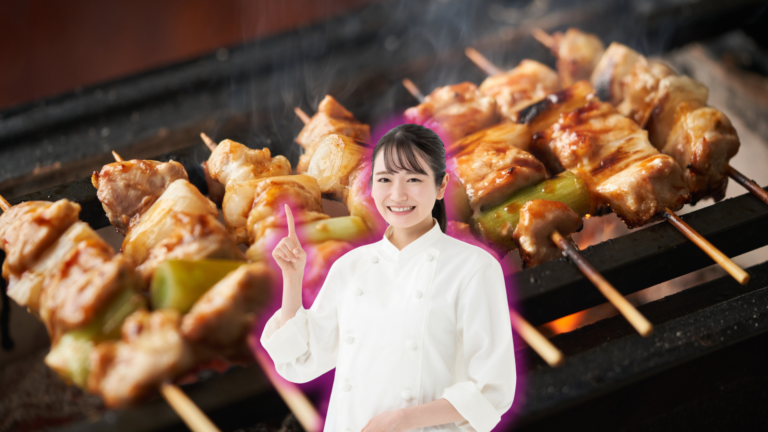
Take a look the next time you go into a yakitori shop in Japan and see who’s manning the grill. Chances are it’s a man. Indeed, female yakitori chefs are rare enough in Japan that Tokyo Calendar recently published a report on three prominent exceptions: women who have been manning their own grills for decades.
Why is the field so male-centric? What factors keep women out of the kitchen in Japan when it comes to pro cooking?
The three women making strides
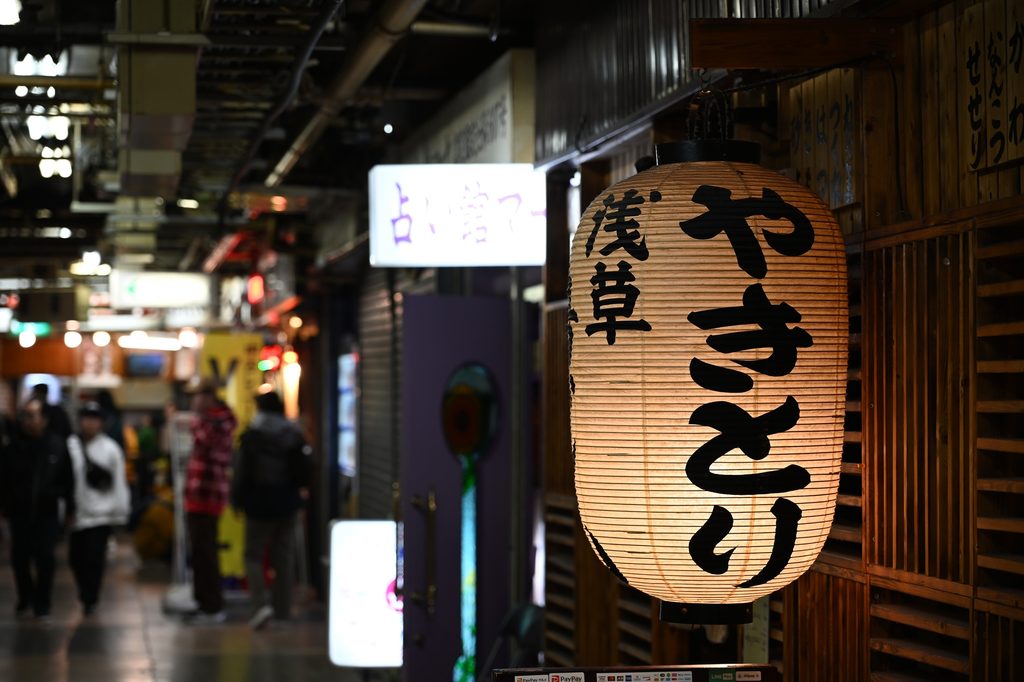
The report notes that most yakitori chefs (焼き師; yakishi) are men, while female yakitori chefs (女流焼き師; joryū-yakishi) remain a minority. But the claim is based on observation rather than data; no official study has counted yakitori chefs by gender.
The presumed rarity of women behind the grill thus reflects a broader pattern in Japan, where certain industries are widely understood to be male-dominated as a matter of common sense. Sushi chefs are another example.
Two of the three women featured by Tokyo Calendar inherited their family businesses. Tateishi Ariko is the second-generation owner of Jirocho in Shōnandai, Kanagawa Prefecture, while Iwase Hiroko is the third-generation owner of Torishizu in Kagurazaka, Tokyo.
The third, Takahashi Hisako, took a different route. She spent 13 years running the grill station at a French-influenced yakitori pioneer before opening her own shop, Charcole, in Asakusa, Tokyo.
What keeps women out of the (professional) kitchen: the numbers
There’s no official data on the gender breakdown of yakitori chefs, but comparisons can be found in the Michelin-starred restaurant world.
According to a report aired by ABEMA Prime in July, 90% of chefs at Michelin-listed restaurants in Japan are men. Food writer Matsuura Tatsuya found an even sharper disparity among Tokyo’s Michelin-starred restaurants: of the 160 restaurants in the Michelin Guide Tokyo 2026, just two have a woman as their sole head chef, or 1.25%. Including two additional restaurants where a woman shares the head-chef position with a man, it brings the total to four, or 2.5%.
The global share of women head chefs at Michelin-starred restaurants was roughly 6% in 2022, meaning that, by this measure, women are significantly underrepresented in Tokyo’s Michelin-starred dining scene.
While these figures don’t directly measure the gender balance among yakitori chefs, they offer a point of comparison for understanding the broader gender imbalance in Japan’s professional kitchens.
One reason so few women become chefs at Michelin-starred restaurants may be that women are already a minority among chefs more broadly, Kimoto Yōko, executive chef at fusion restaurant HYÈNE, told ABEMA. When Kimoto entered culinary school at 18, she said, the student body was already 80% male. At her first job, she was the only woman among 24 cooks. Matsuura estimates that culinary-school enrollment nationwide is roughly 60% to 70% male.
The result is a narrowing funnel: women begin as a minority in culinary schools, become an even smaller share of working chefs, and ultimately make up just 1.25% of sole head chefs at Tokyo’s Michelin-starred restaurants.
Explicit gatekeeping keeps women out
But the barriers are not necessarily limited to the pipeline. Women have also faced explicit gatekeeping, with physical strength sometimes used as a pretext.
Horiuchi Sayaka, owner of Japanese restaurant Oryōri Horiuchi, recalled being blocked from entering the profession roughly 30 years ago, before her apprenticeship could even begin.
“It was an era when a woman entering a kitchen was unthinkable at all. Even when I wanted a job, I was turned away at the door just for being a woman, and nobody would deal with me.”
She was eventually given a test. “They filled a pot with water and said if I could lift it one-handed they would let me in. It was an amount even a man could not lift, and then they told me that is why women are no good.”
The episode suggests that, at least in Horiuchi’s experience, the physical demands of kitchen work were less a genuine qualification than a gatekeeping mechanism: a test designed to be failed rather than a legitimate measure of ability.
A third barrier for women entering the profession is that kitchen workspaces and equipment are often designed around male workers.
Kimoto described the volume of food preparation required at a 60-seat restaurant, as well as counter heights set for a man’s sightline, which forced her to work with her elbow raised.
This presents a different problem from the assumption that women simply lack the physical strength for kitchen work. When equipment and workspaces are designed around one body type, workers who do not fit that template have to absorb the physical cost.
In a yakitori kitchen, the height of the grill, the reach required to handle skewers and the long hours spent standing over charcoal can pose similar challenges.
The worker shortage is driving change
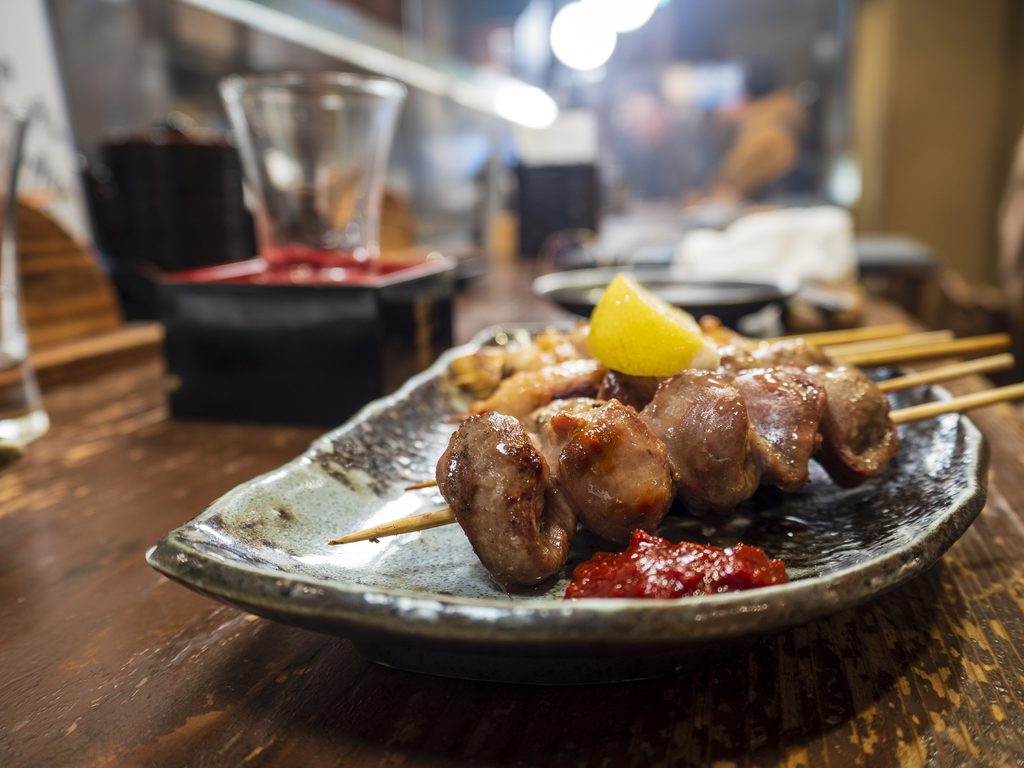
Changes are now underway in the industry, but Horiuchi attributes them less to a shift toward gender equity than to a shortage of workers.
“There are almost no itamae or chefs left who will tell you a woman is no good. There are far too few cooks, and as more women work hard on the floor, plenty of chefs now actively take them on,” Horiuchi said.
The labor shortage is becoming increasingly acute across Japan’s restaurant industry. According to Tokyo Shoko Research, 411 restaurants went bankrupt between January and May, a 2.2% increase from the same period last year. It was the highest number of restaurant bankruptcies recorded since TSR began collecting the data in 1997, with inflation, labor shortages and rising labor costs among the factors cited.
While female chefs are rare, large numbers of women work in food preparation. According to Japan’s 2024 Labour Force Survey, 1.4 million women worked as food preparation workers (inshokubutsu chōri jūjisha; 飲食物調理従事者), a category that includes workers in institutional and chain kitchens. It was the largest single occupational group among women in service-related work, narrowly ahead of the 1.39 million women working as caregivers.
France offers a useful counterpoint to the idea that Japan’s shortage of female chefs is simply a product of traditional gender roles.
Writing from Paris, Takasaki Junko found that women made up 59% of France’s hospitality and restaurant workforce, but only 28% of cooks and 17% of head chefs. At the country’s Michelin-starred restaurants, the share was just 5%, or 33 of 628 head chefs in 2020. This was despite French culinary schools approaching a 50-50 gender split and France ranking 15th out of 153 countries on the World Economic Forum’s Gender Gap Index that year.
Takasaki argues that the barriers are structural, rooted in the military-style hierarchies of professional kitchens rather than in any one country’s culture. France therefore offers a useful comparison for readers tempted to see Japan’s gender imbalance in the kitchen as uniquely Japanese. Even in a country with a more balanced culinary-school pipeline and a stronger overall standing on gender equality, women remain dramatically underrepresented at the top of the restaurant industry.
Keep reading




Sources
料理人も通う!女性職人が焼く焼き鳥の名店3選【神楽坂・浅草・湘南台】東京カレンダー
湘南台『JIROCHO』で焼き鳥デート!女流焼き師の妙技をコースで味わい尽くすグルカレ by 東京カレンダー
ミシュラン掲載店の9割が男性の現実…女性シェフを阻む「負のループ」と結婚・出産の壁 ABEMA TIMES
「一流料理人は男性が多い?」配信番組(ABEMA Prime)で伝えられなかった、大切なこと Yahoo!ニュース
About a Quarter of Chefs are Women: But Only 6% Reach the Very Top Chef’s Pencil
2026年1-5月の「飲食業」倒産 過去最多の411件 飲食業の苦境浮き彫り、「人件費高騰」が6.6倍に急増 Tokyo Shoko Research
職業別にみた就業者の状況―労働力調査(基本集計)の結果から― The Japan Institute for Labor Policy and Training
なぜ、ミシュラン店には「女性の料理人」が少ないのか…料理界「ジェンダーバイアス」という構造 現代ビジネス